
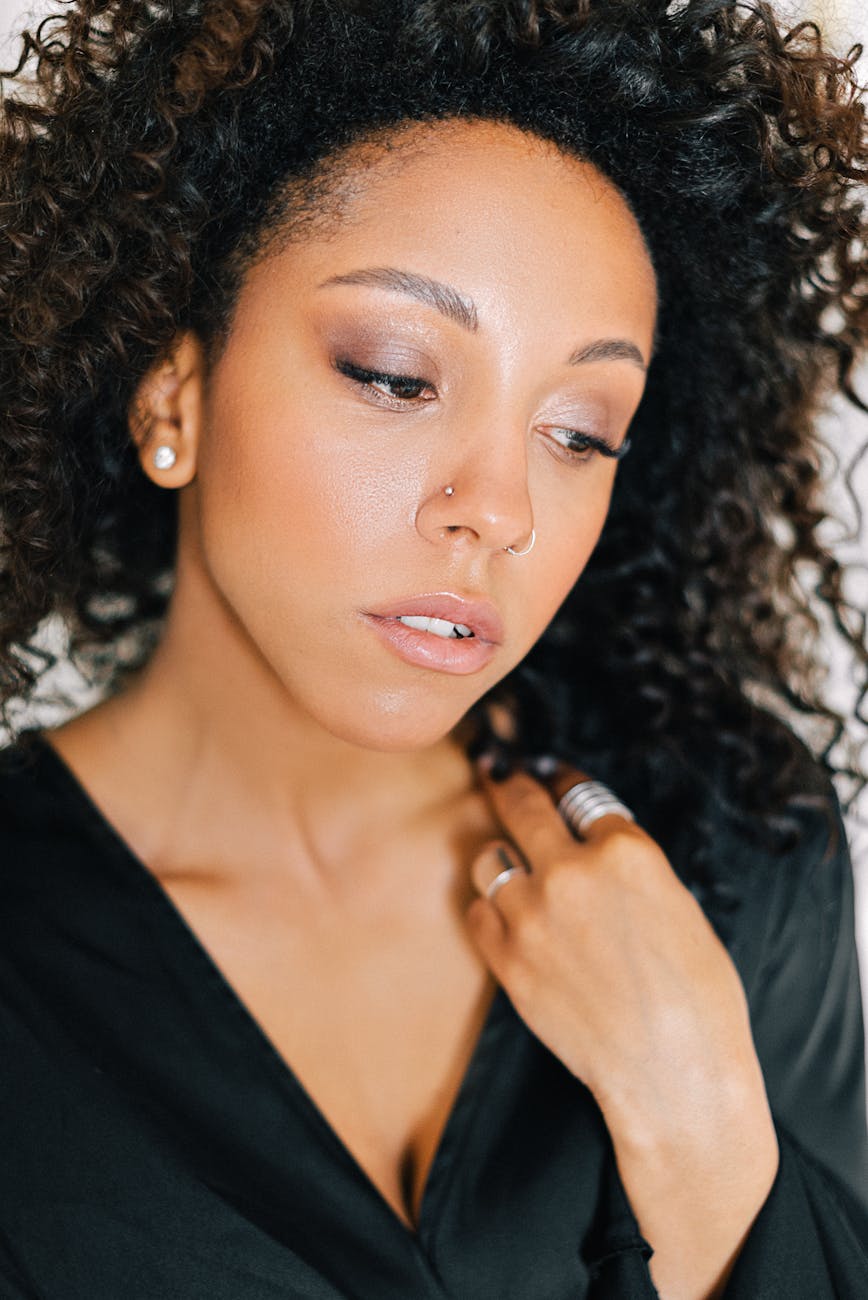
There is a silent song that brown-skinned women know all too well. It is not always spoken loudly, but it echoes in glances, casting calls, dating choices, family dynamics, and cultural preferences. This is the Brown Girl Blues—the lived experience of existing in between the lighter shades society elevates and the darker tones society politicizes. For centuries, Black women of brown complexion have endured both invisibility and stereotyping, caught in the liminal space where their beauty is not fully affirmed.
Historically, the politics of complexion emerged during slavery, where lighter-skinned individuals were often given preferential treatment, while darker-skinned individuals bore harsher labor burdens. Brown-skinned women frequently occupied a middle position, neither “privileged” enough to gain advantage nor fully identified with the struggles of darker-skinned peers (Hunter, 2007). This historical legacy planted seeds of division and hierarchy that still manifest today.
The Bible provides an alternative narrative. The Shulamite woman in Song of Solomon 1:5 (KJV) boldly affirms, “I am black, but comely, O ye daughters of Jerusalem.” Her words break through ancient and modern biases alike, declaring that beauty is not diminished by melanin but enhanced by it. Brown-skinned women carry this scriptural truth in a society that too often silences their voices.
Psychologically, colorism produces unique challenges for brown-skinned women. Research shows that intra-racial hierarchies shape identity development, social belonging, and self-esteem (Hill, 2002). The result is often a sense of displacement, where brown-skinned women feel pressured to compete against lighter peers deemed more “acceptable” and darker peers celebrated for cultural resistance. The Brown Girl Blues emerges from this constant tug-of-war.
In relationships, complexion bias plays a significant role. Studies have shown that men, across racial groups, tend to ascribe higher attractiveness to lighter-skinned women (Keith & Herring, 1991). While dark-skinned women are often fetishized as “exotic,” brown-skinned women are stereotyped as “safe” or “average,” rarely exalted as the ultimate standard of beauty. This stereotype erodes their sense of desirability and feeds into the silent blues they carry.
The entertainment industry amplifies these issues. Celebrities like Nia Long, Regina King, Gabrielle Union, and Sanaa Lathan have all achieved great success. Yet their beauty is rarely framed as “iconic” in the same way that lighter-skinned actresses like Halle Berry have been celebrated, nor as politically symbolic as darker-skinned stars like Lupita Nyong’o. The brown-skinned actress remains somewhere in the middle, talented but under-discussed.
This invisibility resonates with the concept of liminality in anthropology, where individuals exist on thresholds but belong fully to neither category (Turner, 1969). Brown-skinned women embody this liminality—forever visible yet overlooked, present yet erased. It is a psychological and cultural tension that contributes to what we call the Brown Girl Blues.
In popular culture, brown-skinned women are often typecast into roles that emphasize relatability, humor, or supportiveness. Rarely are they positioned as the ultimate love interest, the standard of elegance, or the muse of inspiration. This limited representation reduces their complexity and reinforces the unspoken hierarchy within Black beauty.
The Brown Girl Blues is not merely about external validation—it also affects internal self-perception. Growing up, many brown-skinned girls hear subtle comments such as, “She’s not light enough to be pretty” or “She’s not dark enough to represent Black pride.” These comments create confusion and fracture identity, shaping how women see themselves well into adulthood.
Scripture offers a healing framework. Genesis 1:31 (KJV) declares, “And God saw everything that he had made, and, behold, it was very good.” Brown skin, like every other shade, is divinely crafted and very good in God’s eyes. This truth dismantles the false hierarchies of men and points toward a theology of equality.
The “blues” also emerge in professional spaces. Studies reveal that lighter-skinned Black women often experience greater career opportunities and social mobility compared to darker-skinned peers (Monk, 2014). Brown-skinned women, again, find themselves “in the middle,” receiving neither full advantage nor complete marginalization, but instead occupying a space of ambiguity.
This ambiguity breeds resilience. Many brown-skinned women learn to adapt, finding strength in their versatility. Figures like Regina King demonstrate this resilience by excelling in acting, directing, and advocacy, carving spaces where brown-skinned women are seen not just as background characters but as leaders.
Still, the battle remains. Psychologists argue that when people are excluded from social narratives, their sense of identity suffers (Tajfel & Turner, 1986). For brown-skinned women, invisibility can feel more painful than outright rejection, as it communicates that their existence is neither significant nor memorable.
The blues also play out in romantic relationships, where brown-skinned women may feel they are chosen last. Anecdotal accounts reveal how some men fetishize light-skinned women as “trophy wives” or valorize darker-skinned women as “warrior queens,” while brown-skinned women are left in the shadows. These dynamics reinforce insecurities and perpetuate cycles of neglect.
Cultural affirmations are vital for breaking these cycles. Music, poetry, and art have long served as tools of resistance against color hierarchies. Lauryn Hill and Erykah Badu, both brown-skinned icons, disrupted beauty standards by centering themselves unapologetically. Their artistry functions as a balm for the Brown Girl Blues.
Yet these affirmations must extend beyond art. In the home, parents must affirm brown-skinned daughters, teaching them that their hue is not a compromise but a crown. Schools, media, and communities must likewise amplify the beauty of brown skin, embedding this truth into the collective consciousness of society.
Spiritual healing is also essential. Romans 8:16-17 (KJV) assures believers that they are “children of God: and if children, then heirs.” Brown-skinned women, as daughters of God, inherit divine worth that no human prejudice can diminish. The Brown Girl Blues begins to lift when women embrace this identity rooted in eternal truth.
Psychological practices such as self-affirmation further help. By consciously affirming their value, brown-skinned women can resist external messages that question their worth (Steele, 1988). Daily affirmations, scripture meditation, and supportive sisterhood circles are tools of liberation.
Generational healing is equally important. Brown-skinned mothers, aunts, and mentors can break cycles of color bias by affirming young girls, ensuring they grow with confidence and clarity. Healing the Brown Girl Blues requires planting seeds of affirmation early, so identity blossoms unshaken by societal lies.
The Brown Girl Blues also demands scholarly attention. Too often, academic research on colorism focuses only on light-skin privilege or dark-skin discrimination, overlooking the lived realities of women in between. Centering brown-skinned narratives in research is essential for a complete understanding of colorism’s impact.
Media must also take responsibility. Casting directors, advertisers, and producers must intentionally elevate brown-skinned actresses, models, and anchors—not just as supporting roles, but as leading representations of beauty and power. This shift disrupts the hierarchy and validates the fullness of the spectrum.
It is worth noting that brown skin represents the majority of Black women globally. In Africa, the Caribbean, and the Americas, shades of caramel, honey, and chocolate are abundant. Yet Western standards continue to distort this reality, promoting extremes rather than celebrating the center.
Theological reflection reveals why. Human prejudice thrives on division, but God’s kingdom affirms unity. Acts 17:26 (KJV) declares, “And hath made of one blood all nations of men.” Color hierarchies contradict divine design, and the Brown Girl Blues exists only because society has strayed from God’s vision of equality.
Healing also requires collective solidarity. Light-, brown-, and dark-skinned women must reject divisive hierarchies and instead affirm one another’s beauty. Unity dismantles the chains of colorism, while division keeps them intact. The blues lessen when sisterhood strengthens.
Brown-skinned women like Gabrielle Union, who boldly speaks about her experiences in Hollywood, or Nia Long, who remains a timeless figure of grace, remind us that brown beauty is not background—it is brilliance. Their presence affirms that brown women belong at the center of cultural narratives.
Ultimately, the Brown Girl Blues reflects a society still healing from the wounds of slavery, colonialism, and white supremacy. But it also reflects the resilience of women who thrive in spite of erasure. Brown-skinned women carry grace, beauty, intelligence, and strength that cannot be contained by societal categories.
Brown Girl Healing
The Brown Girl Blues describes the weight of invisibility and the silent struggle of brown-skinned women within the spectrum of colorism. Yet the story does not end with lament. Healing is possible, necessary, and urgent. Brown Girl Healing is the journey from invisibility to illumination, from marginalization to affirmation, from blues to joy.
Healing begins with truth. The truth is that brown skin is not “in-between” but fully radiant. It is a shade of glory, not a compromise. Psalm 139:14 (KJV) reminds us, “I will praise thee; for I am fearfully and wonderfully made.” This affirmation is medicine for the heart, reminding brown-skinned women that their worth is not measured by society’s hierarchies but by God’s creation.
Self-affirmation becomes the first step in healing. Psychology demonstrates that affirmations can reshape self-perception, reduce stress, and empower identity (Steele, 1988). For the brown-skinned woman, this might mean daily confessions such as, “My skin is divine,” or “I carry the richness of my ancestors in my hue.” These words counteract generational lies with generational healing.
Healing also requires representation. When brown-skinned women see themselves centered in media, literature, and leadership, they internalize validation. Icons such as Regina King, who has become a director and cultural voice, show that brown women are not just supporting roles but leaders shaping narratives. Representation affirms identity and dismantles invisibility.
Community is another pillar of healing. Brown-skinned women often share similar struggles of erasure, and sisterhood creates a safe space to unpack pain. Ecclesiastes 4:9-10 (KJV) teaches, “Two are better than one; because they have a good reward for their labour. For if they fall, the one will lift up his fellow.” Healing happens in community, where women lift one another from the blues into wholeness.
Intergenerational dialogue is equally vital. Brown-skinned mothers and elders must speak affirmations into the lives of younger girls, breaking cycles of silence. When a child grows up hearing that her skin is beautiful, she carries that truth into adulthood. Healing requires passing down affirmations rather than insecurities.
The arts play a transformative role. Music, film, and poetry become vehicles for affirmation. When Lauryn Hill sang unapologetically, when Maya Angelou wrote “Phenomenal Woman,” and when Viola Davis stood in her natural brown brilliance on screen, each act became a cultural balm. Art gives voice to the healing process, reminding brown girls that they are seen.
Spiritual healing is foundational. Romans 8:37 (KJV) declares, “Nay, in all these things we are more than conquerors through him that loved us.” Brown-skinned women conquer colorism by anchoring identity in God’s eternal love. This spiritual anchoring provides strength when society’s labels attempt to bind them.
Healing also involves challenging systems. Scholars argue that to heal from colorism, we must dismantle the structures that sustain it (Hunter, 2007). Brown-skinned women and their allies must challenge casting practices, workplace biases, and cultural narratives that perpetuate invisibility. Liberation requires both personal affirmation and systemic transformation.
Education becomes a tool for this systemic change. Schools must teach children about colorism, exposing its historical roots and dismantling its present effects. By including colorism in curriculum, educators prepare the next generation to embrace the full spectrum of beauty without hierarchy.
Healing from the Brown Girl Blues also requires reclaiming language. Terms like “caramel,” “honey,” and “milk chocolate” should not only describe skin tones but celebrate them. When language affirms rather than diminishes, it becomes part of the healing journey.
Marriage and relationships play a role in brown girl healing as well. When partners affirm brown-skinned women rather than compare them, healing occurs within intimacy. A husband who cherishes his wife’s hue or a boyfriend who uplifts his girlfriend’s complexion participates in breaking generational colorist patterns.
The church must also be a space of healing. Too often, colorism enters congregations subtly, but the gospel is a message of equality. Galatians 3:28 (KJV) reminds us: “There is neither Jew nor Greek, there is neither bond nor free, there is neither male nor female: for ye are all one in Christ Jesus.” In Christ, brown-skinned women are affirmed as heirs without hierarchy.
Storytelling is another essential healing tool. When brown-skinned women share their experiences, they give language to pain that many silently endure. Testimonies create solidarity and validate experiences, transforming shame into strength.
Healing also requires joy. The Brown Girl Blues can be heavy, but joy disrupts the cycle. Joy-filled spaces—whether through dance, celebration, or worship—become sacred sites of healing. Nehemiah 8:10 (KJV) declares, “The joy of the LORD is your strength.” Joy becomes both resistance and restoration.
Interpersonal relationships must shift. Friends, families, and peers must learn to affirm brown-skinned women intentionally, not as an afterthought. Casual compliments like “You are beautiful just as you are” dismantle decades of negative conditioning. Small affirmations build a foundation for lifelong healing.
Media platforms have the power to accelerate healing. Campaigns that center brown-skinned women in advertisements and cover shoots redefine cultural standards. When brown skin is consistently visible in luxury, fashion, and leadership spaces, the blues begin to fade.
Healing also means rejecting comparisons. Brown-skinned women must embrace that their beauty is not relative to lighter or darker hues—it is whole on its own. This rejection of comparison aligns with 2 Corinthians 10:12 (KJV): “But they measuring themselves by themselves, and comparing themselves among themselves, are not wise.” Freedom comes when women embrace uniqueness without rivalry.
Psychologically, healing from the blues may also require therapy. Counseling provides tools to unpack internalized colorism, replace harmful narratives, and rebuild self-worth. Therapy affirms that emotional wounds deserve attention, and healing is a process, not a quick fix.
Men must also participate in healing. Too often, colorist preferences are reinforced by male voices in music, film, and personal relationships. When men publicly affirm the beauty of brown-skinned women, they challenge toxic norms and contribute to cultural restoration.
Healing from the Brown Girl Blues is not linear. It requires patience, intentionality, and consistency. There will be days when the old wounds resurface, but each step toward affirmation and faith is a step toward freedom.
Ultimately, Brown Girl Healing is about reclaiming narrative. Brown women are not in the middle—they are masterpieces. They are not overlooked—they are overflowing with light. They are not forgotten—they are chosen, royal, and beloved.
In God’s eyes, there are no hierarchies of complexion. Acts 10:34 (KJV) affirms: “Of a truth I perceive that God is no respecter of persons.” Healing happens when brown-skinned women—and the communities around them—embrace this truth fully.
The journey from blues to healing is a collective one. It requires families, churches, schools, media, and communities to work together in affirming the divine beauty of brown skin. Every act of affirmation chips away at centuries of division.
Brown Girl Healing is not just a possibility—it is a promise. It is the promise that beauty exists in every shade, and that God’s creation is without flaw. It is the promise that the blues will not last forever, but healing will sing louder than silence.
And when healing comes, brown-skinned women will no longer sing the blues. They will sing songs of power, joy, faith, and beauty, knowing that they are not “in between”—they are exactly where God designed them to be: radiant, royal, and redeemed.
To overcome the Brown Girl Blues is to recognize that brown is not “in the middle” of anything—it is complete in itself. It is divine design, worthy of celebration. The blues fade when truth is embraced: brown is beautiful, powerful, and eternal.
References
- Hill, M. E. (2002). Skin color and the perception of attractiveness among African Americans: Does gender make a difference? Social Psychology Quarterly, 65(1), 77–91.
- Hunter, M. (2007). The persistent problem of colorism: Skin tone, status, and inequality. Sociology Compass, 1(1), 237–254.
- Keith, V. M., & Herring, C. (1991). Skin tone and stratification in the Black community. American Journal of Sociology, 97(3), 760–778.
- Monk, E. P. (2014). Skin tone stratification among Black Americans, 2001–2003. Social Forces, 92(4), 1313–1337.
- Steele, C. M. (1988). The psychology of self-affirmation: Sustaining the integrity of the self. Advances in Experimental Social Psychology, 21, 261–302.
- Tajfel, H., & Turner, J. (1986). The social identity theory of intergroup behavior. In S. Worchel & L. W. Austin (Eds.), Psychology of intergroup relations (pp. 7–24). Nelson-Hall.
- Turner, V. (1969). The ritual process: Structure and anti-structure. Aldine.
- The Holy Bible, King James Version.

 THE BROWN GIRL DILEMMA