Tag Archives: Brown Girl

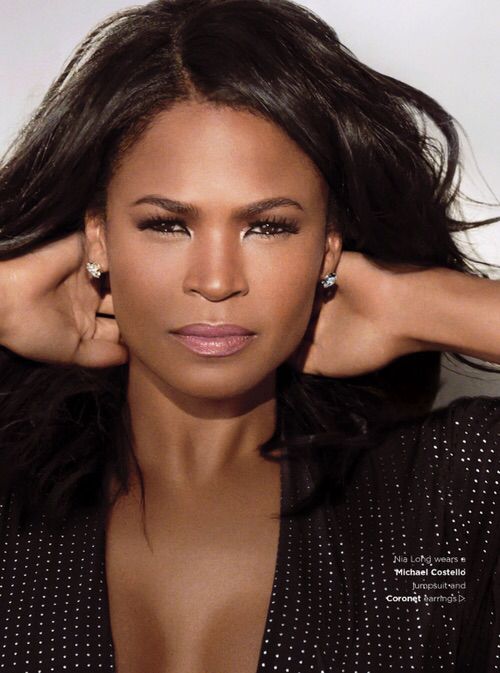
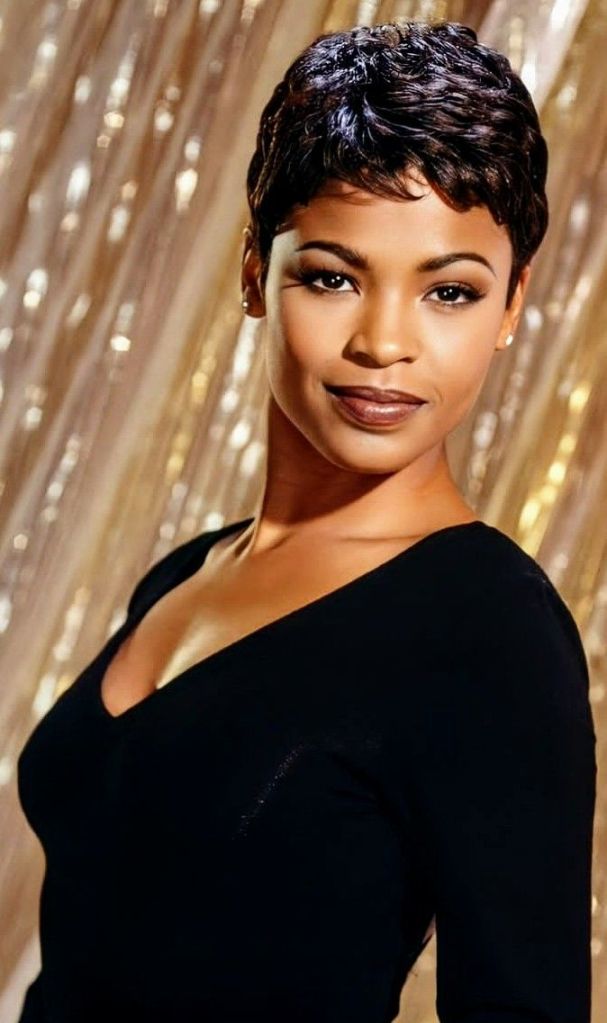
The “It Girl” Series: Nia Long

Timeless Brown Beauty, Unshakable Talent, and Cultural Icon

This photograph is the property of its respective owner. No copyright infringement intended.

Nia Long is widely celebrated as one of Hollywood’s most luminous actresses—her elegant brown skin, classic features, and magnetic presence have earned her the affectionate status of a Black Hollywood “It Girl.” Born on October 30, 1970, in Brooklyn, New York, Long grew up steeped in creative influence; her mother was a printmaker and teacher, and her father a poet and educator. She cultivated her talents early, studying acting and performing in television roles before breaking through in one of the defining films of Black cinema, Boyz n the Hood (1991), which showcased her ability to inhabit characters with depth and authenticity that resonated deeply with audiences nationwide.

Long’s career is marked by versatility and longevity that few performers achieve. After Boyz n the Hood, she transitioned fluidly between gritty dramas like Love Jones (1997) and ensemble favorites like Friday (1995), Soul Food (1997), and the Best Man franchise, earning critical praise and becoming a beloved fixture in both film and television. She also garnered accolades, including multiple NAACP Image Awards and a Black Reel Award for her work, and her portrayal of Officer Sasha Monroe on Third Watch earned her two NAACP Image Awards for Outstanding Actress in a Drama Series—proof of her dramatic range and respected craft.

This photograph is the property of its respective owner. No copyright infringement intended.

People have often cited Long’s beauty as timeless and magnetic—her brown skin, expressive eyes, and poised elegance convey an all‑American allure that transcends passing trends. Her aesthetic has matured with grace; in 2025, she was named the first North America Brand Ambassador for Estée Lauder Companies, a partnership that celebrates authentic beauty and self-expression in later adulthood—a powerful statement against ageist beauty norms. She also starred in a striking 2024 shapewear campaign for SKIMS, reinforcing her status as a fashion and beauty icon whose confidence and poise continue to inspire across generations.

Beyond aesthetics, Long has navigated Hollywood’s challenges with resilience and conviction. As a brown‑skinned woman in an industry long defined by narrow beauty standards and racial bias, she consistently chose roles that expanded representation and humanized Black women with nuance, strength, and complexity. From classic sitcoms such as The Fresh Prince of Bel‑Air to contemporary hits like NCIS: Los Angeles, Empire, and Dear White People, Long has refused to be typecast, demonstrating breadth and intentionality in her choices. Off‑screen, she has ventured into production and behind‑the‑camera work, and she continues to develop meaningful projects that reflect her artistic vision and lived experience.

In every sense, Nia Long’s career exemplifies timeless beauty fused with artistic integrity. Her gorgeous brown skin and striking features are just the surface of a deeper legacy—one of cultural impact, emotional intelligence, and transcendent talent. She is not just an actress; she is an enduring symbol of Black beauty, power, and representation in Hollywood and beyond.

References

Estée Lauder Companies. (2025, October 9). Estée Lauder names Nia Long as Brand Ambassador. https://www.elcompanies.com/en/news-and-media/newsroom/press-releases/2025/10-09-2025-140045499

IMDb. (n.d.). Nia Long biography and filmography. https://www.imdb.com/name/nm0000505/bio/

Long, N. (2025). Upcoming memoir announcement. Artist & Brand Management. https://www.artistandbrand.com/clients/nia-long

Wikipedia contributors. (2025). Nia Long. Wikipedia. https://en.wikipedia.org/wiki/Nia_Long

SKIMS campaign coverage. (2024). Nia Long stars in SKIMS shapewear campaign. https://www.aol.com/nia-long-gets-almost-naked-214918936.html

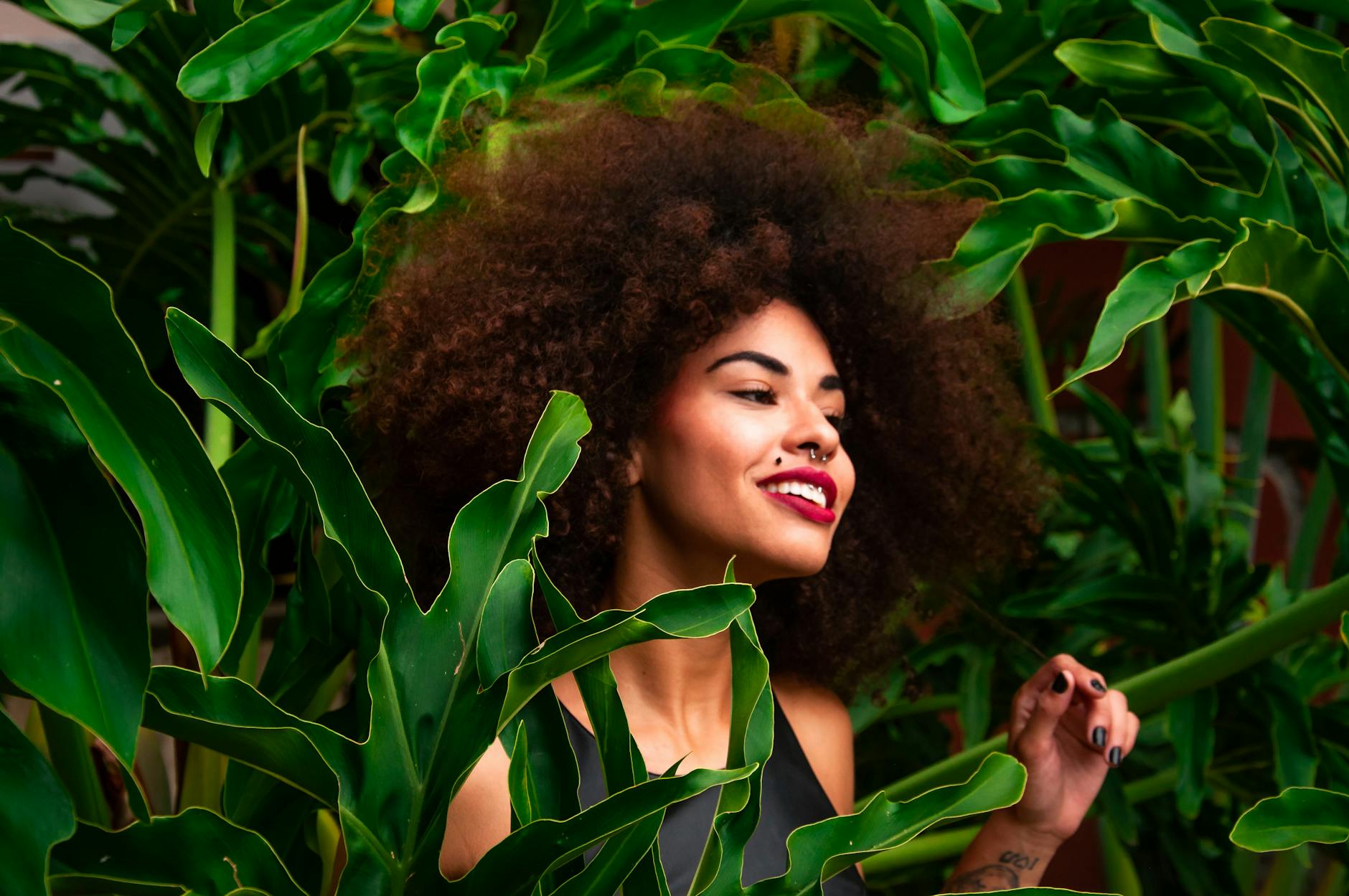
🌺 Colored Girls: The Beauty and The Brains 🌺

Photo by Fernanda Simu00f5es on Pexels.com

The term “colored girls” historically referred to Black women, often during eras of segregation and inequality. Though originally used as a label of exclusion, it has been reclaimed to celebrate the beauty, intellect, and resilience of women of African descent. The Bible affirms this dignity, saying, “I am black, but comely” (Song of Solomon 1:5, KJV). This declaration turns what society once treated as inferior into a statement of divine pride and purpose.

Black women have always been pillars of strength, intellect, and creativity. They have excelled in education, becoming one of the fastest-growing demographics in higher education enrollment (NCES, 2022). Proverbs 31:26 (KJV) perfectly describes this brilliance: “She openeth her mouth with wisdom; and in her tongue is the law of kindness.” From classrooms to boardrooms, colored girls are showing that their intelligence is as radiant as their physical beauty.

Psychologists argue that Black women’s determination is partly shaped by generations of survival under oppression. These challenges have forged a strong sense of identity and agency (Collins, 2000). Resilience, often called “the superwoman schema,” is both a blessing and a challenge — a source of strength but also a weight that requires rest and balance.

Culturally, the beauty of colored girls is celebrated worldwide. From our glowing melanin to our full lips, textured hair, and diverse body shapes, Black women are natural trendsetters. Global beauty markets have responded with bronzers, lip plumpers, and hairstyles inspired by Black women’s natural features. Psalm 139:14 (KJV) reminds us: “I will praise thee; for I am fearfully and wonderfully made.”

Psychology and science confirm why Black beauty is so striking. Facial symmetry, often associated with genetic health, is highly represented in African phenotypes (Little et al., 2011). Fuller lips, higher cheekbones, and wider-set eyes are viewed as youthful and attractive across cultures. Melanin provides natural photoprotection, slowing skin aging and giving Black women a radiant glow well into later life (Taylor, 2020). These biological features make colored girls admired around the globe.

This admiration has sometimes led to cultural appropriation, where others mimic the aesthetics of colored girls without acknowledging the history or struggles that come with them (Russell et al., 2013). Despite this, Black women continue to lead the way in music, fashion, art, and pop culture, influencing trends and shaping global beauty standards.

Examples abound of Black women who have shattered stereotypes. Michelle Obama, the first African American First Lady, is a symbol of grace, intelligence, and poise. Her advocacy for education, health, and empowerment of girls worldwide embodies the “brains” of colored girls. Her book Becoming became a bestseller, inspiring millions with her journey.

Maya Angelou is another powerful example. As a poet, writer, and activist, her work gave voice to generations of Black women. Her words “Still I rise” resonate with the resilience of colored girls everywhere. Her life demonstrates that beauty is not just physical but intellectual and spiritual.

In the realm of sports, Serena Williams exemplifies strength, discipline, and excellence. She not only dominated tennis but also challenged narrow definitions of femininity and beauty in athletics. Her journey shows that colored girls are multifaceted — strong competitors and nurturing mothers, unapologetically themselves.

Entertainment also celebrates the beauty and brains of colored girls. Viola Davis, an award-winning actress, uses her platform to tell authentic Black stories and advocate for diversity in Hollywood. Lupita Nyong’o, with her dark skin celebrated on magazine covers, shifted global beauty narratives and encouraged young Black girls to embrace their natural beauty.

Spiritual leadership is another area where Black women shine. Throughout history, they have been prayer warriors, deaconesses, and gospel singers who carried the church through trials. Their faith is not just for survival but for thriving. 1 Peter 3:3–4 (KJV) reminds us that true beauty is “the hidden man of the heart… even the ornament of a meek and quiet spirit.”

Psychologically, their strength has sometimes been romanticized as if they must always be strong. This expectation can lead to stress and emotional exhaustion. Mental health professionals now emphasize that Black women need safe spaces to rest and heal, reclaiming the right to be soft and cared for. Jesus’ words “Come unto me, all ye that labour and are heavy laden, and I will give you rest” (Matthew 11:28, KJV) remind them that strength also means knowing when to lay burdens down.

Globally, colored girls are admired not only for their beauty but also for their intellect and leadership. Nobel Prize winner Toni Morrison transformed literature by centering Black voices. Chimamanda Ngozi Adichie challenges global audiences to rethink feminism and identity through her books and speeches. These women embody beauty with depth and intellect that changes culture.

Even in STEM, women like Dr. Mae Jemison, the first Black woman in space, prove that colored girls literally reach for the stars. Their contributions remind the world that brains and beauty are not mutually exclusive — they coexist powerfully.

In everyday life, colored girls continue to set trends, educate communities, raise leaders, and stand on the frontlines of justice movements. They are the heartbeat of neighborhoods and the backbone of families, carrying forward legacies of survival and triumph.

In conclusion, “colored girls” are indeed the beauty and the brains — fearfully and wonderfully made, leaders in intellect, trailblazers in culture, and examples of strength and faith. The world may try to imitate their features, but it can never duplicate the soul, resilience, and brilliance that define them.


References

  • Collins, P. H. (2000). Black feminist thought: Knowledge, consciousness, and the politics of empowerment. Routledge.
  • Little, A. C., Jones, B. C., & DeBruine, L. M. (2011). Facial attractiveness: Evolutionary based research. Philosophical Transactions of the Royal Society B: Biological Sciences, 366(1571), 1638–1659.
  • National Center for Education Statistics (NCES). (2022). Status and trends in the education of racial and ethnic groups. U.S. Department of Education.
  • Russell, K., Wilson, M., & Hall, R. (2013). The color complex: The politics of skin color among African Americans. Anchor Books.
  • Taylor, S. (2020). Advances in understanding of skin of color. Journal of the American Academy of Dermatology, 82(1), 157–166.
  • The Holy Bible, King James Version.

Brown Girl, More Than a Stereotype

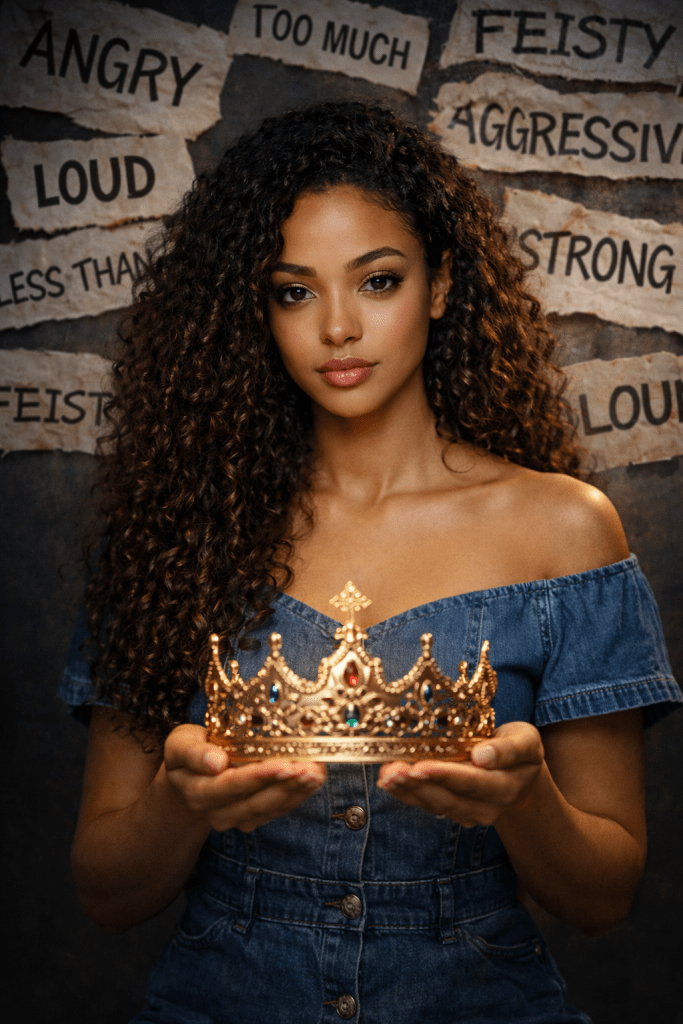
The Brown girl enters the world already burdened with narratives she did not author. Before she speaks, she is often interpreted. Before she is known, she is assumed. Stereotypes precede her humanity, attempting to compress her complexity into something legible and controllable. Yet the Brown girl is more than a stereotype—she is a living contradiction to every lie told about her.

Scripture affirms that every human being is created in the image of God, endowed with inherent dignity that no social construct can erase (Genesis 1:26–27, KJV). This foundational truth directly challenges the systems that seek to reduce Brown girls to caricatures rather than persons. Her worth is not negotiable, conditional, or dependent on proximity to whiteness, femininity norms, or cultural palatability.

Stereotypes function as tools of power. They simplify in order to dominate, flatten in order to control. Patricia Hill Collins (2000) explains that controlling images of Black women—such as the hypersexualized, the angry, or the disposable—serve to justify social inequality. The Brown girl is frequently cast into these roles long before she understands their implications.

God’s standard of seeing stands in opposition to this reduction. “Man looketh on the outward appearance, but the Lord looketh on the heart” (1 Samuel 16:7, KJV). This scripture exposes the moral failure of stereotype-driven perception. To stereotype is to refuse the discipline of truly seeing.

The Brown girl’s body often becomes the battleground where these narratives collide. Her skin tone, hair texture, facial features, and body shape are scrutinized, ranked, and politicized. Colorism further fragments Black womanhood, creating hierarchies that distort self-perception and communal bonds (Norwood, 2015). Yet scripture reminds her that she is fearfully and wonderfully made—not accidentally assembled, not socially inferior, but divinely intentional (Psalm 139:13–16, KJV).

Media representation plays a significant role in sustaining stereotypes. bell hooks (1992) argues that Black women are frequently rendered visible only through distorted lenses that serve dominant interests. The Brown girl is either overexposed in harmful ways or erased altogether. In both cases, her full humanity is denied.

Womanist theology insists that theology must speak from lived experience. Delores Williams (1993) emphasizes that Black women’s survival, faith, and resistance are theological texts in themselves. The Brown girl’s life is not an abstraction—it is evidence. Her endurance, faith, creativity, and moral clarity testify to a God who sustains her beyond stereotype.

Intersectionality further reveals how race and gender operate together to shape the Brown girl’s experience (Crenshaw, 1989). She is not oppressed in fragments; she lives at the convergence of multiple systems. Understanding this reality is essential to dismantling simplistic narratives that blame her for conditions she did not create.

James Cone (2011) reminds us that Black suffering must be interpreted through the lens of the cross. Yet the Brown girl’s story is not only one of suffering—it is also one of resurrection. She rises in classrooms, boardrooms, churches, and homes, often carrying the weight of expectation while quietly rewriting the narrative.

Spiritually, the Brown girl learns to anchor her identity in God rather than public opinion. Galatians 3:28 disrupts hierarchical thinking by declaring unity and equality in Christ. This does not erase differences, but it affirms equal worth. Her faith becomes a shield against internalized inferiority.

The Brown girl is also communal. Her identity is shaped through shared stories, collective memory, and ancestral wisdom. African and African diasporic traditions emphasize relational identity, resisting the hyper-individualism that isolates struggle (Mbiti, 1990). She is never just one—she carries many.

To declare that the Brown girl is more than a stereotype is not rhetorical flourish; it is moral truth. It is a refusal to participate in narratives that diminish her. It is an insistence that she be encountered as whole, sacred, and complex.

Ultimately, the Brown girl does not need permission to exist fully. She is already seen by God, already named, already valued. Every stereotype collapses under the weight of her lived truth. She is more than what was said about her—she is who God says she is.


References

Collins, P. H. (2000). Black feminist thought: Knowledge, consciousness, and the politics of empowerment (2nd ed.). Routledge.

Cone, J. H. (2011). The cross and the lynching tree. Orbis Books.

Crenshaw, K. (1989). Demarginalizing the intersection of race and sex. University of Chicago Legal Forum, 1989(1), 139–167.

hooks, b. (1992). Black looks: Race and representation. South End Press.

Mbiti, J. S. (1990). African religions and philosophy (2nd ed.). Heinemann.

Norwood, K. J. (2015). Color matters: Skin tone bias and the myth of a postracial America. Routledge.

Williams, D. S. (1993). Sisters in the wilderness: The challenge of womanist God-talk. Orbis Books.

The Holy Bible, King James Version. (1769/2017). Cambridge University Press.

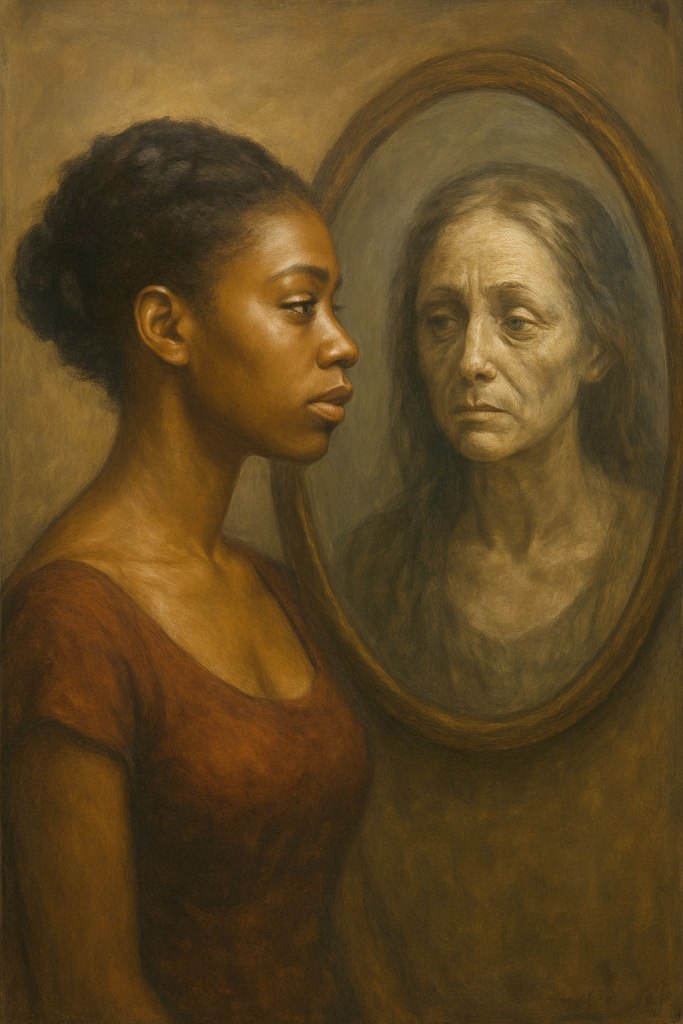
Brown Girl, What Do You See in the Mirror? #thebrowngirldilemma

When a brown girl stands before the mirror, she is not merely gazing at her reflection — she is confronting centuries of history, identity, and perception layered upon her skin. Her reflection is more than flesh and bone; it is the embodiment of resilience, survival, and beauty shaped by ancestral struggle and divine design. Yet for many, the mirror has been weaponized, transformed into a site of doubt, comparison, and internalized pain. The question, “What do you see?” becomes both a challenge and a call to reclaim the sacredness of one’s image in a world that often denies its worth.

The mirror tells stories that society refuses to hear. Through colonial legacies, colorism, and Eurocentric beauty standards, the brown girl has been taught that her value is conditional — that lighter is better, straighter is prettier, and proximity to whiteness equals worth. These distorted messages have shaped her psyche, leaving many to struggle with self-acceptance. Yet, every reflection of melanin is a testimony of divine artistry — “I will praise thee; for I am fearfully and wonderfully made” (Psalm 139:14, KJV). The mirror, when reclaimed, becomes an altar of affirmation, not condemnation.

The brown girl’s image has often been policed, fetishized, or erased. From the historical denigration of African features to the commercialization of beauty that imitates them, she lives within a paradox of being both desired and devalued. The lips, hips, and skin once mocked are now monetized, while the original bearers of these traits are left fighting for recognition. This paradox breeds confusion and spiritual exhaustion, forcing her to navigate an identity that is both celebrated and shamed.

To look in the mirror and see beauty is therefore an act of rebellion. It is a spiritual reclamation that defies centuries of psychological conditioning. When a brown girl declares herself beautiful, she is not practicing vanity — she is practicing healing. She is rewriting the narrative imposed upon her, aligning her reflection with God’s original intention, not man’s limited imagination. “For man looketh on the outward appearance, but the LORD looketh on the heart” (1 Samuel 16:7, KJV).

From early childhood, brown girls receive messages that shape how they perceive themselves. Dolls, media, and social standards subtly reinforce a hierarchy of beauty where darker tones are placed at the bottom. This conditioning embeds itself into the subconscious, leading to internalized colorism and self-doubt. But through self-awareness and spiritual renewal, she can learn to see herself through God’s eyes — radiant, royal, and redeemed.

The mirror reflects more than appearance; it reveals internal wounds. A brown girl’s relationship with her reflection often mirrors her journey of healing from rejection, abandonment, and societal erasure. The mirror becomes a witness to her silent battles — with self-worth, comparison, and belonging. Yet, through grace and truth, she can transform that space into a sanctuary of empowerment. The woman in the mirror becomes a warrior, no longer a captive to lies about her worth.

In Scripture, mirrors are symbolic of reflection and revelation. James 1:23–24 (KJV) describes the one who hears the word but does not act as a man who “beholdeth his natural face in a glass” and forgets who he is. Likewise, when the brown girl forgets her divine origin, she risks adopting a counterfeit identity. But when she remembers that she was made in the image of God (Genesis 1:27), her reflection shifts from insecurity to sacredness.

The journey to self-love for the brown girl is not about arrogance but about restoration. It is about healing generational trauma and rejecting the lie that she must conform to be accepted. Her melanin, her texture, her features — all speak the language of creation’s diversity. She is the living canvas of God’s brilliance, carrying in her complexion the warmth of the earth and the fire of the sun.

The mirror also challenges her to ask: What kind of beauty do I chase? The world glorifies vanity, filters, and digital perfection, but godly beauty radiates from character, wisdom, and grace. “Favour is deceitful, and beauty is vain: but a woman that feareth the LORD, she shall be praised” (Proverbs 31:30, KJV). The brown girl’s glow is not cosmetic; it is spiritual. Her shine comes from within — from peace, purpose, and divine presence.

Society often fears the confident brown girl because she defies stereotypes. When she stands unapologetically in her power, she disrupts systems built on inferiority complexes. Her confidence is not arrogance — it is awareness of who she is and Whose she is. Every time she looks in the mirror and smiles, she is dismantling centuries of lies that told her she wasn’t enough.

Yet, this journey requires community. The brown girl must surround herself with affirming voices — sisters who reflect her light back to her when she forgets. Together, they create mirrors of truth, reminding one another that they are daughters of royalty, not remnants of oppression. This sisterhood of reflection becomes the foundation of healing and liberation.

Media and culture play a profound role in shaping how brown girls view themselves. Representation matters. When they see women of their hue and texture portrayed with dignity, it expands their vision of beauty. From Lupita Nyong’o’s grace to Viola Davis’s power, these reflections in media serve as counter-narratives to centuries of invisibility. The mirror begins to tell new stories — stories of visibility, pride, and victory.

Faith also redefines beauty for the brown girl. When she sees herself through the lens of scripture, she no longer measures herself against impossible standards. Instead, she embraces her divine essence, knowing that God’s definition of beauty transcends culture and trend. “Thou art all fair, my love; there is no spot in thee” (Song of Solomon 4:7, KJV) becomes not just poetry, but prophecy — a declaration over every brown girl who ever doubted her reflection.

Even in pain, her beauty persists. The brown girl’s reflection carries history — of mothers who survived, of daughters who dreamed, and of generations that refused to disappear. Her scars do not diminish her beauty; they sanctify it. The mirror becomes a sacred archive of endurance, showing that true beauty is not in flawlessness, but in faith that endures through adversity.

To teach brown girls to love themselves is to undo centuries of psychological bondage. It means equipping them with the spiritual and emotional tools to reject harmful narratives. It means teaching them to look into the mirror and see divinity — not deficiency. Through this, the next generation of brown girls will stand taller, speak louder, and shine brighter.

In relationships, careers, and faith, how the brown girl sees herself determines how she moves through the world. When she views herself as lesser, she settles; when she views herself as divine, she ascends. Her reflection dictates her standard. Therefore, self-knowledge becomes sacred — a form of worship, because knowing herself honors the God who made her.

The mirror, once a site of comparison, can become a place of communion. When the brown girl prays before her reflection, she reclaims that space as holy ground. She learns to affirm: “I am enough. I am loved. I am created with purpose.” These declarations become spiritual warfare, dismantling every lie whispered by a society afraid of her power.

Ultimately, the mirror reflects not what she sees, but what she believes. If her heart is rooted in God’s truth, her reflection will radiate confidence and peace. Her worth is not measured by societal approval but by divine affirmation. She is a masterpiece — not because of what she wears or how she looks, but because of the Spirit that dwells within her.

So, brown girl, when you look in the mirror, see not what the world says you are, but what God declares you to be: chosen, beloved, royal, and radiant. Let your reflection remind you of the light within. For the mirror does not define you — it only reveals the glory already placed inside you by the Creator.

References (KJV):

  • Psalm 139:14
  • 1 Samuel 16:7
  • Genesis 1:27
  • Proverbs 31:30
  • James 1:23–24
  • Song of Solomon 4:7
  • Ecclesiastes 3:11
  • 1 Peter 3:3–4
  • Romans 12:2
  • 2 Corinthians 3:18

Inheritance of Pain, Legacy of Power: Brown Girls Rising. #thebrowngirldilemma

Photo by Godisable Jacob on Pexels.com

The story of the brown girl begins in the shadow of inherited pain. Her skin carries the memories of slavery, colonization, and systemic colorism. Each shade is a living archive of oppression, a record of what was endured and survived. For generations, brown girls have been taught—explicitly and implicitly—that their bodies are battlegrounds, their beauty conditional, and their voices disposable. This inheritance of pain is heavy, but within it also lies the seed of a profound legacy: the power to rise, redefine, and reclaim.

Inheritance of pain is not merely historical; it is psychological. Trauma is passed through families not just by stories but by silence, body language, and internalized biases (DeGruy, 2005). Brown girls often inherit the whispered warnings: “Don’t stay in the sun too long,” “Light skin is more desirable,” or “You have to work twice as hard.” These messages carry both survival wisdom and insidious shame, training young women to measure their worth by standards they did not create. Yet, what is inherited can also be reinterpreted. Pain, when acknowledged, becomes the soil for resilience.

The legacy of power emerges when brown girls refuse to be confined by narratives of inferiority. Across history, women of color have carried revolutions in their wombs and resistance in their hands. From Sojourner Truth’s proclamation, “Ain’t I a Woman?”, to the modern voices of Chimamanda Ngozi Adichie and Issa Rae, brown girls have transformed their marginalization into platforms of influence. This rising is not accidental—it is the fulfillment of a legacy that insists on survival and brilliance despite systemic silencing.

Spiritually, the brown girl rising is a biblical archetype. The daughters of Zion were often portrayed as oppressed, mocked for their skin tone (Song of Solomon 1:5, KJV: “I am black, but comely”), yet chosen by God to birth nations, preserve wisdom, and lead in times of crisis. The inheritance of pain mirrors Israel’s exile, while the legacy of power mirrors the promise of restoration. God’s pattern is consistent: those the world marginalizes, He elevates.

In today’s cultural landscape, brown girls continue to rise as leaders, innovators, and truth-tellers. They are reshaping industries that once excluded them—whether in entertainment, politics, technology, or theology. Each accomplishment chips away at centuries-old lies, rewriting what beauty, authority, and intelligence look like. The brown girl rising is no longer asking permission to belong; she is establishing spaces where her presence is undeniable and her leadership indispensable.

Psychologically, this rising is rooted in the practice of self-affirmation and collective healing. When brown girls honor their histories without being chained to them, they embody what scholars call post-traumatic growth—the ability to harness adversity for empowerment (Tedeschi & Calhoun, 2004). Instead of perpetuating silence, they speak. Instead of internalizing shame, they cultivate pride. Instead of shrinking, they expand, standing tall as embodiments of survival and grace.

Yet rising does not mean forgetting. The inheritance of pain must be remembered to preserve the legacy of power. Just as gold is tested by fire, the strength of the brown girl shines brightest when her past is not erased but transformed. Each scar, each rejection, and each overlooked moment becomes proof of endurance. And in this endurance, there is glory.

To say brown girls are rising is to recognize a global movement: one that transcends borders and languages. It is the reality of daughters who refuse to bow, women who refuse to be silenced, and generations who refuse to believe they are cursed. It is the testimony of Psalm 118:22 (KJV): “The stone which the builders refused is become the head stone of the corner.” What was rejected becomes foundational. What was dismissed becomes central. What was oppressed becomes unstoppable.

The inheritance of pain is undeniable, but the legacy of power is unbreakable. Brown girls are rising—not just for themselves, but for the daughters yet to come. Their ascent is not only survival; it is prophecy.


References

  • DeGruy, J. (2005). Post Traumatic Slave Syndrome: America’s Legacy of Enduring Injury and Healing. Uptone Press.
  • Tedeschi, R. G., & Calhoun, L. G. (2004). Posttraumatic growth: Conceptual foundations and empirical evidence. Psychological Inquiry, 15(1), 1–18.
  • The Holy Bible, King James Version.

Confidence Is Contagious: Building Self-Worth as a Brown Girl with Virtual confidence.

Photo by PeopleByOwen on Pexels.com

Confidence is a powerful force that extends beyond individual self-esteem—it radiates and influences those around us. For brown girls, cultivating self-worth is both a personal journey and a social statement. Historical colorism, media bias, and societal beauty standards often create barriers to self-acceptance. Yet, embracing one’s skin tone, hair texture, and cultural identity fosters resilience, pride, and confidence.

Self-worth begins with self-recognition. Acknowledging one’s unique features and accomplishments—regardless of societal approval—lays the foundation for authentic confidence. Daily affirmations, mentorship, and representation of brown excellence in media serve as crucial tools in reinforcing value.

Confidence is also relational. When brown girls model self-assuredness, they inspire peers, younger generations, and communities to embrace their identity. By celebrating natural beauty, cultural heritage, and personal achievements, confidence becomes contagious, creating a ripple effect of empowerment.


Social Media and Cultural Influence

Social media platforms are pivotal in shaping perceptions of beauty, identity, and cultural pride. For brown girls, Instagram, TikTok, and Twitter provide spaces to engage with peers, influencers, and movements that celebrate melanin-rich skin, natural hair, and cultural heritage. Hashtags like #BrownSkinGirl, #MelaninMagic, and #BlackGirlJoy amplify representation, fostering visibility and pride.

Cultural influence on social media extends beyond aesthetics. Influencers who share personal narratives, fashion, and hair tutorials provide models of empowerment and authenticity. These platforms also enable brown girls to challenge stereotypes, critique colorism, and redefine beauty norms. The psychological benefits include increased self-esteem, affirmation of identity, and motivation to express individuality boldly.


Virtual Confidence: Navigating Online Spaces as a Brown Girl

While social media offers empowerment, it also exposes brown girls to colorism, negative comments, and unrealistic beauty standards. Navigating these spaces requires intentional strategies for maintaining confidence:

  1. Curate Your Feed: Follow accounts that celebrate diversity and representation.
  2. Set Boundaries: Limit exposure to harmful comments or comparison-driven content.
  3. Engage Authentically: Share personal style, achievements, and narratives confidently.
  4. Participate in Movements: Join online campaigns like #MelaninPoppin or #BrownGirlJoy to connect with supportive communities.
  5. Affirm Daily: Use self-affirmations that reinforce pride in skin tone, heritage, and accomplishments.

Virtual confidence emerges when brown girls use online spaces to celebrate identity, cultivate pride, and foster connection. By navigating these platforms intentionally, they can turn potential vulnerability into empowerment, inspiring themselves and others.

Virtual Confidence for Brown Girls: A Social Media Toolkit

1. Affirm Your Identity

Daily Affirmation Examples:

  • “My skin is radiant, my heritage is powerful, my confidence is unstoppable.”
  • “I am proud of my features, my voice, and my story.”
    Visual Idea: Create colorful, shareable graphics with brown skin tones and affirmations.

2. Curate Your Feed

Tips:

  • Follow influencers and creators celebrating melanin-rich beauty (#MelaninMagic, #BrownSkinGirl).
  • Engage with content that uplifts your identity and cultural pride.
    Visual Idea: Sample Instagram or TikTok feed mock-up highlighting inclusive accounts.

3. Engage Authentically

Tips:

  • Share your personal style, natural hair, makeup, and cultural expression.
  • Post stories, videos, or reels celebrating achievements or heritage.
    Visual Idea: Side-by-side images of selfies, cultural attire, and creative expressions.

4. Set Boundaries

Tips:

  • Use mute, block, or restrict functions to protect mental health.
  • Limit exposure to comparison-driven or negative content.
    Visual Idea: A “Digital Self-Care Checklist” graphic.

5. Participate in Empowering Movements

Hashtags to Follow or Use:

  • #BrownSkinGirl
  • #MelaninPoppin
  • #BlackGirlJoy
  • #VirtualConfidence
    Visual Idea: A hashtag collage showing diverse users celebrating melanin online.

6. Build Community

Tips:

  • Join virtual groups, forums, or challenges that celebrate brown girls.
  • Comment and interact with peers to share positivity and support.
    Visual Idea: A mini infographic of networked circles showing peer support connections.

7. Celebrate Achievements

Tips:

  • Post accomplishments, milestones, and creative projects.
  • Recognize your growth publicly or privately, digitally or offline.
    Visual Idea: Highlight reel or graphic “Celebrate Your Wins” template.

Virtual spaces can amplify confidence when navigated intentionally. By curating supportive content, engaging authentically, and affirming identity, brown girls can transform online platforms into arenas of empowerment, self-expression, and cultural pride. Confidence online is contagious—what you celebrate in yourself inspires the entire community.

References

  • Hunter, M. (2007). The Persistent Problem of Colorism: Skin Tone, Status, and Inequality. Sociology Compass, 1(1), 237–254.
  • Phinney, J. S. (1990). Ethnic Identity in Adolescents and Adults: Review of Research. Psychological Bulletin, 108(3), 499–514.
  • The Holy Bible, King James Version. (1611). Song of Solomon 1:5.

The Politics of Pretty and the Brown Girl #thescienceofblackbeauty

Photo by Giulia Freitas on Pexels.com

Beauty has never been a neutral concept. It has always been political, deeply intertwined with power, race, and identity. For the Brown girl, beauty is not simply a matter of style or preference—it is a site of negotiation, resistance, and survival. Living in a world where Eurocentric standards dominate, the Brown girl’s face, hair, and skin are often scrutinized, diminished, or exoticized. To be considered “pretty” in this context is not a simple compliment; it is a measure shaped by systemic bias, cultural narratives, and centuries of colonial influence.

The phrase “politics of pretty” captures the social and cultural forces that determine which bodies are valued and which are marginalized. For Brown girls—women of darker complexions, textured hair, and features often dismissed by dominant culture—beauty becomes less about personal choice and more about fitting into or rejecting the molds society constructs. Being told one is “pretty for a dark-skinned girl” is a backhanded compliment that reveals how beauty is still filtered through racial hierarchies. Such comments reinforce the notion that prettiness is not expected of the Brown girl but rather an exception to a biased rule.

Psychologically, these beauty politics can carry heavy consequences. Studies on colorism reveal how internalized bias leads to lower self-esteem, body image struggles, and even strained relationships among women of color (Hunter, 2007). The Brown girl may feel pressure to straighten her hair, lighten her skin, or alter her features to align more closely with accepted ideals. These acts are not merely aesthetic—they reflect deep systemic forces that punish authenticity while rewarding conformity. Yet, despite these pressures, many Brown girls have chosen reclamation over assimilation, celebrating melanin, curls, and natural features as radical acts of self-love.

Culture and media play central roles in shaping how the Brown girl is seen. Hollywood, fashion industries, and social media influencers often perpetuate narrow standards of beauty, elevating lighter skin, looser curls, and Eurocentric features. When Brown girls do appear, they are frequently cast as exotic, hypersexualized, or secondary characters. However, the rise of movements such as #MelaninMagic and #BlackGirlMagic has shifted this narrative, carving space for Brown girls to redefine “pretty” on their own terms. These campaigns celebrate diverse shades, textures, and features, challenging the idea that beauty must fit within Eurocentric boundaries.

Biblically, the politics of beauty are also addressed. Scripture reminds us that true worth is not measured by outward appearance but by the heart: “Whose adorning let it not be that outward adorning of plaiting the hair, and of wearing of gold, or of putting on of apparel; But let it be the hidden man of the heart” (1 Peter 3:3–4, KJV). For the Brown girl, this message affirms that while society may politicize her body and her beauty, her value in God’s eyes is rooted in character, wisdom, and faith. This spiritual truth provides a counterweight to cultural lies, offering grounding in divine affirmation.

The politics of pretty also extend into economics and social mobility. Research shows that lighter-skinned women often receive preferential treatment in hiring, salary, and even dating markets (Hersch, 2006). For Brown girls, this creates an additional layer of struggle: their looks can impact not only their social experiences but also their material opportunities. This demonstrates how beauty standards are not superficial but structurally impactful. They determine access, privilege, and even wealth distribution.

Yet within these struggles lies a profound resilience. Brown girls have historically been at the forefront of cultural innovation, from music and dance to style and language. What was once mocked or dismissed—from full lips to natural hairstyles—has often been appropriated and celebrated when adopted by others. This irony highlights the cultural hypocrisy of beauty politics, where features belonging to Brown girls are simultaneously devalued and commodified. Despite this, the Brown girl continues to set trends and reshape culture, forcing society to confront its contradictions.

The healing journey for the Brown girl involves unlearning toxic beauty scripts and embracing authenticity. Psychology emphasizes the importance of positive identity formation, affirmations, and community support (Cross, 1991). Spiritually, it involves resting in God’s truth rather than society’s approval. Culturally, it means celebrating diversity and rejecting monolithic beauty standards. When the Brown girl embraces her radiance, she not only heals herself but also challenges a system that has historically sought to erase her.

In the end, the politics of pretty reveals more about society than it does about the Brown girl. It exposes racialized hierarchies, systemic inequities, and cultural insecurities. Yet the Brown girl stands as a living testimony to resilience, creativity, and grace. She is not “pretty for a dark-skinned girl.” She is beautiful, period—because her beauty transcends comparison, rooted in history, faith, and the fullness of her identity.

The task for all of us is not to reshape the Brown girl to fit beauty politics, but to reshape politics to honor her as she is. When society expands its definition of beauty, it creates space for truth, healing, and justice. Until then, the Brown girl will continue to resist, radiate, and redefine what it means to be “pretty” on her own terms.


📖 References

Cross, W. E. (1991). Shades of Black: Diversity in African-American identity. Temple University Press.

Hersch, J. (2006). Skin tone effects among African Americans: Perceptions and reality. American Economic Review, 96(2), 251–255.

Hunter, M. L. (2007). The persistent problem of colorism: Skin tone, status, and inequality. Sociology Compass, 1(1), 237–254.

The Holy Bible, King James Version. (1769/2017). Cambridge University Press.