
✨When society refuses to see Brown beauty, it is the world—not the woman—that is blind.✨
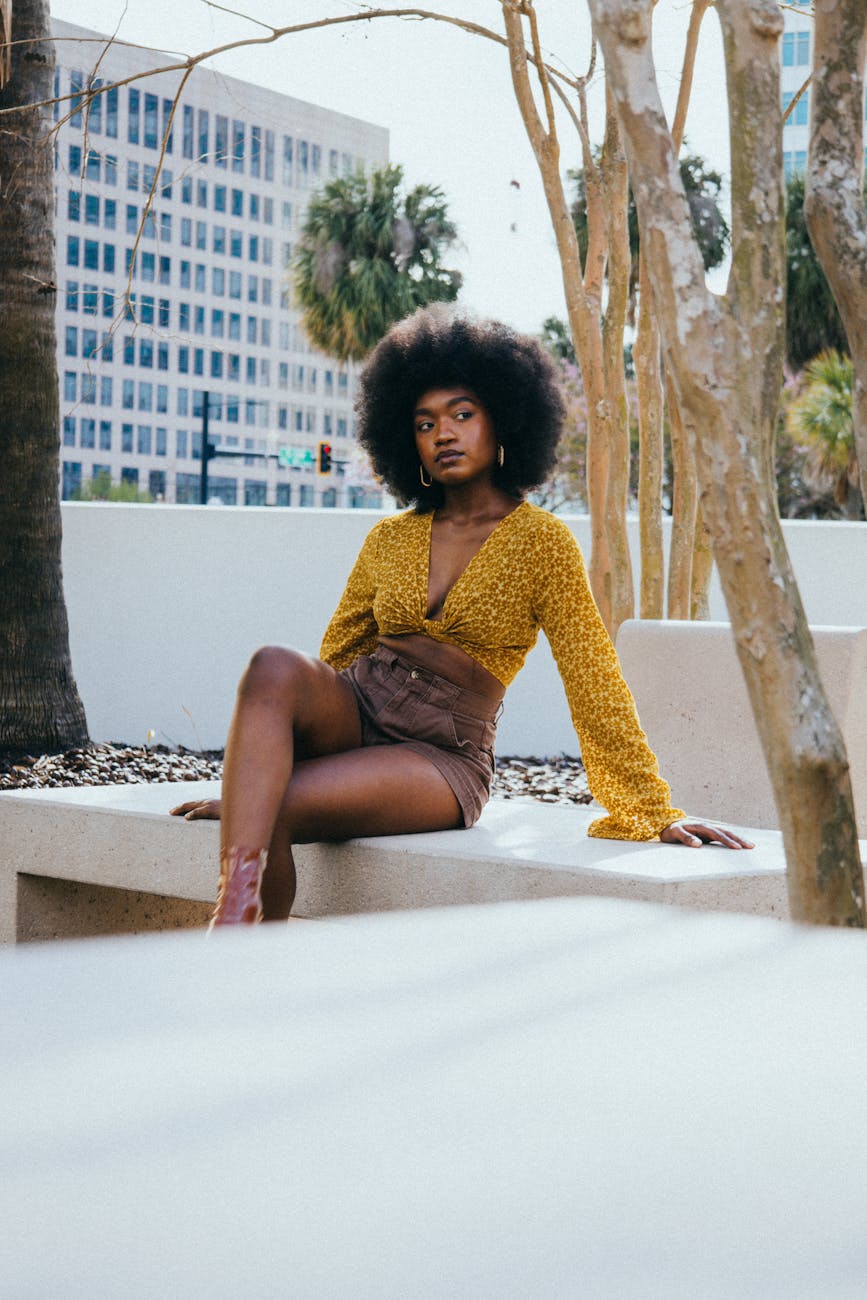
In a world saturated with curated images, filters, and imposed ideals, beauty is both celebrated and commodified. Yet, within this global obsession, Brown beauty often remains invisible. The “standard” of attractiveness that dominates mainstream media and cultural imagination has historically excluded the features, skin tones, and textures most associated with Brown and Black women. This invisibility is not simply accidental—it is the product of long-standing racial hierarchies and Eurocentric norms that dictate who is worthy of being seen, celebrated, and desired (Craig, 2002).
The invisibility of Brown beauty is rooted in colonial histories where lighter skin, straighter hair, and narrower facial features were elevated as superior. Generations of this conditioning continue to shape the implicit biases that determine who graces magazine covers, stars in leading film roles, or becomes the face of luxury brands. Even when Brown women are included, they are often tokenized, exoticized, or positioned in contrast to the so-called universal “standard,” rather than recognized as central to beauty itself (Russell, Wilson, & Hall, 1992).
Psychologically, invisibility produces profound effects. Young Brown girls who rarely see women with their skin tone or natural features represented in aspirational roles internalize a message of inadequacy. Social identity theory suggests that when one’s group is devalued, it negatively impacts self-esteem and belonging (Tajfel & Turner, 1986). The absence of representation silently whispers that Brown beauty is not enough, or worse, not beautiful at all.
Yet, the invisibility is not absolute. Icons like Lupita Nyong’o, Viola Davis, Issa Rae, and Kenya Moore have illuminated the richness of Brown beauty in ways that resist erasure. Their visibility challenges the monolithic standard by celebrating melanin, natural hair, and distinctly African features. Lupita Nyong’o, for example, has spoken openly about her childhood struggles with colorism, later reclaiming her image as a global symbol of elegance and strength. Her rise demonstrates the transformative power of visibility, not only for herself but for countless Brown girls who now see themselves reflected in spaces once closed to them (Nyong’o, 2014).
Media and marketing industries bear responsibility for either perpetuating invisibility or dismantling it. Campaigns that showcase the full spectrum of Brown beauty—from deep mahogany to warm café au lait complexions—have the power to disrupt the invisible standard. Brands like Fenty Beauty, with its inclusive foundation lines, prove that visibility is not just a cultural demand but also a profitable one. By centering Brown beauty rather than marginalizing it, industries can affirm that attractiveness exists in many shades, shapes, and styles.
Spiritually, invisibility becomes an even deeper conversation. Scripture affirms that worth and beauty are not measured by human standards but by divine creation. Genesis 1:27 (KJV) declares, “So God created man in his own image, in the image of God created he him; male and female created he them.” If all humanity reflects the Creator, then Brown beauty is not only visible—it is sacred. The invisibility imposed by society is, therefore, a distortion of truth, not a reflection of divine design.
Ultimately, the invisible standard thrives on silence. To counteract it, Brown women and their allies must continue to tell their stories, share their images, and challenge the hierarchies that erase them. When Brown beauty is seen, celebrated, and affirmed, the standard shifts from invisibility to inclusivity. It is not about replacing one beauty ideal with another but expanding the definition until it fully reflects the diversity of human expression.
References
Craig, M. L. (2002). Ain’t I a Beauty Queen?: Black Women, Beauty, and the Politics of Race. Oxford University Press.
Nyong’o, L. (2014, March). Lupita Nyong’o’s speech at the Essence Black Women in Hollywood Awards. Essence Magazine.
Russell, K., Wilson, M., & Hall, R. (1992). The Color Complex: The Politics of Skin Color among African Americans. Anchor Books.
Tajfel, H., & Turner, J. C. (1986). The social identity theory of intergroup behavior. In S. Worchel & W. G. Austin (Eds.), Psychology of Intergroup Relations (pp. 7–24). Nelson-Hall.
 THE BROWN GIRL DILEMMA