
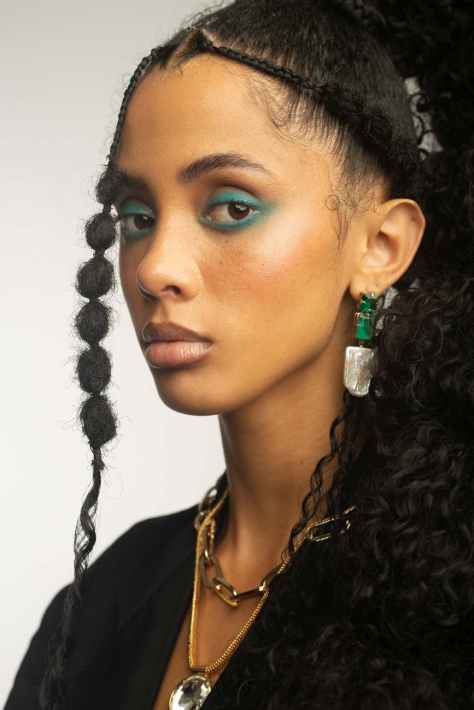
The term “colored girls” historically referred to Black women, often during eras of segregation and inequality. Though originally used as a label of exclusion, it has been reclaimed to celebrate the beauty, intellect, and resilience of women of African descent. The Bible affirms this dignity, saying, “I am black, but comely” (Song of Solomon 1:5, KJV). This declaration turns what society once treated as inferior into a statement of divine pride and purpose.
Black women have always been pillars of strength, intellect, and creativity. They have excelled in education, becoming one of the fastest-growing demographics in higher education enrollment (NCES, 2022). Proverbs 31:26 (KJV) perfectly describes this brilliance: “She openeth her mouth with wisdom; and in her tongue is the law of kindness.” From classrooms to boardrooms, colored girls are showing that their intelligence is as radiant as their physical beauty.
Psychologists argue that Black women’s determination is partly shaped by generations of survival under oppression. These challenges have forged a strong sense of identity and agency (Collins, 2000). Resilience, often called “the superwoman schema,” is both a blessing and a challenge — a source of strength but also a weight that requires rest and balance.
Culturally, the beauty of colored girls is celebrated worldwide. From our glowing melanin to our full lips, textured hair, and diverse body shapes, Black women are natural trendsetters. Global beauty markets have responded with bronzers, lip plumpers, and hairstyles inspired by Black women’s natural features. Psalm 139:14 (KJV) reminds us: “I will praise thee; for I am fearfully and wonderfully made.”
Psychology and science confirm why Black beauty is so striking. Facial symmetry, often associated with genetic health, is highly represented in African phenotypes (Little et al., 2011). Fuller lips, higher cheekbones, and wider-set eyes are viewed as youthful and attractive across cultures. Melanin provides natural photoprotection, slowing skin aging and giving Black women a radiant glow well into later life (Taylor, 2020). These biological features make colored girls admired around the globe.
This admiration has sometimes led to cultural appropriation, where others mimic the aesthetics of colored girls without acknowledging the history or struggles that come with them (Russell et al., 2013). Despite this, Black women continue to lead the way in music, fashion, art, and pop culture, influencing trends and shaping global beauty standards.
Examples abound of Black women who have shattered stereotypes. Michelle Obama, the first African American First Lady, is a symbol of grace, intelligence, and poise. Her advocacy for education, health, and empowerment of girls worldwide embodies the “brains” of colored girls. Her book Becoming became a bestseller, inspiring millions with her journey.
Maya Angelou is another powerful example. As a poet, writer, and activist, her work gave voice to generations of Black women. Her words “Still I rise” resonate with the resilience of colored girls everywhere. Her life demonstrates that beauty is not just physical but intellectual and spiritual.
In the realm of sports, Serena Williams exemplifies strength, discipline, and excellence. She not only dominated tennis but also challenged narrow definitions of femininity and beauty in athletics. Her journey shows that colored girls are multifaceted — strong competitors and nurturing mothers, unapologetically themselves.
Entertainment also celebrates the beauty and brains of colored girls. Viola Davis, an award-winning actress, uses her platform to tell authentic Black stories and advocate for diversity in Hollywood. Lupita Nyong’o, with her dark skin celebrated on magazine covers, shifted global beauty narratives and encouraged young Black girls to embrace their natural beauty.
Spiritual leadership is another area where Black women shine. Throughout history, they have been prayer warriors, deaconesses, and gospel singers who carried the church through trials. Their faith is not just for survival but for thriving. 1 Peter 3:3–4 (KJV) reminds us that true beauty is “the hidden man of the heart… even the ornament of a meek and quiet spirit.”
Psychologically, their strength has sometimes been romanticized as if they must always be strong. This expectation can lead to stress and emotional exhaustion. Mental health professionals now emphasize that Black women need safe spaces to rest and heal, reclaiming the right to be soft and cared for. Jesus’ words “Come unto me, all ye that labour and are heavy laden, and I will give you rest” (Matthew 11:28, KJV) remind them that strength also means knowing when to lay burdens down.
Globally, colored girls are admired not only for their beauty but also for their intellect and leadership. Nobel Prize winner Toni Morrison transformed literature by centering Black voices. Chimamanda Ngozi Adichie challenges global audiences to rethink feminism and identity through her books and speeches. These women embody beauty with depth and intellect that changes culture.
Even in STEM, women like Dr. Mae Jemison, the first Black woman in space, prove that colored girls literally reach for the stars. Their contributions remind the world that brains and beauty are not mutually exclusive — they coexist powerfully.
In everyday life, colored girls continue to set trends, educate communities, raise leaders, and stand on the frontlines of justice movements. They are the heartbeat of neighborhoods and the backbone of families, carrying forward legacies of survival and triumph.
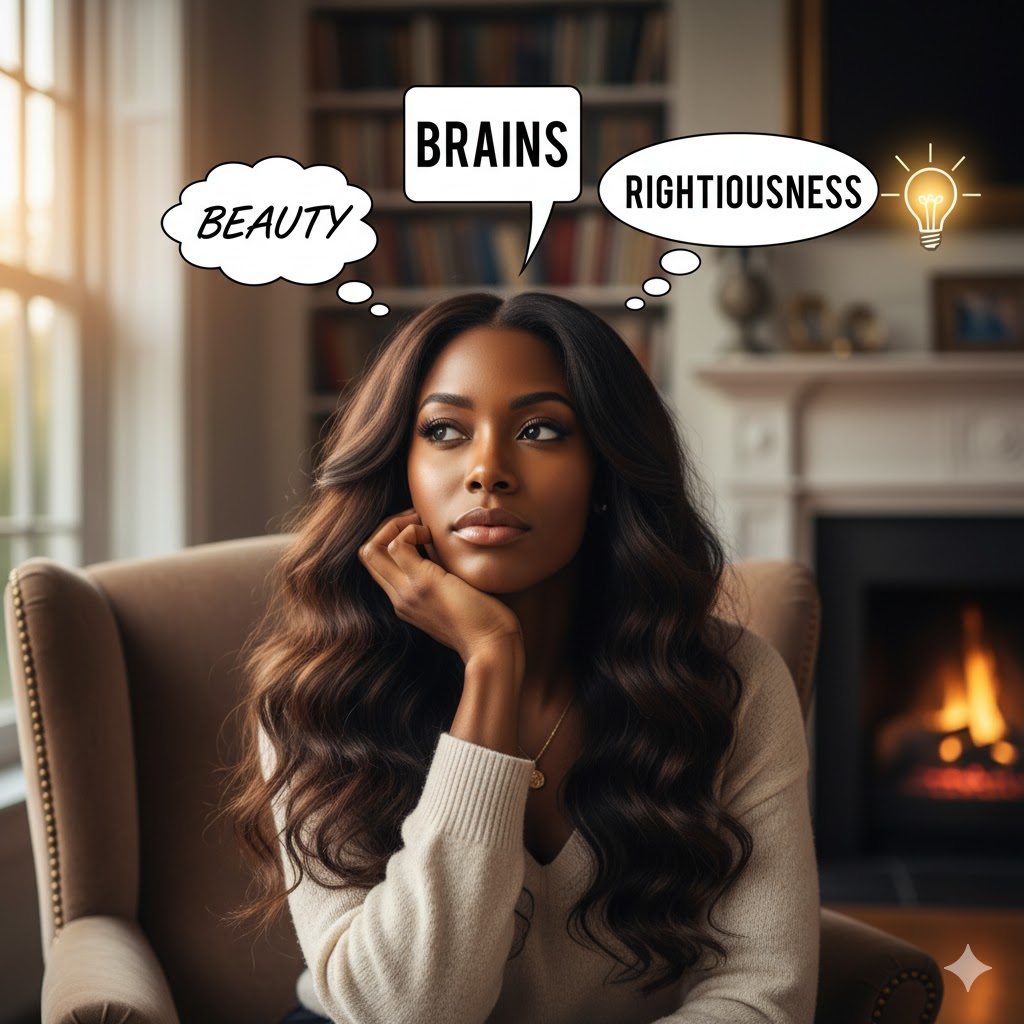
In conclusion, “colored girls” are indeed the beauty and the brains — fearfully and wonderfully made, leaders in intellect, trailblazers in culture, and examples of strength and faith. The world may try to imitate their features, but it can never duplicate the soul, resilience, and brilliance that define them.
References
- Collins, P. H. (2000). Black feminist thought: Knowledge, consciousness, and the politics of empowerment. Routledge.
- Little, A. C., Jones, B. C., & DeBruine, L. M. (2011). Facial attractiveness: Evolutionary based research. Philosophical Transactions of the Royal Society B: Biological Sciences, 366(1571), 1638–1659.
- National Center for Education Statistics (NCES). (2022). Status and trends in the education of racial and ethnic groups. U.S. Department of Education.
- Russell, K., Wilson, M., & Hall, R. (2013). The color complex: The politics of skin color among African Americans. Anchor Books.
- Taylor, S. (2020). Advances in understanding of skin of color. Journal of the American Academy of Dermatology, 82(1), 157–166.
- The Holy Bible, King James Version.
 THE BROWN GIRL DILEMMA