
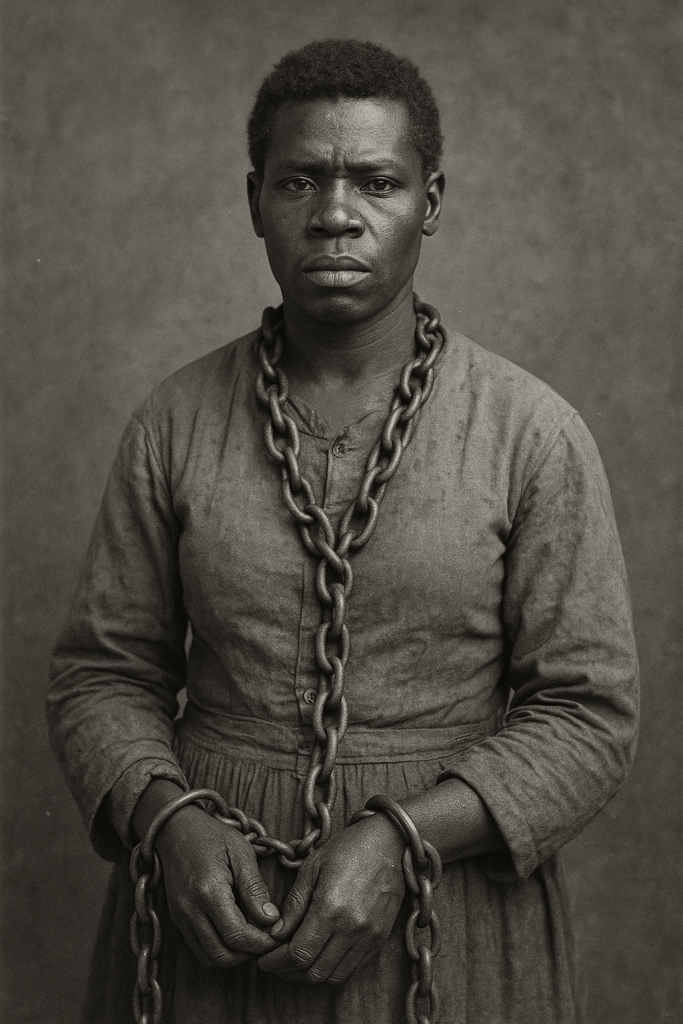
The history of enslavement in the Americas is not solely a chronicle of oppression; it is also a story of profound endurance, cultural preservation, and resistance. Enslaved Africans and their descendants, bound in chains yet spiritually unbroken, forged new identities and forms of resistance that shaped the very foundations of modern society. This narrative of duality—bondage and resilience—reveals the complexity of human survival under the most dehumanizing conditions.
The transatlantic slave trade, which forcibly displaced over twelve million Africans between the sixteenth and nineteenth centuries, created one of the largest forced migrations in human history (Eltis & Richardson, 2008). Those captured were often torn from diverse kingdoms and ethnic groups, such as the Yoruba, Igbo, Mandinka, and Akan. Despite this fragmentation, enslaved Africans carried with them spiritual, linguistic, and cultural frameworks that would influence the Americas in lasting ways.
In the United States, slavery was institutionalized through laws that defined Africans and their descendants as property rather than people. The legal codes of the colonies and early republic—such as the Virginia Slave Codes of 1705—reinforced racial hierarchies and legitimized brutal systems of control (Morgan, 1975). Yet within this system, enslaved individuals constructed subtle and overt forms of resistance that defied their oppressors.
The plantation system depended on both physical labor and psychological domination. Slaveholders employed violence, religious manipulation, and family separation to maintain control (Douglass, 1845). However, enslaved people continually subverted these systems by forming kinship networks, maintaining oral traditions, and practicing spiritual resistance through African-derived religions such as Hoodoo and Yoruba-based worship (Raboteau, 2004).
Women bore the unique burden of both racial and gendered oppression. Enslaved women were subject to forced breeding, sexual assault, and domestic servitude. Yet they also played central roles in community preservation and acts of resistance. Harriet Tubman’s life exemplifies this defiance—her daring rescues through the Underground Railroad earned her the title “Moses” among her people (Clinton, 2004).
Resistance took many forms beyond escape. Work slowdowns, sabotage, secret education, and coded communication in spirituals all functioned as acts of rebellion. Songs like “Follow the Drinking Gourd” carried dual meanings, blending Christian faith with directions for liberation (Levine, 1977). Through these acts, enslaved Africans reclaimed a sense of power within an oppressive system.
Revolts were the most visible expressions of resistance. The Stono Rebellion of 1739 in South Carolina, led by a group of Angolan slaves, marked one of the earliest large-scale uprisings in the British colonies (Wood, 1974). Later, the Haitian Revolution (1791–1804) became the most successful slave revolt in world history, resulting in the first Black republic. It demonstrated that the enslaved were not passive victims but active agents of freedom (James, 1963).
In the antebellum United States, figures such as Nat Turner (1831) and Gabriel Prosser (1800) led insurrections that challenged the myth of slave docility. Though brutally suppressed, these rebellions instilled fear among slaveholders and inspired subsequent generations to envision liberation (Greenberg, 2003). The courage displayed in these movements reflected the enduring belief that freedom was a divine right, not a privilege granted by man.
Intellectual resistance also played a key role. Enslaved individuals who learned to read and write used literacy as a weapon. Frederick Douglass, once an enslaved man, used the written word to dismantle pro-slavery ideology, declaring that “knowledge makes a man unfit to be a slave” (Douglass, 1845). His narrative remains a seminal text in both American literature and abolitionist history.
The preservation of African traditions within slavery reflected a deeper form of psychological survival. Despite attempts by slaveholders to erase their identities, enslaved Africans maintained rituals, music, and kinship practices that evolved into African American culture. Spirituals, call-and-response singing, and ring shouts became not only acts of worship but of cultural resistance (Herskovits, 1941).
Religion provided both solace and subversion. While some enslaved people adopted the Christianity of their oppressors, they reinterpreted biblical stories through the lens of liberation. The story of Exodus, in which God delivers Israel from Egyptian bondage, became a cornerstone of enslaved spirituality and an enduring metaphor for freedom (Raboteau, 2004).
The abolitionist movement was fueled by both white and Black activists, but the testimony of formerly enslaved individuals proved especially powerful. Sojourner Truth, Harriet Jacobs, and Olaudah Equiano used personal narrative to humanize the enslaved and expose the cruelty of the institution (Jacobs, 1861; Equiano, 1789). Their voices reframed public morality and influenced global anti-slavery campaigns.
During the Civil War, the Emancipation Proclamation of 1863 symbolized a legal end to slavery in rebelling states, yet true freedom remained elusive. Many freedpeople continued to labor under exploitative sharecropping systems and faced racial terror through groups like the Ku Klux Klan (Foner, 1988). Resistance, however, persisted through education, political organization, and migration.
The Reconstruction era represented a moment of both hope and betrayal. Freedmen’s schools, Black churches, and civic organizations emerged as symbols of autonomy. Leaders such as Frederick Douglass and Hiram Revels advocated for equality and political participation. Yet the rise of Jim Crow laws soon reimposed racial subjugation, demonstrating the ongoing struggle for true emancipation (Du Bois, 1935).
Throughout the African diaspora, the legacy of slavery fostered movements for self-determination and cultural revival. In the Caribbean and South America, Afro-descendant populations maintained African spiritual systems such as Santería, Candomblé, and Vodou—each a testament to cultural survival against assimilation (Mintz & Price, 1992).
Archaeological and genealogical research continues to recover the names and stories of the enslaved. Sites such as the African Burial Ground in New York City reveal the humanity of those once reduced to property. Their skeletal remains bear witness to both the brutality of slavery and the resilience of African identity (LaRoche & Blakey, 1997).
Enslaved artisans, musicians, and healers also contributed to the cultural and economic life of the Americas. From the rice fields of South Carolina to the architecture of New Orleans, African labor and creativity shaped entire societies. These contributions challenge the narrative of enslaved passivity and highlight the intellectual and cultural agency of the oppressed (Gomez, 1998).
Education became both a symbol and instrument of resistance. Even under threat of death, enslaved people taught one another to read using the Bible, scraps of newspapers, or memory. Literacy symbolized mental emancipation, anticipating the later struggles for civil rights and access to education (Cornelius, 1991).
The trauma of enslavement did not end with abolition. Generations of African Americans have inherited both the scars and the strength of their ancestors. The collective memory of slavery informs ongoing struggles against systemic racism, economic inequality, and cultural erasure (Alexander, 2010).
Artistic expression continues to be a powerful medium of remembrance and resistance. From the sorrow songs of the nineteenth century to the blues, jazz, and hip-hop of today, African-descended people have turned pain into power, creating new languages of identity and protest (Ellison, 1952).
Modern descendants of enslaved people are reclaiming narratives through genealogy, art, and scholarship. Projects such as The 1619 Project and the Slave Voyages Database have reframed global understandings of how slavery shaped modern economies, politics, and social hierarchies (Hannah-Jones, 2019; Eltis et al., 2008).
Monuments and memorials increasingly honor those who resisted slavery rather than those who upheld it. Statues of Harriet Tubman and Nat Turner now stand where once only Confederate icons were displayed. These transformations reflect a shift from glorifying domination to celebrating endurance and justice (Savage, 1997).
The rediscovery of figures like Anarcha Westcott—an enslaved woman subjected to medical experimentation—reveals the hidden dimensions of slavery’s legacy in science and ethics. Her story, and those like hers, illuminate how enslaved bodies were exploited even in the pursuit of “progress” (Washington, 2006).
African spirituality, family structure, and oral history became weapons of survival. Even in bondage, enslaved people found ways to name their children with ancestral meanings, preserving identity in the face of dehumanization (Holloway, 1990). Their cultural endurance represents a quiet revolution that reshaped the spiritual landscape of the Americas.
Resistance was not limited to grand revolts or famous figures—it was embedded in everyday acts: a whispered prayer, a hidden song, or a stolen moment of rest. Each small act of defiance represented a declaration of humanity within a system designed to erase it (White, 1999).
Today, the legacies of bondage and resilience coexist in the collective consciousness of the African diaspora. To remember the enslaved is to remember both suffering and victory—to acknowledge the strength that transcended captivity. Their stories remind us that freedom was not given; it was wrestled from the grip of history.
In the final analysis, the history of enslavement is not simply a story of chains, but of transcendence. Enslaved Africans turned oppression into endurance, silence into song, and despair into defiance. Bound by history yet unbroken in spirit, they transformed the meaning of freedom itself, leaving a legacy that continues to shape the modern world.
References
Alexander, M. (2010). The new Jim Crow: Mass incarceration in the age of colorblindness. The New Press.
Clinton, C. (2004). Harriet Tubman: The road to freedom. Little, Brown.
Cornelius, J. D. (1991). “When I can read my title clear”: Literacy, slavery, and religion in the antebellum South. University of South Carolina Press.
Douglass, F. (1845). Narrative of the life of Frederick Douglass, an American slave. Anti-Slavery Office.
Du Bois, W. E. B. (1935). Black Reconstruction in America, 1860–1880. Harcourt, Brace.
Eltis, D., & Richardson, D. (2008). Atlas of the transatlantic slave trade. Yale University Press.
Equiano, O. (1789). The interesting narrative of the life of Olaudah Equiano. London.
Foner, E. (1988). Reconstruction: America’s unfinished revolution, 1863–1877. Harper & Row.
Gomez, M. A. (1998). Exchanging our country marks: The transformation of African identities in the colonial and antebellum South. University of North Carolina Press.
Greenberg, K. S. (2003). Nat Turner: A slave rebellion in history and memory. Oxford University Press.
Hannah-Jones, N. (2019). The 1619 Project. The New York Times Magazine.
Herskovits, M. J. (1941). The myth of the Negro past. Harper & Brothers.
Holloway, J. E. (1990). Africanisms in American culture. Indiana University Press.
Jacobs, H. (1861). Incidents in the life of a slave girl. Thayer & Eldridge.
James, C. L. R. (1963). The Black Jacobins: Toussaint L’Ouverture and the San Domingo Revolution. Vintage.
LaRoche, C. J., & Blakey, M. L. (1997). Seizing intellectual power: The dialogue at the New York African Burial Ground. Historical Archaeology, 31(3), 84–106.
Levine, L. (1977). Black culture and Black consciousness: Afro-American folk thought from slavery to freedom. Oxford University Press.
Mintz, S. W., & Price, R. (1992). The birth of African-American culture: An anthropological perspective. Beacon Press.
Morgan, E. S. (1975). American slavery, American freedom: The ordeal of colonial Virginia. W.W. Norton.
Raboteau, A. J. (2004). Slave religion: The “invisible institution” in the antebellum South. Oxford University Press.
Savage, K. (1997). Standing soldiers, kneeling slaves: Race, war, and monument in nineteenth-century America. Princeton University Press.
Washington, H. A. (2006). Medical apartheid: The dark history of medical experimentation on Black Americans from colonial times to the present. Doubleday.
White, D. G. (1999). Ar’n’t I a woman? Female slaves in the plantation South. W.W. Norton.
Wood, P. H. (1974). Black majority: Negroes in colonial South Carolina from 1670 through the Stono Rebellion. W.W. Norton.
 THE BROWN GIRL DILEMMA