
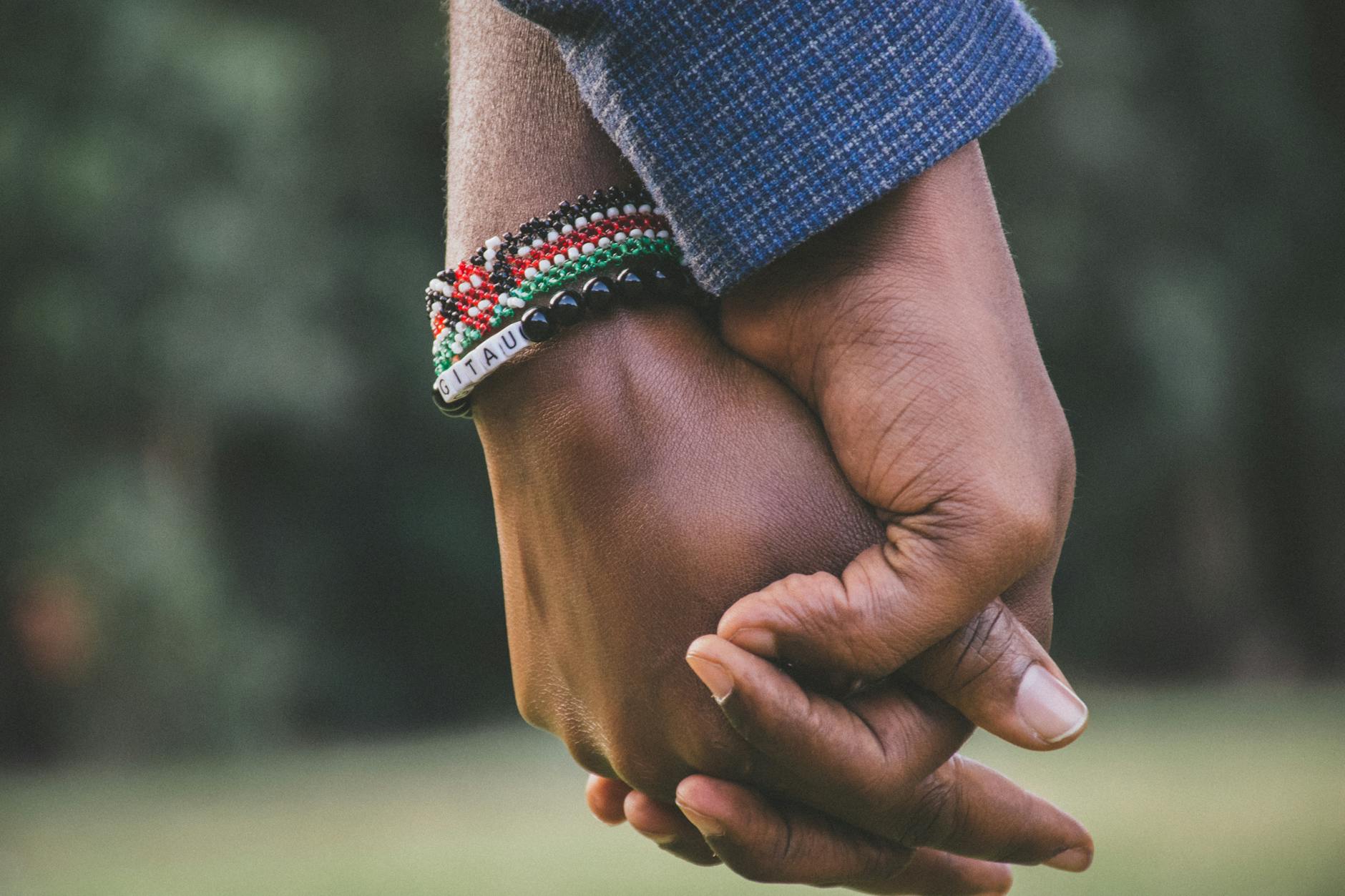
There was a time when the bond between Black men and Black women was sacred—a spiritual connection born of shared struggle and mutual survival. That love endured whips, chains, and systems designed to destroy it. Yet in the 21st century, something has shifted. The gap between Black men and Black women has widened—not only in relationships but in trust, understanding, and unity. To bridge this divide, we must return to the essence of who we are: divine reflections of one another, created not to compete, but to complete.
The fractures we see today are not natural; they are historical. During slavery, families were torn apart, and gender roles were deliberately distorted. Enslaved men were stripped of authority, while women were forced to become protectors in a world without protection. These traumas did not vanish with emancipation—they evolved. The seeds of mistrust planted in those centuries still bear fruit in modern relationships. Healing begins when we acknowledge that this division was orchestrated, not ordained.
In the aftermath of oppression, both Black men and women learned survival differently. Men often internalized stoicism, strength, and pride as their armor. Women carried resilience, independence, and emotional labor as theirs. These traits, though admirable, can clash when survival becomes competition. The challenge is to transform survival into synergy—learning to stand together instead of standing apart.
Media narratives have deepened this divide. The strong Black woman is portrayed as unyielding, and the Black man as either absent or inadequate. These depictions erode intimacy and reinforce stereotypes that pit us against one another. Bridging the gap requires dismantling these lies and telling our own stories—stories of love, leadership, and partnership that reflect truth rather than trauma.
Spiritually, we must remember that the first covenant between man and woman came from God, not society. “And the LORD God said, It is not good that the man should be alone; I will make him an help meet for him” (Genesis 2:18, KJV). The divine blueprint was never adversarial—it was complementary. Black men and women must return to this sacred design, understanding that our differences are not weapons but gifts meant to balance creation.
Economically, division weakens us. A fractured household means fractured wealth, fractured legacy, and fractured community. When Black men and women unite in financial vision and discipline, they rebuild the foundations of prosperity that systemic inequality has long denied. Love is not only emotional—it is also economic warfare against generational poverty.
Psychologically, bridging the gap requires healing from internalized wounds. Black men must confront the pain of emasculation, abandonment, and unmet emotional needs. Black women must release the burden of over-functioning and reclaim the freedom to be soft without fear of exploitation. Healing is not a gendered task—it is a collective responsibility.
Communication is the bridge between understanding and unity. Too often, we speak at each other instead of to each other. Thriving Black love demands emotional literacy—the courage to express needs without shame and to listen without judgment. In this space, honesty becomes healing, and empathy becomes power.
Forgiveness must also take center stage. Centuries of division cannot be undone without mercy. Black women must forgive the wounds inflicted by absent fathers and broken promises. Black men must forgive the mistrust born from survivalism and pain. Only then can love flow freely without the chains of resentment.
Faith provides the framework for rebuilding. When God is at the center, love becomes covenant, not chaos. Ephesians 5:25 reminds, “Husbands, love your wives, even as Christ also loved the church.” And Proverbs 31:11 declares, “The heart of her husband doth safely trust in her.” In this divine order, mutual honor replaces competition. It is through obedience to God’s design that reconciliation begins.
Bridging the gap also requires re-education. The next generation must see love modeled, not just preached. They must witness men leading with humility and women submitting with strength—not out of control, but out of covenant. When our children grow up seeing harmony instead of hostility, they inherit the vision of unity we once lost.
Community accountability plays a crucial role. Our music, media, and conversations must reflect restoration rather than rivalry. The glorification of hyper-individualism and toxic independence has bred division. We must celebrate interdependence—the power of “we” over “me.” True progress is collective.
Historically, movements like the Civil Rights era thrived because of unity between Black men and women. Coretta Scott King, Fannie Lou Hamer, Malcolm X, and Martin Luther King Jr. modeled what partnership looked like under pressure. Their shared mission produced progress because love was not merely romantic—it was revolutionary.
Culturally, we must redefine beauty and masculinity within our context. The world teaches Black women to idolize Eurocentric standards and Black men to suppress emotion. Bridging the gap requires affirming each other as divine reflections of God’s image—where dark skin, natural hair, and Black strength are celebrated, not criticized.
Emotionally, thriving relationships demand patience. We must unlearn the urgency of temporary pleasure and relearn the endurance of covenant love. It takes time to rebuild trust that centuries have broken. But every conversation, every act of kindness, every prayer whispered together is a stone laid in the bridge toward wholeness.
Socially, we must also protect our unions from the systems that profit from our disunity. Mass incarceration, poverty, and gender warfare are tools of control. When we love intentionally, we disrupt those systems. Every healthy Black relationship becomes a protest against oppression and a prophecy of restoration.
Theologically, our reconciliation mirrors God’s redemptive love. Just as Christ reconciled humanity to Himself through grace, so must we reconcile to one another through humility. Love is not about dominance—it is about divine reflection. The Black man and woman together reveal the full spectrum of God’s creative power.
Ultimately, bridging the gap is not about returning to the past—it is about building a future. It is about transforming our pain into purpose, our competition into cooperation, and our division into destiny. It is the work of generations, but it begins with two people who choose to try again.
The future of us depends on our ability to love beyond our wounds. When the Black man sees the Black woman not as his adversary but as his ally, and when the Black woman sees the Black man not as her threat but as her protector, the restoration of Eden begins anew. The gap narrows, the bridge forms, and together—we rise.
References
- The Holy Bible, King James Version (Genesis 2:18; Ephesians 5:25; Proverbs 31:11).
- hooks, b. (2004). We Real Cool: Black Men and Masculinity. Routledge.
- Baldwin, J. (1962). The Fire Next Time. Dial Press.
- Akbar, N. (1996). Know Thyself. Mind Productions.
- Hill Collins, P. (2000). Black Feminist Thought. Routledge.
- Boyd-Franklin, N. (2003). Black Families in Therapy. Guilford Press.
- West, C. (1993). Race Matters. Beacon Press.
- Davis, A. (1981). Women, Race, & Class. Random House.
 THE BROWN GIRL DILEMMA