
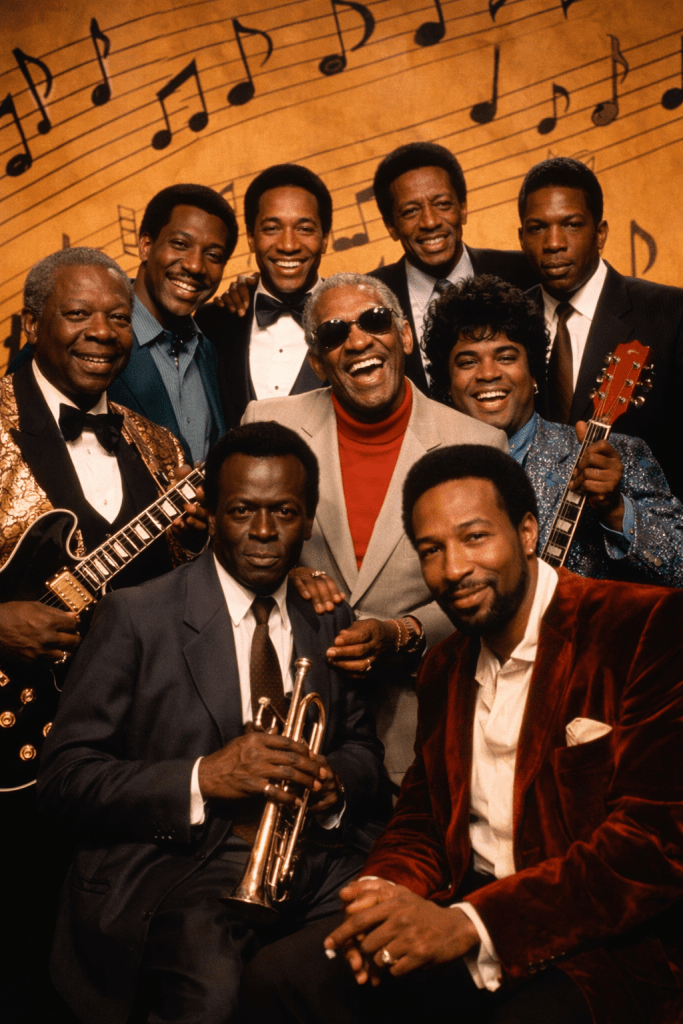
African American music is one of the richest contributions to global culture, shaping the soundscape of the modern world. Jazz, soul, and blues are not merely genres—they are historical chronicles of struggle, triumph, and creative ingenuity. Each arose from the African American experience, reflecting emotions, storytelling, and cultural resilience in the face of oppression. These genres have influenced each other profoundly, giving birth to rhythm and blues (R&B) and ultimately shaping popular music across the 20th and 21st centuries.
Blues music, often called the foundation of modern Black music, emerged in the late 19th and early 20th centuries in the Deep South. Rooted in African spirituals, work songs, and field hollers, the blues expressed the pain, resilience, and hope of formerly enslaved people. Instruments such as the guitar, piano, and harmonica became staples of the genre. Pioneering artists like Bessie Smith and Robert Johnson defined early blues, using emotive vocal techniques and twelve-bar structures that would influence generations.
Jazz, born in New Orleans around the early 1900s, blended African rhythms, European harmonics, and improvisational techniques. It was first popularized in brothels, dance halls, and clubs, creating a distinct urban culture. Iconic artists like Louis Armstrong, Duke Ellington, and Ella Fitzgerald transformed jazz into both a popular entertainment form and an artistic statement. Jazz’s improvisational nature, complex harmonies, and syncopated rhythms made it a revolutionary form of musical expression.
Soul music emerged in the 1950s and 1960s as an extension of gospel and rhythm and blues traditions. Soul fused emotional gospel singing with secular themes, creating music that was both spiritually powerful and deeply relatable. Artists like Otis Redding, Aretha Franklin, and Sam Cooke became voices of a generation, merging personal expression with social commentary during the Civil Rights era. Soul music emphasized vocal intensity, call-and-response patterns, and lyrical storytelling that spoke to everyday struggles and joys.
Rhythm and blues, commonly known as R&B, developed in the 1940s as a hybrid of jazz, blues, and gospel. This genre introduced strong backbeats, danceable rhythms, and smooth vocal harmonies that would later influence rock and pop music. Artists such as Jeffrey Osborne helped popularize R&B in the late 1970s and 1980s, building on the traditions established by earlier performers like Ray Charles and Ruth Brown. R&B bridged the gap between blues, jazz, and contemporary soul, making African American music accessible to mainstream audiences while retaining its cultural essence.
All three genres—blues, jazz, and soul—share common threads. They are deeply rooted in African musical traditions, emphasizing improvisation, rhythm, and emotional storytelling. They reflect the collective African American experience, using music as a tool to narrate personal and communal struggles. The interplay of call-and-response, improvisation, and emotional intensity creates a continuum that links early field songs to modern R&B and hip-hop.
The historical impact of these genres is monumental. Jazz broke racial barriers in performance spaces and recording studios, giving African American musicians international acclaim. Blues provided a raw emotional outlet during eras of severe oppression and economic hardship. Soul became a voice of empowerment during the Civil Rights movement, connecting music with social change and identity. Together, they laid the foundation for future musical innovation across all genres.
Notable jazz artists include Charlie Parker, Miles Davis, Thelonious Monk, and John Coltrane. Their improvisational brilliance, technical mastery, and innovative approaches to melody and harmony defined jazz as an art form and influenced countless musicians across genres.
Blues innovators include Muddy Waters, B.B. King, and Etta James. These artists refined the twelve-bar blues, expressive vocal phrasing, and guitar techniques that remain central to modern music.
Soul music pioneers like Marvin Gaye, Curtis Mayfield, and Gladys Knight showcased the intersection of spiritual intensity and secular themes, bridging church traditions with contemporary musical expression. Their work also informed the development of funk and disco.
R&B evolved further with artists such as Luther Vandross, Teddy Pendergrass, and Jeffrey Osborne, who infused modern production techniques while retaining emotional depth and vocal virtuosity. Their success in the 1970s and 1980s solidified R&B as a mainstream genre with mass appeal.
The interconnections between these genres are undeniable. Jazz improvisation influenced soul phrasing. Blues chord structures informed R&B songwriting. Gospel-inspired call-and-response techniques permeated all three styles. These shared elements demonstrate the continuity of African American musical innovation across decades.
Each genre also shaped dance, fashion, and social culture. From jazz clubs in New York and Chicago to soul concerts and R&B television performances, music became a catalyst for social gatherings, identity expression, and community solidarity. Television programs like Soul Train highlighted this evolution by showcasing Black artistry to national audiences.
Jazz
- Louis Armstrong – Trumpeter, singer, and bandleader; a pioneer of solo improvisation.
- Duke Ellington – Composer and bandleader known for sophisticated orchestration.
- Charlie Parker – Bebop innovator and saxophone virtuoso.
- Miles Davis – Revolutionary in cool jazz, modal jazz, and fusion.
- John Coltrane – Innovator in improvisation and modal jazz.
- Thelonious Monk – Composer known for unique harmonic and rhythmic style.
- Ella Fitzgerald – “First Lady of Song,” famous for scat singing and vocal improvisation.
Blues
- B.B. King – Guitar legend and emotive vocalist.
- Muddy Waters – Father of modern Chicago blues.
- Robert Johnson – Delta blues pioneer whose guitar work inspired rock and blues.
- Etta James – Soulful voice blending blues, R&B, and jazz.
- Bessie Smith – Empress of the Blues, iconic early 20th-century vocalist.
Soul
- Otis Redding – Iconic voice of Southern soul and heartfelt ballads.
- Aretha Franklin – “Queen of Soul,” blending gospel with R&B.
- Sam Cooke – Smooth vocals and socially conscious lyrics.
- Marvin Gaye – Social commentary and romantic themes in Motown soul.
- Curtis Mayfield – Political soul and funk pioneer.
- Gladys Knight – Powerful voice and emotive performances.
Rhythm & Blues (R&B)
- Jeffrey Osborne – 1980s R&B crooner with hits like On the Wings of Love.
- Luther Vandross – Smooth vocals, ballads, and love songs.
- Teddy Pendergrass – Soulful, romantic style that bridged soul and R&B.
- Ray Charles – Fused gospel, jazz, blues, and R&B, innovating soul music.
- Ruth Brown – Early R&B pioneer, sometimes called “Miss Rhythm.”
Technological advancements, including radio, recording studios, and later television, helped spread jazz, blues, and soul to broader audiences. The migration of African Americans to northern urban centers during the Great Migration brought regional musical styles into contact, facilitating fusion and innovation.
The legacy of these genres continues today. Contemporary R&B, neo-soul, jazz fusion, and blues-rock all trace their roots to the pioneering artists of the 20th century. Musicians still draw inspiration from the improvisational freedom, emotional depth, and rhythmic complexity of early jazz, blues, and soul.
In summary, jazz, soul, and blues reflect the historical and cultural journey of African Americans. They document pain, resilience, love, and joy. The emergence of R&B and contemporary music owes a debt to these foundations, as seen in the works of artists like Jeffrey Osborne and Otis Redding. Together, they embody a musical continuum that celebrates creativity, identity, and the enduring power of Black culture.
References
Gioia, T. (2011). The History of Jazz (2nd ed.). Oxford University Press.
Ward, B., & Burns, K. (2000). Jazz: A History of America’s Music. Knopf.
Evans, D. (2010). Blues: The Basics. Routledge.
George, N. (1988). The Death of Rhythm and Blues. Pantheon Books.
Werner, C. (2006). A Change is Gonna Come: Music, Race, and the Soul of America. University of Michigan Press.
Smithsonian National Museum of African American History and Culture. (n.d.). Jazz, Blues, and Soul Collections.
AllMusic. (n.d.). Artist biographies for Jeffrey Osborne, Otis Redding, Louis Armstrong, and other key figures.
 THE BROWN GIRL DILEMMA