Tag Archives: Author

DOUBLE BOOK REVIEW: Black Skin, White Masks & The Wretched of the Earth by Frantz Fanon.

Frantz Fanon: The Revolutionary Mind of Black Liberation
Featuring Reviews of Black Skin, White Masks and The Wretched of the Earth


Who Was Frantz Fanon? Biography & Nationality
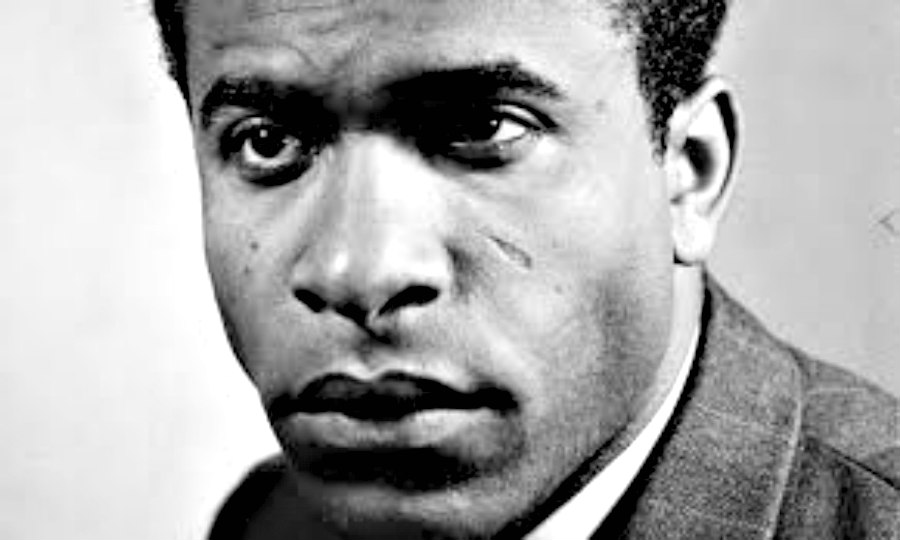
Frantz Omar Fanon was born on July 20, 1925, in Fort-de-France, Martinique, a French colony in the Caribbean. He was a Black psychiatrist, writer, revolutionary theorist, and anti-colonial activist. Fanon was of French nationality, since Martinique was a French territory, but he fiercely rejected colonial identity and became one of the most radical critics of French imperialism.

He grew up speaking French and was educated in the French system, but his experience as a Black man in a white-dominated society led him to reject colonial assimilation and instead advocate for African liberation.


His Marriage and Personal Life

Fanon married Josie (Marie-Josephe) Dublé, a white Frenchwoman, who was a nurse. This marriage sparked controversy, as Fanon wrote passionately against white colonialism and the psychological effects of internalized whiteness among Black people. Yet, he also saw personal relationships as complex and never viewed love solely through political binaries.

They had one son, Olivier Fanon.


His Language and Writing

Fanon wrote in French, and both of his major works have been translated into many languages, including English, Spanish, Arabic, and Portuguese, making his ideas accessible to freedom fighters and intellectuals around the world.


Life in Martinique and France: The Formation of a Revolutionary

Growing up in Martinique, Fanon was considered part of the Black middle class. However, he became deeply disillusioned with the racism of the French colonial structure, even in his homeland. He witnessed colorism, elitism, and a system that trained Black people to idolize whiteness.

He later moved to France to study psychiatry. As a young man, he fought in World War II for the Free French forces, believing in liberty and equality. But upon returning, he was met with the same anti-Black racism, even by those who had called him a fellow soldier. This double betrayal pushed him to rethink everything about colonialism, identity, and liberation.


Fanon wasn’t just a theorist; he joined the Algerian Revolution against French colonial rule, working as a psychiatrist and strategist for the National Liberation Front (FLN) in Algeria.

He treated Algerian fighters traumatized by war, and he exposed the use of torture by the French. His writings were not abstract—they were tools of war. The French authorities expelled him from Algeria for his radicalism, and he spent his remaining years helping liberation movements across Africa, including in Ghana and the Congo.
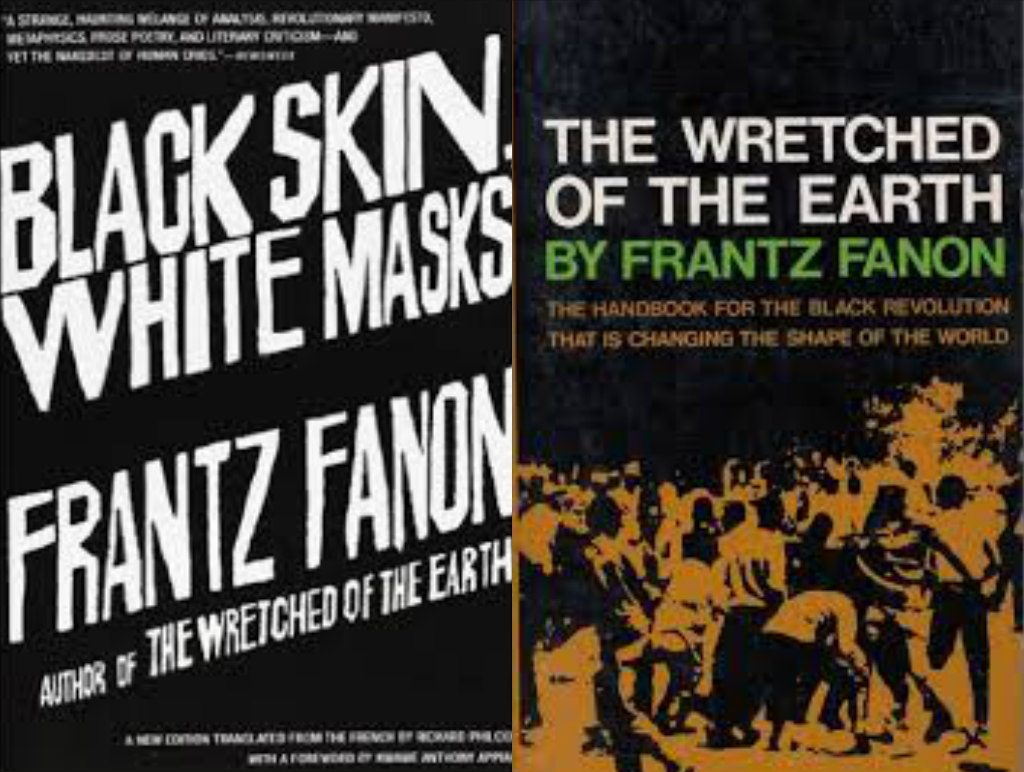

📘 Book Review: Black Skin, White Masks

⭐️⭐️⭐️⭐️⭐️

Published: 1952

Language: French (translated to English by Charles Lam Markmann)

Original Title: Peau Noire, Masques Blancs

This book is a psychological and philosophical dissection of what it means to be Black in a world built on white supremacy. Fanon dives deep into the Black psyche under colonialism, examining how racism shapes identity, self-worth, language, and love.

Key Messages and Themes:

  1. The Inferiority Complex of the Colonized:
    Black people, especially those educated in white systems, are taught to hate themselves and to wear “white masks” to be accepted.
  2. Language as a Tool of Oppression:
    Speaking French “well” became a way to be seen as civilized, but Fanon argued that this was a linguistic betrayal of self.
  3. Desire for Whiteness:
    Fanon was critical of Black men who sought white women to gain status, and Black women who rejected their own features for European beauty standards.
  4. Racism as a Mental Illness:
    He saw racism not just as social injustice but as a psychiatric condition—both for the oppressed and the oppressors.

“The Black man has no resistance against the white man’s culture. He becomes a mimic man.”
—Frantz Fanon, Black Skin, White Masks

🔥 Impact on the Black Psyche

The book shattered illusions. It revealed how colonialism invaded the mind, creating identity crises and self-hatred. It gave Black people language to understand their trauma and tools to decolonize the self.


📕 Book Review: The Wretched of the Earth

⭐️⭐️⭐️⭐️⭐️

Published: 1961 (just before his death from leukemia at age 36)

Translated by: Constance Farrington

Original Language: French

Introduction by: Jean-Paul Sartre

This is Fanon’s revolutionary manual, a blistering indictment of colonial violence and a blueprint for third-world liberation. Written from the frontlines of the Algerian War, it calls for armed struggle, psychological liberation, and national consciousness.

Key Messages and Chapters:

  1. “Violence is cleansing.”
    Fanon controversially argues that for the colonized to reclaim their dignity, violence is inevitable and purifying. It is how the oppressed reclaim agency.
  2. Mental Illness as a Colonial Weapon
    Fanon documents how colonial trauma causes paranoia, psychosis, and inferiority, especially among youth and fighters.
  3. Revolution Must Go Beyond Nationalism
    Independence is not enough. True liberation must dismantle capitalism, Western models of power, and Eurocentric values.
  4. Warning to Post-Colonial Elites
    Fanon criticized new African leaders who replaced white rulers but served the same Western interests, failing to uplift the masses.

“The colonized can see right away if decolonization is taking place or not. The minimum demand is for the colonized to govern their own country.”
—Frantz Fanon, The Wretched of the Earth


Why Was Fanon Revolutionary?

At a time when France still claimed moral superiority, Fanon exposed the brutality of its empire, tearing down illusions of liberal democracy. His insistence on psychological freedom, militant resistance, and cultural pride made him a hero to Black radicals and a threat to white colonial powers.


How Were Black People Seen in His Time?

In France and its colonies, Black people were exoticized, infantilized, and oppressed. They were taught that whiteness was superior, and “becoming French” was their highest goal. Fanon rejected this with rage and clarity.


Did His Light Skin Give Him Privilege?

Fanon was of mixed ancestry, and his relatively light skin may have given him closer access to French intellectual circles, but he rejected any identity built on proximity to whiteness. He used his position to amplify the pain and resistance of the oppressed, never to benefit personally.

His “je ne sais quoi” was not his skin—it was his brilliance, passion, and fearlessness.


What Was His Impact on Black People Worldwide?

Fanon inspired:

  • The Black Panther Party
  • South African anti-apartheid fighters
  • Caribbean and African revolutions
  • Black Lives Matter and global liberation movements
  • Scholars like bell hooks, Ngũgĩ wa Thiong’o, Angela Davis, and Malcolm X

His writings gave language to the rage and hope of colonized people and continue to empower those fighting white supremacy.


💡 Core Messages of Both Books

  • Colonialism is not just political—it is psychological.
  • Racism creates internalized hatred that must be unlearned.
  • Liberation requires both mental and physical decolonization.
  • Black identity must be rebuilt on truth, history, and cultural pride.
  • Freedom is not given—it must be seized.

Conclusion: The Fire That Still Burns

Frantz Fanon lived only 36 years, but he changed the world. He exposed the invisible chains in the Black mind and gave us tools to break them. His books are not just texts—they are weapons.

“Each generation must, out of relative obscurity, discover its mission, fulfill it, or betray it.”
—Frantz Fanon

Fanon fulfilled his mission. The question now is—will we fulfill ours?
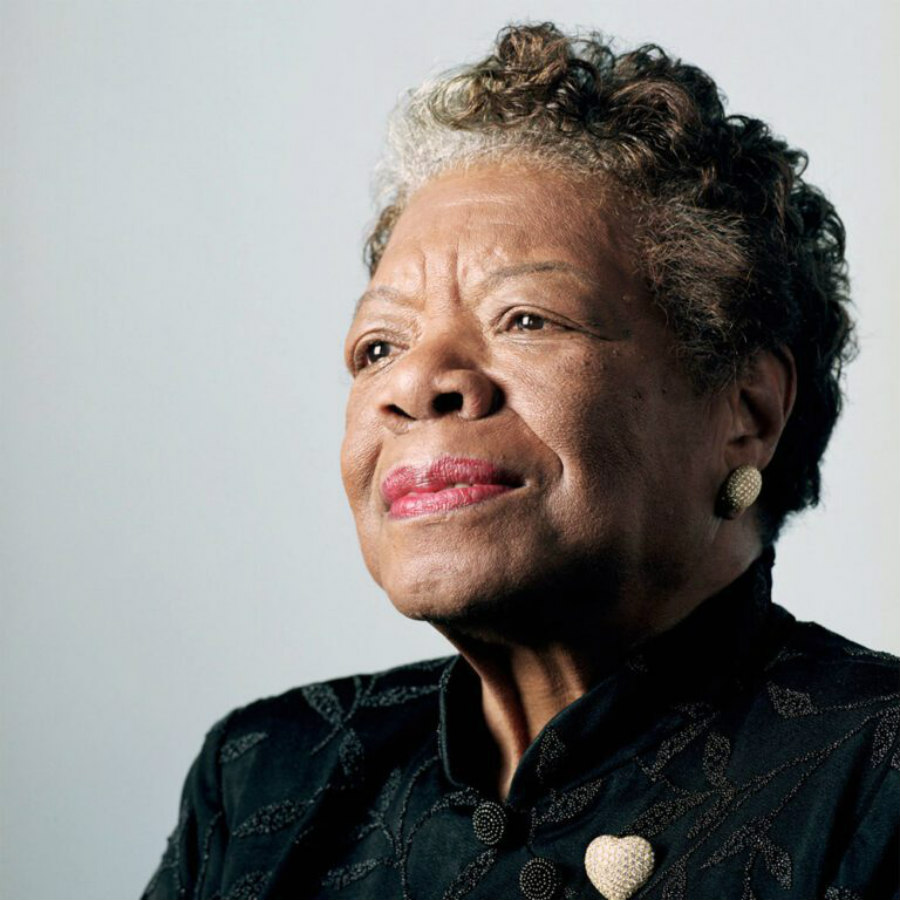
AUTHOR SPOTLIGHT: Maya Angelou

Maya Angelou: A Caged Bird Who Soared—The Voice, The Vision, The Victory of a Phenomenal Woman

This photograph is the property of its respective owner. No infringement intended.

Few figures in American history have embodied the spirit of resilience, eloquence, and cultural pride quite like the late great, Dr. Maya Angelou. Born Marguerite Annie Johnson on April 4, 1928, in St. Louis, Missouri, she emerged as one of the most influential poets, memoirists, performers, and activists of the 20th and 21st centuries. Her life’s work defied categorization, transcending literature and the arts to become a moral and cultural compass for Black America and the world.

Angelou’s early life was marked by trauma and hardship. After her parents’ divorce, she was sent to live with her grandmother in the deeply segregated town of Stamps, Arkansas. At the age of eight, she was sexually abused by her mother’s boyfriend. Following this traumatic experience, Angelou stopped speaking for nearly five years. It was during this long silence that her love for literature was born. The works of Black writers like Paul Laurence Dunbar and Langston Hughes became her refuge, and words—though unspoken—became her means of survival. Later in life, she famously declared, “There is no greater agony than bearing an untold story inside you” (I Know Why the Caged Bird Sings, 1969). This became the heartbeat of her writing.

Her literary debut, I Know Why the Caged Bird Sings, is widely considered a cornerstone of American memoir. Published in 1969, it recounts her youth marked by racism, trauma, and transformation. It was one of the first widely read autobiographies by a Black woman that dealt openly with sexual violence, racial oppression, and personal rebirth. Angelou’s voice was raw yet refined—she did not write to entertain, but to liberate. For Black Americans, particularly Black women, her story was a mirror and a map: a reflection of their pain, and a guide to their power.

While Angelou’s literary career was monumental, her 1978 poem Phenomenal Woman cemented her as a cultural icon. Written in a time when Eurocentric beauty standards dominated media and society, the poem was a defiant love letter to Black femininity and natural confidence. It celebrated the curves, poise, rhythm, and strength of women whose beauty could not be defined by magazine covers. She wrote:

“It’s in the reach of my arms,
The span of my hips,
The stride of my step,
The curl of my lips.
I’m a woman
Phenomenally.”

With this work, Angelou redefined beauty—not as something adorned, but as something lived. The poem resonated deeply with women of all backgrounds and became a rallying cry for body positivity and self-respect. She wrote not for applause but for affirmation—of identity, dignity, and womanhood.

Throughout her career, Maya Angelou received numerous accolades. She was awarded more than 50 honorary degrees, three Grammy Awards for her spoken-word albums, and was nominated for Tony and Emmy Awards for her acting and screenwriting. Her literary work was complemented by her activism; she worked alongside Dr. Martin Luther King Jr. and Malcolm X, and was deeply involved in Pan-Africanist movements during her time living abroad in Ghana and Egypt. In 1993, she recited her poem On the Pulse of Morning at President Bill Clinton’s inauguration, becoming the second poet in U.S. history to be so honored. Later, in 2011, President Barack Obama awarded her the Presidential Medal of Freedom, the highest civilian honor in the nation.

Angelou’s personal life was as layered as her professional one. She was married briefly to Tosh Angelos, a Greek sailor, though the marriage ended in divorce. She adopted “Angelou,” a variation of her birth and married names, as her stage name. She had one son, Guy Johnson, whom she gave birth to at the age of seventeen. Her devotion to him was unwavering, and he often spoke of her strength, describing her as “the greatest woman I’ve ever known.” Her fierce independence and sacrifices as a single mother gave depth to her understanding of womanhood and motherhood, which often permeated her writing.

Despite her fame, Angelou remained deeply connected to her roots and committed to uplifting her community. Her influence reached far beyond the literary world. She appeared in films such as Roots (1977), Poetic Justice (1993), and How to Make an American Quilt (1995), and directed Down in the Delta (1998), a poignant film about healing and generational restoration. She was a frequent guest on television, notably with Oprah Winfrey, and her impact on popular culture spanned generations. Her words were sampled in music, quoted in speeches, and recited at women’s empowerment events across the globe.

Angelou was revered in the Black community as a truth-teller, a mother figure, and a living ancestor. While some white institutions initially resisted her unapologetic Blackness, she eventually won universal acclaim. Yet she never sought white validation. She understood that her work was rooted in telling the Black truth—and that truth had the power to shake systems and heal souls.

Her poem Phenomenal Woman continues to be a timeless ode to self-worth. When asked about the inspiration behind it, Angelou explained that she wanted to give women permission to be proud of their presence, not just their appearance. She wrote:

“Now you understand
Just why my head’s not bowed.
I don’t shout or jump about
Or have to talk real loud.
When you see me passing,
It ought to make you proud.”

The poem’s resonance was not only literary but deeply personal to women who had been told to shrink themselves. Angelou’s command was simple: be big, be bold, be phenomenal.

She also had personal pleasures—she loved gumbo, Southern cuisine, jazz music, gardening, and Shakespeare. These interests grounded her as a woman of both intellect and heart, rooted in heritage but always reaching for something transcendent.

When asked about her inspiration, Angelou always pointed back to her childhood silence. It was her muteness, paradoxically, that gave her voice such force. Writing became her resurrection. As Pearl Bailey, her dear friend and fellow performer, once said: “She’s more than a writer. She’s a spirit. A thunderous force of truth wrapped in grace.”

After Angelou’s passing in 2014, her son Guy Johnson reflected on her legacy with reverence, saying: “My mother lived a life of deep honesty, and in doing so, she gave millions permission to tell their own truths.”

Maya Angelou was not merely a woman of letters—she was a woman of legacy. Her work endures not because she conformed, but because she dared to live—and write—the truth. She was, and remains, a phenomenal woman in every sense. Her voice still sings, still soars, reminding generations that even a caged bird can rise and touch the heavens.


References

Angelou, M. (1969). I Know Why the Caged Bird Sings. Random House.
Angelou, M. (1995). Phenomenal Woman: Four Poems Celebrating Women. Random House.
Obama, B. (2011). Presidential Medal of Freedom Recipients. The White House Archives.
Johnson, G. (2014). Interview on the legacy of Maya Angelou. National Public Radio (NPR).
Bailey, P. (1985). Reflections on Maya Angelou. Ebony Magazine.

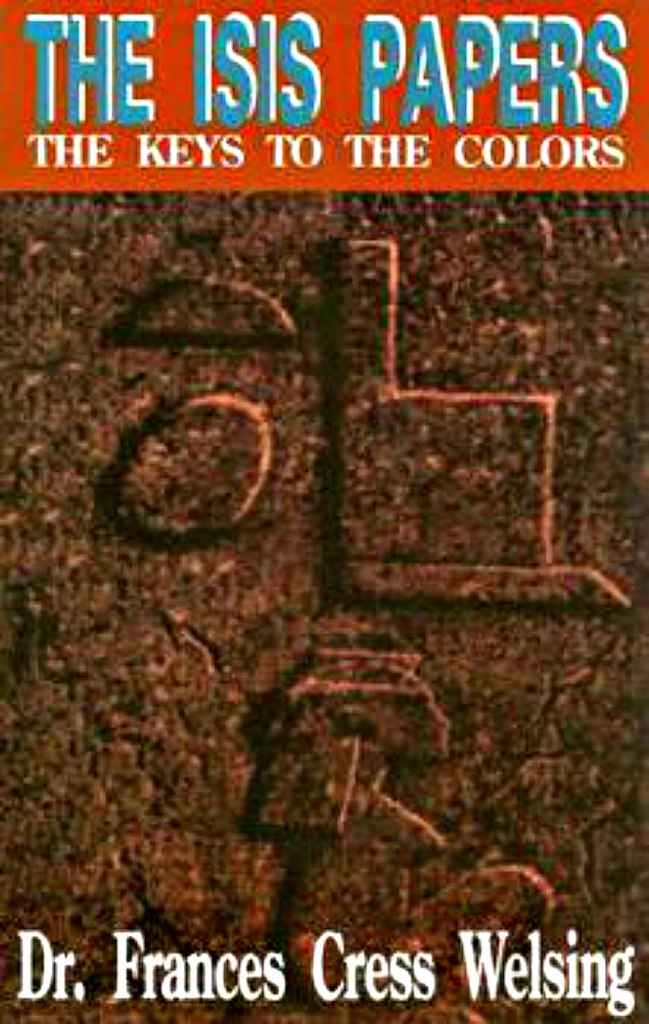
Book Review: “The Isis Papers: The Keys to the Colors.” by Dr. Frances Cress Welsing

🌟🌟🌟🌟🌟 5/5

Book Review & Tribute: The Isis Papers by Dr. Frances Cress Welsing
A Five-Star Masterpiece of Black Consciousness and Psychological Liberation


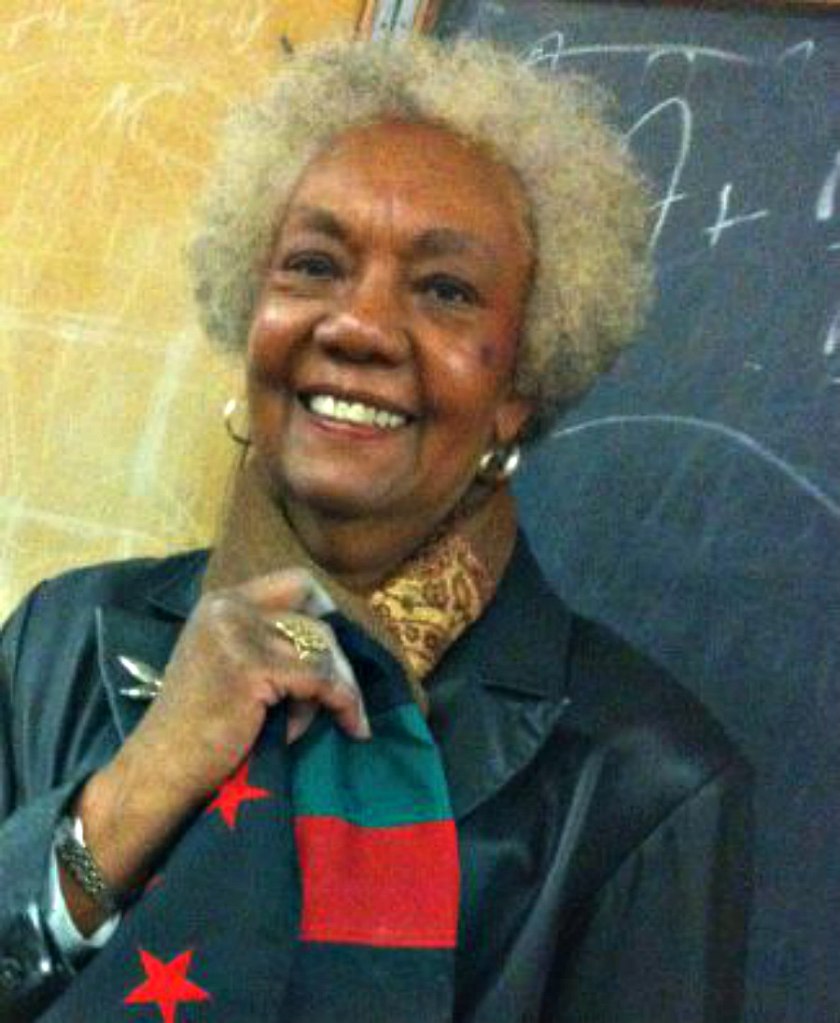
About the Author: Who Was Dr. Frances Cress Welsing?

Dr. Frances Cress Welsing was a woman of extraordinary depth, towering intellect, and unwavering moral clarity—whose life and work reshaped the landscape of Black consciousness and psychological liberation. With the precision of a trained psychiatrist and the soul of a revolutionary, she confronted the global system of white supremacy with fearless analysis and compassionate truth-telling. Her book, The Isis Papers: The Keys to the Colors, stands as a timeless masterpiece that examines racism not merely as a social problem, but as a psychological imperative rooted in genetic fear. Welsing’s activism, deeply grounded in scholarship and service, transformed countless lives and awakened a generation to the psychological warfare waged against people of African descent. Through her unshakable modesty, disciplined intellect, and spiritual courage, she became one of the most consequential Black women of the 20th and 21st centuries—a seer, healer, and teacher whose legacy continues to reverberate in the hearts and minds of all who seek liberation.

Dr. Frances Cress Welsing (1935–2016) was an esteemed psychiatrist, scholar, and public intellectual who made an indelible mark on the field of Black psychology and social analysis. Born in Chicago, Illinois, Welsing came from a lineage of educated and socially conscious Black professionals. She earned her bachelor’s degree from Antioch College and went on to receive her M.D. from Howard University College of Medicine, where she later served as a professor.

Though she never married and did not have children, she became a mother to the minds of a generation—a guiding figure in the intellectual liberation of African-descended people worldwide. Her work combined clinical psychiatry with Afrocentric theory, crafting a new framework through which Black people could analyze their oppression with clarity, dignity, and strategy.


Her Life’s Work and Philosophy

Dr. Welsing dedicated her career to understanding and addressing the psychological effects of racism, particularly on Black communities. She believed that the root of global white supremacy was a deep-seated fear of Black genetic dominance, a thesis that she introduced in her groundbreaking 1974 paper, The Cress Theory of Color-Confrontation. This theory became the foundational framework for her most influential book, The Isis Papers: The Keys to the Colors (1991).

Her unique contribution was the use of psychoanalysis and medical science to explain the hidden motivations behind racism, aggression, and systemic oppression. She frequently argued that white supremacy is a system driven by survival anxiety, stemming from the biological inability of white people to produce melanin-dominant (Black) offspring.


Quote from Dr. Welsing

“Black people are the only people who can genetically annihilate white people… and this is the fear that informs the system of racism.”
—Dr. Frances Cress Welsing, The Isis Papers

This quote captures the essence of her central argument—that racism is not merely prejudice or ignorance, but a biogenetic strategy for white survival in a world where Black genetic dominance is inevitable.


The Premise and True Meaning of The Isis Papers

Named after the ancient African goddess Isis, a symbol of divine Black womanhood, wisdom, and regeneration, The Isis Papers is a compilation of essays that analyze racism through symbols, sports, language, media, religion, and even the subconscious drives of Western culture.

Welsing argued that everything from ball games to military strategy, from consumer marketing to television programming, is saturated with subconscious white fear of Black power and Black fertility. She interpreted items such as guns, balls, and cigars as phallic symbols representing white anxiety about genetic survival and impotence.

Her approach was both clinical and cultural, unapologetically Afrocentric, and deeply rooted in ancient African spirituality and psychology. She urged Black people to understand themselves not as victims, but as the targets of a fear-based global system—and then to rise with knowledge, unity, and self-control.


Her Activism and Service to the Community

Though not affiliated with political movements in the traditional sense, Dr. Welsing was an activist of the mind. She gave countless lectures at Black colleges, community centers, and national conferences, challenging audiences to think critically about race, power, and self-worth. She also appeared on major television programs such as The Phil Donahue Show and was a regular on Black media platforms.

At Howard University Hospital, she served the D.C. community as a psychiatrist, particularly focusing on Black youth, and was known for her compassionate but bold truth-telling. She mentored generations of Black scholars, including in the field of Afrocentric psychiatry and Pan-African analysis.


Why White America Hated Her

Dr. Welsing’s work was controversial and deeply unsettling to mainstream academia and white society. She unapologetically exposed the psychological underpinnings of white supremacy, going beyond polite liberalism or reform-based rhetoric. She accused white supremacy of being a survival-based system of genetic warfare, and she did so with academic rigor and prophetic boldness.

Her refusal to back down, even under criticism and intellectual exile, made her a pariah to some, and a prophet to others. The truth she revealed—layered, uncomfortable, and piercing—challenged the very identity of whiteness itself.


Why She Was Respected

Despite opposition, Dr. Frances Cress Welsing was deeply revered in the global African community for her intellectual courage, clarity, and service. She gave language to the rage and confusion many Black people felt about systemic oppression. She empowered Black minds to see beyond the surface of racism and into its biological, economic, and spiritual roots.

She is considered a pioneer in Black psychology, alongside scholars like Dr. Na’im Akbar and Dr. Amos Wilson, and continues to influence activists, psychologists, and scholars worldwide. Her work remains central to discussions around Afrocentric mental health, systemic racism, and Black cultural empowerment.


Final Verdict: A Timeless Masterwork

The Isis Papers is a five-star masterpiece of revolutionary thought. It is essential reading for anyone seeking to understand the system of white supremacy and how it functions globally. Dr. Frances Cress Welsing was not only a writer but a healer, teacher, and warrior of the mind. Her legacy lives on in every Black person awakened to truth, dignity, and purpose.


References

  • Welsing, F. C. (1991). The Isis Papers: The Keys to the Colors. Third World Press.
  • Welsing, F. C. (1974). The Cress Theory of Color-Confrontation. Black Scholar.
  • Horne, G. (2015). Race War! New York: NYU Press.
  • Karenga, M. (1993). Introduction to Black Studies. Los Angeles: University of Sankore Press.