
Tag Archives: Asia

The Asian Dolls: Liu Yifei

Ethereal Beauty, Timeless Radiance.
This photograph is the property of its respective owner. No copyright infringement intended.

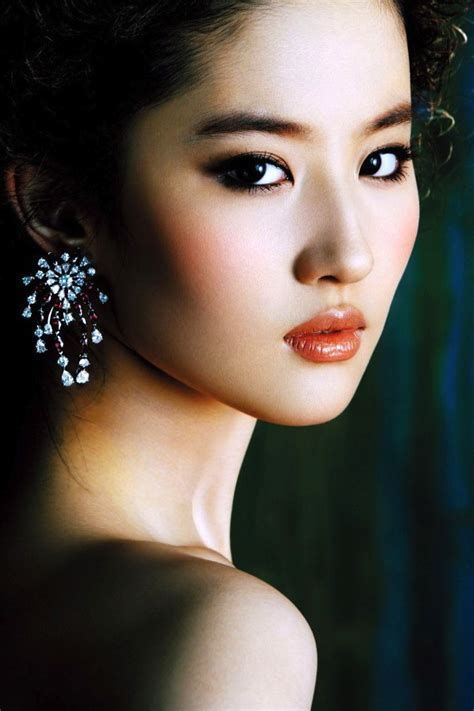
Liu Yifei is one of the most beautiful and celebrated actresses in contemporary Chinese cinema and one of the few Chinese-born performers to successfully bridge Eastern and Western film industries. Known affectionately in China as the “Fairy Sister” (神仙姐姐), Liu embodies a delicate yet commanding presence that has made her a modern symbol of classical Asian beauty.

Born An Feng in Wuhan, Hubei, China, on August 25, 1987, she later adopted her stage name Liu Yifei. Her parents divorced when she was young, and she relocated to the United States with her mother at age ten, living in New York. During this period, she obtained U.S. citizenship. Her bicultural upbringing would later position her uniquely within global cinema.

At fifteen, Liu was accepted into the prestigious Beijing Film Academy, becoming one of its youngest students. Her early television roles quickly elevated her status. She gained national recognition for performances in Chinese dramas such as The Story of a Noble Family and Chinese Paladin. However, it was her portrayal of Wang Yuyan in Demi-Gods and Semi-Devils that earned her the nickname “Fairy Sister,” a testament to her ethereal screen presence, porcelain complexion, oval facial harmony, and serene gaze.

Liu transitioned to film with notable roles in historical epics and martial arts dramas, including The Forbidden Kingdom alongside Jackie Chan and Jet Li. Her composure in action sequences, combined with her refined aesthetic, reinforced her image as both graceful and strong. In 2020, she achieved global prominence starring as the lead in Disney’s live-action adaptation of Mulan. This role made her one of the most internationally visible Chinese actresses of her generation and introduced her to mainstream American audiences.

Her beauty is often described as classical and balanced. She possesses luminous skin, soft yet defined facial symmetry, almond-shaped eyes, and an understated elegance that aligns with traditional Chinese aesthetic ideals. Unlike hyper-glamorous archetypes, Liu’s appeal is subtle and refined. Her expressions carry quiet strength, which enhances her cinematic mystique.

In terms of awards, Liu Yifei has received numerous honors in China, including accolades from the Macau International Movie Festival and nominations from prominent Chinese film institutions. She has also appeared on Forbes China Celebrity lists, reflecting her commercial and cultural influence.

This photograph is the property of its respective owner. No copyright infringement intended.

Regarding her personal life, Liu Yifei has largely maintained privacy. She was previously in a relationship with South Korean actor Song Seung-heon, whom she met during the filming of The Third Way of Love. The couple eventually separated. As of recent public information, she is not married and does not have children. Her discretion regarding her private affairs has only deepened her enigmatic appeal.

In China, Liu Yifei is exceptionally famous. She is considered an A-list actress with a strong fan base and significant brand endorsements. Her name carries both commercial and artistic weight. In the United States, her fame increased substantially after Mulan, though her recognition remains more concentrated among audiences familiar with international cinema. Nonetheless, she represents a crucial bridge between Hollywood and the Chinese film industries.

Her impact extends beyond film. Liu symbolizes the globalization of Chinese femininity—rooted in heritage yet adaptable to modern, transnational platforms. She challenges narrow Western perceptions of Asian beauty by presenting depth, discipline, and dignity.

Why is she an “Asian Doll”? The phrase, when used respectfully, reflects admiration for her porcelain complexion, balanced features, expressive yet gentle eyes, and graceful composure. She appears almost sculpted—like fine art—yet she moves with quiet power. However, she is far more than an aesthetic appeal. She is educated, multilingual, internationally experienced, and professionally disciplined.

Liu Yifei represents refinement without excess, fame without scandal, and beauty without aggression. She is ethereal yet grounded. She is delicate yet resilient. She is cinematic poetry in motion.


References

Beijing Film Academy archives.
Forbes China Celebrity List reports.
IMDb. (n.d.). Liu Yifei – Filmography and Biography.
Macau International Movie Festival records.
Wikipedia contributors. (n.d.). Liu Yifei.
Wikipedia contributors. (n.d.). Song Seung-heon.
Colorism in Asia

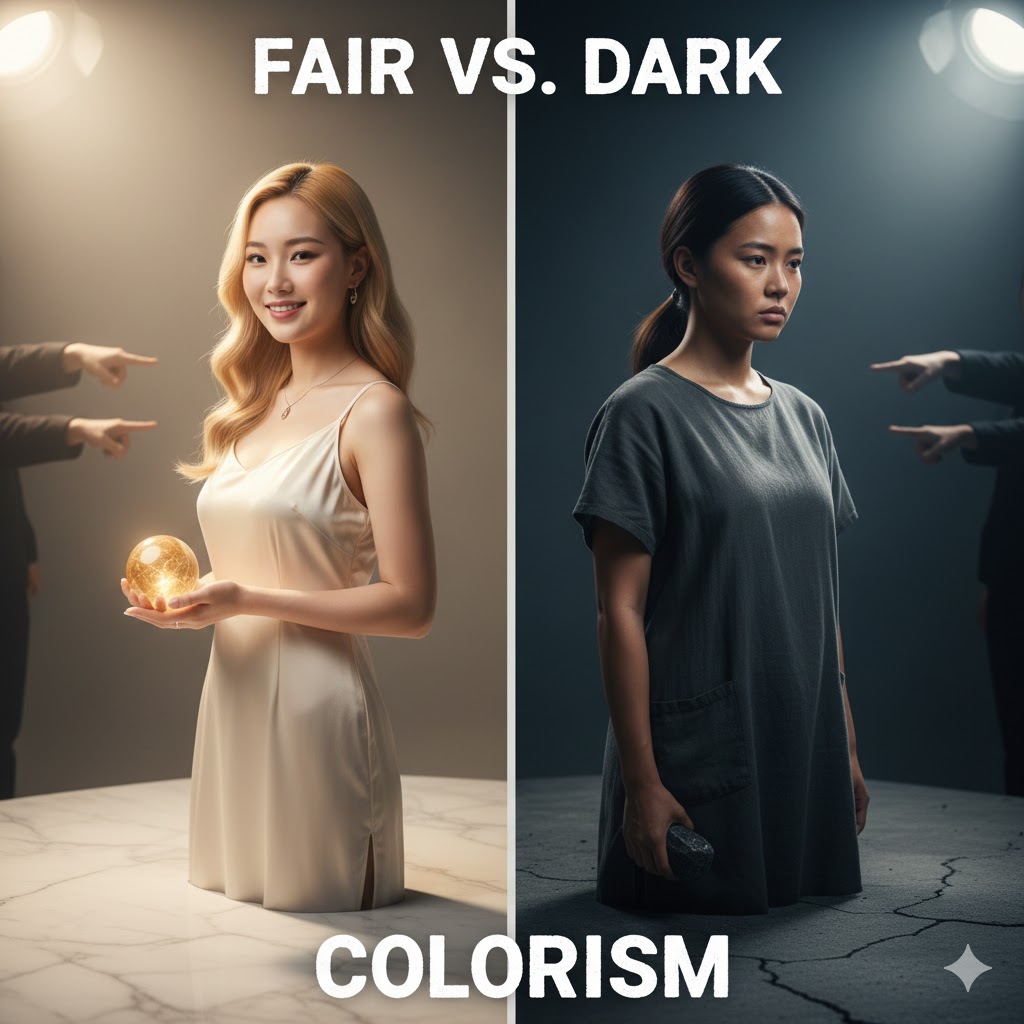
Colorism in Asia is a pervasive social phenomenon in which lighter skin is culturally valued over darker skin, creating systemic advantages for those perceived as fairer. Unlike racism, which often categorizes by ethnicity, colorism operates within racial and ethnic groups, privileging lighter tones as a symbol of wealth, status, and beauty. Its impact spans social, economic, and psychological domains, influencing marriage, employment, media representation, and daily interactions.

The roots of colorism in Asia are complex, intertwining pre-colonial class distinctions with European colonial influence. Historically, fair skin was associated with the elite or ruling classes who worked indoors, while darker skin indicated labor-intensive outdoor work. European colonialism reinforced and codified these associations, idealizing whiteness as superior and desirable.

In India, colorism is deeply entrenched. Fair skin has long been linked to beauty, marriageability, and social status. Advertisements promoting skin-lightening products are widespread, and matrimonial ads often specify preference for fair-skinned partners. Caste and colonial legacy amplify this preference, embedding it in social and cultural norms (Ludhianvi, 2020).

Pakistan similarly exhibits strong colorist tendencies. Lighter skin is associated with higher social class and greater marital prospects. The skin-lightening industry thrives, with consumers believing fairness equates to upward mobility, attractiveness, and professional credibility. Media, film, and advertising reinforce these ideals.

In Southeast Asia, countries like the Philippines, Thailand, and Indonesia exhibit pervasive colorism due to colonial history and media influence. In the Philippines, Spanish colonization and American media created ideals of beauty that favor lighter skin, influencing both professional opportunities and romantic desirability. Fair skin continues to be a marker of privilege and social mobility.

Thailand has a cultural preference for lighter skin, evident in beauty advertisements, television, and social expectations. The legacy of colonial trade and the association of light skin with urban elites amplify this hierarchy. Skin-whitening products dominate the market, signaling the perceived necessity of fair skin for social acceptance.

In China and East Asia, colorism is widespread, though nuanced. Lighter skin is historically associated with refinement, status, and scholarly pursuits, contrasting with rural laborers. Modern media, fashion, and entertainment reinforce these ideals, sustaining societal bias and shaping self-perception from a young age (Li & Min, 2014).

Japan and South Korea also reflect colorism influenced by historical class structures and Western beauty ideals. In South Korea, skin whitening and cosmetic surgery are widespread, with lighter skin seen as a standard of beauty and sophistication. In Japan, light skin is tied to elegance, status, and femininity, although contemporary media sometimes diversifies representation.

The worst-affected countries in Asia tend to be those with both colonial history and rigid social hierarchies. India, Pakistan, the Philippines, and Thailand experience intense societal pressure to conform to fair-skinned beauty ideals, reinforced through marriage markets, media, and professional spaces. The combination of historical caste or class divisions and globalized beauty standards intensifies the penalty for darker skin.

Colorism in Asia intersects with gender, disproportionately affecting women. Women are judged more harshly by skin tone, and their social, marital, and professional opportunities are more tightly linked to appearance. This leads to heightened use of skin-lightening products, cosmetic procedures, and restrictive beauty practices.

Economically, colorism affects career prospects. In India and Southeast Asia, lighter-skinned individuals are more likely to be hired for front-facing roles, leadership positions, and customer-oriented professions. Appearance is often equated with competence and professionalism, creating systemic advantage.

Marriage markets are heavily influenced by colorism. Matrimonial advertisements frequently specify preference for fair-skinned partners, reflecting the perception that lighter skin signals social status, family wealth, and desirability. Darker-skinned individuals are marginalized, even when other qualities are equal.

Media representation reinforces colorism by prioritizing lighter-skinned actors, models, and influencers. Television, film, and advertisements overwhelmingly feature fair-skinned individuals in roles of power, romance, and beauty, while darker-skinned people are underrepresented or typecast. This perpetuates bias in both perception and aspiration.

The skin-lightening industry is a multi-billion-dollar sector in Asia, indicating both the intensity of societal preference for fair skin and the psychological impact of colorism. Consumers internalize the message that lighter skin equates to opportunity, attractiveness, and social capital, sustaining demand and normalizing bias.

Colorism also has psychological consequences, contributing to low self-esteem, anxiety, and body image dissatisfaction. Individuals internalize societal preferences, leading to shame, identity conflict, and social comparison, particularly among women and youth.

Education is not immune. Teachers and peers may implicitly favor lighter-skinned students, assuming greater intelligence, discipline, or refinement. These biases influence expectations, opportunities, and social inclusion, reinforcing systemic inequality from early childhood.

Social mobility in Asia is intertwined with skin tone. Lighter skin is often equated with urbanity, cosmopolitanism, and modernity, while darker skin signals rural labor, poverty, or lower status. This creates a persistent cycle where appearance directly affects life trajectory.

Historically, colorism was reinforced by colonial hierarchies and caste systems. In India, fair skin was associated with higher castes, while darker skin correlated with servitude or laboring classes. European colonization globally reinforced these associations, elevating whiteness as aspirational and moralized.

To challenge colorism in Asia, cultural, institutional, and personal efforts are required. Media representation must diversify, educational systems must address bias, and beauty industries must be held accountable for perpetuating harmful standards. Individual awareness and advocacy play key roles in dismantling internalized preference.

Overcoming colorism involves redefining beauty, valuing diverse appearances, and affirming dignity independent of skin tone. Societies must confront historical roots, economic incentives, and cultural reinforcement to create equitable spaces where color does not determine opportunity, respect, or love.


References

Ludhianvi, R. (2020). Skin-deep bias: The politics of complexion in India. Journal of South Asian Studies, 43(2), 215–232.

Hunter, M. (2007). The persistent problem of colorism: Skin tone, status, and inequality. Sociology Compass, 1(1), 237–254.

Li, W., & Min, S. (2014). Cultural beauty standards in East Asia: Colorism and social perception. Asian Journal of Social Psychology, 17(3), 192–201.

Hamermesh, D. S., & Biddle, J. E. (1994). Beauty and the labor market. American Economic Review, 84(5), 1174–1194.

Hosoda, M., Stone-Romero, E. F., & Coats, G. (2003). The effects of physical attractiveness on job-related outcomes: A meta-analysis of experimental studies. Personnel Psychology, 56(2), 431–462.

Eagly, A. H., Ashmore, R. D., Makhijani, M. G., & Longo, L. C. (1991). What is beautiful is good, but…: A meta-analytic review of research on the physical attractiveness stereotype. Psychological Bulletin, 110(1), 109–128.

Frisby, C. M. (2004). Does race or gender matter? Effects of media images on self-perception. Journal of Broadcasting & Electronic Media, 48(2), 301–317.