
Affiliate marketing is a performance-based marketing strategy where you promote someone else’s products or services and earn a commission for each sale or action generated through your unique referral link. Essentially, you act as a middleman connecting the product with the customer.
It benefits three parties:
- The Merchant: Gains more sales or leads without upfront marketing costs.
- The Affiliate (You): Earns a commission for driving traffic or sales.
- The Customer: Finds products through trusted recommendations.
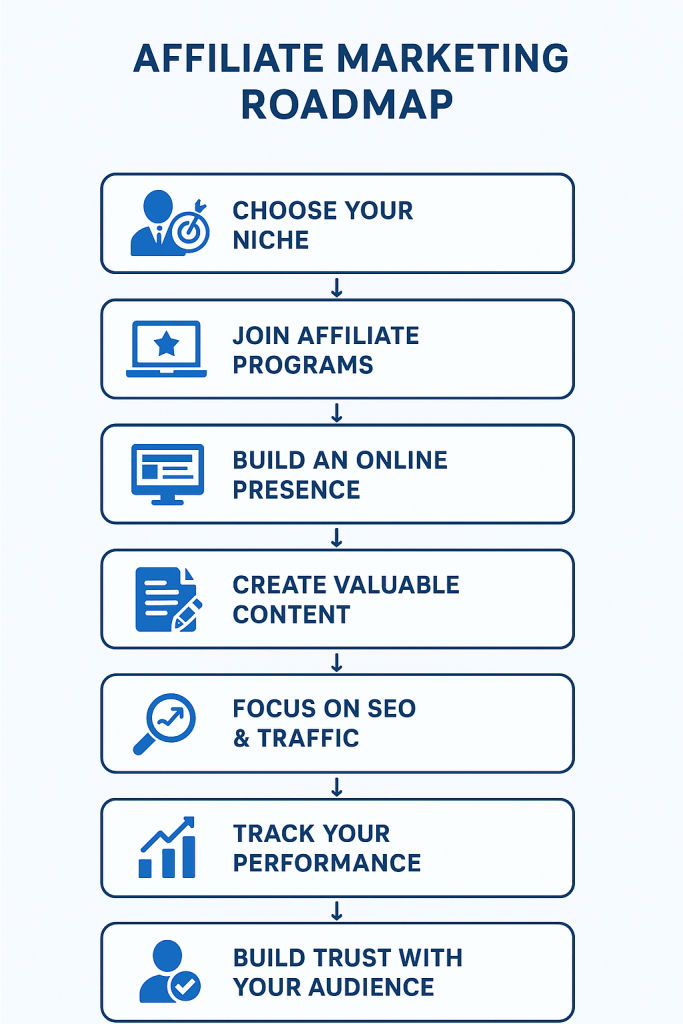
In today’s digital world, affiliate marketing has emerged as one of the most popular ways to earn income online. At its core, affiliate marketing is a performance-based strategy where individuals, known as affiliates, promote products or services and earn a commission for every sale, click, or action generated through their unique referral links. It creates a win-win scenario: merchants increase their sales without upfront costs, affiliates earn money by promoting products, and customers gain access to trusted recommendations. For those looking to build a sustainable online income, understanding the fundamentals of affiliate marketing is essential.
The first step to getting started in affiliate marketing is choosing a niche. A niche is a specific area of interest or industry, such as beauty, fitness, technology, travel, or personal finance. By focusing on a niche, affiliates can build authority and trust with their audience, ensuring that promotions resonate effectively. Once a niche is selected, the next step is to join reputable affiliate programs. Popular networks include Amazon Associates, ShareASale, CJ Affiliate, ClickBank, and Rakuten Marketing. Each platform offers unique benefits, from a wide variety of products to higher commission rates on digital goods, making it possible for affiliates to choose programs that align with their niche and audience.
Choose Your Niche:
Focus on a specific industry or topic you are passionate about, such as beauty, fitness, finance, tech, or travel. A clear niche builds trust and authority with your audience.
Select Affiliate Programs/Companies:
Start with reputable companies and networks. Popular options include:
- Amazon Associates – Easy to join; wide range of products.
- ShareASale – Thousands of merchants in various niches.
- CJ Affiliate (Commission Junction) – High-quality brands and reliable tracking.
- ClickBank – Digital products, often higher commissions.
- Rakuten Marketing – Big brands and global reach.
Build an Online Presence:
You’ll need a platform to promote products:
- Blog or Website: SEO content drives organic traffic.
- Social Media: Instagram, TikTok, or Pinterest for visual promotions.
- YouTube: Tutorials and reviews can be highly effective.
- Email Marketing: Build a subscriber list for recurring promotions.
Affiliate Marketing Tips & Tricks: Quick-Start Guide
1. Choose Your Niche Wisely
- Pick a topic you are passionate about.
- Focus on a specific audience to build authority.
2. Join Reputable Affiliate Programs
- Amazon Associates – Wide variety of products.
- ClickBank – High commissions on digital products.
- ShareASale / CJ Affiliate / Rakuten – Access to quality brands.
3. Build an Online Presence
- Start a blog, YouTube channel, or social media profile.
- Use email lists to reach your audience directly.
4. Create Valuable Content
- Tutorials, reviews, comparison guides, and “how-to” articles.
- Incorporate affiliate links naturally—don’t force them.
5. Focus on SEO & Traffic
- Optimize your website for search engines to attract organic visitors.
- Use paid ads strategically for faster results.
6. Track Your Performance
- Use analytics to monitor clicks, conversions, and top-performing products.
- Adjust strategies based on what works best.
7. Build Trust with Your Audience
- Be honest about affiliate links.
- Share genuine experiences and product recommendations.
8. Diversify & Scale
- Join multiple affiliate programs to avoid relying on one source.
- Reinvent and expand your content to reach more audiences.
9. Be Patient & Consistent
- Earnings grow over time with effort, testing, and optimization.
- Focus on quality and value rather than quick profits.
10. Learn from Successful Affiliates
- Follow top affiliates in your niche.
- Study strategies that consistently convert traffic into sales.
Building a strong online presence is crucial for affiliate marketing success. Affiliates can leverage blogs, websites, social media platforms, YouTube channels, and email marketing to reach potential customers. Content marketing, such as product reviews, tutorials, comparison guides, and “how-to” articles, allows affiliates to provide value while naturally integrating affiliate links. Search engine optimization (SEO) further amplifies reach by attracting organic traffic, while paid advertisements on Google, Facebook, or Instagram can target highly specific audiences to increase conversions. Trust is key; affiliates who provide genuine recommendations and showcase real experiences often see higher engagement and sales.
Content Marketing: Create valuable content like product reviews, “how-to” guides, and comparison articles.
SEO Optimization: Rank your content in search engines to attract free organic traffic.
Paid Ads: Facebook Ads, Google Ads, or influencer partnerships to drive targeted traffic.
Email Campaigns: Promote products to a dedicated audience with newsletters and promotions.
Social Proof & Trust: Use testimonials, case studies, and real experiences to boost credibility.
Successful affiliate marketers employ a combination of strategies to maximize earnings. Tracking performance through analytics enables affiliates to determine which products and promotional methods yield the best results. Diversifying income streams by joining multiple programs and promoting various products reduces risk and increases potential revenue. Email marketing campaigns to a loyal subscriber list can generate recurring income, and integrating social proof—such as testimonials, case studies, or user-generated content—helps establish credibility. Affiliates who prioritize quality over quantity and remain transparent about affiliate links build long-term relationships with their audience.
Pick products you personally trust and align with your audience.
Focus on quality over quantity; promote fewer, high-value products.
Track your performance with analytics to see what converts.
Diversify income streams with multiple affiliate programs.
Always disclose affiliate links; honesty builds trust with your audience.
The earning potential in affiliate marketing varies widely based on niche, traffic, and conversion rates. Beginners might earn between $50 and $500 per month, intermediate affiliates can generate $500–$5,000 monthly, and experienced marketers with multiple platforms and email lists can earn upwards of $50,000 per month. Physical products typically offer lower commissions (1%–10%), while digital products can provide higher rates (30%–75%). The key to success lies in patience, consistency, and reinvesting earnings to scale one’s efforts gradually.
- Commissions vary by product and program:
- Physical products: ~1%–10% per sale (Amazon).
- Digital products: ~30%–75% per sale (ClickBank).
- Income depends on traffic, conversion rates, and niche:
- Beginners: $50–$500/month
- Intermediate: $500–$5,000/month
- Advanced: $5,000–$50,000+/month (top affiliates often scale with multiple websites and email lists)
Tip: Start small, reinvest earnings, and scale gradually for sustainable income.
In conclusion, affiliate marketing offers a flexible and potentially lucrative way to earn online, provided one approaches it with strategy, integrity, and dedication. By selecting the right niche, collaborating with reputable programs, establishing a robust online presence, and implementing targeted marketing strategies, aspiring affiliates can establish a sustainable source of income. With continuous learning, testing, and adaptation, affiliate marketing not only provides financial opportunities but also allows individuals to share valuable products and services with audiences around the world.
👉 These REFERENCES provide both academic depth and real-world industry insights.
Books & Academic Sources
- Chaffey, D., & Ellis-Chadwick, F. (2019). Digital Marketing (7th ed.). Pearson.
- Evans, D. S., & Schmalensee, R. (2016). Matchmakers: The New Economics of Multisided Platforms. Harvard Business Review Press.
- Strauss, J., & Frost, R. (2016). E-Marketing (7th ed.). Routledge.
Industry & Professional Sources
- Patel, N. (2021). Affiliate Marketing Made Simple: A Step-by-Step Guide. Neil Patel Digital. Retrieved from https://neilpatel.com
- Shopify. (2023). Affiliate Marketing: What It Is and How to Get Started. Retrieved from https://www.shopify.com/blog/affiliate-marketing
- HubSpot. (2022). The Ultimate Guide to Affiliate Marketing. Retrieved from https://blog.hubspot.com/marketing/affiliate-marketing
Statistics & Earnings Potential
- Statista. (2023). Affiliate Marketing – Statistics & Facts. Retrieved from https://www.statista.com
- Business Insider Intelligence. (2021). The Affiliate Marketing Report.
👉 These references provide both academic depth and real-world industry insights.
 THE BROWN GIRL DILEMMA