
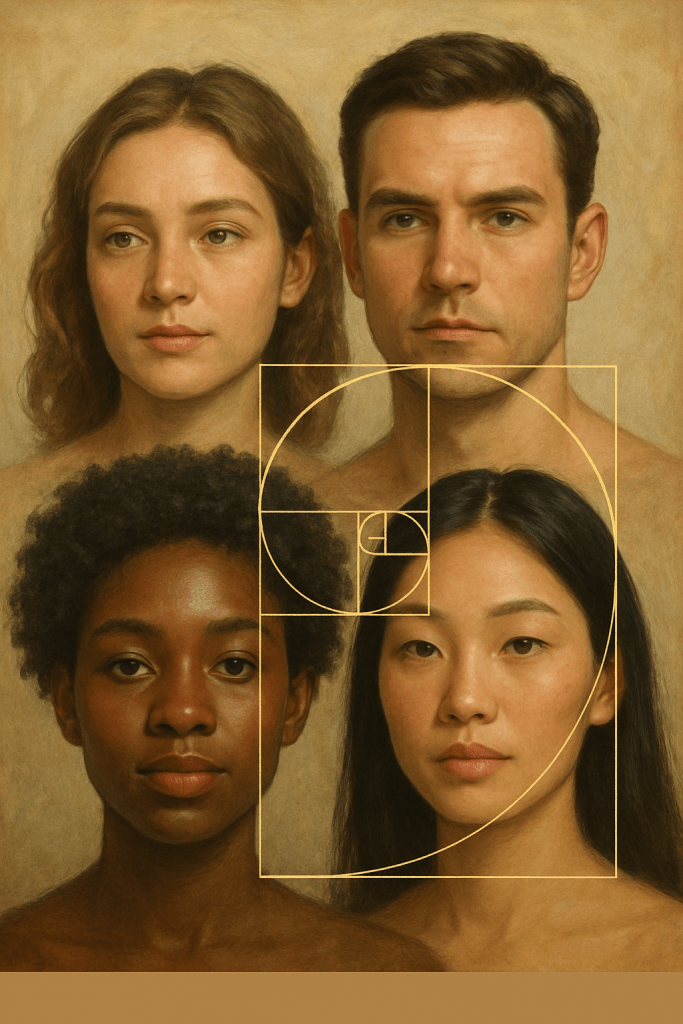
Beauty has long fascinated philosophers, scientists, and artists alike, as it intersects both the tangible and intangible aspects of human existence. While often considered subjective, beauty also possesses measurable biological and psychological dimensions that have been studied across disciplines such as evolutionary biology, neuroscience, and sociology. The science of beauty seeks to understand why certain features, forms, and proportions are universally regarded as attractive and how these perceptions influence human behavior and social dynamics.
Evolutionary biology offers a foundation for understanding beauty through the lens of survival and reproduction. Charles Darwin’s theory of sexual selection posits that beauty functions as a biological signal of health, fertility, and genetic fitness (Darwin, 1871). Facial symmetry, for instance, is often interpreted as an indicator of developmental stability and resistance to disease, leading individuals with symmetrical faces to be perceived as more attractive.
Symmetry is not merely an aesthetic ideal but a biological marker. Studies show that facial symmetry is associated with optimal hormone levels, fewer genetic mutations, and stronger immune systems (Rhodes, 2006). This biological alignment resonates subconsciously with observers, who interpret symmetry as a sign of good genes—a preference encoded over millennia of human evolution.
Another key concept in the science of beauty is the “golden ratio,” or phi (approximately 1.618), which describes a mathematical proportion found throughout nature, architecture, and the human body. Research has shown that faces approximating the golden ratio are consistently rated as more attractive (Marquardt, 2002). The Marquardt facial mask, designed to reflect these ideal proportions, has become a scientific model for analyzing facial harmony.
However, beauty extends beyond mathematics. Facial features such as full lips, clear skin, and high cheekbones also influence perceptions of attractiveness because they are subconsciously associated with youth, vitality, and reproductive capability (Etcoff, 1999). These traits act as visual cues that have guided human mate selection throughout history.
Neuroscience further enriches our understanding by exploring how the brain responds to beauty. Neuroimaging studies show that when individuals view faces they perceive as beautiful, the brain’s reward center—the medial orbitofrontal cortex—is activated (Aharon et al., 2001). This activation mirrors responses to pleasurable stimuli such as music or food, suggesting that beauty engages both cognitive and emotional circuits.
Psychological research has long examined the “halo effect,” a cognitive bias where physically attractive individuals are perceived as more intelligent, kind, and capable (Dion, Berscheid, & Walster, 1972). This effect reveals how deeply ingrained visual perception is in shaping human judgment and social hierarchies.
Cultural and racial variations complicate the notion of universal beauty. While certain traits are globally appreciated, cultural contexts shape aesthetic ideals. For example, Western media historically favored Eurocentric features—fair skin, narrow noses, and lighter eyes—whereas African, Asian, and Indigenous societies have celebrated diverse beauty markers such as darker skin tones, fuller bodies, and textured hair (Hunter, 2011).
In the modern era, beauty is also intertwined with media influence and technology. Social media platforms amplify specific beauty standards through filters, digital editing, and algorithms that reward particular looks. This digital aesthetic homogenization can distort self-perception and promote unrealistic ideals (Fardouly & Vartanian, 2016).
The cosmetics and fashion industries further reinforce the commercial side of beauty. The global beauty industry, valued at over $500 billion, capitalizes on insecurities by marketing transformation as empowerment. Yet this commodification raises ethical questions about authenticity and self-worth (Jones, 2021).
Beauty perception is also influenced by hormones and genetics. For example, testosterone levels are linked to masculine facial features such as a strong jawline, while estrogen contributes to features considered feminine, such as soft skin and fuller lips (Thornhill & Gangestad, 1999). These biological signals influence attraction subconsciously, reflecting reproductive compatibility.
Beyond physical features, behavioral expressions such as confidence, warmth, and kindness can enhance perceived attractiveness. Research suggests that beauty is dynamic—animated expressions, body language, and voice tone can transform how a person is viewed (O’Doherty et al., 2003).
The role of melanin in beauty has also been scientifically explored. Melanin not only determines skin tone but also provides photoprotection and age resistance (Kaidbey et al., 1979). Yet, despite its biological advantage, darker skin has often been devalued in societies shaped by colonial and colorist histories.
The psychological toll of beauty bias is profound. Studies link appearance-based discrimination to lower self-esteem, depression, and social anxiety (Rumsey & Harcourt, 2005). This underscores the importance of diversifying beauty ideals to promote psychological well-being and cultural inclusivity.
Beauty also intersects with moral and spiritual philosophy. Biblical and philosophical traditions have long grappled with whether beauty is a reflection of inner goodness or mere external vanity. As Proverbs 31:30 (KJV) reminds us, “Favor is deceitful, and beauty is vain: but a woman that feareth the Lord, she shall be praised.”
Modern science aligns with this idea by revealing that kindness, empathy, and positive energy can alter facial perception—literally making individuals appear more attractive through microexpressions and improved emotional resonance (Little, Burt, & Perrett, 2006).
Aesthetic medicine and cosmetic surgery have blurred the line between natural and artificial beauty. While technological advancements allow individuals to enhance or alter features, the psychological motivation often stems from conformity to societal pressures rather than personal fulfillment (Sarwer et al., 2005).
From a sociological perspective, beauty functions as a form of cultural capital. French sociologist Pierre Bourdieu (1984) argued that aesthetic preferences are tied to social class and education, reinforcing social hierarchies by defining what is considered “refined” or “desirable.”
The future of beauty science lies in inclusivity and authenticity. With increased awareness of genetic diversity, researchers are beginning to celebrate broader definitions of beauty that reflect global humanity rather than narrow ideals. This evolution aligns with the growing understanding that beauty is both innate and learned—an interplay of biology, culture, and consciousness.
Ultimately, the science of beauty reveals a profound truth: beauty is both a mirror and a mystery. It reflects our biological heritage while embodying the values of the societies we build. To understand beauty is to understand humanity itself—a species constantly seeking harmony between the seen and the unseen, the body and the soul.
References
Aharon, I., Etcoff, N., Ariely, D., Chabris, C. F., O’Connor, E., & Breiter, H. C. (2001). Beautiful faces have variable reward value: fMRI and behavioral evidence. Neuron, 32(3), 537–551.
Bourdieu, P. (1984). Distinction: A social critique of the judgement of taste. Harvard University Press.
Darwin, C. (1871). The descent of man, and selection in relation to sex. John Murray.
Dion, K., Berscheid, E., & Walster, E. (1972). What is beautiful is good. Journal of Personality and Social Psychology, 24(3), 285–290.
Etcoff, N. (1999). Survival of the prettiest: The science of beauty. Anchor Books.
Fardouly, J., & Vartanian, L. R. (2016). Social media and body image concerns: Current research and future directions. Current Opinion in Psychology, 9, 1–5.
Hunter, M. (2011). Race, gender, and the politics of skin tone. Routledge.
Jones, M. (2021). Beauty and capitalism: The cultural economy of aesthetics. Palgrave Macmillan.
Kaidbey, K. H., Agin, P. P., Sayre, R. M., & Kligman, A. M. (1979). Photoprotection by melanin—a comparison of black and Caucasian skin. Journal of the American Academy of Dermatology, 1(3), 249–260.
Little, A. C., Burt, D. M., & Perrett, D. I. (2006). Assortative mating for perceived facial personality traits. Personality and Individual Differences, 40(5), 973–984.
Marquardt, S. R. (2002). Dr. Stephen Marquardt’s Phi Mask: The mathematical formula of beauty. Journal of Aesthetic Dentistry, 12(2), 55–65.
O’Doherty, J., Winston, J., Critchley, H., Perrett, D., Burt, D. M., & Dolan, R. J. (2003). Beauty in a smile: The role of medial orbitofrontal cortex in facial attractiveness. Neuropsychologia, 41(2), 147–155.
Rhodes, G. (2006). The evolutionary psychology of facial beauty. Annual Review of Psychology, 57, 199–226.
Rumsey, N., & Harcourt, D. (2005). The psychology of appearance. Open University Press.
Sarwer, D. B., Crerand, C. E., & Didie, E. R. (2005). Body image and cosmetic medical treatments. Body Image, 2(4), 321–333.
Thornhill, R., & Gangestad, S. W. (1999). Facial attractiveness. Trends in Cognitive Sciences, 3(12), 452–460.
 THE BROWN GIRL DILEMMA