Category Archives: www.thebrowngirldilemma.com

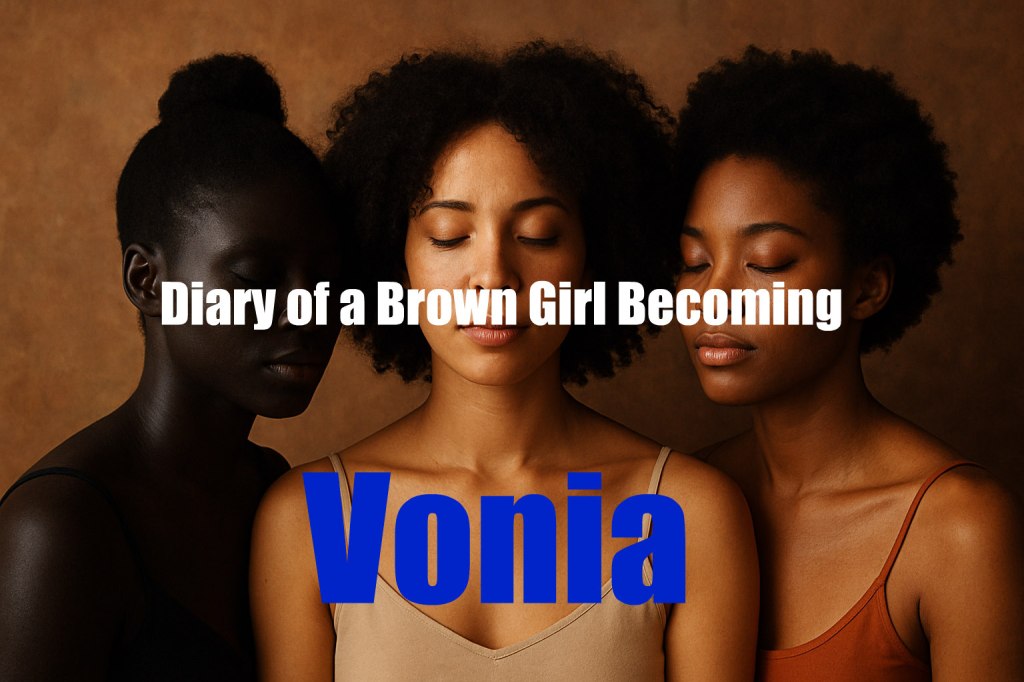
Diary of a Brown Girl Becoming: Vonia’s Story.

Vonia grew up in a house where love and pain lived side by side. Her mother’s voice was sharp, her words cutting deep into places no one could see. From the outside, they looked like any other family, but behind closed doors, the warmth of home felt more like a battlefield. The irony was cruel—Vonia’s light skin, something others might have envied, became the reason she was despised.

Her mother, a dark-skinned woman with her own wounds from rejection and ridicule, saw in Vonia a reflection of everything she had been taught to hate. That pain turned inward until it found a target—her daughter. Every harsh word, every slap, every accusation carried the weight of generational trauma. “You think you’re better than me,” her mother would hiss, as if Vonia’s existence was an offense. The young girl learned early that sometimes hate doesn’t come from strangers—it comes from those too broken to love you fully.

In family gatherings, jealousy followed her like a shadow. Aunts and cousins whispered, their smiles tight and brittle. Compliments about her complexion came with daggers behind them. Vonia never asked to be lighter; she never asked to be “different.” Yet, her very presence stirred old insecurities that were not hers to carry.

For years, she wore her guilt like a shroud, wondering why she was born the way she was. She hid her glow, dimmed her laughter, and tried to blend in, thinking maybe she could make herself less visible. But pain has a way of calling out for healing, and one day, that call led her to the only One who could answer.

When Vonia found God, she didn’t find religion—she found restoration. She learned that her worth was not determined by the tone of her skin or the acceptance of her mother, but by the love of a Creator who made no mistakes. Psalm 139:14 became her anthem: “I will praise thee; for I am fearfully and wonderfully made.” The more she prayed, the more she began to see her story not as a curse, but as a testimony.

Healing didn’t happen overnight. There were nights when memories still burned, when she questioned why love had to hurt so much. But slowly, she began to understand that her mother’s cruelty was a mirror of her own pain—a pain born of centuries of colorism, colonialism, and comparison. Vonia chose to forgive, not because her mother deserved it, but because she refused to carry bitterness into her future.

Forgiveness was her freedom. The same mouth that once cursed her now spoke blessings over herself and others. The same heart that once ached now poured out compassion for women who were still bound by self-hate. Vonia became a light in her community, mentoring young girls, reminding them that beauty has no hierarchy in the eyes of God.

Today, when she looks in the mirror, she doesn’t see light skin—she sees light. The divine kind. The kind that breaks curses and silences shame.

Her story reminds us that colorism wounds both sides—the one rejected for being dark and the one punished for being light. But in God, both find healing. In Him, both are loved, redeemed, and made whole.

Vonia’s story is not about complexion—it’s about transformation. It’s about the power of grace to turn pain into purpose, and shame into shining.

Psychology Series: Is Life like a Game of Chess?

Life is often described through metaphors to help human beings make sense of complexity, uncertainty, and consequence. One of the most enduring metaphors is chess—a game of strategy, foresight, patience, and consequence. Chess mirrors life not because life is rigid or predetermined, but because both require intentional thinking, awareness of the environment, and responsibility for one’s choices. Every move matters, even the ones that seem insignificant at the time.

Chess is a board game played between two opponents, each commanding sixteen pieces with distinct roles and limitations. The goal is not merely to capture pieces, but to place the opponent’s king in a position where escape is impossible. This objective mirrors life’s deeper pursuits, where success is rarely about isolated wins, but about long-term positioning, stability, and survival. Winning in chess, as in life, is about strategy rather than impulse.

Each chess piece represents a different capacity, just as individuals in life possess varying strengths, limitations, and roles. Pawns are often underestimated, yet they form the foundation of the game. In life, foundational habits such as discipline, education, and character function like pawns—seemingly small, but essential for progress and protection. Without strong pawns, the game collapses early.

The king is the most valuable piece, even though it is not the most powerful. Its safety determines the outcome of the game. In life, this mirrors mental health, integrity, and identity. You may accumulate achievements, resources, and recognition, but if your core self is compromised, everything else becomes irrelevant. Protecting the “king” is a psychological necessity.

The queen, the most powerful piece, represents potential, influence, and versatility. In life, unchecked power can lead to overconfidence and vulnerability. Many lose their queen early—burning themselves out, oversharing, or overextending—only to realize later that power must be used with restraint. Wisdom lies not in how much power you have, but in when and how you deploy it.

Chess teaches delayed gratification, a core principle in psychology associated with emotional regulation and long-term success. A good player resists immediate gains in favor of better positioning. Similarly, life rewards those who can resist short-term pleasure for long-term fulfillment. Impulsive decisions often feel good in the moment but create vulnerabilities that are difficult to repair.

Every chess move has consequences, whether visible immediately or revealed later in the game. This mirrors the psychological concept of cause and effect in decision-making. Life choices—relationships, finances, moral decisions—often appear harmless at first, yet compound over time. Chess trains the mind to think beyond the present moment.

Anticipation is central to chess. Players must consider not only their own moves, but their opponent’s responses. In life, emotional intelligence functions the same way. Understanding human behavior, motivations, and reactions allows individuals to navigate social environments more effectively. Poor anticipation leads to unnecessary conflict and self-sabotage.

Chess also teaches adaptability. No game unfolds exactly as planned. Unexpected sacrifices, losses, or threats force players to recalibrate. Life operates the same way. Psychological resilience is the ability to adjust without losing direction. Those who rigidly cling to one plan often struggle when reality shifts.

Sacrifice is a profound lesson in chess. Sometimes a piece must be given up to gain a positional advantage or protect the king. In life, sacrifice often involves letting go of ego, unhealthy relationships, or immediate comfort for future growth. Psychology recognizes sacrifice as a mature coping strategy rooted in purpose rather than fear.

The opening phase of chess emphasizes development and preparation. Early mistakes can haunt a player for the entire game. Likewise, early life experiences—childhood environment, education, and mentorship—shape long-term psychological outcomes. While one can recover from a poor opening, it requires greater effort and awareness.

The middle game represents complexity, tension, and conflict. This stage mirrors adulthood, where responsibilities multiply and consequences intensify. Psychological stress often peaks here, as individuals juggle identity, relationships, career, and purpose. Chess teaches that clarity and patience are essential during high-pressure moments.

Endgames are quiet, precise, and unforgiving. With fewer pieces on the board, every move is magnified. Life’s later stages often resemble this phase, where reflection, legacy, and wisdom become central. Psychology emphasizes meaning-making during this stage, as individuals evaluate their choices and contributions.

Chess punishes emotional decision-making. Anger, fear, or arrogance often lead to blunders. Life is no different. Emotional regulation is one of the strongest predictors of success and well-being. The game reinforces the importance of responding thoughtfully rather than reacting emotionally.

Patterns play a critical role in chess mastery. Experienced players recognize recurring structures and traps. In life, psychology teaches pattern recognition through self-awareness. Repeated relationship failures, financial mistakes, or emotional triggers are signals, not coincidences. Growth begins when patterns are acknowledged and addressed.

Chess also teaches accountability. There are no teammates to blame for a loss. Every defeat is the result of one’s own decisions. Life operates under the same principle, though people often resist it. Psychological maturity involves taking responsibility rather than externalizing blame.

Silence and observation are underrated skills in chess. The best players often wait, watch, and gather information. In life, listening is a powerful psychological tool. Many mistakes are made not from ignorance, but from speaking or acting too quickly without understanding the full situation.

Time management is another parallel. Chess clocks impose limits, forcing players to balance speed and accuracy. Life also imposes time constraints—aging, deadlines, and finite opportunities. Psychology emphasizes prioritization as a survival skill. Not every battle deserves your time or energy.

Victory in chess is not about domination but precision. A single accurate sequence can decide the outcome. Life success is similar. Small, consistent, well-thought-out decisions often outweigh dramatic gestures. Mastery is quiet, not flashy.

Ultimately, chess is a mirror of the mind. It reveals patience, impulsivity, foresight, fear, and discipline. Life does the same. The board simply makes these traits visible. Studying chess psychologically is not about becoming a grandmaster, but about becoming more intentional, self-aware, and strategic in how one lives.

Life may not be a game, but it is governed by rules, consequences, and choices. Chess does not teach how to control others; it teaches how to control oneself. In that sense, life is not won by checkmating people, but by mastering the mind that makes the moves.


References

Baumeister, R. F., & Tierney, J. (2011). Willpower: Rediscovering the greatest human strength. Penguin Press.

Charness, N., Tuffiash, M., & Jastrzembski, T. (2004). Motivation, emotion, and expertise in chess. Journal of Applied Cognitive Psychology, 18(3), 297–315. https://doi.org/10.1002/acp.1016

De Groot, A. D. (1978). Thought and choice in chess. Mouton Publishers.

Kahneman, D. (2011). Thinking, fast and slow. Farrar, Straus and Giroux.

Mischel, W. (2014). The marshmallow test: Mastering self-control. Little, Brown and Company.

Vygotsky, L. S. (1978). Mind in society: The development of higher psychological processes. Harvard University Press.

10 Material Things you Need to Stop Buying

In a society dominated by consumerism, it is easy to equate wealth with status, happiness, and personal worth. From expensive cars to designer handbags, the constant pursuit of material possessions can blind individuals to the deeper purpose of wealth and the responsibility to use it wisely.

America, in particular, promotes an ethos of individualism—“I got mine, you get yours”—that encourages accumulation over compassion. This mindset often prioritizes personal gain over communal support, leading to a culture where opulence becomes a badge of superiority rather than a tool for service.

Expensive cars, while symbolizing status, rarely produce lasting fulfillment. The thrill of ownership fades quickly, leaving only the financial burden behind. While transportation is necessary, the obsession with luxury vehicles can distract from using resources to meet the needs of others.

Designer handbags from Hermès, Chanel, Prada, and similar brands have become status symbols in many communities. These items signal wealth and taste, yet they cannot carry eternal value. The Bible reminds us that earthly treasures are fleeting and cannot accompany us beyond this life (Matthew 6:19–21).

Costly clothing, beyond what is necessary, often reinforces pride and materialism. Fashion can become a competition of visibility rather than a reflection of personal character. The constant desire for the latest trends shifts focus from spiritual growth and community impact to self-centered display.

Pride and arrogance frequently accompany riches. When wealth becomes a source of identity, humility is compromised, and relationships suffer. Proverbs 16:18 warns that pride goes before destruction, and a haughty spirit before a fall, emphasizing that character matters more than possessions.

Many forget that God gives wealth not merely for personal comfort, but to enable generosity and service. Acts of kindness, financial assistance to those in need, and support of community initiatives honor God’s purpose for resources (1 Timothy 6:17–19). Wealth without generosity is hollow.

Electronics, the latest gadgets, and luxury items intended purely for status also fall into the category of material traps. While these may bring temporary satisfaction, they do not cultivate wisdom, empathy, or spiritual growth. The Bible teaches contentment with what we have (Hebrews 13:5), which contrasts sharply with consumer culture.

Jewelry, watches, and other flashy accessories often symbolize social ranking rather than necessity. When adornment becomes a source of comparison, it fosters envy, division, and distraction. James 2:1–4 cautions against favoritism based on outward appearance, reminding believers to prioritize the heart over possessions.

The pursuit of material wealth often overshadows the need to help others, particularly brothers and sisters in distress. When someone is in need, sharing resources embodies the love and generosity God calls us to express. True wealth is measured not by what we accumulate, but by how we bless others with what we have.

Luxury vacations and extravagant experiences are another form of consumable pride. While travel can enrich perspective, doing so solely to broadcast status fosters vanity. Scripture repeatedly emphasizes stewardship, reminding us that earthly experiences are temporary and should serve a higher purpose.

High-end homes, often purchased as trophies of success, can foster both financial strain and a sense of entitlement. While shelter is necessary, opulence should not replace community connection or spiritual focus. The parable of the rich fool (Luke 12:16–21) illustrates the folly of storing up treasures for oneself alone.

Collecting material items often leads to distraction from spiritual life. Time, energy, and money spent on accumulating things could instead be invested in prayer, study, service, and generosity. Matthew 6:24 teaches that one cannot serve both God and mammon, reminding believers to prioritize eternal over temporal gain.

These items are temporary and cannot accompany us into eternity. Instead, the resources used to acquire them can be redirected toward helping others, cultivating spiritual growth, and living with humility.

  1. Expensive Cars – Luxury vehicles may signal status, but do not bring lasting fulfillment.
  2. Designer Handbags – Brands like Hermès, Chanel, and Prada offer prestige, not eternal value.
  3. Costly Clothing – Overspending on fashion fosters pride and distracts from character and purpose.
  4. Jewelry and Watches – Flashy accessories often promote envy and comparison rather than meaningful self-expression.
  5. Luxury Electronics – Gadgets purchased purely for status rarely enrich the soul or relationships.
  6. High-End Homes – Opulent houses can create financial strain and encourage materialistic priorities.
  7. Extravagant Vacations – Travel for show can cultivate vanity instead of spiritual or personal growth.
  8. Collectibles and Trophies – Accumulating items for prestige often replaces acts of generosity and stewardship.
  9. Expensive Vehicles for Leisure – Boats, jets, or recreational vehicles bought for image rather than need.
  10. Designer Accessories – Shoes, belts, or sunglasses purchased for social status rather than utility.

Instead of chasing possessions, believers are called to cultivate generosity, humility, and contentment. By focusing on relationships, service, and stewardship, we align our lives with God’s vision for wealth. True prosperity is reflected in the lives we touch, not the objects we own.

Ultimately, the things we accumulate cannot accompany us into eternity. Investing in others, supporting the needy, and living with contentment honors God and ensures our wealth serves a lasting purpose. By resisting the allure of unnecessary material purchases, we free ourselves to embrace generosity, humility, and eternal value.


References

Holy Bible, King James Version. (1769).

Anderson, T. (2019). The culture of consumerism and spiritual fulfillment. Christian Scholar Press.

Benedict, D. (2020). Wealth, generosity, and the Christian life. Faith & Finance Publications.

Keller, T. (2013). Generous justice: How God’s grace makes us just. Dutton.

Miller, W. R. (2017). Contentment in a consumer society. Journal of Biblical Ethics, 12(3), 45–60.

Wright, N. T. (2010). After you believe: Why Christian character matters. HarperOne.

Beautyism and the Inheritance of Colonial Aesthetics.

Beauty, often perceived as an individual trait, is deeply social, political, and historically constructed. “Beautyism” refers to the systemic privileging of individuals who conform to dominant aesthetic standards, and the inheritance of colonial aesthetics highlights how these standards are racialized, gendered, and embedded in structures of power. For communities of color, particularly Black and brown populations, these standards are not neutral; they are a legacy of colonialism, slavery, and European dominance, which continue to shape perceptions of worth, social mobility, and cultural acceptance.

Colonial powers imposed Eurocentric standards of beauty on colonized populations, privileging light skin, straight hair, narrow noses, and European facial features. As Fanon (1967) argues, these imposed ideals created internalized hierarchies of appearance, teaching oppressed populations to equate proximity to European aesthetics with social value, intelligence, and morality. Over generations, these beauty norms became cultural inheritance, producing what is now widely referred to as colorism—a preference for lighter skin and Eurocentric features within communities of color (Hunter, 2007).

Colorism manifests in multiple ways: social visibility, economic opportunity, media representation, and interpersonal desirability. Light-skinned individuals frequently receive more favorable treatment in employment, education, and romantic contexts, reflecting the lingering impact of colonial aesthetics (Anderson, Grunert, Katz, & Lovascio, 2010; Hamermesh, 2011). Conversely, darker-skinned individuals, despite possessing features celebrated in ancestral or cultural contexts, often face marginalization, invisibility, and devaluation, highlighting how colonial beauty norms persist as systemic bias.

Hair has been one of the most conspicuous battlegrounds of colonial influence. European standards historically stigmatized curly, coily, or wooly hair textures, pressuring Black women and men to straighten or chemically alter their hair to fit “acceptable” ideals (Banks, 2000). Such practices extend beyond aesthetics—they reinforce internalized notions of inferiority and perpetuate the belief that natural features are undesirable. Resistance to these pressures, such as embracing natural hair and protective styling, has become an act of cultural reclamation and defiance against inherited colonial aesthetics.

Facial features and skin tone remain central to the perpetuation of beautyism. Big eyes, full lips, broad noses, and melanin-rich skin, historically undervalued under colonial influence, are increasingly celebrated in movements reclaiming Black and brown beauty (Craig, 2002). These movements challenge the internalized notion that beauty is synonymous with European features, insisting that aesthetic value is culturally situated and historically contingent.

Media representation plays a crucial role in reinforcing or challenging beautyism. For decades, Eurocentric standards dominated television, film, and advertising, marginalizing Black and brown bodies. Contemporary efforts to highlight diverse skin tones, natural hair textures, and a variety of facial features counteract these historical biases, providing visibility and affirming that inherited colonial aesthetics are neither universal nor inherently desirable (Rhode, 2010).

Psychologically, the inheritance of colonial aesthetics contributes to internalized bias and self-perception challenges. Individuals who deviate from Eurocentric ideals may experience diminished self-esteem, feelings of inadequacy, and a constant pressure to conform (Eagly, Ashmore, Makhijani, & Longo, 1991). Conversely, embracing features that align with ancestral or culturally grounded standards fosters self-confidence, pride, and cultural continuity.

Beautyism also intersects with gender. Women, particularly in Black and brown communities, are disproportionately affected by the pressure to conform to colonial aesthetics. Their features, hair textures, and skin tones are policed in professional, social, and romantic contexts. Men, though often less scrutinized in terms of aesthetics, are still influenced by preferences for lighter skin and Eurocentric traits, reflecting broader societal biases (Langlois et al., 2000).

Colorism and beautyism are not merely personal issues; they are structural. The inheritance of colonial aesthetics influences hiring practices, media representation, and social networking opportunities, reinforcing systems of inequality. Recognition of this legacy is essential to dismantling discriminatory practices and cultivating inclusive standards of beauty that honor diversity, ancestry, and cultural heritage (Hunter & Davis, 1992).

Resistance and reclamation are central to the contemporary response to beautyism. Movements such as natural hair advocacy, Afrocentric beauty campaigns, and media platforms centering melanin-rich aesthetics demonstrate that beauty is culturally constructed and that inherited colonial standards can be challenged. By embracing diverse features—full lips, broad noses, textured hair, and rich skin tones—communities affirm identity, resilience, and historical continuity.

The spiritual dimension of beauty further contextualizes resistance. Biblical principles remind us that worth is not measured by external appearance but by character, virtue, and alignment with divine purpose (1 Samuel 16:7). Celebrating ancestral aesthetics aligns with this principle, affirming that beauty, when rooted in heritage and authenticity, reflects God’s design rather than imposed societal preference.

Education is pivotal in addressing beautyism. Teaching the historical origins of Eurocentric aesthetics, colorism, and colonial beauty standards empowers individuals to recognize internalized biases and make informed choices regarding self-perception, presentation, and cultural alignment. Cultural literacy fosters pride in ancestral features and counters centuries of devaluation.

Economically, beautyism affects access to opportunities. Hamermesh (2011) notes that perceptions of attractiveness influence hiring, wages, and promotion. Since colonial aesthetics continue to inform societal standards, individuals whose appearance aligns with Eurocentric norms often enjoy systemic advantages, while those embracing ancestral features may face barriers. Recognizing and challenging this inequity is a critical step toward social justice.

The inheritance of colonial aesthetics also impacts interpersonal relationships. Preferences for lighter skin and European features shape dating dynamics, friendship hierarchies, and social inclusion, often privileging proximity to Eurocentric ideals. Such dynamics reflect broader societal biases rather than objective measures of attractiveness or compatibility.

By redefining beauty standards to honor ancestral traits, communities challenge entrenched hierarchies. Features once devalued under colonial influence—full lips, broad noses, textured hair, and melanin-rich skin—are now celebrated, affirming identity, pride, and historical continuity. This reclamation disrupts beautyism and repositions cultural aesthetics as a source of empowerment rather than limitation.

Media, fashion, and entertainment industries play a transformative role by presenting diverse representations of Black and brown beauty. Featuring a range of skin tones, natural hair textures, and varied facial features shifts public perception, challenges internalized biases, and promotes equitable valuation of appearance.

Ultimately, beautyism and the inheritance of colonial aesthetics illustrate how historical oppression continues to shape contemporary standards of appearance. Recognizing this legacy is crucial for personal empowerment, cultural reclamation, and societal equity. By embracing diverse features and ancestral aesthetics, communities resist Eurocentric dominance and affirm the dignity, worth, and beauty inherent in melanin-rich bodies.

In conclusion, understanding beautyism requires acknowledging the colonial origins of aesthetic hierarchies and their ongoing impact on perception, opportunity, and self-worth. Reclaiming ancestral beauty—through features, hair, and skin tone—resists the internalization of colonial standards, celebrates diversity, and affirms cultural pride. True beauty emerges not from conformity to inherited Eurocentric ideals but from embracing the richness, history, and authenticity of Black and brown aesthetics.


References

Anderson, T. L., Grunert, C., Katz, A., & Lovascio, S. (2010). Aesthetic capital: A research review on beauty perks and penalties. Sociology Compass, 4(8), 564–575. https://doi.org/10.1111/j.1751-9020.2010.00312.x

Banks, I. (2000). Hair matters: Beauty, power, and Black women’s consciousness. New York University Press.

Bourdieu, P. (1986). The forms of capital. In J. Richardson (Ed.), Handbook of theory and research for the sociology of education (pp. 241–258). Greenwood Press.

Craig, M. L. (2002). Ain’t I a beauty queen? Black women, beauty, and the politics of race. Oxford University Press.

Eagly, A. H., Ashmore, R. D., Makhijani, M. G., & Longo, L. C. (1991). What is beautiful is good, but… A meta-analytic review. Psychological Bulletin, 110(1), 109–128.

Fanon, F. (1967). Black skin, white masks. Grove Press.

Feingold, A. (1992). Good-looking people are not what we think. Psychological Bulletin, 111(2), 304–341.

Hamermesh, D. S. (2011). Beauty pays: Why attractive people are more successful. Princeton University Press.

Hunter, M. (2007). The persistent problem of colorism: Skin tone, status, and inequality. Sociology Compass, 1(1), 237–254. https://doi.org/10.1111/j.1751-9020.2007.00006.x

Hunter, M., & Davis, A. (1992). Colorism: A new perspective. Cultural Diversity and Mental Health, 4(2), 25–35.

Langlois, J. H., et al. (2000). Maxims or myths of beauty? Psychological Bulletin, 126(3), 390–423.

Rhode, D. L. (2010). The beauty bias: The injustice of appearance in life and law. Oxford University Press.

Wilson, T. D. (2002). Strangers to ourselves: Discovering the adaptive unconscious. Harvard University Press.

Gafney, W. (2017). Womanist midrash: A reintroduction to the women of the Torah and the Throne. Westminster John Knox Press.

Social Media Filters: How they affect Society.

Social media filters—digital tools that alter or enhance images—have become ubiquitous in modern communication. From subtle smoothing and lighting adjustments to full transformations of facial features and body proportions, filters are used across platforms like Instagram, Snapchat, TikTok, and Facebook. While often framed as fun or aesthetic enhancements, their societal impact is profound and multi-layered.

Filters influence perceptions of beauty, often reinforcing Eurocentric or unrealistic ideals. Features such as lighter skin, sharper noses, larger eyes, and plumped lips are frequently emphasized in popular filters. These digital alterations echo long-standing beauty hierarchies established in media and advertising, further embedding narrow standards of attractiveness.

The psychological impact of filters is significant. Studies show that constant exposure to filtered images can increase body dissatisfaction, self-comparison, and anxiety, particularly among young women and adolescents (Fardouly et al., 2018). Filters create a gap between one’s real appearance and the idealized digital self, fostering insecurities and negative self-perception.

Social comparison is a major consequence. Platforms encourage users to measure their appearance, lifestyle, and desirability against curated and often digitally enhanced representations. For Black and Brown users, filters that lighten skin or smooth natural hair textures may reinforce colorism and internalized bias, subtly suggesting that darker features are less desirable.

Filters also affect interpersonal relationships. Individuals may feel pressure to present a perfected digital self in dating apps or social media, influencing attraction and romantic dynamics. This can create unrealistic expectations and dissatisfaction when interacting with unfiltered, real-life appearances.

The “beauty filter economy” is closely tied to consumerism. Filters often align with cosmetic trends, promoting products like skin-lightening creams, makeup, or cosmetic surgery. Influencers and brands capitalize on filter-enhanced appearances to market products, blending digital aesthetics with material consumption.

Filters have social and cultural implications beyond individual self-esteem. They contribute to homogenized beauty ideals, erasing diversity and authenticity. Features traditionally celebrated in African, Asian, and Indigenous cultures—such as textured hair, darker skin, and broader noses—are frequently altered or erased in popular filters, reinforcing Eurocentric dominance.

On the positive side, filters can promote creativity and self-expression. Users can explore artistic aesthetics, experiment with color grading, or adopt fantastical appearances for entertainment purposes. For marginalized communities, filters may provide playful ways to experiment with identity, though these benefits coexist with potential harm.

Mental health concerns associated with filters are increasingly recognized. Professionals report growing cases of body dysmorphia, low self-esteem, and anxiety related to online appearance comparison. Young users, especially girls and women of color, are disproportionately affected, as societal beauty standards intersect with racialized and gendered expectations.

Filters also influence professional and social identity. Influencers, models, and public figures often rely on digitally enhanced appearances to gain followers, sponsorships, and visibility. This blurs the line between authentic identity and curated performance, affecting how society values physical appearance and social capital.

Education and awareness can mitigate some negative effects. Media literacy programs encourage users to critically evaluate digitally altered images, recognize filters, and understand their psychological impact. Social campaigns promoting natural beauty, diversity, and authenticity provide counter-narratives to filter-driven standards.

Some platforms have taken regulatory steps. Instagram and Snapchat have introduced warnings about heavy filters, promoted unaltered imagery in certain campaigns, and encouraged users to embrace authenticity. However, the commercial incentives to maintain filter popularity remain strong.

Filters intersect with the broader societal obsession with perfection. They amplify cultural pressures to achieve flawless skin, symmetrical features, and Eurocentric aesthetics. Combined with the skin-lightening industry, cosmetic surgery trends, and celebrity influence, filters perpetuate a culture of constant self-optimization.

Social media algorithms exacerbate the problem. Content that aligns with beauty ideals receives more engagement, reinforcing visibility of filtered images. Users then perceive these idealized images as normative, increasing pressure to conform digitally and physically.

Cultural resistance movements, like #NoFilter, #MelaninPoppin, and #DarkIsBeautiful, challenge the dominance of filtered beauty. They encourage users to showcase natural skin tones, hair textures, and unaltered features, highlighting the diversity of human aesthetics and reclaiming agency over self-presentation.

Filters also have implications for racial identity. In contexts where lighter skin and Eurocentric features are valued, filters that whiten skin or slim noses may reinforce internalized racism and colorism, particularly among Black and Brown youth. This digital reinforcement of historical hierarchies can affect self-worth and social interactions.

In addition to race, filters intersect with gender. Women disproportionately experience pressure to use filters to appear youthful, flawless, and conventionally attractive. Men are not immune, but social norms often render their digital alterations less scrutinized, reflecting gendered beauty expectations.

Technological innovation will continue to shape the landscape. Artificial intelligence now allows hyper-realistic transformations, aging or de-aging effects, and even deepfake manipulation. These developments raise ethical concerns regarding authenticity, consent, and the psychological consequences of prolonged exposure to impossible ideals.

Ultimately, social media filters illustrate the convergence of technology, culture, and psychology. While offering creative tools, they simultaneously perpetuate restrictive beauty standards, exacerbate mental health challenges, and reinforce systemic biases. Critical engagement and cultural awareness are essential to mitigate harm.

In conclusion, the societal effects of social media filters are profound. They shape perceptions of beauty, influence interpersonal and professional dynamics, and reinforce historical hierarchies tied to race, gender, and class. Awareness campaigns, media literacy, and cultural reclamation movements are crucial in challenging their negative impacts, promoting diversity, authenticity, and psychological well-being.


References

  • Fardouly, J., Diedrichs, P. C., Vartanian, L. R., & Halliwell, E. (2018). Social comparisons on social media: The impact of Facebook on young women’s body image concerns and mood. Body Image, 13, 38–45.
  • Chua, T. H. H., & Chang, L. (2016). Follow me and like my beautiful selfies: Singapore teenage girls’ engagement in self-presentation and peer comparison on social media. Computers in Human Behavior, 55, 190–197.
  • Lewis, J., & Lockwood, E. (2018). Colorism, Beauty, and Media: Social Perceptions of Black Women. Journal of African American Studies.
  • Wang, Y., & Lee, S. Y. (2020). Beauty filters and selfie culture: A psychological study on the impact of appearance-altering technology. Journal of Media Psychology, 32(2), 67–78.
  • Tiggemann, M., & Slater, A. (2014). NetGirls: The Internet, Facebook, and body image concern in adolescent girls. International Journal of Eating Disorders, 47(6), 630–643.

The WIFE: The Heart of the House

The wife stands as the quiet pulse of a home, the rhythm that keeps the household alive even when no one notices the steady beat. Her presence carries warmth, order, and sacred purpose. She is not merely an occupant within the walls—she is the heart that gives the house life.

A wife’s strength is often subtle, revealed in the way she hosts peace within her spirit. She cultivates gentleness, dignity, and wisdom, manifesting the essence of biblical womanhood. Her devotion to God frames the foundation of her responsibilities, making her a vessel of divine influence.

In Scripture, the wife is described as a “help meet,” not a subordinate, but a divine counterpart—one crafted by Yah to stand alongside her husband in destiny. Her partnership is purposeful, and her voice is essential to the spiritual climate of the home.

The heart of a house is not loud; it beats quietly. In the same way, a wife’s presence fills the home with unseen blessings. Her prayers shift atmospheres. Her discernment guides decisions. Her patience cultivates growth within the family.

She embodies spiritual intuition, often sensing danger or blessing before it manifests. Her connection to God enables her to perceive what the natural eye may overlook. Through her, families learn to listen for the soft whisper of the Holy Spirit.

A wife is also the keeper of emotional climate. Her words can soothe storms or stir waters. Proverbs teaches that “a wise woman builds her house,” revealing that her speech, discretion, and grace contribute to the home’s foundation of peace.

Her nurturing nature forms the emotional architecture of her children’s hearts. Through affection, boundaries, and prayer, she shapes future generations. Her legacy rests not only in her actions but in the character she molds in her children.

A wife carries the delicate balance of strength and softness. She is resilient yet tender, unwavering yet compassionate. Her smile becomes a refuge for her family, and her presence becomes a stabilizing force when life becomes uncertain.

She is also the embodiment of loyalty and devotion. Through seasons of abundance and seasons of lack, through joys and sorrows, a godly wife remains anchored in covenant. Her love is not casual—it is covenantal, mirroring God’s steadfast love.

In her role, the wife becomes the silent intercessor of the home. She prays for her husband’s strength, for her children’s safety, and for her family’s spiritual covering. Her prayers ascend like incense, unseen but powerful.

Her labor—both physical and emotional—builds the home’s foundation. From managing daily tasks to offering emotional support, her work often goes unnoticed, yet it remains indispensable. She is the quiet commander of order and harmony.

The wife’s wisdom often acts as the spiritual compass of the household. Like Abigail, she brings clarity and protection; like Ruth, she walks in loyalty; like Esther, she intercedes with courage. These examples illuminate the sacred assignment given to godly women.

Her beauty is not solely external but radiates from her spirit. A wife who walks in righteousness shines with an inner glow. Scripture reminds us that favor is deceitful and beauty is vain, but a woman who fears the Lord shall be praised.

As the heart of the home, she helps regulate emotional flow. She becomes the balancing force between encouragement and correction, comfort and discipline. Her discernment guides her in nurturing what is healthy and pruning what is harmful.

When her husband grows weary, she becomes a breath of strength. When her children face challenges, she becomes their support system. Her ability to carry the burdens of those she loves makes her the emotional heartbeat of the home.

She also reflects the nature of the Holy Spirit—comforter, nurturer, teacher. The wife teaches by example and leads with compassion. Through her spiritual sensitivity, she invites God’s presence into every corner of the home.

Her hospitality turns a house into a sanctuary. She creates spaces where love thrives, where family feels safe, and where guests feel welcome. Her hands shape the environment, reflecting her inner peace and devotion.

A wife’s calling is not confined to domestic responsibilities; it includes spiritual leadership alongside her husband. She partners with him in prayer, plans, and visions, strengthening the family’s spiritual trajectory.

Her capacity to forgive demonstrates profound spiritual maturity. Whether reconciling after disagreements or extending grace to her children, her forgiveness becomes a model of God’s love in human form.

Though the world often underestimates the depth of her role, Scripture elevates it. A wife is portrayed as a crown to her husband, a rare jewel, and a blessing from the Lord. Her life adds value and honor to the entire household.

She is also a cultivator of joy. Through celebrations, traditions, and thoughtful gestures, she infuses delight into daily life. Her creativity makes the home feel alive with meaning.

A godly wife seeks constant growth in wisdom, faith, and character. She understands that her spiritual health influences her household, so she prioritizes intimacy with God. Her devotion becomes the well from which her family drinks.

Her identity is rooted not in societal expectations but in divine purpose. She is not measured by comparison but by the calling placed within her by God. Her worth surpasses material measures.

She also stands as a pillar of emotional stability during transitions, losses, and challenges. Her presence reassures the family that God remains faithful, no matter the season. Her faith becomes the anchor when storms arise.

As the heart of the house, the wife embodies unconditional love. Her compassion flows freely, reflecting Christ’s love. Her commitment strengthens the family’s foundation and blesses future generations.

Even in moments of fatigue or discouragement, her perseverance reveals her spiritual strength. She continues to nurture, guide, and pray because she sees the larger vision for her family’s destiny.

The wife’s influence remains even when her children become adults. Her teachings echo in their decisions, her prayers shield them, and her love remains a guiding force. Her legacy extends beyond her lifetime.

She is the living testimony of Proverbs 31—diligent, wise, strong, and gracious. Her life illustrates the beauty of covenant, devotion, and faith-driven leadership. She stands as both queen and servant of her home.

As the heart of the house, she reminds the family of God’s steadfast love. She reflects His compassion, His order, and His peace. Through her, the home becomes a sanctuary, a place where spiritual growth flourishes.

Ultimately, the wife is not simply part of the home—she is the home’s heartbeat. Through her prayers, her wisdom, her strength, and her unwavering love, she ensures that the house is not merely lived in, but truly alive.


References

Holy Bible, King James Version. (1611). Thomas Nelson.

Grudem, W. (2006). Evangelical feminism and biblical truth. Crossway.

Pearse, M. (2014). The Proverbs 31 woman: Virtue and influence in biblical womanhood. Baker Academic.

Piper, J., & Grudem, W. (Eds.). (2021). Recovering biblical manhood and womanhood: A response to evangelical feminism. Crossway.

Stanton, E. (2020). Sacred femininity: The theological roots of biblical womanhood. Zondervan.

Marriage, Role, and Partnership

  • Proverbs 18:22 — He who finds a wife finds a good thing.
  • Genesis 2:18–24 — The wife as helper suitable; unity in marriage.
  • Ephesians 5:22–24 — Wives submitting unto their husbands as unto the Lord.
  • Colossians 3:18 — Submission fitting in the Lord.
  • 1 Peter 3:1–6 — Wives operating in quiet strength and godly character.
  • Titus 2:3–5 — Women as keepers of the home, sober, loving husbands and children.
  • 1 Corinthians 7:3–4 — Mutual responsibility within the marriage covenant.
  • Proverbs 14:1 — A wise woman builds her home.

Character, Virtue & Conduct

  • Proverbs 31:10–31 — The virtuous woman: strength, wisdom, stewardship, and fear of the Lord.
  • 1 Timothy 2:9–10 — Modesty, good works, feminine character.
  • Galatians 5:22–23 — Fruits of the Spirit shaping a wife’s behavior.
  • 1 Samuel 25:3 — Abigail as wise, discerning, gracious.
  • Ruth 1:16–17; 3:11 — Ruth’s loyalty and virtuous reputation.

Love, Support & Family Structure

  • Song of Solomon 1:15; 4:7 — The beauty of love and affection in marriage.
  • Proverbs 12:4 — A virtuous woman is a crown to her husband.
  • Ecclesiastes 4:9–12 — Partnership, unity, strength together.
  • 1 Corinthians 13:4–7 — Love’s character—patient, kind, steadfast.
  • Psalm 128:3 — Wife as a fruitful vine, blessing the home.

Motherhood & Teaching the Children

  • Proverbs 31:26–28 — Mother’s wisdom; children rise and call her blessed.
  • 2 Timothy 1:5 — Influence of a godly mother (Lois and Eunice).
  • Deuteronomy 6:6–7 — Teaching children diligently in the ways of the Lord.
  • Isaiah 66:13 — A mother’s comfort reflecting God’s heart.

Spiritual Strength & Devotion

  • Psalm 46:5 — God in the midst of her; she shall not be moved.
  • Psalm 37:5 — Trusting her life to the Lord.
  • Philippians 4:6–7 — Prayer, peace, emotional steadiness.
  • Joshua 1:9 — Courage and strength in the Lord.
  • Matthew 6:33 — Seeking God first in the home.

Respect, Honor & Communication

  • Proverbs 15:1 — Soft answer turning away wrath.
  • Proverbs 25:11 — A word fitly spoken.
  • James 1:19 — Quick to hear, slow to speak.
  • Ephesians 4:29 — Words that edify.

Wife’s Role, Virtue, and Character

  • Proverbs 31:10–31 — The virtuous woman; strength, wisdom, industry, and honor.
  • Proverbs 12:4 — A virtuous woman is a crown to her husband.
  • Proverbs 14:1 — A wise woman builds her home.
  • Proverbs 19:14 — A prudent wife is from the Lord.
  • Titus 2:3–5 — Character, discretion, holiness, love for husband and children.
  • 1 Peter 3:1–6 — Submissive spirit, inner beauty, quiet strength.

Marriage, Respect, and Partnership

  • Ephesians 5:22–24, 33 — Wives respecting and honoring their husbands.
  • Colossians 3:18 — Wives submitting unto husbands as is fit in the Lord.
  • 1 Corinthians 7:3–5 — Mutual care and marital duty.
  • Genesis 2:18, 21–24 — Wife as helper fit for the man; the two become one flesh.
  • Matthew 19:4–6 — Marriage covenant and unity before God.
  • 1 Peter 3:7 — How husbands should honor wives (useful for balance in the article).
  • Ruth 1:16–17 — Loyalty, covenant spirit, faithfulness (applied typologically).

Motherhood, Home, and Nurturing

  • Proverbs 31:27–28 — Care for the household and children rising to bless her.
  • 1 Timothy 5:14 — Younger women to guide the home.
  • Psalm 127:3–5 — Children as a heritage of the Lord.
  • Proverbs 22:6 — Training up a child.
  • Exodus 20:12 — Foundation for respect within the home.

Prayer, Faith, and Spiritual Strength

  • 1 Samuel 1:9–28 — Hannah’s prayer life, devotion, and sacrifice.
  • Luke 1:45 — Blessed is she that believed.
  • Psalm 46:5 — “God is in the midst of her; she shall not be moved.”
  • Matthew 6:6 — Personal devotion and prayer.
  • James 5:16 — Effectual, fervent prayer of the righteous.

Modesty, Dignity, and Godly Conduct

  • 1 Timothy 2:9–10 — Women adorning themselves modestly with good works.
  • 1 Peter 3:3–4 — Beauty of a meek and quiet spirit.
  • Proverbs 31:25 — Strength and honor are her clothing.

Wisdom, Speech, and Behavior

  • Proverbs 31:26 — She opens her mouth with wisdom.
  • Psalm 37:30–31 — The mouth of the righteous speaks wisdom.
  • James 1:19 — Slow to speak, slow to wrath.
  • Proverbs 15:1 — Soft answer turns away wrath.

Love, Faithfulness, Covenant

  • Song of Solomon 2:16 — “My beloved is mine, and I am his.”
  • Song of Solomon 6:3 — Covenant intimacy and devotion.
  • Malachi 2:14–16 — The wife as companion in covenant.
  • 1 Corinthians 13:4–8 — Charity/love in the home.

Beyond the Mirror: Confronting Society’s Obsession with Beauty.

Highlighting the societal fixation on physical appearance.

Humanity has spent centuries gazing into mirrors—both literal and metaphorical—seeking affirmation, identity, and value through physical appearance. In every culture, era, and social structure, beauty has been elevated to a pedestal, shaping status, desirability, and self-worth. Yet this fascination, while often disguised as harmless admiration, conceals a deeper social pathology: beauty obsession has become a cultural religion, and the body its altar. Beneath the polished surface lies insecurity, competition, and moral decay.

Modern beauty culture did not emerge in isolation. From ancient Egypt’s kohl-lined eyes to Greek statues idealizing human form, societies historically revered aesthetics. Yet the global commercialization of beauty transformed admiration into addiction. With social media, beauty is no longer occasional reflection—it is constant surveillance. People do not merely look in mirrors; they live in them. Makeup, filters, cosmetic procedures, and body-sculpting industries have risen to multi-billion-dollar empires feeding on human insecurity.

The Bible warns against this vanity, declaring, “Man looketh on the outward appearance, but the LORD looketh on the heart” (1 Samuel 16:7, KJV). God’s standard rebukes humanity’s superficial compass. Inner virtue, not outer polish, reflects true spiritual identity. Yet culture celebrates the opposite: the external image as ultimate currency. Appearances dominate hiring decisions, social opportunities, romantic selection, and even perceptions of intelligence and morality.

Beauty obsession produces invisible wounds. It breeds envy, self-hatred, and a relentless striving that never satisfies. Social comparison theory suggests that individuals evaluate themselves in relation to others (Festinger, 1954). In an age of hyper-curated beauty, comparison has become inescapable. Countless individuals suffer under the pressure of unrealistic, digitally-enhanced standards that no living body can match.

Media platforms function as mirrors multiplied. Influencer culture rewards symmetry, youth, skinniness, lightness, smoothness, and sexualized aesthetics. Those outside its mold are ignored, ridiculed, or pressured to “improve” themselves. Studies show that exposure to idealized beauty imagery increases depression, anxiety, and body dissatisfaction (Perloff, 2014). Beauty is not merely admired—it is demanded.

The obsession is further fueled by capitalism. Beauty sells. Advertisers weaponize insecurity, convincing consumers that with more products, procedures, and perfection, they can earn love, relevance, and success. Beauty becomes a perpetual chase, a treadmill with no finish line. When worth is tied to appearance, identity becomes unstable—fragile as glass, breakable with age, weight change, or a single critical comment.

Scripture cautions against this vanity, “Favour is deceitful, and beauty is vain” (Proverbs 31:30, KJV). Beauty can deceive because it can mask wickedness. History offers countless examples of attractive individuals lacking morals, compassion, or integrity. Yet society often excuses harmful behaviors when accompanied by physical beauty. Humanity confuses presentation with purity.

This obsession erodes spiritual sight. If value rests in physical perfection, one neglects the soul—character, purpose, wisdom, and righteousness. Christ’s appearance, described without worldly appeal (Isaiah 53:2, KJV), demonstrates that divine greatness is not measured by physical aesthetics. Salvation came through substance, not style. Thus, God subverts human vanity through humility.

Beauty culture disproportionately harms women, conditioning them from childhood to equate femininity with attractiveness. Yet men increasingly crumble under muscularity and grooming pressures. Youth, particularly girls, face identity crises shaped by digital perfection, leading to rising rates of body dysmorphia, eating disorders, and cosmetic surgery performed even in adolescence.

Racialized beauty standards further deepen harm. Eurocentric features, lighter skin, straight hair, and certain facial structures are globally elevated as “ideal,” marginalizing melanated and ethnic appearances. Colorism, rooted in colonial beauty hierarchies, links beauty to privilege and proximity to whiteness (Hunter, 2007). Beauty obsession thus intersects with racism, classism, and cultural imperialism.

Aging bodies endure additional marginalization. Youth is worshipped, wrinkles demonized, and experience disregarded. Yet scripture teaches, “The hoary head is a crown of glory” (Proverbs 16:31, KJV). Aging is a sacred testament to survival, wisdom, and grace, not a blemish to erase. Modern culture treats age not as honor, but as decay—erasing the dignity God assigns.

Beauty fixation distorts love. Relationships built on attraction often crumble when appearance changes. True covenantal love, however, sees beyond flesh. Godly love is rooted in integrity, kindness, loyalty, and spirit. To love someone’s face but not their soul is not love—it is aesthetic attachment. Beauty may ignite interest, but only character sustains connection.

The church, too, is challenged not to absorb worldly standards. When beauty, wealth, or charisma determine leadership admiration or marital worth, spiritual discernment suffers. Believers must guard against substituting style for substance. Holiness is not glamorous; righteousness is not filtered.

To confront beauty obsession requires spiritual awakening. Individuals must reclaim identity rooted in divine creation, not worldly validation. “I will praise thee; for I am fearfully and wonderfully made” (Psalm 139:14, KJV). Worth is intrinsic, not conditional. True beauty radiates from spirit—love, humility, integrity, peace, and service.

Education and community transformation are necessary. Teaching media literacy, affirming diverse and natural beauty, and resisting comparison culture empower liberation. Parents, leaders, and creators must model self-acceptance and celebrate character over cosmetics. Healing comes through unlearning lies and embracing truth.

Practically, confronting beauty obsession involves nurturing the soul: prayer, scripture reflection, meaningful purpose, and community rooted in faith. When the soul grows, surface anxieties shrink. Like a tree with strong roots, inner identity withstands outer pressures.

Ultimately, society must redefine beauty not as surface perfection but as spiritual radiance. Beauty becomes meaningful when aligned with righteousness, wisdom, dignity, compassion, and strength. When humanity sees through God’s lens, it transcends the shallow mirror of flesh.

To look beyond the mirror is to return to divine design. We are not bodies with souls—we are souls with bodies. Flesh fades; spirit endures. In eternity, no filter remains—only truth. May our eyes be trained not to idolize bodies but to honor image-bearers of God.

Thus, the challenge is not merely to confront beauty obsession but to ascend above it. Society must reclaim vision that values substance, celebrates divine craftsmanship, and recognizes that real beauty begins where the mirror ends.


References

Festinger, L. (1954). A theory of social comparison processes. Human Relations, 7(2), 117–140.
Hunter, M. (2007). The persistent problem of colorism: Skin tone, status, and inequality. Sociology Compass, 1(1), 237–254.
Perloff, R. (2014). Social media effects on young women’s body image concerns. Sex Roles, 71(11-12), 363–377.
King James Bible

The Black Man’s Struggle: Breaking Chains, Building Kings.

This photograph is the property of its respective owner. No copyright infringement intended.

The story of the Black man in the modern world is one of survival, resilience, and relentless battle against systems that were never designed for his flourishing. From slavery to segregation, from mass incarceration to covert discrimination, he has faced barriers that strike at his manhood, identity, and soul. To understand his struggle is to confront the deep wounds of history and the hidden chains that remain today.

The first wound is slavery’s imprint on the Black male psyche. For centuries, he was denied the role of protector and provider. Families were torn apart, wives were taken, and men were stripped of dignity. This generational trauma still echoes today, manifesting as mistrust, anger, and a battle to reclaim his rightful place as head of the household (Ephesians 5:23, KJV).

The struggle with sexual sin is one of the most silent but destructive battles. Hypersexualization of the Black male body during slavery turned him into a symbol of virility, often demonized or fetishized. Today, this legacy continues through media stereotypes and pornography addiction, leading many men into cycles of lust that destroy relationships and intimacy. Scripture warns, “Flee fornication. Every sin that a man doeth is without the body; but he that committeth fornication sinneth against his own body” (1 Corinthians 6:18, KJV).

Women are both a source of strength and a battlefield for the Black man’s soul. Many wrestle with distrust of women due to broken homes, infidelity, and generational cycles of fatherlessness. Yet the Black woman has also been his fiercest ally, standing beside him through slavery, civil rights, and beyond. A restored view of womanhood — seeing her as a help meet (Genesis 2:18, KJV) rather than competition — is crucial for healing.

Addiction is another shackle that grips many. Drugs and alcohol became coping mechanisms for pain and systemic exclusion. Substance abuse not only destroys health but also leads to criminalization. Breaking free requires both spiritual and psychological intervention. Romans 12:2 (KJV) calls for transformation by the renewing of the mind, which can be aided by therapy, accountability groups, and faith communities.

Jobs and economic opportunities remain unequal. Many Black men face hiring discrimination, lower wages, and fewer chances for advancement. Economic instability contributes to stress, crime rates, and fractured families. Solutions include financial literacy, entrepreneurship, and collective community support systems that create pathways for generational wealth (Proverbs 13:22, KJV).

Mass incarceration is the new plantation for many. The prison industrial complex disproportionately targets Black men through policing, sentencing disparities, and the war on drugs. Once released, they face stigma, lack of housing, and limited job opportunities. Proverbs 31:8-9 (KJV) reminds society to “open thy mouth for the dumb… plead the cause of the poor and needy,” calling believers to advocate for prison reform and reentry programs.

Racism remains a constant shadow. Whether through microaggressions, systemic bias, or police brutality, the Black man is often seen as a threat before he is seen as a human being. This psychological pressure creates hypervigilance, anxiety, and depression. Psalm 94:20-21 (KJV) speaks of the throne of iniquity that frames mischief by law, reminding us that some systems are designed to oppress.

Provider identity is one of the most central aspects of manhood. When the Black man cannot provide due to unemployment, incarceration, or discrimination, shame and frustration arise. This often leads to unhealthy coping strategies such as escapism, promiscuity, or violence. Scripture encourages him to rise and work with his hands, that he “may have to give to him that needeth” (Ephesians 4:28, KJV).

Another hidden struggle is the temptation of interracial dynamics, particularly the allure of white women. While love between races is not sin, historically, white women have been used as tools of accusation and destruction against Black men (Emmett Till’s case being one of the most notorious). A healed, wise Black man must navigate relationships with discernment, not falling into traps of fetishization or social backlash.

Colorism within the Black community creates additional psychological weight. Light skin is often privileged while dark skin is shamed, leading to internal division. A biblical view reminds us that all shades reflect the image of God (Genesis 1:27, KJV), and self-hatred must be uprooted.

Media portrayals add fuel to these struggles, painting Black men as criminals, absentee fathers, or hypersexual predators. These images shape how society sees them and how they see themselves. Proverbs 23:7 (KJV) reminds us, “For as he thinketh in his heart, so is he.” Reclaiming the narrative is key — through storytelling, education, and positive representation.

Mental health remains stigmatized in many Black communities. Trauma from racism, poverty, and broken homes often goes untreated, manifesting as anger, numbness, or aggression. Seeking counseling is not a lack of faith but an act of courage. “In the multitude of counsellors there is safety” (Proverbs 11:14, KJV).

Fatherlessness is both a wound and a cycle. Many Black men grew up without fathers due to systemic removal or personal abandonment. This absence leaves sons without models of manhood. Malachi 4:6 (KJV) speaks of God turning the hearts of fathers to children — this restoration is essential to breaking generational curses.

Gang culture and street life lure many young Black men seeking belonging and protection. While this provides a false sense of family, it often ends in death or prison. The church and community must offer real brotherhood and rites of passage that affirm manhood without violence.

Educational disparities also play a major role. Underfunded schools, lack of mentorship, and low expectations trap young Black men in cycles of underachievement. Proverbs 4:7 (KJV) emphasizes that wisdom is the principal thing — therefore, investment in tutoring, mentorship, and access to higher education is vital.

Sexual identity crises affect some as well. Hypermasculinity, homophobia, and confusion about manhood lead to identity struggles. Biblical manhood should be restored as a model of strength, humility, and holiness (1 Corinthians 16:13, KJV).

Financial exploitation through predatory lending, credit traps, and consumerism keeps many Black men in debt slavery. Proverbs 22:7 (KJV) reminds us that “the borrower is servant to the lender.” Teaching budgeting, investing, and cooperative economics is essential for liberation.

Spiritual warfare is perhaps the deepest struggle. The Black man is a target because of his potential to lead, build, and influence. Ephesians 6:12 (KJV) reminds us that we wrestle not against flesh and blood but against spiritual wickedness in high places. This calls for prayer, fasting, and standing firm in faith.

Forgiveness and inner healing are crucial. Carrying bitterness against oppressors or absent fathers can destroy the soul. Ephesians 4:31-32 (KJV) commands believers to put away bitterness and forgive, even as God forgave us.

Community rebuilding must be intentional. Supporting Black businesses, mentoring young men, and building safe spaces for dialogue and growth are part of the solution. Ecclesiastes 4:9-10 (KJV) teaches that two are better than one because they have good reward for their labor.

Restoration of marriage and family must be prioritized. Strong marriages create strong communities. Husbands are called to love their wives as Christ loved the church (Ephesians 5:25, KJV), providing an example of sacrificial leadership.

Mentorship is a solution for breaking cycles. Older men are instructed to teach the younger men to be sober-minded, sound in faith, and steadfast (Titus 2:2,6, KJV). This intergenerational guidance creates a culture of accountability and growth.

Political engagement is another key step. Voting, advocacy, and running for office ensure that policies reflect the needs of the community. Proverbs 29:2 (KJV) states, “When the righteous are in authority, the people rejoice.”

Faith in Christ is the ultimate solution. True liberation comes not just through policy but through the transformation of the heart. John 8:36 (KJV) promises, “If the Son therefore shall make you free, ye shall be free indeed.”

The Black man’s struggle is not his end. He is more than a victim — he is a builder, a leader, and a king in the making. By facing his wounds, embracing accountability, and walking in God’s truth, he can break the chains of sin and oppression.

The future depends on his healing. When the Black man rises, the family rises, the community rises, and a generation is changed. The call is clear: stand up, take your rightful place, and walk in the freedom Christ purchased.

References

Biblical References (KJV)

  • Genesis 1:27 – Man created in the image of God.
  • Genesis 2:18 – Woman created as a help meet for man.
  • Exodus 20:2 – Deliverance from bondage.
  • Proverbs 4:7 – Wisdom is the principal thing.
  • Proverbs 11:14 – Safety in a multitude of counselors.
  • Proverbs 13:22 – A good man leaves an inheritance to his children’s children.
  • Proverbs 22:7 – The borrower is servant to the lender.
  • Proverbs 23:7 – As a man thinketh in his heart, so is he.
  • Proverbs 29:2 – When the righteous are in authority, the people rejoice.
  • Proverbs 31:8-9 – Speak up for those who cannot speak for themselves.
  • Ecclesiastes 4:9-10 – Two are better than one.
  • Malachi 4:6 – Turning the hearts of fathers to the children.
  • Matthew 6:33 – Seek first the kingdom of God.
  • John 8:36 – If the Son makes you free, you shall be free indeed.
  • Romans 12:2 – Be transformed by the renewing of your mind.
  • 1 Corinthians 6:18 – Flee fornication.
  • 1 Corinthians 16:13 – Watch, stand fast in the faith, be strong.
  • Ephesians 4:28, 31-32 – Work with your hands, put away bitterness, forgive.
  • Ephesians 5:23, 25 – Husband as head of wife, love her as Christ loved the church.
  • Ephesians 6:12 – Spiritual warfare against principalities and powers.
  • Titus 2:2, 6 – Older men to be sober, younger men to be sound-minded.

Psychological & Sociological Sources

  • Akbar, N. (1996). Breaking the Chains of Psychological Slavery. Mind Productions.
  • Anderson, E. (1999). Code of the Street: Decency, Violence, and the Moral Life of the Inner City. W. W. Norton.
  • Franklin, A. J., Boyd-Franklin, N., & Kelly, S. (2006). Invisibility Syndrome: A clinical model of the effects of racism on African American males. American Journal of Orthopsychiatry, 76(2), 157–165.
  • Hooks, B. (2004). We Real Cool: Black Men and Masculinity. Routledge.
  • Majors, R., & Billson, J. M. (1992). Cool Pose: The Dilemmas of Black Manhood in America. Lexington Books.
  • Oliver, W., Brown, J. D., & Barnes, A. (2016). Addressing the Black Male Crisis: New Directions in Research and Theory. Journal of African American Studies, 20(1), 1–12.
  • Stevenson, H. C. (2003). Playing with Anger: Teaching Coping Skills to African American Boys through Athletics and Culture. Praeger.
  • Sue, D. W. (2010). Microaggressions in Everyday Life: Race, Gender, and Sexual Orientation. Wiley.
  • West, C. (1994). Race Matters. Beacon Press.

Historical & Social References

  • Alexander, M. (2010). The New Jim Crow: Mass Incarceration in the Age of Colorblindness. The New Press.
  • Du Bois, W. E. B. (1903). The Souls of Black Folk. A. C. McClurg & Co.
  • Woodson, C. G. (1933). The Mis-Education of the Negro. Associated Publishers.

Black, Brown, and Brilliant: Celebrating Diverse Complexions in Media.

Photo by Darina Belonogova on Pexels.com

Representation in media is more than entertainment—it shapes perception, identity, and self-worth. For decades, Black and brown complexions were underrepresented or misrepresented in film, television, advertising, and fashion. This lack of visibility reinforced narrow standards of beauty, contributing to societal biases and internalized colorism. Today, however, a new wave of media celebrates diverse skin tones, offering inspiration, empowerment, and validation for communities long denied visibility.

The Power of Representation

Seeing oneself reflected in media matters psychologically. Representation validates identity and reinforces confidence, especially for young viewers developing self-image (Hunter, 2007). Diverse portrayals of Black and brown individuals challenge monolithic beauty standards and affirm that every shade is worthy of recognition. From deep espresso to light caramel, seeing a spectrum of complexions on screen signals inclusion, possibility, and brilliance.

Trailblazers and Visibility

Actors, models, and influencers are at the forefront of this celebration. Figures like Lupita Nyong’o, Viola Davis, Adut Akech, Michaela Coel, and Zendaya have not only achieved global recognition but also embraced their natural complexions, challenging traditional beauty norms. Their visibility communicates that Black and brown skin is elegant, powerful, and versatile—worthy of leading roles, magazine covers, and high fashion campaigns.

Black, Brown, and Brilliant: A Visual Guide to Diverse Complexions in Media

1. Deep Espresso

  • Description: Rich, dark brown skin, exuding depth and elegance.
  • Notable Figures: Lupita Nyong’o, Viola Davis, Idris Elba
  • Impact: Challenges Eurocentric beauty norms, exemplifies strength, talent, and sophistication.

2. Chocolate Brown

  • Description: Warm, velvety brown tones, versatile and radiant.
  • Notable Figures: Naomi Campbell, Gabrielle Union, Morris Chestnut
  • Impact: Redefines glamour and high fashion, highlights the allure of melanin-rich skin.

3. Caramel Glow

  • Description: Medium brown with golden undertones, radiant and luminous.
  • Notable Figures: Saana Lathan, Kerry Washington, Janelle Monáe
  • Impact: Bridges cultural representation, symbolizing versatility and modern elegance.

4. Light Café au Lait

  • Description: Subtle, warm beige-brown tones, soft and luminous.
  • Notable Figures: Rihanna, Halle Berry, Tracee Ellis Ross
  • Impact: Celebrates lighter brown shades often underrepresented, emphasizing diversity within brown skin.

5. Almond Radiance

  • Description: Light brown with subtle golden hues, delicate yet striking.
  • Notable Figures: Michaela Coel, Lupita Tsimba, Issa Rae
  • Impact: Highlights understated beauty, inspiring confidence and self-love in lighter brown skin tones.

Impact on Audience and Society

Media representation shapes both self-perception and societal perception. Studies show that positive portrayals of darker complexions reduce internalized colorism and foster pride (Russell, Wilson, & Hall, 1992). Furthermore, diverse media challenges audiences to reconsider ingrained biases, broadening definitions of beauty beyond Eurocentric ideals. This cultural shift benefits not only Black and brown communities but society as a whole, promoting inclusivity and equity.

Challenges and Progress

Despite improvements, challenges remain. Colorism persists in casting, advertising, and editorial choices, often privileging lighter brown skin over deeper tones. Moreover, stereotypical roles continue to limit the portrayal of multidimensional Black and brown characters. Continued advocacy, visibility, and media literacy are crucial for sustaining progress and celebrating every shade authentically.

Cultural and Psychological Significance

Celebrating diverse complexions is also a celebration of heritage, history, and resilience. Skin tone carries ancestral significance and embodies cultural pride. Psychologically, embracing one’s natural complexion fosters confidence, reduces anxiety related to appearance, and strengthens identity (Hunter, 2007). Media that reflects these truths reinforces self-love, empowerment, and a sense of belonging.

Conclusion

Black, brown, and brilliant: these words are more than descriptors—they are declarations. Media that celebrates diverse complexions not only empowers individuals but reshapes cultural narratives about beauty, value, and potential. Every shade represents resilience, creativity, and brilliance. By honoring and amplifying these voices, stories, and faces, media becomes a platform for empowerment, inspiration, and societal transformation.


References

  • Hunter, M. (2007). The Persistent Problem of Colorism: Skin Tone, Status, and Inequality. Sociology Compass, 1(1), 237–254.
  • Russell, K., Wilson, M., & Hall, R. E. (1992). The Color Complex: The Politics of Skin Color in a New Millennium. Anchor Books.

Beyond the Mirror: Unpacking the Brown Girl Dilemma. #thebrowngirldilemma

Photo by Jaycee300s on Pexels.com

The concept of the brown girl dilemma describes the tension of existing in a world that both sees and refuses to see brown-skinned women. It is a paradox of hyper-visibility and invisibility, of being exalted as exotic while simultaneously devalued as undesirable. More than an issue of surface-level aesthetics, it reflects centuries of social engineering, colonial domination, and racialized standards of femininity. To fully understand the brown girl dilemma, one must look beyond the mirror—into history, psychology, spirituality, and cultural representation.

The Mirror as Metaphor

The mirror is not simply an object; it is a metaphor for reflection and self-perception. For the brown-skinned woman, the mirror has too often reflected back distorted images shaped by Eurocentric ideals. What should be a place of affirmation becomes a site of scrutiny and comparison. The dilemma, therefore, is not only about personal insecurities but also about collective histories embedded in glass, culture, and memory.

Colonialism and the Invention of Beauty Hierarchies

The roots of this dilemma stretch deep into colonial encounters where European conquerors created hierarchies of race and beauty. Dark skin became associated with servitude and inferiority, while lighter skin was elevated as closer to civility and divinity (Painter, 2010). This system of thought shaped slavery, caste systems, and beauty industries that persist to this day. The dilemma is thus not self-imposed but historically manufactured.

Slavery and the Double Burden

During slavery in the Americas, brown-skinned women were subjected to a dual exploitation. They were both laborers and objects of sexual control. Enslavers often favored lighter-skinned women, who were frequently products of assault, while darker women endured harsher treatment. This practice seeded colorism within communities of African descent, creating internal hierarchies that still echo (Hunter, 2007). The brown girl dilemma carries this inherited wound.

Colorism as Internalized Oppression

Colorism, the preference for lighter skin over darker tones within the same racial group, continues to mark brown-skinned women. Studies show that lighter skin is often associated with higher earnings, marriageability, and social acceptance, while darker skin is linked with stigma and limited opportunities (Monk, 2014). The brown girl dilemma is therefore not just about external prejudice but also internalized self-division.

Media Representation and Stereotypes

The dilemma intensifies when examining media portrayals. Brown women are either absent, stereotyped, or exoticized. The archetype of the “strong Black woman” often denies vulnerability, while the “sassy brown girl” reduces individuality to caricature. Rarely are brown women portrayed with nuance. When actresses like Viola Davis or Lupita Nyong’o challenge these portrayals, they expand cultural imagination, showing that brown skin is not a limitation but a canvas of depth and brilliance.

The Global Reach of the Dilemma

This dilemma is not unique to African American women. Across the globe, from South Asia to the Caribbean, brown-skinned women confront similar struggles. In India, skin-lightening products remain billion-dollar industries. In the Dominican Republic, Haiti, and Brazil, color hierarchies dictate class and desirability. The brown girl dilemma is therefore a global issue, shaped by centuries of colonialism and reinforced by globalization.

The Psychology of the Mirror

Psychologists argue that beauty standards play a significant role in self-esteem and identity development. For brown girls, the mirror often reflects a struggle between internal truth and external messaging. Research shows that women of color may internalize negative stereotypes, leading to anxiety, depression, or eating disorders (Thompson, 1996). The dilemma, then, is a psychological battle, not merely cultural commentary.

Hyper-Visibility and Invisibility

One of the most painful aspects of the brown girl dilemma is the paradox of being hyper-visible yet unseen. Brown women are often hyper-sexualized in media and fetishized in relationships, yet their humanity, intellect, and individuality are overlooked. This paradox strips them of subjectivity, leaving them caught in the tension between being desired and being dismissed.

The Role of Hair in the Dilemma

Hair becomes another battlefield. Eurocentric ideals often prize straight, silky textures, leading many brown women to alter their natural hair through chemicals or heat. The natural hair movement has sought to reclaim pride in coils, curls, and kinks, asserting that beauty does not need to conform. Yet, the workplace, schools, and even legislation have historically policed Black hair. Thus, the brown girl dilemma extends from skin to scalp, from identity to acceptance.

Spiritual Dimensions of Beauty

Faith offers a powerful alternative to destructive beauty hierarchies. The Bible teaches that true beauty comes from within: “Whose adorning let it not be that outward adorning… but let it be the hidden man of the heart” (1 Peter 3:3–4, KJV). Song of Solomon 1:5 unapologetically declares, “I am black, but comely.” These scriptures affirm the dignity and worth of brown women in ways that challenge societal distortions.

Ancestral Legacy as Healing

Reconnecting with ancestral heritage is another path of healing. For centuries, African societies celebrated melanin-rich skin as divine and powerful. Brown skin was linked to fertility, wisdom, and strength. To reclaim these narratives is to resist colonial lies and honor the legacy of queens, warriors, and mothers who embodied pride long before oppression sought to define them otherwise.

Resilience and Resistance

The brown girl dilemma is not solely a story of struggle; it is also a narrative of resilience. Brown women have continually resisted erasure through art, activism, and scholarship. Writers such as bell hooks and Audre Lorde dissected the intersections of race, gender, and beauty, creating intellectual blueprints for liberation. Their voices demonstrate that naming the dilemma is the first step in dismantling it.

Representation as Revolution

Representation is not trivial; it is revolutionary. When young girls see women who look like them on magazine covers, in films, and in leadership positions, it challenges the internalized hierarchy of shade. Media visibility does not solve all issues, but it creates new frameworks for self-acceptance. Issa Rae’s rise, for example, has offered a celebration of awkward, intelligent, brown-skinned womanhood—shattering monolithic depictions.

Intergenerational Transmission of the Dilemma

The dilemma is also generational. Mothers pass down both pride and pain, shaping how daughters see themselves. Healing requires interrupting cycles of self-deprecation with affirmations of beauty and worth. Teaching brown girls to love their reflection is not vanity—it is survival.

Social Movements and Collective Healing

Movements like #MelaninMagic and #BlackGirlMagic are more than hashtags; they are affirmations of collective worth. They operate as cultural interventions, affirming that brownness is not a liability but a superpower. Social media has become a mirror of its own, where brown women can reclaim narratives, curate beauty on their terms, and create digital sisterhoods.

The Brown Girl Dilemma in Academia and Workplaces

Even in professional spaces, brown women face dilemmas of perception. They are often considered “too aggressive” or “too loud” when advocating for themselves, while lighter-skinned peers may not face the same stereotypes. Professionalism itself has been coded in ways that police Black and brown expression. Thus, the dilemma extends from beauty to competence, from mirror to office.

Beyond Victimhood: Reframing the Narrative

To unpack the brown girl dilemma is to resist framing brown women solely as victims. While acknowledging pain, it is equally essential to celebrate victories. Brown women are innovators, thinkers, artists, and leaders whose contributions to history and culture remain unparalleled. To dwell only on oppression is to diminish the fullness of their humanity.

Toward Liberation and Empowerment

Liberation requires both individual and communal action. Individually, it involves self-love, faith, and reclamation of heritage. Communally, it requires dismantling colorism, expanding representation, and creating structures that honor equity. The brown girl dilemma may have been created by oppression, but it can be undone by empowerment.

Conclusion: Beyond the Mirror

Ultimately, the mirror can no longer be the measure of brown beauty. To look beyond the mirror is to embrace a truth deeper than reflection: that brown skin is sacred, strong, and sufficient. The dilemma may persist, but it need not define. By reclaiming their narrative, brown girls transform the mirror from a place of doubt into a place of affirmation, reflecting the light of resilience, faith, and unyielding beauty.


References

  • Hunter, M. (2007). The persistent problem of colorism: Skin tone, status, and inequality. Sociology Compass, 1(1), 237–254.
  • Monk, E. P. (2014). Skin tone stratification among Black Americans, 2001–2003. Social Forces, 92(4), 1313–1337.
  • Painter, N. I. (2010). The history of White people. W.W. Norton & Company.
  • Thompson, C. (1996). Black women, beauty, and hair as a matter of being. Women’s Studies, 25(6), 667–678.
  • The Holy Bible, King James Version.