
Category Archives: woman of faith

Brown Girl, Faith Woven in Her Bones

Faith for the Brown girl is not a concept learned only in books or churches; it is something she carries in her body. It lives in her posture, her endurance, her prayers whispered through clenched teeth, and her ability to stand when history expected her to break. Her faith is ancestral, embodied, and practiced long before it is ever named.

From the womb, the Brown girl is fearfully and wonderfully made, crafted with intention by a God who knew the weight she would bear (Psalm 139:13–16, KJV). Her body becomes both sanctuary and testimony. Scripture affirms that divine power dwells within earthen vessels, revealing that what appears fragile to the world often carries immeasurable spiritual treasure (2 Corinthians 4:7, KJV).

Faith woven into her bones is inherited. It is passed down through mothers and grandmothers who prayed over children they could not always protect, but trusted God to cover. During slavery, segregation, and ongoing structural oppression, Black women’s faith functioned as survival theology—an active trust in God’s presence amid suffering rather than denial of it (Williams, 1993).

The Brown girl learns early that strength and softness are not opposites. Proverbs 31:25 declares that she is clothed in strength and dignity, yet wisdom flows from her mouth with gentleness. This duality resists Western frameworks that masculinize strength and feminize fragility. In her, faith produces wholeness.

Her body remembers what history tries to forget. Trauma is not only psychological; it is stored somatically, shaping how one moves through the world (van der Kolk, 2014). Yet the same body that carries pain also carries praise. African and African American spiritual traditions affirm that memory, rhythm, and ritual transmit faith through generations (Thompson, 1983).

The declaration “I am black, but comely” (Song of Solomon 1:5, KJV) stands as a direct contradiction to racialized beauty hierarchies imposed through colonialism. For the Brown girl, faith includes reclaiming beauty as sacred rather than conditional. Her melanin, hair texture, and features are not obstacles to holiness; they are expressions of divine artistry.

Womanist theology insists that God-talk must take the lived experiences of Black women. Faith is not abstract doctrine detached from life, but a practice forged in the wilderness—much like Hagar, whose encounter with God affirmed her visibility and worth (Williams, 1993; Weems, 1995). The Brown girl recognizes herself in these biblical narratives.

Isaiah 61 promises beauty for ashes and garments of praise for the spirit of heaviness. This scripture resonates deeply for the Brown girl, whose joy often emerges not from ease but from transformation. Her faith does not erase suffering; it redeems it.

The endurance of the Brown girl reflects Hebrews 11:1—faith as substance and evidence. Faith becomes visible through perseverance, moral clarity, and refusal to internalize lies about inferiority. It shows up in how she loves, forgives, and continues believing even when outcomes are delayed.

Black feminist thought emphasizes that knowledge is produced through lived experience (Collins, 2000). The Brown girl’s faith is a form of knowing—one that resists erasure and challenges dominant narratives that marginalize her voice. Her spirituality is intellectual, emotional, and embodied.

James Cone reminds us that the cross cannot be separated from Black suffering in America (Cone, 2011). Yet the Brown girl’s faith affirms resurrection as well. She believes not only in survival, but in restoration, dignity, and future joy.

Her faith is communal. It thrives in testimony, song, prayer circles, and sacred conversations among women. This collective spirituality mirrors African cosmologies where the individual is inseparable from the community (Mbiti, 1990).

Ultimately, faith woven in her bones means the Brown girl does not have to prove her worth to be chosen. She is already called, already seen, already held. Her life itself becomes scripture—readable evidence of a God who sustains, heals, and restores.


References

Cannon, K. G. (1988). Black womanist ethics. Scholars Press.

Collins, P. H. (2000). Black feminist thought: Knowledge, consciousness, and the politics of empowerment (2nd ed.). Routledge.

Cone, J. H. (2011). The cross and the lynching tree. Orbis Books.

Mbiti, J. S. (1990). African religions and philosophy (2nd ed.). Heinemann.

Thompson, R. F. (1983). Flash of the spirit: African and Afro-American art and philosophy. Vintage Books.

van der Kolk, B. (2014). The body keeps the score. Viking.

Weems, R. J. (1995). Just a sister away: A womanist vision of women’s relationships in the Bible. LuraMedia.

Williams, D. S. (1993). Sisters in the wilderness: The challenge of womanist God-talk. Orbis Books.

The Holy Bible, King James Version. (1769/2017). Cambridge University Press.
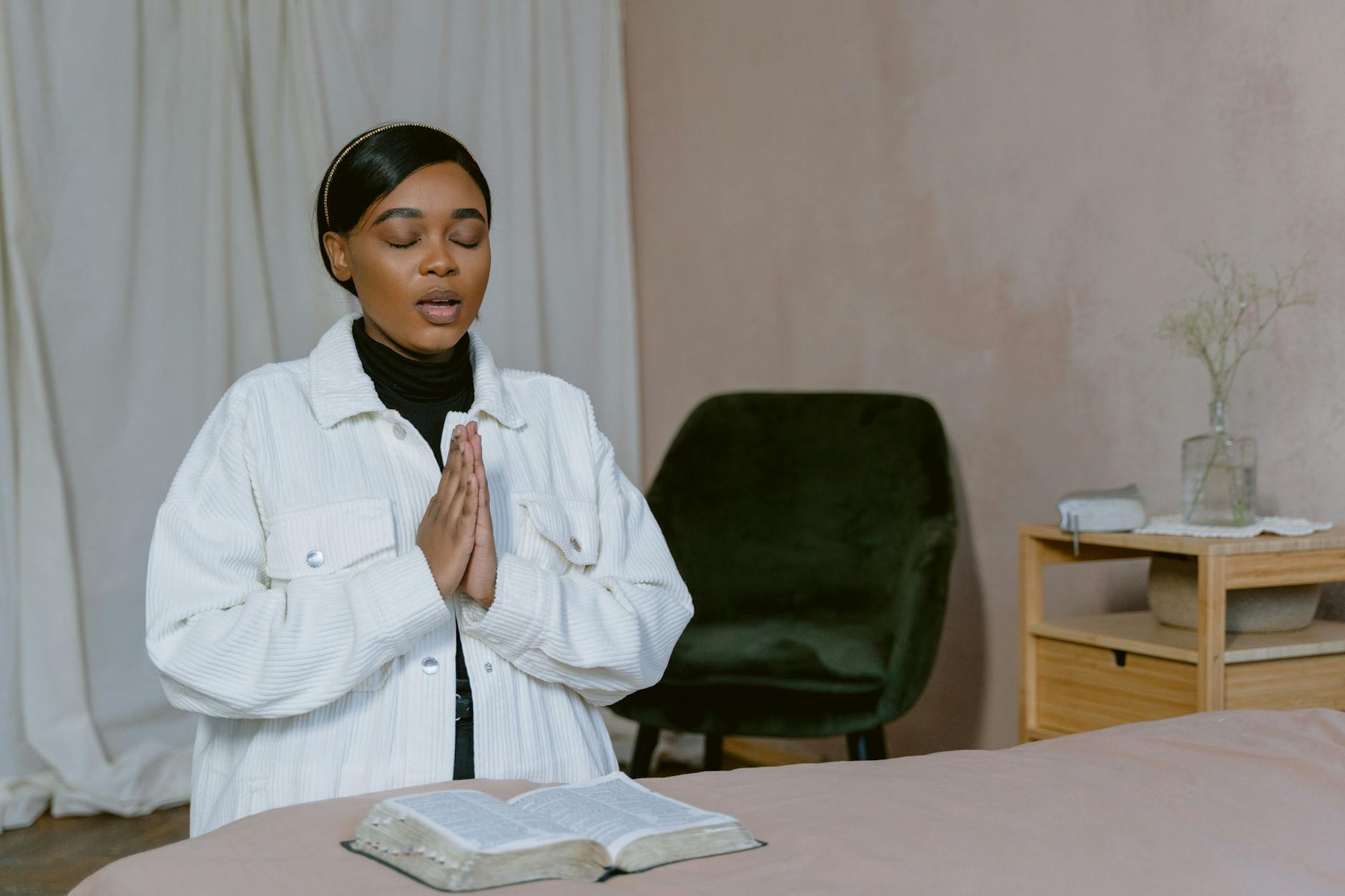
Lessons from Biblical Women for Modern Life. #virtuouswomen #womenoffaith

Photo by Tima Miroshnichenko on Pexels.com

Throughout Scripture, women emerge not only as mothers and wives but also as leaders, visionaries, and vessels of divine purpose. From the Old Testament to the New, their stories carry timeless lessons that transcend culture and era. Today, when modern women wrestle with identity, leadership, motherhood, career, and faith, the examples of biblical women provide profound guidance.

Deborah: Leadership with Wisdom and Courage

Deborah, prophetess and judge over Israel (Judges 4–5, KJV), stands as a model of godly leadership. She led Israel in a time of oppression, guiding military strategies while delivering God’s word with authority. Her story teaches modern women that leadership grounded in wisdom, humility, and obedience to God can transform communities. Today, women called to leadership—whether in the church, workplace, or home—can embrace Deborah’s example of courage without compromising grace.

Ruth: Loyalty and Faithfulness

The Moabite woman Ruth demonstrates loyalty and faith even in loss. Her declaration to Naomi, “Thy people shall be my people, and thy God my God” (Ruth 1:16, KJV), reveals a devotion beyond cultural barriers. Ruth’s faithfulness positioned her to be part of the lineage of Christ. Modern life, marked by broken relationships and fleeting commitments, can be enriched by Ruth’s example of perseverance, loyalty, and choosing integrity over convenience.

Esther: Courage to Speak Truth to Power

Queen Esther exemplifies bravery and discernment. Though hesitant at first, she risked her life to plead for her people, embodying the truth that “for such a time as this” (Esther 4:14, KJV), God positions His people to act. In today’s world, where systemic injustice and moral compromise abound, Esther’s courage encourages modern women to speak truth, defend the vulnerable, and use influence for the greater good.

Hannah: Prayer and Perseverance

Hannah’s story (1 Samuel 1, KJV) reveals the power of persistent prayer. Mocked and burdened by barrenness, she poured out her soul to the Lord and was blessed with Samuel, who became a prophet. Her testimony underscores the importance of resilience in prayer and trust in God’s timing. For modern women facing personal struggles—infertility, grief, or unmet desires—Hannah’s perseverance shows that God listens and answers in His divine season.

Mary, Mother of Jesus: Humility and Obedience

Mary’s acceptance of God’s will—“Be it unto me according to thy word” (Luke 1:38, KJV)—reflects radical obedience. Despite the social risks, she embraced her calling as the mother of the Messiah. Her humility and faith inspire modern women to surrender personal ambitions when God calls, trusting that His plans are greater than fear or societal judgment.

Mary Magdalene: Transformation and Devotion

Delivered from seven demons (Luke 8:2, KJV), Mary Magdalene became a devoted follower of Christ and the first to witness His resurrection. Her story shows the transformative power of grace and unwavering devotion. In an age where women often battle stigmas and labels, her example reminds us that past struggles do not disqualify anyone from becoming a faithful servant and witness of Christ.

Modern Application: Living Their Legacy

These women teach lessons still relevant today: Deborah challenges women to lead with wisdom; Ruth teaches loyalty and integrity; Esther embodies courage; Hannah reveals perseverance in prayer; Mary, mother of Jesus, exemplifies humility and obedience; Mary Magdalene represents redemption and devotion. Each narrative emphasizes that biblical womanhood is not passive but active, powerful, and divinely purposed.

In modern life, these lessons remind women to ground their identity in God’s word, resist societal pressures, and walk with strength clothed in faith. Their stories are not distant tales but living testimonies of how faith, character, and obedience bring transformation across generations.


References

  • The Holy Bible, King James Version.
  • Myers, A. C. (Ed.). (1987). The Eerdmans Bible Dictionary. Eerdmans.
  • Trible, P. (1984). Texts of terror: Literary-feminist readings of biblical narratives. Fortress Press.
  • Brenner, A. (1995). The feminist companion to the Bible. Sheffield Academic Press.
  • Day, P. L. (2007). Gender and difference in ancient Israel. Fortress Press.

testimony.

© thebrowngirldilemma.com

“He Carried Me Through”
—A Widow’s Testimony

The day my husband died, the sky did not change—but everything in my world collapsed. His absence was louder than any noise, and the silence between breaths became unbearable. I felt as if my soul had been torn from my chest, left bleeding in the arms of memory. No one truly prepares you for the weight of grief, for the ache of an empty side of the bed, for the clothes left hanging in closets that no longer carry a future. I stared at the walls that once echoed laughter and wondered how I would face this life—this cruel and sudden emptiness—alone. I whispered into pillows and prayed through tears, trying to understand how the love of my life could be here one moment and gone the next.

The nights were the hardest. In the dark, the pain became alive. I asked the Most High why. I asked Him how. How do I live without the one who knew my heart better than anyone? How do I smile when the one I laughed with is no longer here? I carried a heaviness that made even breathing feel like a burden. Yet somewhere between my anguish and my pleading, He met me. The Most High didn’t scold me for my sorrow; He held me through it. He reminded me through Scripture that I was not abandoned. “A father to the fatherless and a defender of widows is God in his holy dwelling” (Psalm 68:5). When I thought I would fall apart, He became my strength. When the world grew silent, His Word became louder.

Over time, He began to gently mend what was broken. I saw signs of my husband’s love in little things—a favorite song, a sunset, the kindness of strangers, and in the face of our son. But I saw the hand of the Most High in everything. He reminded me of His promises, that death is not the end for the righteous, and that I would see my beloved again. He showed me purpose in my pain and gave me new breath when mine had run out. I came to know Him not just as God of the heavens, but as a very present help in trouble. He surrounded me with people who prayed when I could not, who stood when I couldn’t rise, and He gave me the courage to walk again—even if slowly, even if with tears.

Today, I live not without grief, but with grace. My sorrow has become a psalm, my mourning a ministry. I am a widow, yes—but I am also a witness. The Most High carried me through the fire, and I came out refined, not consumed. My husband’s memory lives in my spirit, and the love we shared is eternal, written in the scrolls of heaven. Though I faced the valley of the shadow of death, I feared no evil—for He was with me. His rod and staff comforted me. And I will dwell in His presence all the days of my life.

Your story has power. What you’ve been through, how you’ve overcome, and the lessons you’ve learned can be a light to someone walking through a similar struggle. By sharing your testimony, you give hope, inspire faith, and show that victory is possible. Don’t underestimate the impact your journey can have—what was once a trial for you can become a testimony for others. Speak your truth, share your experiences, and let your life be a beacon of encouragement.

thebrowngirlnetwork@gmail.com

CashApp: $thebrowngirlnetwork

Thank you for your support! ❤️ Tasha