
Category Archives: Self Worth

Rebuilding Self-Worth

Photo by ShotPot on Pexels.com

Rebuilding self-worth is both a spiritual and psychological journey. When a person has experienced rejection, betrayal, or emotional abuse, their perception of themselves can become distorted. They may feel unworthy of love, success, or God’s blessings. Yet, Scripture reminds us that human value is not based on external validation but on God’s design. Psalm 139:14 declares, “I will praise thee; for I am fearfully and wonderfully made.” This verse is not a casual statement but a theological declaration that human worth is intrinsic, God-given, and unchangeable.

True self-worth begins with identity. Understanding that you are created in the image of God (Genesis 1:27) reframes how you see yourself. When the world tears you down, this truth acts as an anchor: you are not defined by failure, heartbreak, or rejection. Your worth comes from being a child of God. This identity is not earned through performance but received through grace (Ephesians 2:8–9).

One essential step in rebuilding self-worth is practicing self-care as an act of worship. The body is described as the temple of the Holy Spirit (1 Corinthians 6:19–20), meaning that caring for your physical, emotional, and mental health is a way of honoring God. Self-care is not indulgence; it is stewardship. Eating well, resting, exercising, and setting healthy boundaries help maintain the vessel God entrusted you with.

Romans 12:2 offers a prescription for mental and emotional renewal: “And be not conformed to this world: but be ye transformed by the renewing of your mind.” This verse links transformation with a mental shift. You must actively replace destructive thought patterns with thoughts aligned with God’s truth. This is where spiritual disciplines like prayer, meditation on Scripture, and fasting become tools for mental clarity.

A cognitive-behavioral approach (CBT) is useful for identifying and challenging distorted thoughts. CBT teaches you to examine automatic thoughts, test their validity, and replace them with healthier alternatives. For instance, when a person thinks, “I am unworthy of love,” they can counter with biblical truth: “I am loved with an everlasting love” (Jeremiah 31:3). This retrains the brain to align with spiritual reality.

Negative self-talk is often the residue of past trauma or toxic relationships. These internalized voices must be confronted. Second Corinthians 10:5 encourages believers to “cast down imaginations, and every high thing that exalteth itself against the knowledge of God.” This includes false narratives about your identity. Every thought that calls you worthless must be replaced with Scripture that affirms your value.

Affirmations are powerful tools for renewing the mind. Declaring “I am fearfully and wonderfully made” (Psalm 139:14) daily can shift your perspective over time. Speaking Scripture aloud reinforces truth at a neurological level, building new mental pathways that promote confidence and hope.

Forgiveness—both of others and of self—is a major step in restoring self-worth. Guilt and resentment can weigh heavily on the soul. When you forgive, you release the emotional poison that keeps you tied to the past. First John 1:9 assures believers that if we confess our sins, God is faithful to forgive and cleanse us. Accepting His forgiveness frees you from shame.

Journaling can help track growth and progress. Writing down prayers, thoughts, and victories allows you to see how far you have come. It also provides a space to pour out pain before God. Many women find healing in writing letters they never send, releasing old wounds and reclaiming their emotional voice.

Another vital step is surrounding yourself with life-giving community. Proverbs 27:17 teaches that “iron sharpeneth iron; so a man sharpeneth the countenance of his friend.” Choose friends who speak truth, encourage your growth, and hold you accountable. Healthy community reflects God’s love back to you and reminds you that you are not alone.

Practicing gratitude shifts the focus from what you lack to what God has already done. Keeping a gratitude journal can retrain the brain to notice blessings instead of disappointments. Philippians 4:6–7 connects thanksgiving with peace, promising that the peace of God will guard your heart and mind when you bring your requests before Him with gratitude.

Worship also plays a role in rebuilding self-worth. Praising God lifts the spirit and resets focus. Psalm 100:4 invites us to “enter into his gates with thanksgiving, and into his courts with praise.” Worship shifts your attention from your inadequacies to God’s greatness, restoring perspective and hope.

Healthy boundaries are another layer of self-worth. Boundaries protect your heart from unnecessary harm and reinforce the message that your well-being matters. Proverbs 4:23 instructs, “Keep thy heart with all diligence; for out of it are the issues of life.” Setting limits is not selfish; it is wise stewardship of your emotional health.

Rest is often underestimated in the healing process. Jesus Himself withdrew to solitary places to rest and pray (Mark 1:35). Taking time for stillness allows space for God to speak to your heart, reveal hidden wounds, and fill you with His peace.

Renewing self-worth also means redefining success according to God’s standards. The world may measure worth by appearance, wealth, or status, but God looks at the heart (1 Samuel 16:7). Focusing on character development—kindness, humility, and integrity—gives you a sense of worth rooted in eternal values.

The process of rebuilding self-worth is not always linear. There will be days of progress and days of struggle. Patience with yourself is crucial. Philippians 1:6 reminds believers that God, who began a good work in you, will complete it. Trust the process and know that setbacks are not the end of your story.

Engaging in acts of service can also strengthen self-worth. When you help others, you experience purpose beyond your pain. Galatians 5:13 reminds believers to serve one another in love, which reinforces that you have something valuable to offer the world.

Over time, as you consistently renew your mind, practice self-care, and align your identity with Scripture, your confidence will return. You will begin to walk with assurance, speak with boldness, and make decisions from a place of wholeness.

Ultimately, rebuilding self-worth glorifies God. When you embrace who He made you to be, you reflect His image to the world. Your healing becomes a testimony that draws others closer to Him, proving that His grace is sufficient and His power is made perfect in weakness (2 Corinthians 12:9).


References

  • Holy Bible, King James Version (KJV).
  • Beck, J. S. (2021). Cognitive Behavior Therapy: Basics and Beyond. Guilford Press.
  • Cloud, H., & Townsend, J. (2017). Boundaries: When to Say Yes, How to Say No to Take Control of Your Life. Zondervan.
  • Peterson, C., & Seligman, M. E. P. (2004). Character Strengths and Virtues: A Handbook and Classification. Oxford University Press.

The Dating Playbook for Women Who Know Their Worth.

Knowing one’s worth is the foundation of healthy dating. A woman who understands her value does not enter relationships seeking validation but discernment. She recognizes that companionship is a complement to her life, not a remedy for emptiness. This awareness reshapes how she dates, what she tolerates, and whom she allows access to her heart.

A woman who knows her worth begins with self-respect. She honors her boundaries, her time, and her emotional energy. Dating is not about proving desirability but about evaluating alignment. Scripture affirms that her body and life carry sacred value, not to be treated casually or without honor.

Intentionality is central to wise dating. Rather than drifting into connections, a woman of worth dates with clarity of purpose. She understands that God is not the author of confusion, and therefore she seeks relationships marked by clarity, consistency, and reverence for righteousness.

Discernment is more powerful than attraction. While chemistry may spark interest, character sustains connection. A discerning woman allows time to reveal truth, remembering that desire without discipline often leads to regret. “He that ruleth his spirit is better than he that taketh a city” (Proverbs 16:32, KJV).

Boundaries are not walls but safeguards. A woman who knows her worth establishes emotional, physical, and spiritual limits early. These boundaries protect her purity and peace. “Abstain from all appearance of evil” (1 Thessalonians 5:22, KJV) becomes a guiding principle, not a burden.

Self-worth reshapes how temptation is viewed. A woman grounded in her values does not flirt with compromise. She understands that fornication carries spiritual, emotional, and relational consequences. “Flee fornication. Every sin that a man doeth is without the body; but he that committeth fornication sinneth against his own body” (1 Corinthians 6:18, KJV).

Emotional availability must be earned, not freely given. A wise woman does not rush intimacy or mistake attention for commitment. She remembers that her body is sacred. “Know ye not that your body is the temple of the Holy Ghost which is in you… ye are not your own” (1 Corinthians 6:19, KJV).

Faith shapes her dating posture. A woman who knows her worth understands that purity is not punishment but protection. “For this is the will of God, even your sanctification, that ye should abstain from fornication” (1 Thessalonians 4:3, KJV). Her obedience flows from reverence, not fear.

Consistency becomes her measure of sincerity. A man who honors God will also honor her boundaries. Pressure, impatience, or manipulation are immediately recognized as red flags. A woman of worth knows that anyone who truly values her will not ask her to violate her convictions.

Dating wisely requires emotional responsibility. A woman who knows her worth does not attempt to heal or rescue potential partners. She understands that she cannot sacrifice her purity or peace to prove loyalty. Love that demands disobedience to God is not love at all.

Patience is an act of strength. A woman who waits does not lack options; she exercises wisdom. “Better is the end of a thing than the beginning thereof: and the patient in spirit is better than the proud in spirit” (Ecclesiastes 7:8, KJV). Waiting refines discernment.

Respect is non-negotiable. A woman of worth does not tolerate sexual pressure disguised as affection. She understands that honor precedes intimacy. “Marriage is honourable in all, and the bed undefiled: but whoremongers and adulterers God will judge” (Hebrews 13:4, KJV).

Modern dating culture often mocks purity, presenting restraint as outdated. A woman who knows her worth resists this narrative. She understands that holiness is timeless and that guarding her body guards her future. She does not confuse freedom with recklessness.

Clarity brings peace. A woman grounded in truth asks direct questions and communicates expectations early. She does not fear honesty because she values righteousness more than attention. Light exposes intention, and she welcomes that exposure.

Healing is essential to maintaining purity. A woman who knows her worth addresses past wounds so they do not lead her into compromise. She understands that unhealed pain often seeks comfort in unhealthy intimacy. Healing restores discernment.

Confidence in purity is quiet and steady. It does not argue, explain, or beg for understanding. A woman of worth stands firm, knowing obedience to God outweighs momentary pleasure. “Thy word have I hid in mine heart, that I might not sin against thee” (Psalm 119:11, KJV).

Sexual boundaries reflect spiritual maturity. A woman who honors her body honors God. She understands that intimacy creates bonds that should be reserved for a covenant. Purity preserves emotional clarity and spiritual authority.

A woman who knows her worth pays attention to how relationships affect her spirit. Confusion, guilt, and anxiety are signals to step back. Peace, safety, and alignment with God’s Word signal wisdom. Her conscience becomes her compass.

Dating is not about proving desirability but protecting destiny. A woman who knows her worth understands that obedience today safeguards joy tomorrow. She refuses to exchange long-term purpose for short-term pleasure.

The dating playbook for women who know their worth is rooted in holiness, discernment, and self-respect. It chooses obedience over impulse and purpose over pressure. Such a woman understands that remaining pure is not about deprivation, but about preparation—for a love that honors God and honors her.


References

The Holy Bible, King James Version. (1611/2017). Cambridge University Press.

1 Corinthians 6:18–19, KJV
1 Thessalonians 4:3, KJV
Hebrews 13:4, KJV
Psalm 119:11, KJV
Proverbs 16:32, KJV
Ecclesiastes 7:8, KJV

Cloud, H., & Townsend, J. (1992). Boundaries. Zondervan.

Stanley, S. M., Rhoades, G. K., & Markman, H. J. (2006). Sliding Versus Deciding. Family Relations, 55(4), 499–509.

Girl Talk Series: You are worthy!

Black woman, this is written directly to you. You are worthy—not because the world says so, but because the Most High declared it long before you took your first breath. Your beauty, your brilliance, your Blackness, your soul, and your very existence are intentional. You are not an accident, not overlooked, and not forgotten. You are a chosen vessel, crafted with divine detail, shaped through generations of survival, and crowned with a spiritual inheritance that cannot be taken. Scripture tells us, “Thou art all fair, my love; there is no spot in thee” (Song of Solomon 4:7, KJV). Walk into that truth, sis. You are worthy.

Black women carry a weight that is both ancestral and divine. You have stood in the gaps when no one stood for you. You have been the backbone of families, communities, and movements. Yet even in your strength, you deserve softness, gentleness, and love. The Most High sees your labor, your tears, and your silent prayers. He calls you precious, for the Word says, “Since thou wast precious in my sight… I have loved thee” (Isaiah 43:4, KJV).

You are worthy because you belong to a chosen lineage. The Scriptures speak of a people who were scattered, oppressed, and afflicted, yet never abandoned by God. Many scholars and believers identify the descendants of the transatlantic slave trade within these prophetic narratives. That means you are not just a woman trying to survive—you are a daughter of the covenant, a living testament to prophecy, and a reminder that the Most High keeps His word. “For thou art an holy people unto the LORD thy God… above all people that are upon the face of the earth” (Deuteronomy 7:6, KJV).

Your Blackness is good. Your melanin is not a curse; it is a covering, a crown, and a reflection of divine craftsmanship. The world has tried to twist it into something lesser, but God Himself said that what He made is “very good.” From the deep richness of your skin to the coils of your hair, you are a masterpiece. You are the embodiment of resilience and radiance that continues to shine in environments designed to dim you.

Black woman, you are not defined by rejection. Though society often overlooks you, Scripture reminds you that you are chosen even when man rejects you. “The stone which the builders refused is become the head stone of the corner” (Psalm 118:22, KJV). You are foundational—nothing can be built without you. Your worth is not attached to acceptance from a world that fears your power. Your value is secured in the Most High.

The pain you’ve carried has not gone unnoticed. Your heartbreaks, disappointments, and seasons of isolation serve a greater purpose. The Father sometimes hides His best treasures before revealing them to the world. Even Christ Himself said, “Blessed are they that mourn: for they shall be comforted” (Matthew 5:4, KJV). You will be comforted. Your tears water the soil where your blessings will grow.

You are worthy of love—not the bare minimum, not the half-hearted, not the conditional—but divine, abundant, patient, and joyful love. The kind that mirrors God’s heart. The kind that cherishes you, protects you, and honors the queen you are. “Charity never faileth” (1 Corinthians 13:8, KJV). You deserve a love that does not fail.

You are not too strong, too loud, too emotional, or too much. You are everything the Most High intended you to be. Even your voice carries the weight of generations. Your passion is purpose. Your fire is your anointing. The world may try to shame your intensity, but God uses it to shake foundations and birth change.

Black woman, your mind is brilliant. Your thoughts carry wisdom, creativity, and strategy. The Most High equipped you not only with beauty but with intellect and discernment. Proverbs 31 describes a woman who “openeth her mouth with wisdom” (Proverbs 31:26, KJV). That is you—wise, insightful, and spiritually attuned.

Your body is sacred. Not an object, not a stereotype, not something to be exploited. It is a temple and a testimony. Every curve, every scar, every inch is part of your story. The world commodifies what God sanctified. Don’t let culture cheapen what heaven crowned.

Your spirit is powerful, stronger than iron chains and generational attacks. You are a warrior who has survived what others could not. When the enemy sought to destroy your ancestors, the Most High preserved your bloodline. You are walking evidence of divine protection. “No weapon that is formed against thee shall prosper” (Isaiah 54:17, KJV).

You are worthy of rest. You do not have to earn your existence. You do not have to be everyone’s savior. Even the Proverbs 31 woman rested in the strength of God, not her own. Peace is your birthright, not a reward for exhaustion.

Your voice matters. Your testimony matters. Your journey matters. The Most High has given you spiritual authority and influence. Whether you speak softly or boldly, heaven backs your words when they are aligned with His will.

Your future is blessed. Even if your past was heavy, your destiny is not determined by it. The Most High specializes in turning ashes into beauty. “He will give you beauty for ashes” (Isaiah 61:3, KJV). Your next season is one of transformation and elevation.

You are not alone. The Most High walks with you, covers you, and carries you. Even in silence, He is working. Even in darkness, He is present. “I will never leave thee, nor forsake thee” (Hebrews 13:5, KJV). His love is unwavering.

Your femininity is divine. It is both soft and strong. You carry the breath of God and the legacy of women who built nations. There is nothing ordinary about you. Your presence shifts atmospheres. Your prayers move mountains.

Your dreams are valid. Your gifts are needed. Your purpose is real. You were created with intention, and the kingdom suffers when you diminish your light. Arise, queen. Shine unapologetically. “Arise, shine; for thy light is come” (Isaiah 60:1, KJV).

Your lineage is royal. You descend from a people the Most High calls His own—a people who endured captivity yet remain spiritually undefeated. You are part of that victory. You are the daughter of survivors, prophets, and kings.

You are worthy of joy—overflowing, abundant, untouchable joy. Joy that the world cannot give and cannot steal. You deserve to smile without apology and laugh without restraint because the Most High delights in you.

You are chosen. You are loved. You are seen. You are protected. You are celebrated by heaven even when earth fails to honor you. The Most High has called you worthy and nothing can overturn His declaration.

Black woman, rise into your identity. You are worthy—not just of love but of honor, rest, joy, and divine purpose. The Most High chose you, and that makes you unstoppable.


References (KJV)

Deuteronomy 7:6; Isaiah 43:4; Song of Solomon 4:7; Psalm 118:22; Matthew 5:4; 1 Corinthians 13:8; Proverbs 31:26; Isaiah 54:17; Isaiah 61:3; Hebrews 13:5; Isaiah 60:1.

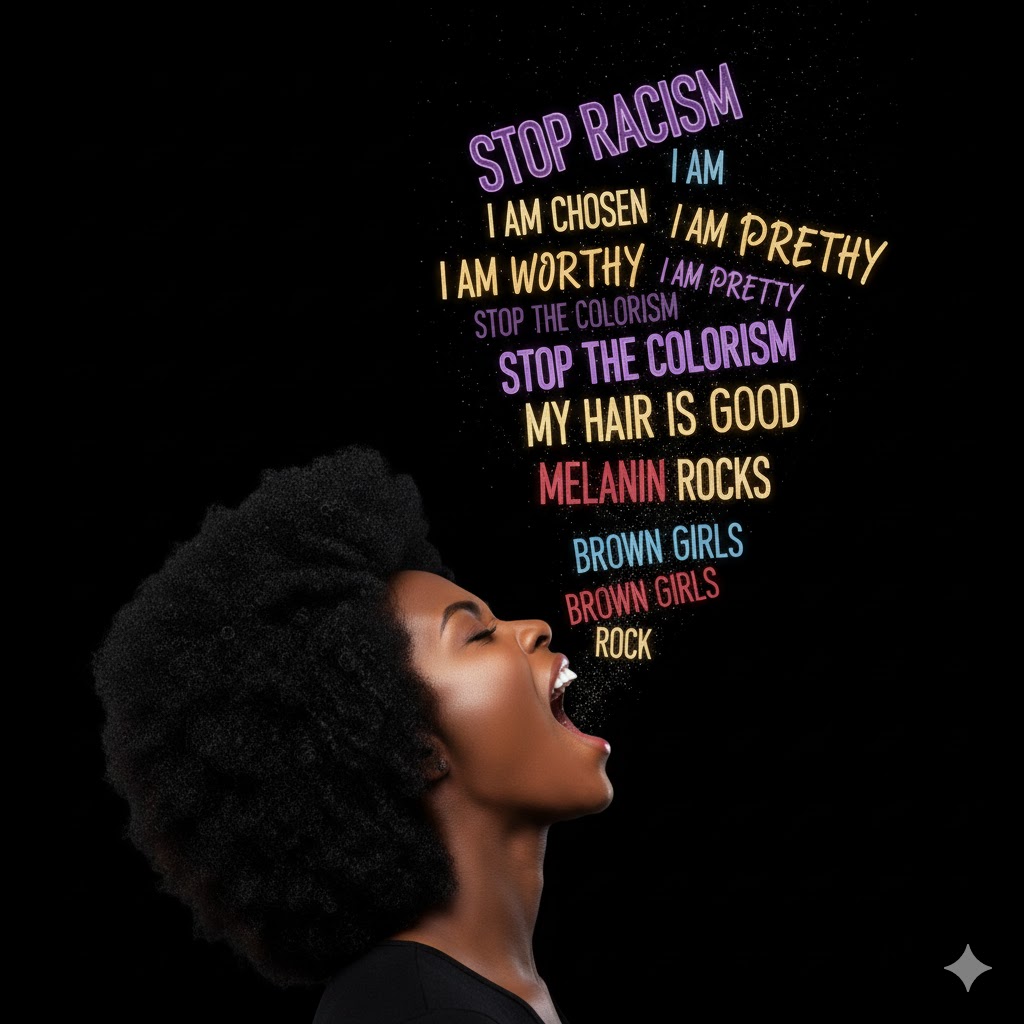
Confidence Is Contagious: Building Self-Worth as a Brown Girl with Virtual confidence.

Photo by PeopleByOwen on Pexels.com

Confidence is a powerful force that extends beyond individual self-esteem—it radiates and influences those around us. For brown girls, cultivating self-worth is both a personal journey and a social statement. Historical colorism, media bias, and societal beauty standards often create barriers to self-acceptance. Yet, embracing one’s skin tone, hair texture, and cultural identity fosters resilience, pride, and confidence.

Self-worth begins with self-recognition. Acknowledging one’s unique features and accomplishments—regardless of societal approval—lays the foundation for authentic confidence. Daily affirmations, mentorship, and representation of brown excellence in media serve as crucial tools in reinforcing value.

Confidence is also relational. When brown girls model self-assuredness, they inspire peers, younger generations, and communities to embrace their identity. By celebrating natural beauty, cultural heritage, and personal achievements, confidence becomes contagious, creating a ripple effect of empowerment.


Social Media and Cultural Influence

Social media platforms are pivotal in shaping perceptions of beauty, identity, and cultural pride. For brown girls, Instagram, TikTok, and Twitter provide spaces to engage with peers, influencers, and movements that celebrate melanin-rich skin, natural hair, and cultural heritage. Hashtags like #BrownSkinGirl, #MelaninMagic, and #BlackGirlJoy amplify representation, fostering visibility and pride.

Cultural influence on social media extends beyond aesthetics. Influencers who share personal narratives, fashion, and hair tutorials provide models of empowerment and authenticity. These platforms also enable brown girls to challenge stereotypes, critique colorism, and redefine beauty norms. The psychological benefits include increased self-esteem, affirmation of identity, and motivation to express individuality boldly.


Virtual Confidence: Navigating Online Spaces as a Brown Girl

While social media offers empowerment, it also exposes brown girls to colorism, negative comments, and unrealistic beauty standards. Navigating these spaces requires intentional strategies for maintaining confidence:

  1. Curate Your Feed: Follow accounts that celebrate diversity and representation.
  2. Set Boundaries: Limit exposure to harmful comments or comparison-driven content.
  3. Engage Authentically: Share personal style, achievements, and narratives confidently.
  4. Participate in Movements: Join online campaigns like #MelaninPoppin or #BrownGirlJoy to connect with supportive communities.
  5. Affirm Daily: Use self-affirmations that reinforce pride in skin tone, heritage, and accomplishments.

Virtual confidence emerges when brown girls use online spaces to celebrate identity, cultivate pride, and foster connection. By navigating these platforms intentionally, they can turn potential vulnerability into empowerment, inspiring themselves and others.

Virtual Confidence for Brown Girls: A Social Media Toolkit

1. Affirm Your Identity

Daily Affirmation Examples:

  • “My skin is radiant, my heritage is powerful, my confidence is unstoppable.”
  • “I am proud of my features, my voice, and my story.”
    Visual Idea: Create colorful, shareable graphics with brown skin tones and affirmations.

2. Curate Your Feed

Tips:

  • Follow influencers and creators celebrating melanin-rich beauty (#MelaninMagic, #BrownSkinGirl).
  • Engage with content that uplifts your identity and cultural pride.
    Visual Idea: Sample Instagram or TikTok feed mock-up highlighting inclusive accounts.

3. Engage Authentically

Tips:

  • Share your personal style, natural hair, makeup, and cultural expression.
  • Post stories, videos, or reels celebrating achievements or heritage.
    Visual Idea: Side-by-side images of selfies, cultural attire, and creative expressions.

4. Set Boundaries

Tips:

  • Use mute, block, or restrict functions to protect mental health.
  • Limit exposure to comparison-driven or negative content.
    Visual Idea: A “Digital Self-Care Checklist” graphic.

5. Participate in Empowering Movements

Hashtags to Follow or Use:

  • #BrownSkinGirl
  • #MelaninPoppin
  • #BlackGirlJoy
  • #VirtualConfidence
    Visual Idea: A hashtag collage showing diverse users celebrating melanin online.

6. Build Community

Tips:

  • Join virtual groups, forums, or challenges that celebrate brown girls.
  • Comment and interact with peers to share positivity and support.
    Visual Idea: A mini infographic of networked circles showing peer support connections.

7. Celebrate Achievements

Tips:

  • Post accomplishments, milestones, and creative projects.
  • Recognize your growth publicly or privately, digitally or offline.
    Visual Idea: Highlight reel or graphic “Celebrate Your Wins” template.

Virtual spaces can amplify confidence when navigated intentionally. By curating supportive content, engaging authentically, and affirming identity, brown girls can transform online platforms into arenas of empowerment, self-expression, and cultural pride. Confidence online is contagious—what you celebrate in yourself inspires the entire community.

References

  • Hunter, M. (2007). The Persistent Problem of Colorism: Skin Tone, Status, and Inequality. Sociology Compass, 1(1), 237–254.
  • Phinney, J. S. (1990). Ethnic Identity in Adolescents and Adults: Review of Research. Psychological Bulletin, 108(3), 499–514.
  • The Holy Bible, King James Version. (1611). Song of Solomon 1:5.