
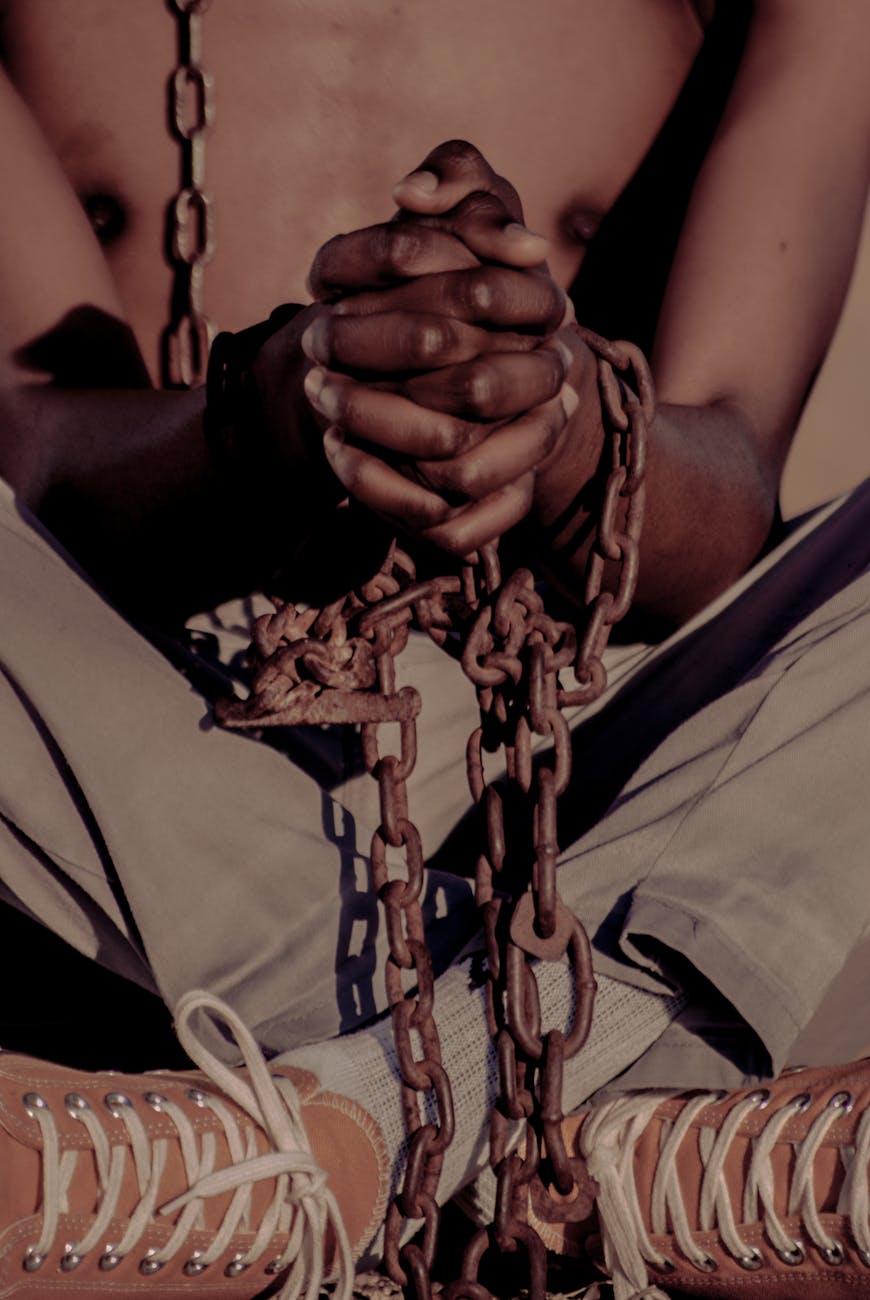
The Emancipation Proclamation and Its Impact
The Emancipation Proclamation, issued on January 1, 1863, was a wartime executive order that declared all enslaved people in Confederate-held territory to be free (Foner, 2010). Although it did not immediately free all enslaved people, it transformed the character of the war, shifting its aim from merely preserving the Union to also including the abolition of slavery. It allowed Black men to enlist in the Union Army, leading to the formation of over 180,000 Black soldiers who fought for their freedom and the Union cause.
The Emancipation Proclamation did not apply to the border slave states (Delaware, Kentucky, Maryland, Missouri) or areas of the Confederacy already under Union control. It applied only to states in active rebellion. Here’s what it declared:
“That on the first day of January, A.D. 1863, all persons held as slaves within any State or designated part of a State, the people whereof shall then be in rebellion against the United States, shall be then, thenceforward, and forever free.”
Main Points:
- Freedom for enslaved people in Confederate-controlled territories (not the entire U.S.).
- Authorized Black men to serve in the Union Army and Navy, transforming the war into a fight for human liberty.
- Called for the U.S. military to recognize and maintain the freedom of formerly enslaved people.
- Framed as a “fit and necessary war measure” for suppressing the rebellion.
Lincoln concluded with a solemn declaration:
“And upon this act, sincerely believed to be an act of justice, warranted by the Constitution, upon military necessity, I invoke the considerate judgment of mankind and the gracious favor of Almighty God.”
Limitations of the Emancipation Proclamation
Despite its powerful rhetoric, the Proclamation did not immediately free a single slave in practice. Why?
- It only applied to areas outside of Union control.
- It excluded the border states and certain regions within Confederate states that had already surrendered or been reclaimed.
- Enforcement depended entirely on Union military success.
However, its symbolic and legal significance was profound.
Impact on Black Americans and the War
- Moral Clarity: It transformed the Civil War from a battle for union into a crusade against slavery, giving the war a moral imperative that resonated globally.
- Black Enlistment: Over 180,000 Black men joined the Union Army and Navy, shifting the tide of the war and demonstrating extraordinary valor (Berlin et al., 1992).
- Pathway to the 13th Amendment: Though not a constitutional law, the Emancipation Proclamation paved the way for the 13th Amendment (ratified in 1865), which permanently abolished slavery in the United States.
- Global Message: It discouraged foreign powers (especially Britain and France) from supporting the Confederacy, as they had already abolished slavery in their own empires.
Historical Interpretation
- Frederick Douglass called the Emancipation Proclamation “the immortal paper” that turned a war for Union into a war for freedom.
- Historian Eric Foner notes that although it was limited in scope, it was “a revolutionary act of immense consequence” (Foner, 2010).
- Lincoln later said, “I never, in my life, felt more certain that I was doing right, than I do in signing this paper.”
Though legally narrow and strategically calculated, the Emancipation Proclamation was a turning point in American history. It elevated the struggle of enslaved African Americans onto the national and international stage, set the foundation for constitutional abolition, and forced the United States to reckon with its original sin—slavery.
It was not merely a document of war; it was a moral declaration that the U.S. could no longer be a nation divided between slavery and freedom.
Abraham Lincoln: The Reluctant Liberator and the Legacy of Freedom
Abraham Lincoln, the 16th President of the United States, stands as one of the most pivotal figures in American history. Born on February 12, 1809, in a log cabin in Hardin County, Kentucky, Lincoln rose from humble beginnings to the nation’s highest office. Self-taught and profoundly principled, he guided the country through its most divisive era—the Civil War—preserving the Union and paving the way toward the abolition of slavery.
Lincoln’s motivations were both moral and strategic. While he personally opposed slavery, he prioritized saving the Union. In a famous letter to Horace Greeley in 1862, Lincoln wrote, “If I could save the Union without freeing any slave, I would do it… and if I could save it by freeing all the slaves, I would do it” (Lincoln, 1862). The proclamation was as much a military strategy as a moral statement—aimed at weakening the Confederacy’s economic base and preventing foreign nations from supporting the South.
Why Lincoln Helped Black People: A Shift in Moral Clarity
Lincoln’s evolution on slavery was gradual. Initially, he supported compensated emancipation and colonization schemes to send freed slaves to Africa or the Caribbean. However, as the war progressed, he began to recognize the moral and constitutional necessity of abolition. Influenced by abolitionists like Frederick Douglass and the courage of Black soldiers, Lincoln’s policies matured, culminating in his push for the Thirteenth Amendment, which permanently abolished slavery in the United States.
The Division Between North and South
The Civil War exposed the deep ideological divide between the industrialized North and the agrarian, slaveholding South. The North viewed slavery as economically backward and morally indefensible, while the South saw it as integral to its economy and social order. Lincoln’s leadership during this period forced the issue to the national forefront, resulting in radical social and constitutional changes that reshaped American society.
His Rise to the Presidency
Lincoln’s political career began in the Illinois State Legislature, and he later served a single term in Congress. It was his debates with Senator Stephen Douglas during the 1858 Illinois Senate race that catapulted him to national prominence. Though he lost that race, his powerful oratory and moral conviction caught the attention of the newly-formed Republican Party, which nominated him for President in 1860. His election triggered Southern secession, plunging the nation into civil war.
Family, Legacy, and Lineage
Lincoln married Mary Todd, a woman from a wealthy Kentucky family, and together they had four sons—Robert, Edward, William, and Thomas (Tad). Only Robert lived to adulthood. Lincoln’s ancestry was primarily English, and while there have been unsubstantiated rumors that he had African ancestry, there is no verified genealogical evidence supporting this claim (Oates, 1977). However, the cultural symbolism of his role in ending slavery has often led Black Americans to claim a spiritual kinship with him.
Was Lincoln the Greatest President for Black Americans?
While Lincoln is often hailed as the “Great Emancipator,” his legacy is nuanced. He took critical steps toward ending slavery, but not always out of an abolitionist conviction. Later presidents such as Lyndon B. Johnson, who signed the Civil Rights Act of 1964 and the Voting Rights Act of 1965, also played pivotal roles in advancing Black civil rights. Barack Obama, the first Black president, holds a symbolic and historical significance that echoes Lincoln’s foundational impact.
The Tragic End: Assassination by John Wilkes Booth
Lincoln was assassinated on April 14, 1865, by John Wilkes Booth, a Confederate sympathizer, at Ford’s Theatre in Washington, D.C., just days after the Confederate surrender at Appomattox. Booth believed Lincoln’s actions had destroyed the South and sought to avenge its downfall. Lincoln died the next morning, becoming a martyr for the Union and for liberty.
Conclusion
Abraham Lincoln remains one of the most consequential leaders in American history. His legacy, especially in the Black community, is one of complex admiration. Though not without contradictions, his leadership during the Civil War and his eventual commitment to abolition fundamentally reshaped the nation. His decisions laid the groundwork for future civil rights advancements, and his vision of a united, free America continues to inspire generations.
References
- Foner, E. (2010). The Fiery Trial: Abraham Lincoln and American Slavery. W. W. Norton & Company.
- Lincoln, A. (1862). Letter to Horace Greeley, August 22, 1862.
- Oates, S. B. (1977). With Malice Toward None: A Life of Abraham Lincoln. Harper & Row.
- Berlin, I., Reidy, J. P., & Rowland, L. (1992). Freedom: A Documentary History of Emancipation, 1861–1867. Cambridge University Press.
- Foner, E. (2010). The Fiery Trial: Abraham Lincoln and American Slavery. W. W. Norton & Company.
- Lincoln, A. (1863). The Emancipation Proclamation. U.S. National Archives.
 THE BROWN GIRL DILEMMA