
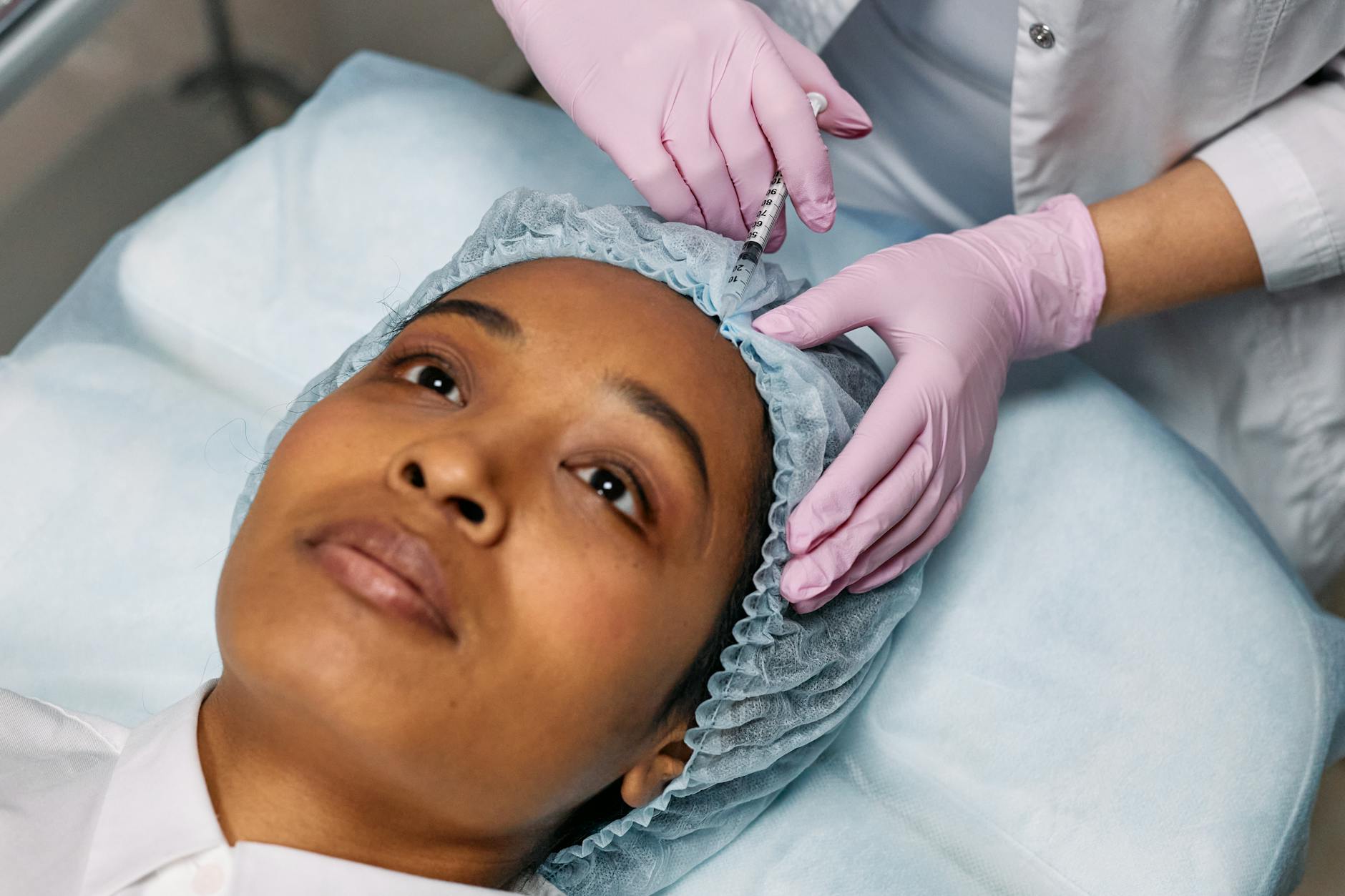
The pursuit of beauty has existed for centuries, but in modern society, it has taken on new dimensions with the widespread use of plastic surgery. Increasingly, men and women are willing to undergo painful, expensive, and sometimes dangerous procedures to alter their natural appearance. This fixation on artificial beauty reflects deeper issues of self-esteem, cultural pressure, and misplaced value on outward appearance rather than inner character. The Bible warns against such vanity, urging believers to focus on the “hidden man of the heart” (1 Peter 3:3 -4, KJV), where true beauty lies.
The Psychology of Plastic Surgery
From a psychological standpoint, many people who seek plastic surgery struggle with body image dissatisfaction, social comparison, and the pressures of perfectionism. Studies have linked high usage of cosmetic surgery to body dysmorphic disorder (BDD)—a condition where individuals obsess over perceived flaws in their appearance (Sarwer et al., 2007). Social media platforms further intensify this by promoting “filter culture” and unrealistic beauty ideals, leading many to feel inadequate in their natural state. While some individuals pursue cosmetic enhancements for reconstructive purposes after accidents or illness, the majority seek it for vanity-driven reasons tied to self-worth and societal approval.
Popular Procedures and Cultural Influence
The most popular plastic surgery procedures include rhinoplasty (nose reshaping), liposuction, breast augmentation, buttock enhancement (such as the Brazilian Butt Lift), eyelid surgery, and facelifts. In non-surgical categories, Botox and dermal fillers dominate. Celebrities have both normalized and accelerated these trends. Figures such as the Kardashians are often cited by plastic surgeons as the most requested “look” (Devgan, 2021). Other celebrities like Michael Jackson, Lil’ Kim, and Jocelyn Wildenstein became famous for their extensive facial surgeries. Surgeons report that patients often bring photos of celebrities or even AI-generated images of themselves to consultations, asking to be transformed into “idealized” versions of beauty.
Most Popular Plastic Surgery Procedures
According to the 2024 ASPS (American Society of Plastic Surgeons) report:
- Top Surgical Procedures:
- Liposuction: ~349,728 cases
- Breast augmentation: ~306,196 cases
- Tummy tuck (abdominoplasty): ~171,064 cases
- Breast lift: ~153,616 cases
- Eyelid surgery (blepharoplasty): ~120,755 cases American Society of Plastic SurgeonsPlastic Surgery Practice
- Top Minimally Invasive Treatments:
- Neuromodulator injections (e.g., Botox): ~9.88 million procedures
- Hyaluronic acid fillers: ~5.33 million procedures
- Skin resurfacing (lasers, peels): ~3.7 million procedures American Society of Plastic SurgeonsPlastic Surgery Practice
These trends reflect both enduring body contouring demands and the growing popularity of quick, minimally invasive procedures.
2. Which Celebrity Faces Are Most Requested?
Plastic surgeons report strong demand to emulate the appearance of celebrities, particularly members of the Kardashian-Jenner family, renowned for contoured bodies, full lips, and balanced facial features. However, now, many clients bring filtered selfies, seeking to replicate surgically what filters achieve—a phenomenon referred to as “Snapchat Dysmorphia.” Wikipedia
3. Psychology: Why Do People Get Plastic Surgery?
- Self-Image & Identity: Many seek boosted confidence or wish to look refreshed rather than drastically altered. Surgeons like Dr. Banek integrate psychological evaluations to understand client motivations. The Times
- Social Media Influence: The rise of social media and filter culture increases facial and body dissatisfaction. A study from Boston University found a jump in people considering cosmetic surgery—from 64% to 86%—and increased surgeon consultations. New York Post
- Psychological Traits: Research shows that high levels of perfectionism and external appearance pressure predict increased interest in cosmetic procedures. Allure
Summary Table
| Topic | Insight |
|---|---|
| Top Procedures (2024) | Liposuction, breast augmentation, abdominoplasty, breast lift, eyelid surgery |
| Celebrity Trends | Kardashian-inspired looks and “filtered selfie” aesthetic requests |
| Why People Opt In | To improve confidence, influenced by social media, driven by body image issues |
The Cost of Artificial Beauty
Plastic surgery is also a multi-billion-dollar industry. In the United States, procedures can range from $5,000 to $15,000 for breast or body operations, and $7,500 or more for facial surgeries (American Society of Plastic Surgeons, 2022). Non-surgical procedures, though less invasive, still cost hundreds to thousands annually due to repeat maintenance. Beyond financial cost, patients often face physical risks such as infection, scarring, nerve damage, or even death from procedures like the Brazilian Butt Lift, which has one of the highest mortality rates among elective surgeries.
Biblical Teachings on Beauty
The Bible warns against excessive focus on outward appearance. Proverbs 31:30 (KJV) reminds us, “Favour is deceitful, and beauty is vain: but a woman that feareth the Lord, she shall be praised.” Similarly, 1 Timothy 2:9 encourages modesty and inner godliness over outward adornment. God created each person “fearfully and wonderfully made” (Psalm 139:14, KJV), and altering His vanity design can reflect ingratitude and misplaced priorities. While the Bible does not specifically mention plastic surgery, it consistently elevates inner character, spiritual fruit, and holiness above physical alterations.
Why People Do It
The reasons people undergo plastic surgery are deeply tied to insecurity, cultural standards, and societal glorification of celebrity beauty. Many believe it will bring happiness, confidence, or romantic fulfillment, but psychological studies reveal that satisfaction often fades, leading to repeated procedures (Honigman et al., 2004). In essence, it becomes a cycle of chasing perfection that never delivers lasting peace. The Bible teaches that true contentment cannot be bought or surgically implanted but is rooted in faith, identity in God, and the love of Christ (Philippians 4:11).
Conclusion
Plastic surgery reflects a culture that idolizes artificial beauty and neglects the spiritual truth that worth is found in God. While reconstructive procedures have legitimate purposes, the obsession with vanity-driven alterations reveals a deeper spiritual and psychological struggle. For believers, the call is clear: resist the false promises of worldly beauty standards and embrace the eternal beauty of a heart aligned with God.
References
- American Society of Plastic Surgeons. (2022). Plastic Surgery Statistics Report. Retrieved from https://www.plasticsurgery.org
- Devgan, L. (2021). The Kardashian Effect: How Celebrity Culture Influences Plastic Surgery. Journal of Cosmetic Surgery, 38(5), 112–120.
- Honigman, R., Phillips, K. A., & Castle, D. J. (2004). A review of psychosocial outcomes for patients seeking cosmetic surgery. Plastic and Reconstructive Surgery, 113(4), 1229–1237.
- Sarwer, D. B., Cash, T. F., Magee, L., Williams, E. F., Thompson, J. K., Roehrig, M., … & Anderson, D. A. (2007). Female college students and cosmetic surgery: An investigation of experiences, attitudes, and body image. Plastic and Reconstructive Surgery, 120(3), 845–856.
- The Holy Bible, King James Version.

 THE BROWN GIRL DILEMMA