

Category Archives: people

The 3 Types of People in your Life

People are among the most powerful forces shaping the direction, health, and outcome of our lives. Long before careers, wealth, or status define us, relationships quietly sculpt our values, decisions, and emotional resilience. Who we allow access to our time, trust, and inner world often determines whether we grow, stagnate, or fracture. Wisdom, therefore, is not only about knowledge—it is about discernment in relationships.

From childhood to adulthood, we encounter people who enter our lives for different reasons and seasons. Some arrive briefly, some stay for a while, and a rare few remain anchored through storms and sunshine. Misunderstanding these distinctions often leads to disappointment, misplaced loyalty, and unnecessary heartbreak. Understanding them brings peace, clarity, and emotional maturity.

There is a timeless framework often summarized as leaf people, branch people, and root people. Though commonly shared in motivational and spiritual teachings, the wisdom behind it aligns with psychology, sociology, and biblical principles. Each category serves a purpose, but not each deserves the same level of access, trust, or expectation.

Leaf people are seasonal and surface-level. Like leaves on a tree, they are visible, plentiful, and often the first thing we notice. They provide shade, color, and temporary comfort. Leaf people usually come into our lives during moments of enjoyment, convenience, or shared interests.

These individuals may be friends you socialize with, coworkers who bond over circumstance, or acquaintances connected to a particular phase of life. Their presence is not inherently negative. In fact, leaf people can bring laughter, networking, and short-term encouragement.

However, leaf people are not designed to withstand pressure. When the weather changes—hardship, conflict, or personal growth—they often fall away. Expecting leaves to function as roots leads to disappointment. Their departure is not betrayal; it is nature.

Branch people appear stronger and more dependable. They are closer to the trunk, offering support, companionship, and shared weight for a season. Branch people may stand with you during challenges, offer advice, or assist during transitional moments.

Yet branches have limits. They can bend under pressure and, when the load becomes too heavy, they may break. Branch people often support you until your growth demands more than they can bear—emotionally, spiritually, or psychologically.

This breaking point can feel painful because branch people often appear loyal. But their exit is not always rooted in malice. Sometimes they cannot grow where you are going. Sometimes your elevation exposes their limitations.

Root people are rare and invaluable. Roots operate underground, unseen, and often uncelebrated. They nourish, stabilize, and sustain the entire tree. Root people are deeply invested in your well-being, not your performance or usefulness.

These are the individuals who remain when life strips you bare—when the leaves fall and branches snap. Root people tell you the truth in love, pray for you, correct you, and protect your integrity even when it costs them comfort.

Root people do not compete with your growth; they contribute to it. They are not threatened by your success or inconvenienced by your pain. Their loyalty is covenantal, not conditional.

Biblically, root relationships reflect covenant rather than convenience. Scripture teaches that “a friend loveth at all times” and that “there is a friend that sticketh closer than a brother” (Proverbs 17:17; Proverbs 18:24, KJV). These verses describe root-level commitment.

Problems arise when we misassign roles. When leaf people are expected to provide root-level loyalty, resentment grows. When branch people are trusted with root-level access, heartbreak often follows. Discernment is the wisdom to love people without confusing their function.

Not everyone in your life is meant to know your deepest struggles. Not everyone deserves your vulnerabilities, secrets, or future plans. Jesus Himself did not entrust everyone with the same access, despite loving all (John 2:24–25).

Understanding these categories also frees us from bitterness. People leaving your life does not always mean you failed or were abandoned. Sometimes the season simply changed. Trees are not angry when leaves fall—they prepare for growth.

Emotionally mature individuals release people without resentment. They honor what was given in the season it was needed. Gratitude replaces grief when purpose is understood.

At the same time, wisdom requires boundaries. You must guard your roots. Overexposure to leaf-level relationships can drain energy and distort priorities. Investing deeply where there is no capacity for depth leads to emotional exhaustion.

The question is not whether people will leave—people always do. The question is whether you will learn to correctly identify who is who. Clarity protects peace. Discernment preserves destiny.

So what should you do about people? First, accept people for who they are, not who you hope they will become for you. Second, align expectations with reality. Third, invest most deeply in those who prove themselves to be roots through time, truth, and trials.

  • Appreciate leaf people without expecting permanence
  • Value branch people without overloading them
  • Protect and honor the root people
  • Match access to the assignment
  • Release without resentment
  • Practice discernment, not bitterness
  • Be a root, not a burden

Finally, become a root person yourself. Be loyal, grounded, and life-giving. When you cultivate strong roots within, you are less devastated by falling leaves and broken branches. You stand firm, grow upward, and bear fruit—regardless of who stays or goes.


References

Angelou, M. (1993). Wouldn’t take nothing for my journey now. Random House.

Cloud, H., & Townsend, J. (1992). Boundaries: When to say yes, how to say no to take control of your life. Zondervan.

Proverbs 17:17 (King James Version). Holy Bible.

Proverbs 18:24 (King James Version). Holy Bible.

John 2:24–25 (King James Version). Holy Bible.

Vangelisti, A. L., & Perlman, D. (2018). The Cambridge handbook of personal relationships. Cambridge University Press.
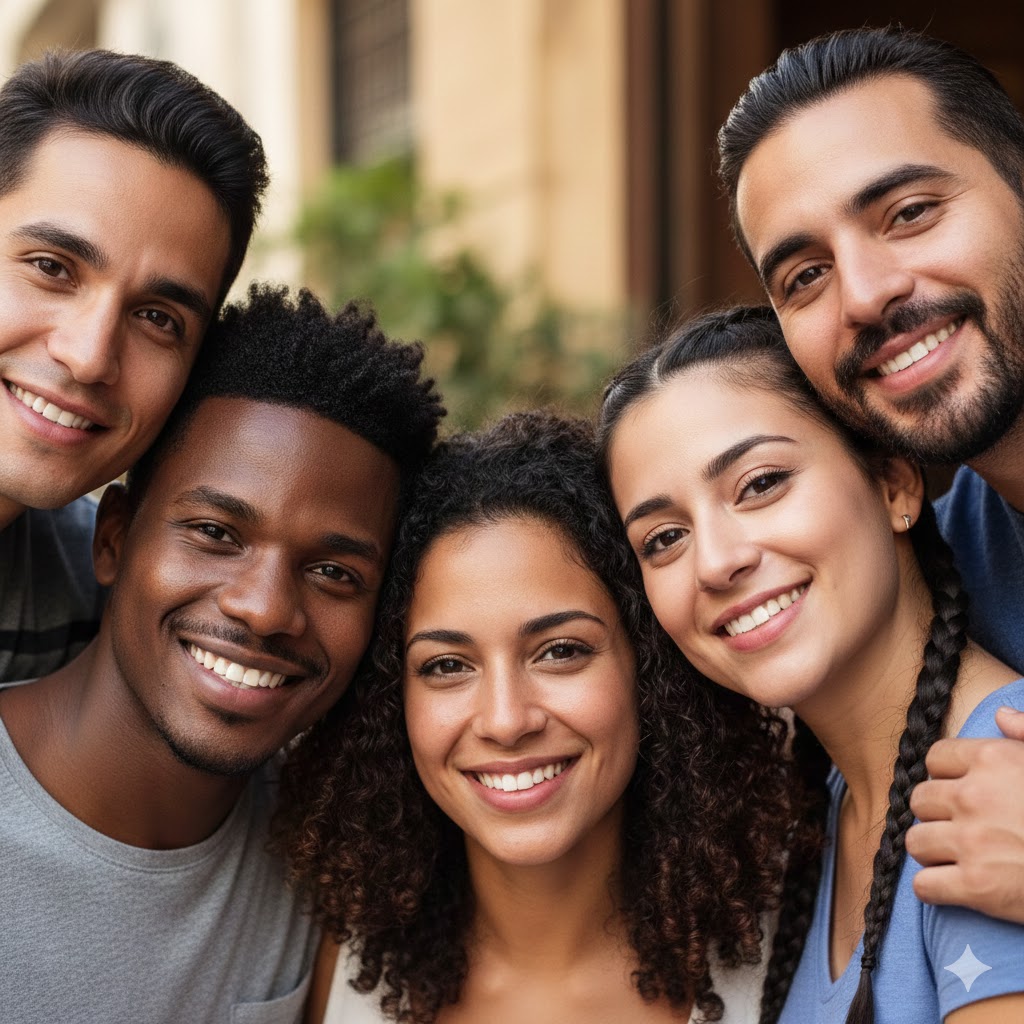

Latin Lineages: Spanish/Latin/Hispanic

Here’s the breakdown:

TermMeaning
SpanishSomeone from Spain (the country) — nationality/ethnicity tied to the Iberian Peninsula.
Spanish-speaking / Hispan(o/a/ic)People from countries that speak Spanish because of Spanish colonization. This includes Mexico and Puerto Rico, so in this sense they are part of the Hispanic (Spanish-speaking) world, but not Spanish by nationality.
Latino/LatinaA person from Latin America or the Caribbean, regardless of the language. Mexicans and Puerto Ricans are Latino/a.
Race/EthnicityMexican and Puerto Rican people can be Indigenous, European, African, mixed (mestizo/mulatto/triracial), etc., depending on family ancestry. This is separate from being “Spanish.”

So:

  • A Mexican person is not Spanish, unless their family is literally from Spain.
  • A Puerto Rican person is not Spanish by nationality, but is Hispanic because Puerto Rico is a Spanish-speaking Caribbean island.
  • Both Mexico and Puerto Rico are part of the Spanish-speaking/Hispanic world, but their people are Mexican or Puerto Rican, not Spanish, unless their ancestry traces directly to Spain.

Why the confusion?

Because:

  • They speak Spanish
  • Their countries were colonized by Spain
  • Hispanic culture carries Spanish influence

That sometimes leads to the umbrella assumption that “Spanish = anyone who speaks Spanish,” but formally, Spanish refers only to Spain.

Final clarity:

✅ Mexicans & Puerto Ricans are Hispanic (Spanish-speaking)
✅ They are Latino/a
❌ They are not Spanish, unless their lineage is from Spain itself

Let me know if you want this explained next through ancestry, genetics, or cultural identity too!

Latin beauty is an aesthetic concept shaped by the histories, peoples, and cultures of Latin America, the Caribbean, and the Iberian-influenced Spanish-speaking world. It is not one single look or race, but a constellation of shared beauty markers, cultural values, and presentation styles that come from regions where Indigenous, European (especially Spanish/Portuguese), African, and later Middle Eastern and Asian influences blended over centuries.


Core elements of Latin beauty

1. Diversity within unity

Latin beauty thrives on mixture—mestizaje (racial and cultural blending).
A Latin woman may have:

  • Indigenous features (e.g., flat nasal bridge, deep-set black/brown eyes)
  • European symmetry (often Iberian)
  • African influence (curly/afro-textured hair, full lips, warm undertones)
  • Middle Eastern influence in some families (arched brows, dramatic eyes like Salma Hayek)
    Latin beauty doesn’t require one ancestry, but often reflects the results of many intersecting ones.

2. Expressive facial features

Frequently celebrated markers include:

  • Large, luminous, emotionally expressive eyes
  • Long, dark, or thick eyelashes
  • Naturally arched or full eyebrows
  • Balanced or defined nose shapes (varies by ancestry)
  • High or sculpted cheekbones
  • Full to medium lips with natural pigmentation

3. Warm, glowing skin tones

Latin beauty tends to emphasize:

  • Olive, caramel, honey, bronze, or golden undertones
  • Skin described as sun-kissed, radiant, or warm rather than pale
  • A complexion associated with life, climate, identity, and vitality

4. Hair richness

Common hair aesthetics include:

  • Dark hues (jet black to deep brown)
  • Thick texture
  • Natural movement (from sleek and straight to wavy, curly, or coiled, depending on region)
    Hair is often treated as a symbol of femininity and sensuality.

5. Femininity, cultural presence, and style storytelling

Latin beauty is not only physical—it reflects:

  • Confidence without coldness, warmth without fragility
  • Cultural embrace of color, rhythm, and sensual expression
  • Beauty rituals that celebrate adornment, care, fragrance, skin oils, jewelry, bold eye makeup, and natural lip tones
    It is beauty with personality attached, like a story rather than a sculpture alone.

Regional aesthetics that feed the Latin beauty identity

RegionInfluence on beauty
Mexico, Central & South AmericaStrong Indigenous + Spanish mix, known for dark eyes, warm undertones, thick hair
Caribbean (Puerto Rico, DR, Cuba)More Afro-Latina presence, soft skin, bright smiles, curly or textured hair, girl-next-door warmth like Roselyn Sánchez
Spain & Portugal connectionBrings Iberian symmetry, elegance, old-world glamour, dramatic eye shapes (Penelope Cruz archetype)
Latin celebrities in U.S. mediaCreated the modern imagination of Spanish dolls: glamorous but culturally rooted

Why “doll” imagery became associated with Latin beauty

Because of:

  • Symmetrical faces
  • Large, captivating eyes
  • Glossy dark hair
  • Golden or brown complexions
  • A beauty that feels both idealized and ornamental
    But unlike plastic dolls, Latin beauty carries identity, voice, legacy, and heritage beneath the surface.

Final definition

Latin beauty is the celebration of multiracial harmony, warm and expressive features, dark hair richness, glowing skin, and a culturally embodied femininity that blends strength with warmth, glamour with relatability. It is not just seen—it is felt.

Yes—Mexican, Spanish (from Spain), and Puerto Rican people can all be considered Latin, but in slightly different ways.

Explanation:

GroupLatin?Why
Mexican✅ YesMexico is part of Latin America, a Latin region.
Puerto Rican✅ YesPuerto Rico is in the Latin Caribbean, also a Latin region.
Spanish (from Spain)✅ Yes (Culturally Latin)Spain is not in Latin America, but it is a Romance/Latin-based culture (Latin language influence, Roman + Iberian history). They are often included in broader “Latin world” discussions, but not Latino/a unless living identity ties to Latin America.

Key terms clarified:

  • Latino/Latina = someone from Latin America or the Caribbean → (Mexico & Puerto Rico qualify)
  • Hispanic = Spanish-speaking countries → (Mexico, Puerto Rico, and Spain qualify)
  • Latin = Romance-language influenced regions/cultures (Spanish, Portuguese, French, Italian roots) → (All 3 fit culturally)
  • Latin American = specifically from the Americas → (Spain does not fit this one)

Final clarity:

✅ Mexicans are Latino/a
✅ Puerto Ricans are Latino/a
✅ Spanish people are Latin culturally, but not Latino/a by nationality unless they identify through Latin American heritage or upbringing

The Origins of White Skin

The study of human pigmentation, particularly the origins of white skin, intertwines anthropology, genetics, and evolutionary biology. Understanding how and why skin color diversified requires an exploration of migration patterns, environmental adaptation, and genetic mutations that shaped the physical diversity among humankind. This essay will explore the scientific, historical, and sociocultural dimensions of white skin evolution through an integrative scholarly lens.

The terms “white” and “black” are social and symbolic designations, not literal reflections of human pigmentation. Scientifically and anthropologically, all humans fall along a spectrum of brown skin tones determined by melanin concentration, hemoglobin visibility, and other pigmentary factors.

In biological terms, skin color arises from three main pigments: melanin, carotene, and hemoglobin. Melanin, produced by melanocytes, gives skin its brown to dark brown shades. Carotene adds yellow or golden undertones, while hemoglobin contributes pink to red hues visible through lighter skin. Therefore, so-called “white” people actually possess light beige or pinkish skin tones, influenced by low melanin levels and higher visibility of underlying blood vessels (Jablonski, 2021).

Similarly, “black” skin is not black in the literal sense but represents varying concentrations of eumelanin that create rich brown tones ranging from bronze to deep espresso. Under sunlight, darker skin often reveals golden, red, or blue undertones rather than pure blackness. This continuous gradation underscores that human pigmentation exists along a chromatic continuum, not binary categories.

The labels white and black originated during European colonial expansion to reinforce social hierarchies, not biological realities. In the 17th and 18th centuries, racial theorists used color as a metaphor for moral and intellectual worth—“white” symbolizing purity and civilization, and “black” denoting savagery and sin (Smedley & Smedley, 2011). These associations, rooted in ideology rather than anatomy, shaped enduring racial constructs that persist today.

Modern genetics and anthropology confirm that all humans share over 99.9% identical DNA, and differences in skin color are governed by a handful of genes (Norton et al., 2007). Thus, color terminology reflects cultural identity and historical power dynamics more than any genuine biological division.

In truth, all people are various shades of brown—from the lightest ivory to the deepest mahogany—demonstrating our shared origin and diversity within unity. As the biblical verse reminds, “And hath made of one blood all nations of men” (Acts 17:26, KJV). Science and scripture converge here: humanity’s distinctions are aesthetic and adaptive, not hierarchical.

Early human populations originated in sub-Saharan Africa, where high ultraviolet radiation levels favored dark skin pigmentation rich in melanin. Melanin serves as a natural barrier protecting the skin from UV-induced damage and degradation of folate, an essential nutrient for reproductive success (Jablonski & Chaplin, 2010). Thus, the earliest Homo sapiens possessed dark skin as a biological adaptation to equatorial sunlight.

As human groups migrated northward out of Africa roughly 60,000 years ago, they encountered regions with lower UV exposure. In these environments, dark pigmentation became less advantageous. To maintain adequate vitamin D synthesis—a process reliant on UV-B radiation—lighter skin gradually evolved through natural selection (Norton et al., 2007).

One of the most significant genetic factors in light skin evolution is the SLC24A5 gene. A single nucleotide change in this gene (Ala111Thr) is strongly associated with light pigmentation among Europeans (Lamason et al., 2005). This mutation, which likely arose around 8,000 years ago, spread rapidly due to selective pressures in northern latitudes where sunlight was weaker.

Another key gene, SLC45A2, also contributes to depigmentation in European populations (Stokowski et al., 2007). Together with TYR and OCA2 genes, these variants represent a cluster of evolutionary adaptations that reshaped melanin production, producing the light skin phenotypes common in Europe.

The emergence of white skin was not instantaneous but gradual. Genetic modeling suggests multiple independent depigmentation events occurred among non-African populations. East Asians, for example, developed lighter skin through different genetic pathways (notably the DCT and MFSD12 genes), demonstrating convergent evolution (Yamaguchi et al., 2018).

Archaeogenetic evidence indicates that early Europeans, such as the Mesolithic hunter-gatherers of Western Europe, still had dark skin and blue eyes (Olalde et al., 2014). It was only during the Neolithic agricultural revolution—when farming spread from the Near East—that genes for lighter skin became dominant in Europe.

This agricultural transition likely accelerated depigmentation. Diets deficient in vitamin D due to reduced consumption of animal products made lighter skin advantageous for efficient synthesis of the vitamin from limited sunlight (Hofmanová et al., 2016). Thus, whiteness as a phenotype arose through both environmental and dietary adaptation.

Cultural evolution soon intersected with biological change. As populations developed hierarchies, skin color became symbolically charged—first as a marker of regional origin, later as a social construct of superiority and purity (Smedley & Smedley, 2011). The scientific origins of white skin were therefore overlaid by ideological meanings during the rise of European colonialism.

European societies, beginning in the Renaissance and Enlightenment periods, reinterpreted physical difference through racial taxonomy. Thinkers like Linnaeus and Blumenbach used skin color to classify humanity, cementing whiteness as the “norm” of civilization (Eze, 1997). These frameworks distorted evolutionary diversity into hierarchical racial structures.

The biological reality, however, undermines these racialized assumptions. Modern genomic data reveal that skin color variation represents a small portion of overall genetic diversity among humans—roughly 0.1% of total DNA difference (Lewontin, 1972). Thus, “race” is more a sociopolitical invention than a biologically discrete category.

The theological narrative also influenced perceptions of white skin. In medieval Europe, depictions of Adam and Eve as white reinforced Eurocentric conceptions of divine image-bearing, contrasting with African and Semitic biblical origins (Goldenberg, 2003). This ideological whiteness would later justify slavery, colonialism, and systemic inequality.

Anthropologically, lighter skin in Eurasia should be seen not as superiority but as regional adaptation. It parallels the Inuit’s dietary vitamin D compensation or the dark skin retention of equatorial peoples despite varying UV exposure—each reflecting environmental equilibrium rather than hierarchy (Jablonski, 2021).

The adaptation process reveals the remarkable plasticity of the human genome. Mutations in pigmentation genes often occurred within a few thousand years—a rapid pace in evolutionary terms—demonstrating the strong influence of climate and diet on phenotype (Liu et al., 2015).

Moreover, studies of ancient DNA reveal that pigmentation genes continued evolving even in historical times. For example, the allele for light eyes and skin (HERC2/OCA2) rose in frequency in Europe during the Bronze Age (Mathieson et al., 2015). This continuous selection underscores skin color as a dynamic trait rather than a fixed racial essence.

Socially, the valorization of whiteness became a cultural invention with far-reaching consequences. Colonial narratives equated light skin with intelligence, civility, and divine favor—distortions that persist in global colorism today (Hunter, 2013). The origin of white skin, therefore, cannot be divorced from the ideologies it later inspired.

Biomedically, understanding the genetics of pigmentation informs research into health disparities. Lighter skin correlates with higher risks of UV-related cancers and folate deficiency, while darker skin populations in northern latitudes face vitamin D deficiencies (Nina et al., 2019). Both extremes highlight the adaptive trade-offs of human evolution.

The story of white skin also illustrates humanity’s shared ancestry. Despite visible differences, all modern humans trace their lineage to a common African origin roughly 200,000 years ago (Stringer, 2016). Skin color differences merely represent evolutionary responses along a continuum of adaptation.

From a spiritual-humanistic perspective, these findings reaffirm the unity of mankind. As the Apostle Paul declared, “And hath made of one blood all nations of men” (Acts 17:26, KJV). Scientific inquiry thus harmonizes with scriptural truth: diversity is divine design, not division.

Contemporary discussions on race and identity must therefore distinguish between biological pigmentation and sociocultural constructs. Whiteness as an identity emerged not from genetics but from power, empire, and ideology—constructed upon natural adaptation but weaponized through social stratification.

Ultimately, the origins of white skin testify to human resilience and adaptability. Our ancestors’ capacity to evolve physically, migrate globally, and adapt spiritually underscores the interconnectedness of all humanity under one Creator.

Science continues to demystify color, revealing that beneath the epidermis lies a shared human essence. In understanding how white skin evolved, we come closer to transcending the myths it inspired and embracing the unity embedded in our DNA.

References

Eze, E. C. (1997). Race and the Enlightenment: A reader. Blackwell.
Goldenberg, D. M. (2003). The curse of Ham: Race and slavery in early Judaism, Christianity, and Islam. Princeton University Press.
Hofmanová, Z., et al. (2016). Early farmers from across Europe directly descended from Neolithic Aegeans. Proceedings of the National Academy of Sciences, 113(25), 6886–6891.
Hunter, M. (2013). Race, gender, and the politics of skin tone. Routledge.
Jablonski, N. G., & Chaplin, G. (2010). Human skin pigmentation as an adaptation to UV radiation. Proceedings of the National Academy of Sciences, 107(Suppl 2), 8962–8968.
Jablonski, N. G. (2021). Living color: The biological and social meaning of skin color. University of California Press.
Lamason, R. L., et al. (2005). SLC24A5, a putative cation exchanger, affects pigmentation in zebrafish and humans. Science, 310(5755), 1782–1786.
Lewontin, R. C. (1972). The apportionment of human diversity. Evolutionary Biology, 6, 381–398.
Liu, F., et al. (2015). Genetics of skin color variation. Annual Review of Genomics and Human Genetics, 16, 99–120.
Mathieson, I., et al. (2015). Genome-wide patterns of selection in ancient Eurasians. Nature, 528(7583), 499–503.
Nina, G., et al. (2019). Pigmentation and health: The evolutionary legacy of skin color adaptation. Nature Reviews Genetics, 20(10), 705–718.
Norton, H. L., et al. (2007). Genetic evidence for the convergent evolution of light skin in Europeans and East Asians. Molecular Biology and Evolution, 24(3), 710–722.
Olalde, I., et al. (2014). Derived immune and ancestral pigmentation alleles in a 7,000-year-old Mesolithic European. Nature, 507(7491), 225–228.
Smedley, A., & Smedley, B. D. (2011). Race in North America: Origin and evolution of a worldview. Westview Press.
Stokowski, R. P., et al. (2007). A genomewide association study of skin pigmentation in a South Asian population. American Journal of Human Genetics, 81(6), 1119–1132.
Stringer, C. (2016). The origin and evolution of Homo sapiens. Philosophical Transactions of the Royal Society B, 371(1698), 20150237.
Yamaguchi, Y., et al. (2018). Diverse pathways to depigmentation: Evolution of light skin in different human populations. Pigment Cell & Melanoma Research, 31(3), 338–350.