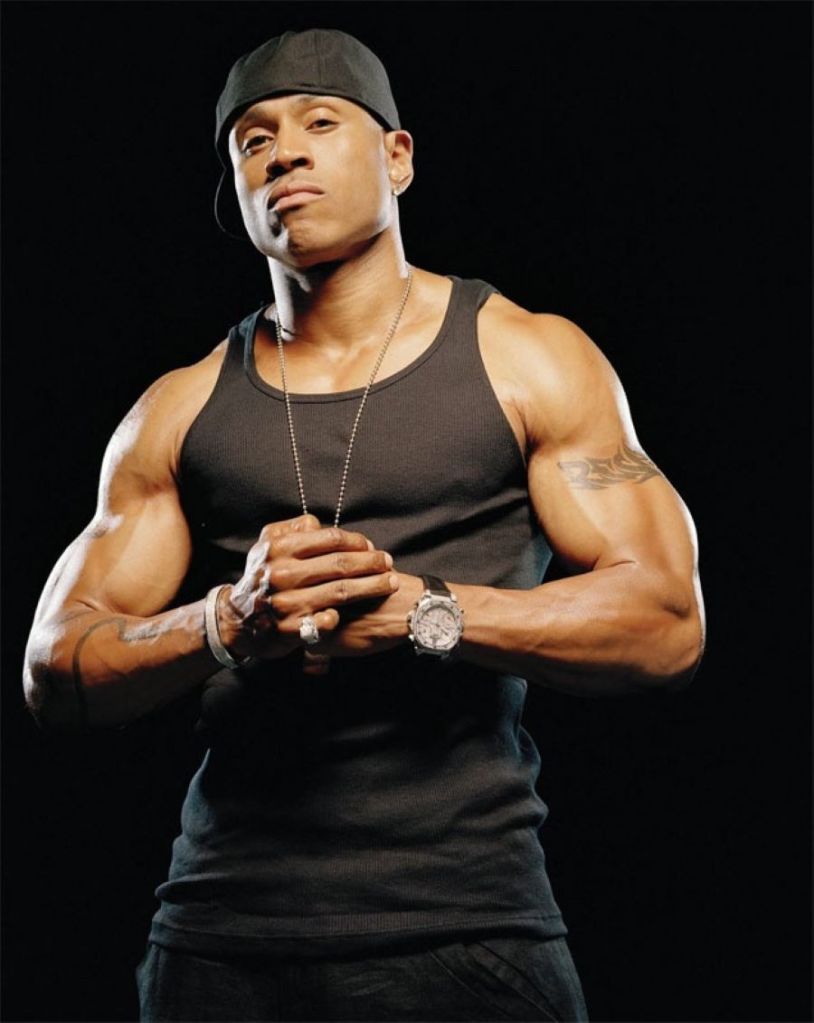
The Rapping Peanut-Butter Colored Adonis, one of the pioneers and GOATs of Rap Music,and timeless swagger.
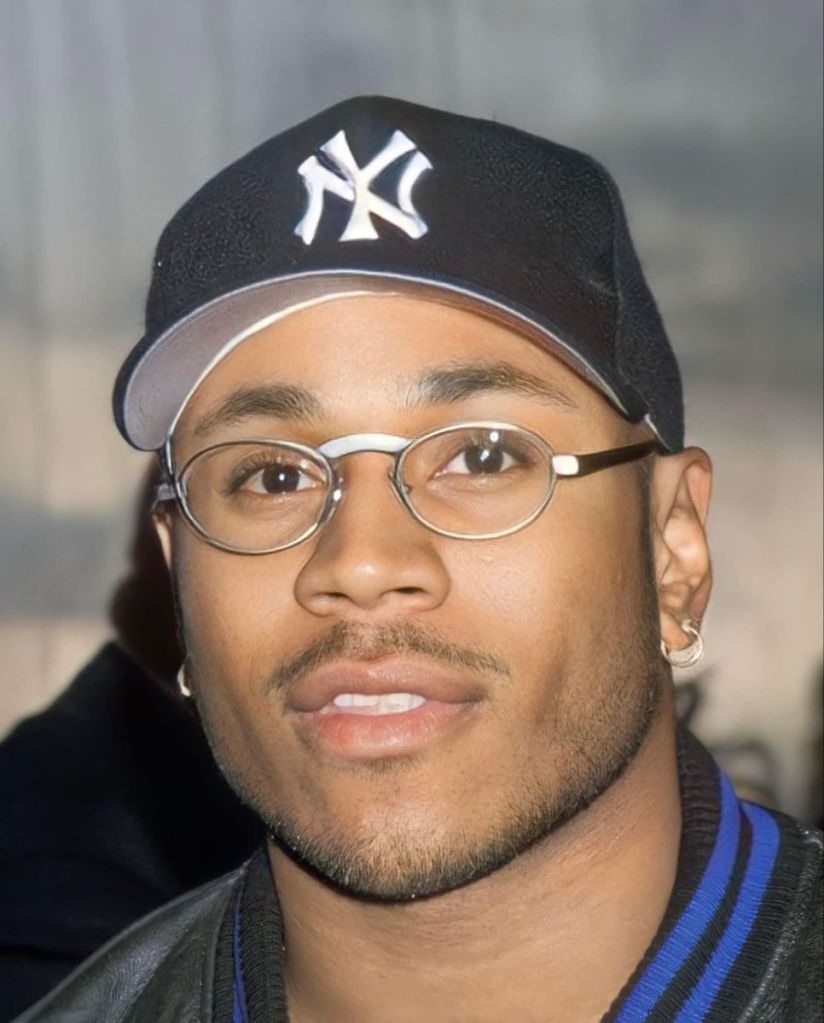
LL Cool J—born James Todd Smith on January 14, 1968, in Queens, New York—emerged from humble beginnings to become one of hip-hop’s most enduring architects. Raised in a working-class household in the Hollis neighborhood, he began writing rhymes at age nine and was recording demos by his early teens. His breakthrough came in 1984 when he signed with the pioneering label Def Jam Recordings, co-founded by Russell Simmons and Rick Rubin. His debut album, Radio (1985), helped solidify the commercial viability of rap music, blending street lyricism with crossover appeal. From the outset, LL Cool J projected confidence, charisma, and lyrical precision—qualities that would earn him the title many fans bestow upon him: one of the GOATs of rap.
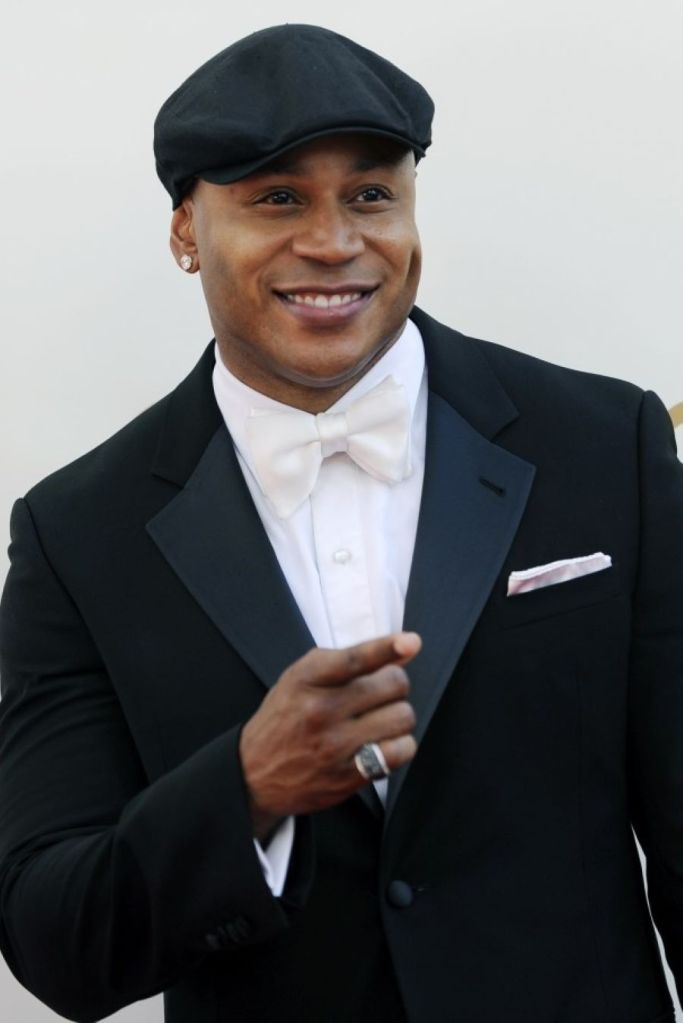
Throughout the late 1980s and 1990s, LL Cool J became synonymous with versatility. He balanced hard-edged battle rhymes with romantic ballads like “I Need Love,” proving that vulnerability could coexist with bravado in hip-hop masculinity. Albums such as Bigger and Deffer (1987) and Mama Said Knock You Out (1990) elevated him into rap royalty, with the latter earning a Grammy Award and cementing his comeback narrative. His accolades include multiple Grammy Awards, NAACP Image Awards, and in 2021, induction into the Rock and Roll Hall of Fame—a historic milestone recognizing his foundational role in shaping mainstream hip-hop. His Kennedy Center Honors recognition further affirmed his cultural impact beyond music.
Beyond the microphone, LL Cool J built a formidable acting career. His filmography includes roles in Deep Blue Sea (1999), Any Given Sunday (1999), and S.W.A.T. (2003). On television, he achieved long-running success starring as Sam Hanna in the hit CBS series NCIS: Los Angeles (2009–2023), a role that introduced him to a new generation of viewers and showcased his disciplined, commanding screen presence. His transition from rap pioneer to respected actor demonstrated rare longevity in an industry known for rapid turnover. Few artists have sustained relevance across four decades while maintaining credibility in both music and film.
Physically, LL Cool J has long been celebrated as a striking figure in entertainment—a peanut-butter–hued Adonis with a sculpted physique that redefined hip-hop sex appeal in the late twentieth century. His commitment to fitness, often displayed through sleeveless performances and confident stage presence, challenged stereotypes of rappers and expanded the image of Black male desirability in mainstream media. Yet beneath the aesthetic admiration lies a consistent narrative of discipline and devotion. Married since 1995 to Simone Smith, whom he often describes as his foundation, he is a devoted husband and father to their four children. His story—rooted in Queens grit, maternal encouragement, lyrical hunger, and spiritual grounding—embodies perseverance. LL Cool J is not merely a rapper or actor; he is a cultural institution whose artistry, humility, and longevity continue to shape the architecture of hip-hop and Black masculinity in American popular culture.
LL Cool J belongs in the Masculine Perfection series because he epitomizes the ideal of manhood in both form and presence. With his peanut-butter complexion, sculpted physique, and commanding aura, he embodies physical perfection while exuding confidence, discipline, and charisma. His music redefined Black male aesthetic in hip-hop, blending strength, vulnerability, and emotional intelligence, while his acting career demonstrates gravitas, control, and versatility on screen. Beyond his striking appearance, his humility, devotion to family, and sustained excellence over four decades make him a paragon of refined power, resilience, and timeless appeal—a man whose beauty, talent, and character are “drop-dead fine” and worthy of celebration as the ultimate masculine ideal.
References
LL Cool J. (2023). Biography. Rock & Roll Hall of Fame.
Rock and Roll Hall of Fame. (2021). LL Cool J Inductee Profile.
Dyson, M. E. (2007). Know What I Mean? Reflections on hip-hop. Basic Civitas Books.
Forman, M., & Neal, M. A. (Eds.). (2012). That’s the joint!: The hip-hop studies reader (2nd ed.). Routledge.
Grammy Awards. (n.d.). LL Cool J – Artist Profile. The Recording Academy.
CBS. (2009–2023). NCIS: Los Angeles series archives and cast biography.
Smith, S., & Cool J, L. L. (2022). Public interviews and award acceptance speeches compiled in media archives.
Black male beauty has long existed at the intersection of visibility and erasure—celebrated within Black communities yet historically marginalized by mainstream media that privileged Eurocentric standards of masculinity. Today, the rise of Black leading men in film, television, fashion, and culture represents not merely aesthetic recognition but a cultural re-centering of what male beauty truly looks like. Black male attractiveness is not singular or monolithic; it spans a spectrum of shades, facial structures, energies, and archetypes—from regal authority to gentle vulnerability, from warrior strength to romantic softness. These men embody more than physical appeal; they reflect history, resilience, and ancestral aesthetics that reclaim African features as symbols of global desirability. In honoring the most handsome Black male celebrities, we are also honoring a larger truth: Black male beauty is diverse, powerful, and divinely designed, standing as both a visual standard and a cultural restoration.
This photograph is the property of its respective owner. No copyright infringement intended.
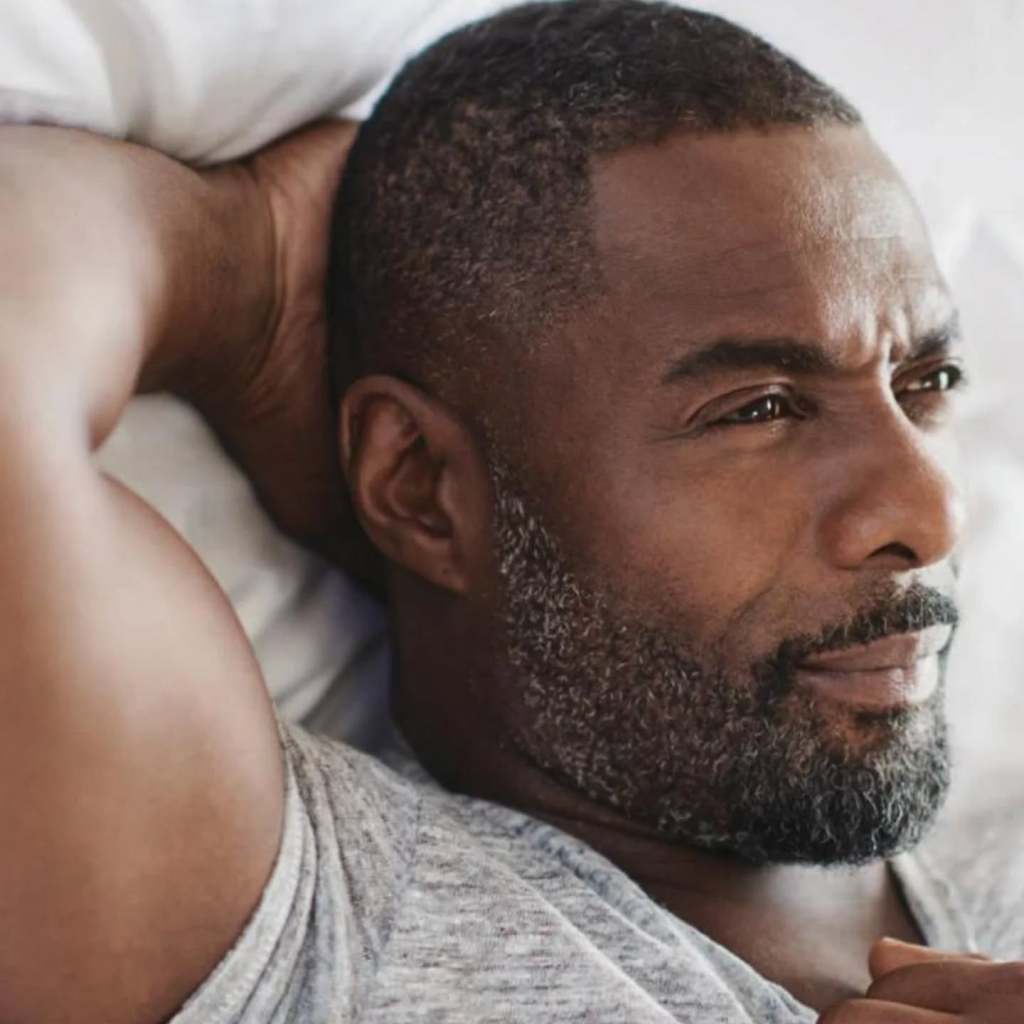
Idris Elba Idris Elba embodies the classic “tall, dark, and handsome” archetype through his imposing height, deep complexion, resonant voice, and commanding presence, which together signal what evolutionary psychology associates with protective and authoritative masculinity—strength, genetic fitness, and emotional depth (Rhodes, 2006; Puts et al., 2012). He is the epitome of handsomeness, the complete package, with his broad facial structure, piercing soulful eyes, strong jawline, and calm demeanor. This projection of kingly gravitas feels both powerful and grounding, making his beauty not only physical but also symbolic of dignified Black male authority in a global cultural landscape.
This photograph is the property of its respective owner. No copyright infringement intended.
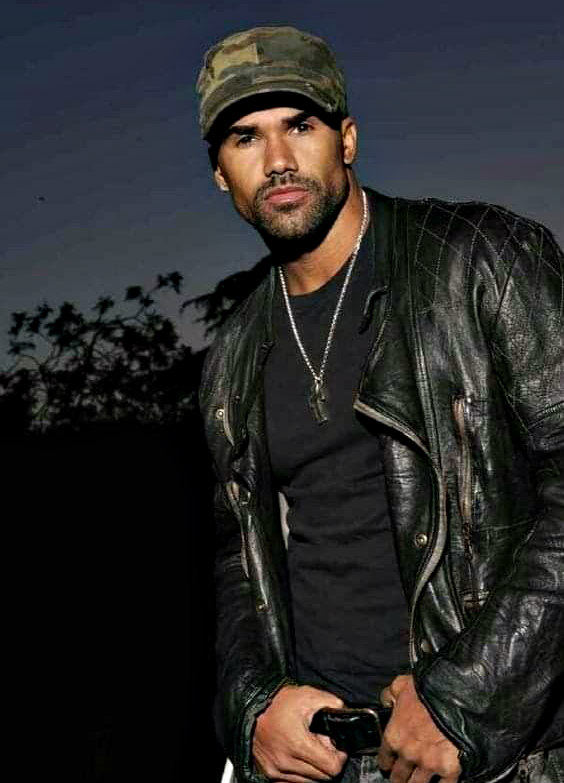
Shemar Moore Shemar Moore represents a “golden” or “light cafe au lait” masculinity rooted in warmth, symmetry, and relational charm, with his light honeyed skin tone, expressive marbles like eyes, and radiant smile activating perceptions of approachability, joy, and emotional safety (Maddox & Gray, 2002; Gangestad & Simpson, 2000). He is the complete package in terms of beauty. His muscular build, combined with playful charisma, reflects a form of soft dominance—strength without threat—making his beauty feel intimate, affectionate, astonishing, and emotionally inviting rather than distant or intimidating.
This photograph is the property of its respective owner. No copyright infringement intended.
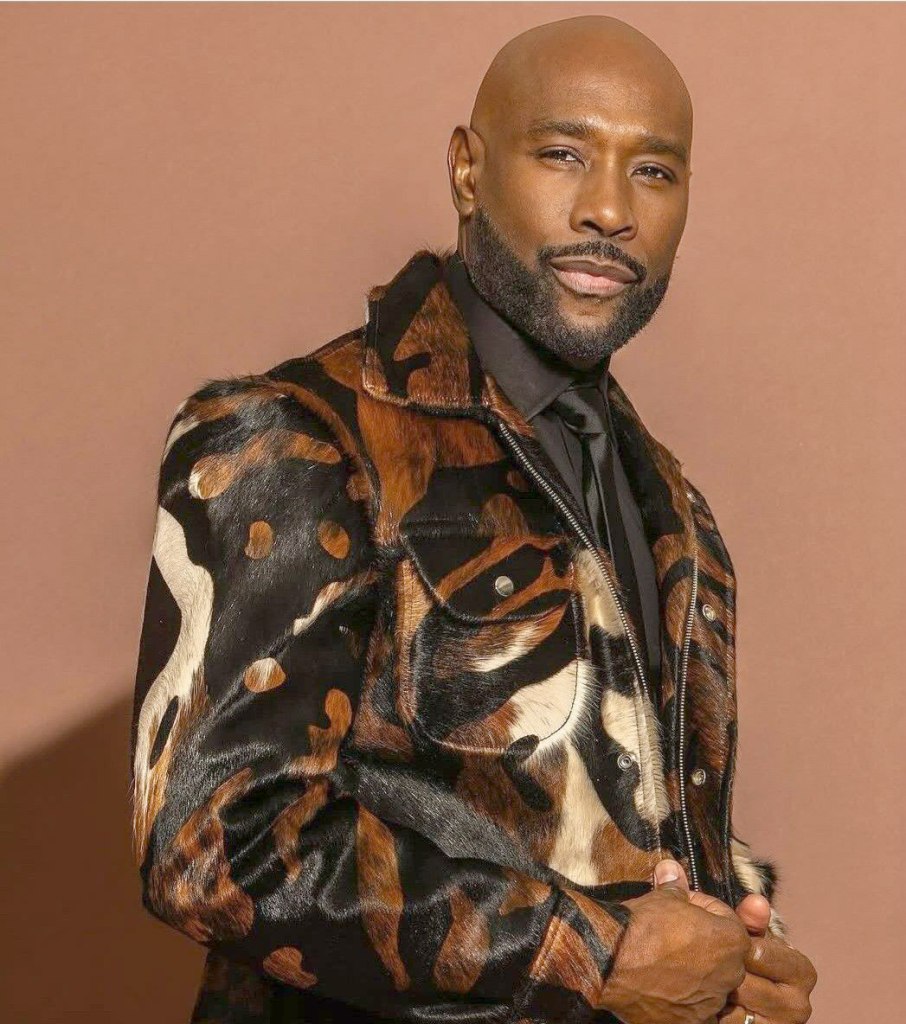
Morris Chestnut Morris Chestnut has been the heartthrob for decades, representing black masculinity and black male beauty. He embodies a form of “classic gentleman masculinity” rooted in symmetry, emotional steadiness, and timeless appeal. The epitome of fineness. His medium-brown complexion, described as chocolate heaven, refined facial proportions, calm eyes that convey a great deal, and consistently polished presentation signal what evolutionary psychology describes as stable attractiveness—beauty associated with trust, long-term partnership, and reliability, rather than fleeting sexual novelty (Rhodes, 2006; Gangestad & Simpson, 2000). Chestnut’s appeal is not loud or hyper-sexualized; it is dignified, mature, and romantic, making him the archetype of the dependable Black leading man whose beauty feels safe, rooted, and enduring across generations.
This photograph is the property of its respective owner. No copyright infringement intended.
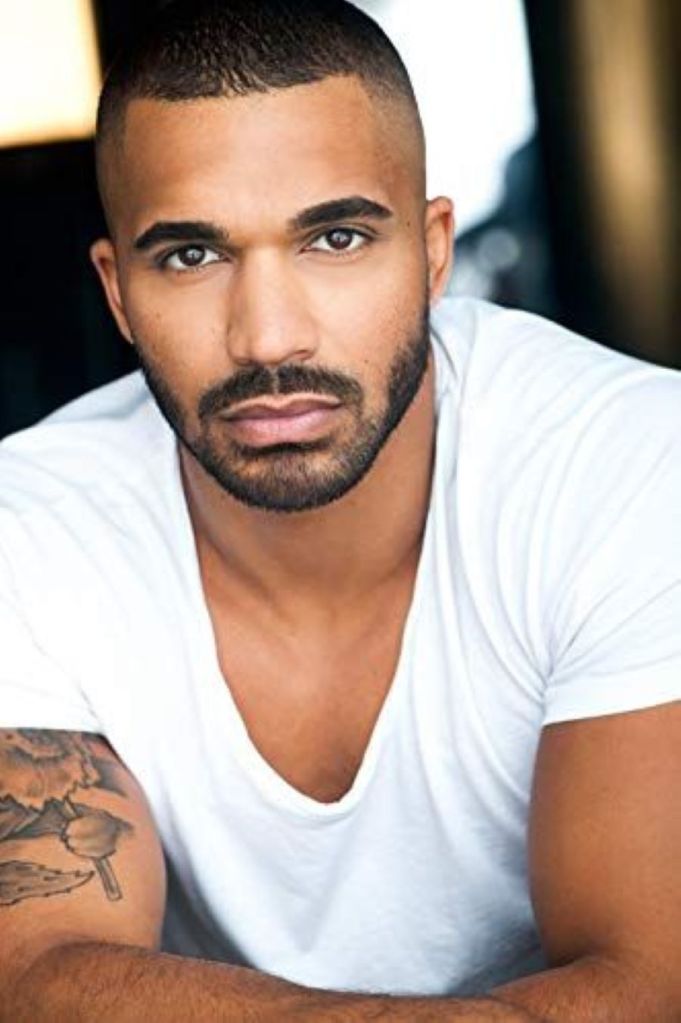
Travis Cure Travis Cure represents a modern “aesthetic masculinity” shaped by fitness culture, facial harmony, and digital-era visual standards. His lean, muscular build, sharp jawline, clear skin, come-hither good looks, and balanced facial symmetry align closely with contemporary metrics of physical attractiveness, where visual clarity, body sculpting, and high grooming standards dominate desirability frameworks (Frederick & Haselton, 2007). Cure’s beauty reflects a post-Instagram masculinity—where the male body is curated, disciplined, and displayed as both art and aspiration, signaling self-mastery, health, and high social capital.
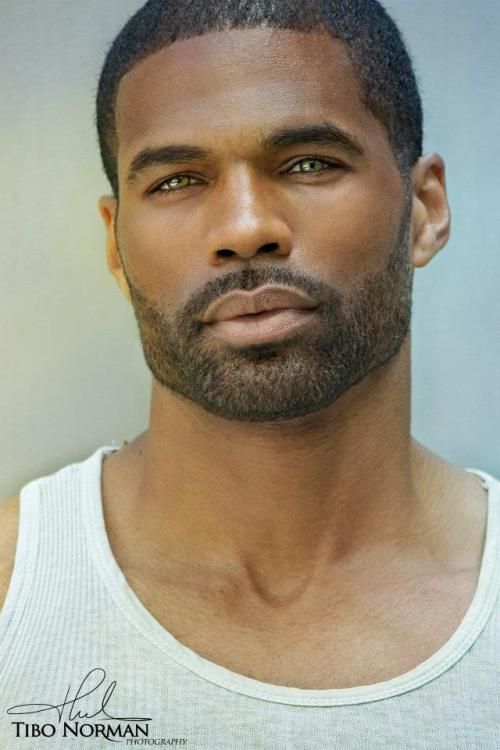
Photo Credit: Tibo Norman Photography
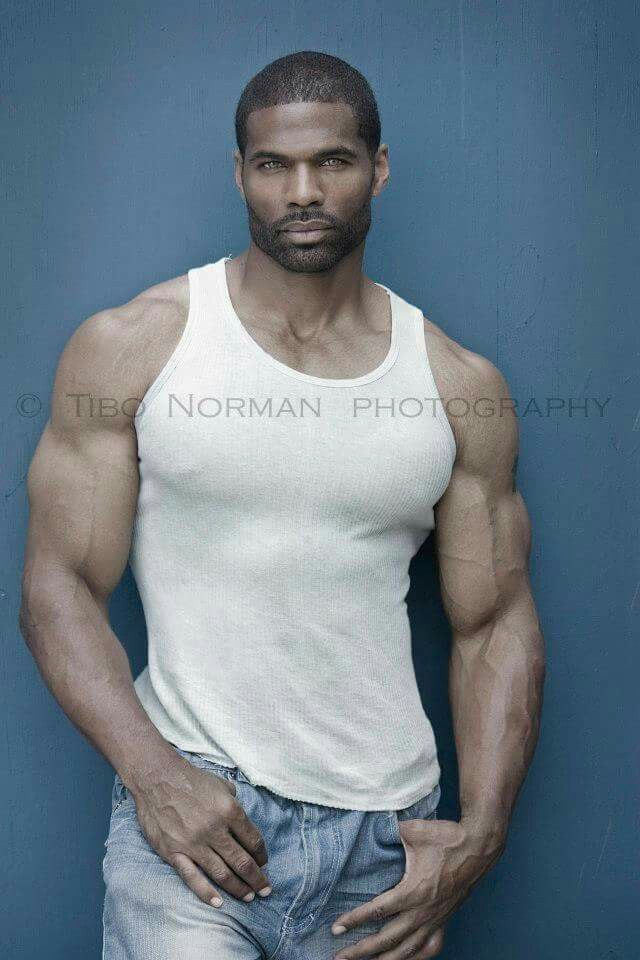
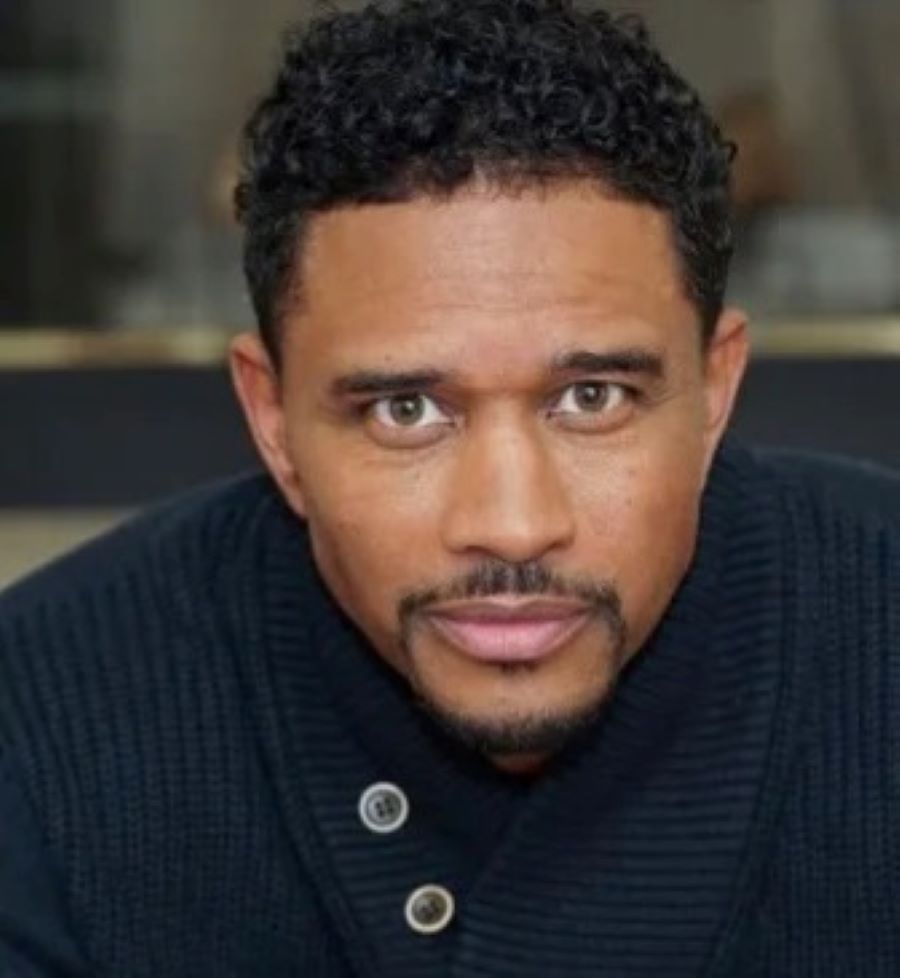
Louis Allen III Louis Allen III embodies “intellectual masculinity”—a beauty rooted not only in physical features but in cognitive presence, articulation, and cultural depth. His refined facial structure, physique, piercing green-hazel eyes, like a piece of art found in a museum, and composed demeanor project what social psychology identifies as competence-based attractiveness, where intelligence, emotional regulation, and verbal confidence significantly enhance perceived desirability (Fiske et al., 2007). Allen’s appeal operates in the realm of gravitas and mental authority; his beauty feels thoughtful, elevated, and spiritually grounded, representing a form of Black male attractiveness where the mind becomes the primary aesthetic asset.
This photograph is the property of its respective owner. No copyright infringement intended.
Broderick Hunter Broderick Hunter represents “sculptural masculinity”—a form of beauty that feels almost architectural in its precision and physical harmony. His tall, model-good-looks, bewitching mirrored eyes, athletic frame, sharply defined cheekbones, full lips, and symmetrical facial structure align closely with classical standards of male attractiveness rooted in proportion, balance, and visual impact (Rhodes, 2006). Hunter’s appeal is highly aesthetic and cinematic; he embodies the archetype of the living statue, where Black male beauty is experienced as fine art—polished, striking, and immediately captivating, reflecting a modern luxury ideal of masculine form.
This photograph is the property of its respective owner. No copyright infringement intended.
Redriac Williams Redriac Williams represents a form of “regal masculinity” rooted in stature, symmetry, and aristocratic bearing. His athletic frame, mesmerizing green-hazel eyes, sculpted features, and composed posture align with what social psychologists describe as status-based attractiveness—beauty associated with leadership, high rank, and social authority (Fiske et al., 2007). Williams’ appeal feels noble and elevated, evoking the image of a modern Black prince whose beauty communicates command, discipline, and quiet confidence.
This photograph is the property of its respective owner. No copyright infringement intended.
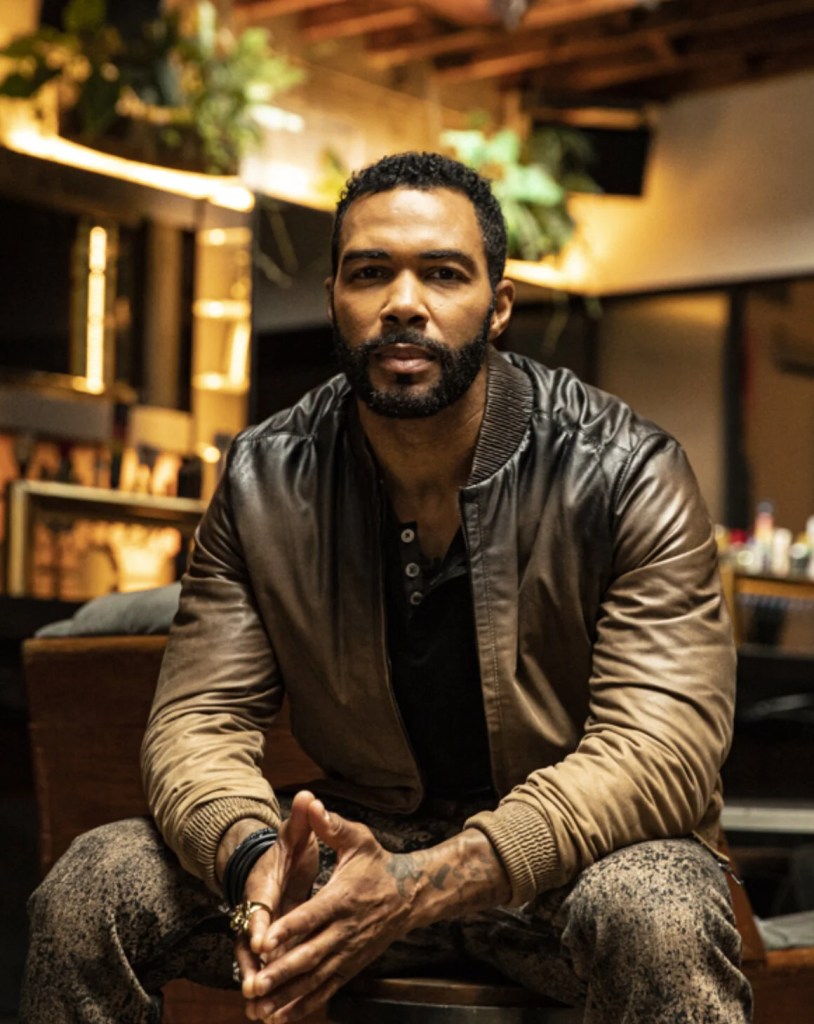
Omari Hardwick Omari Hardwick represents “warrior-poet masculinity”—a fusion of physical intensity and emotional complexity. His muscular build, pretty eyes with an intense gaze, and textured facial features project what psychology defines as dominance-based attractiveness, while his artistic sensibility and introspective demeanor soften that dominance into depth (Frederick & Haselton, 2007). Hardwick’s beauty feels charged and cinematic; he embodies the archetype of the brooding protector whose appeal lies in both power and inner struggle.
This photograph is the property of its respective owner. No copyright infringement intended.
Kenneth Okolie Kenneth Okolie embodies “continental masculinity”—a deeply Afrocentric beauty marked by strong bone structure, dark luminous skin, and ancestral presence. His broad facial planes, deep-set eyes, and princely demeanor associate with royalty. Dignified stillness aligns with evolutionary cues of genetic robustness and masculine stability (Rhodes, 2006). Okolie’s attractiveness feels primal and rooted, reflecting a lineage-based aesthetic where Black male beauty is directly tied to heritage, earthiness, and spiritual depth rather than Western grooming standards.
This photograph is the property of its respective owner. No copyright infringement intended.
Michael Ealy Michael Ealy embodies “ethereal masculinity”—a rare form of beauty defined by softness, luminosity, and emotional transparency. His light complexion, piercing blue eyes, gentle facial contours, and expressive gaze activate what psychologists describe as neotenous attractiveness, where youthful features and vulnerability increase perceptions of trust, emotional safety, and romantic desirability (Fiske et al., 2007; Rhodes, 2006). Ealy’s beauty feels tender, positioning him as the archetype of the sensitive romantic—where Black male attractiveness is associated not with dominance, but with intimacy, empathy, and emotional depth.
*Honorary Mention*
This photograph is the property of its respective owner. No copyright infringement intended.
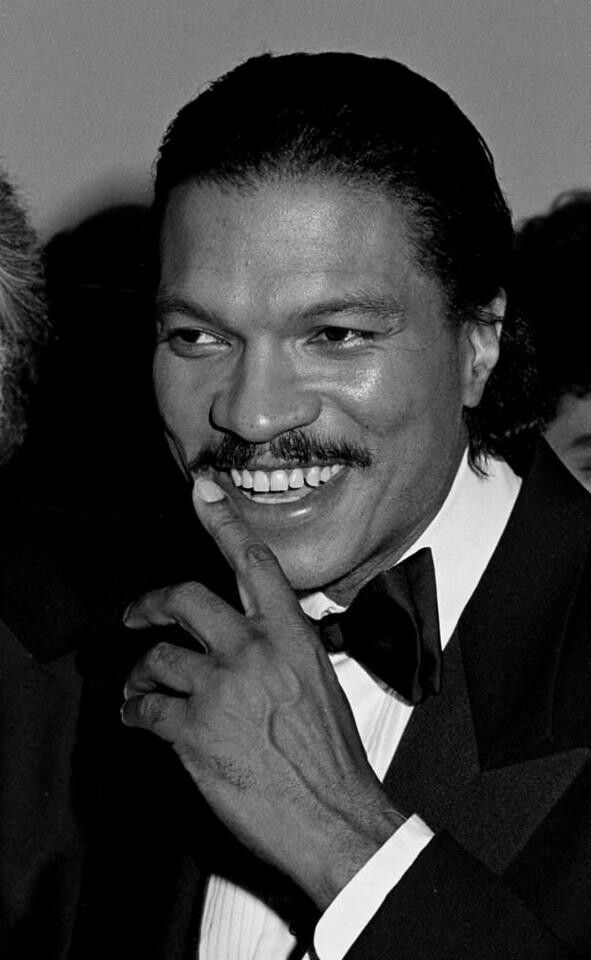
Billy Dee Williams Billy Dee Williams embodies “legendary gentleman masculinity”—a timeless elegance defined by smooth features, a come-hither smile, relaxed confidence, and effortless charm. His appeal aligns with what sociologists describe as charisma-based attractiveness, where confidence, voice, and social ease outweigh raw physicality (Fiske et al., 2007). Williams’ beauty is not about youth but about aging gracefully—he represents the archetype of the black male celebrity beauty – cool, demure, unique, sophisticated, and romantic icon whose sophistication and grace transcend generations.
References
Gangestad, S. W., & Simpson, J. A. (2000). The evolution of human mating: Trade-offs and strategic pluralism. Behavioral and Brain Sciences, 23(4), 573–587. Maddox, K. B., & Gray, S. A. (2002). Cognitive representations of Black Americans: Reexploring the role of skin tone. Personality and Social Psychology Bulletin, 28(2), 250–259. Puts, D. A., et al. (2012). Sexual selection on male vocal fundamental frequency in humans. Proceedings of the Royal Society B, 279(1743), 1–7. Rhodes, G. (2006). The evolutionary psychology of facial beauty. Annual Review of Psychology, 57, 199–226.
Frederick, D. A., & Haselton, M. G. (2007). Why is muscularity sexy? Tests of the fitness indicator hypothesis. Personality and Social Psychology Bulletin, 33(8), 1167–1183. Fiske, S. T., Cuddy, A. J. C., & Glick, P. (2007). Universal dimensions of social cognition: Warmth and competence. Trends in Cognitive Sciences, 11(2), 77–83. Gangestad, S. W., & Simpson, J. A. (2000). The evolution of human mating: Trade-offs and strategic pluralism. Behavioral and Brain Sciences, 23(4), 573–587. Rhodes, G. (2006). The evolutionary psychology of facial beauty. Annual Review of Psychology, 57, 199–226.
From the golden glow of the screen to the charisma that lights up a room, certain men embody the essence of masculine perfection — a divine balance of strength, grace, and style. Their skin radiates with health and depth, their eyes hold both power and gentleness, and their physiques are sculpted as though by divine intention. Yet beyond their beauty lies a deeper brilliance — talent, discipline, and a quiet confidence that speaks louder than words. Omari Hardwick, Ben Stephens, and Tyler Lepley represent this rare trifecta of artistry, aesthetic, and authenticity. Each man stands as a reflection of Black excellence — embodying the fusion of regal presence and raw emotion that continues to redefine what it means to be both beautiful and masculine in Hollywood.
Omari Hardwick
This photograph is the property of its respective owner. No copyright infringement intended.
Omari Hardwick, born on January 9, 1974, in Savannah, Georgia, is an actor, poet, and producer best known for his captivating performances in both film and television. A graduate of the University of Georgia, Hardwick initially pursued a career in football before his passion for storytelling led him to the arts. His perseverance through rejection and struggle eventually paid off with breakout roles in For Colored Girls (2010) and Sparkle (2012), before achieving international fame as James “Ghost” St. Patrick in the Starz hit series Power (2014–2020).
Hardwick’s artistry extends beyond acting — he is also a spoken word poet and founder of the production company Bravelife Films. His performances are marked by emotional depth, intellectual sharpness, and magnetic screen presence. Known for his flawless light cafe au lait skin, chiseled physique, and piercing eyes, Hardwick embodies refined masculinity with poetic grace. In his personal life, he is devoted to his wife, Jennifer Pfautch, and their two children, often crediting family as his grounding force. His recognition includes multiple NAACP Image Award nominations, affirming his place among Hollywood’s most respected leading men.
Benjamin Stephens
This photograph is the property of its respective owner. No copyright infringement intended.
Benjamin “Ben” Stephens, an emerging star known for his suave demeanor and captivating looks, represents the next generation of Black male excellence in entertainment. Born and raised in the United States, Stephens built his reputation through modeling and acting, where his striking facial structures, piercing eyes, smooth skin tone, and athletic frame quickly drew attention. His journey began in the fashion industry, working with luxury brands and major campaigns before transitioning into television and film roles.
One of his most notable performances is in the hit television series Family Business, where he showcases remarkable emotional depth, range, and charisma. Stephens’ portrayal earned him growing praise for his natural on-screen presence and his ability to connect with audiences through both vulnerability and confidence. His work in Family Business demonstrated his gift for bringing authenticity and dimension to every role — a talent that has set him apart in a competitive industry.
Beyond the spotlight, Ben Stephens values family, faith, and personal growth. He often speaks about the importance of discipline, humility, and gratitude in shaping both his personal and professional life. His combination of classic good looks — luminous brown skin, expressive eyes, and a physique that mirrors his dedication to health and balance — complements his strong sense of purpose. Though still early in his Hollywood career, his growing recognition in both fashion and acting circles signals a bright future. Stephens continues to redefine what it means to be a leading man: intelligent, grounded, and beautifully human.
Tyler Lepley
This photograph is the property of its respective owner. No copyright infringement intended.
Tyler Lepley, born on March 24, 1987, in Philadelphia, Pennsylvania, has become one of Hollywood’s most magnetic stars. With his sculpted physique, radiant brown skin, and soulful gaze, Lepley exudes a raw, masculine allure that has captivated audiences worldwide. After earning a degree in criminal justice from Kutztown University, Lepley’s career took an unexpected turn when he was discovered by a producer at a Los Angeles boxing gym. His natural charm and talent quickly opened doors to acting opportunities, leading to his first major role in The Have and the Have Nots (2013–2021) on the Oprah Winfrey Network.
Lepley’s performances are marked by authenticity, vulnerability, and quiet intensity. He later starred in P-Valley (2020–present) and Harlem (2021–present), solidifying his status as a leading man in both drama and romance. Behind the camera, he is a devoted father and man of faith, often speaking about self-growth, humility, and divine timing. Tyler’s work has earned him critical recognition, including nominations for the BET and NAACP Image Awards. His combination of talent, charisma, and good looks — defined by sculpted features, magnetic eyes, and a voice full of calm strength — makes him one of the most captivating figures in modern entertainment.
Conclusion
Omari Hardwick, Ben Stephens, and Tyler Lepley each represent a distinct facet of masculine perfection — the poet, the model, and the warrior. Their beauty is not superficial; it is a reflection of resilience, discipline, and a deep sense of purpose. With glistening skin like polished bronze, eyes that tell stories, and physiques that embody strength and artistry, they redefine Black male elegance for a new generation. Their legacies remind the world that masculinity can be both powerful and tender, and that true perfection lies not just in appearance, but in the spirit within.
References
BET. (2020). Tyler Lepley talks faith, fatherhood, and career growth. Black Entertainment Television. https://www.bet.com
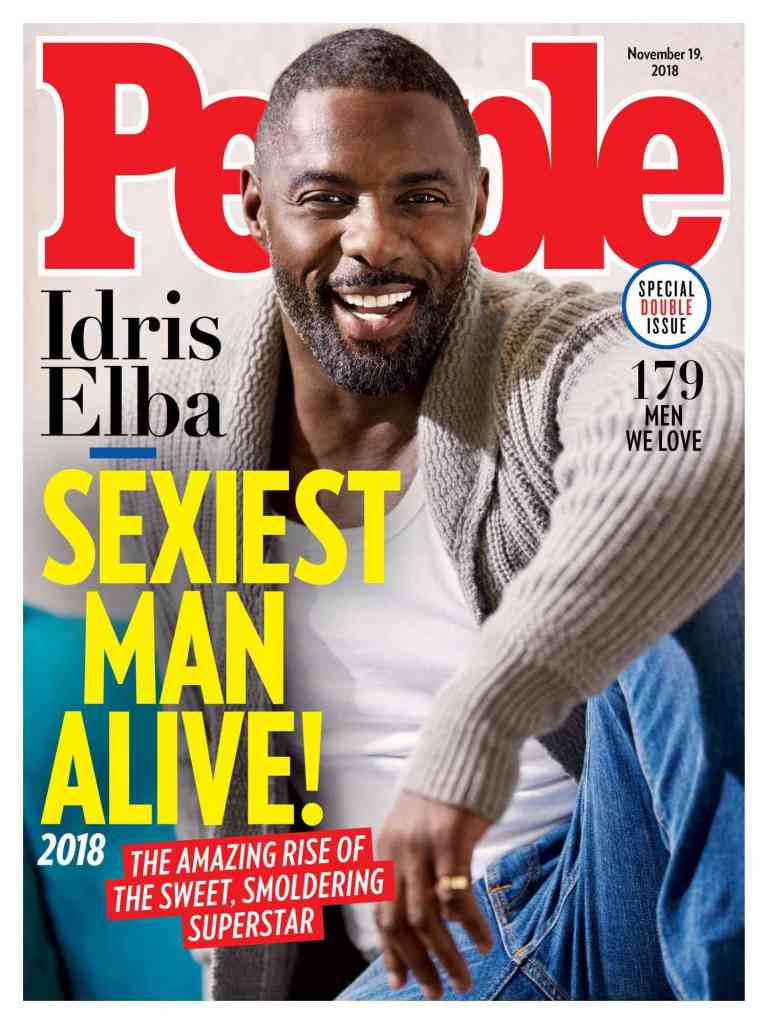
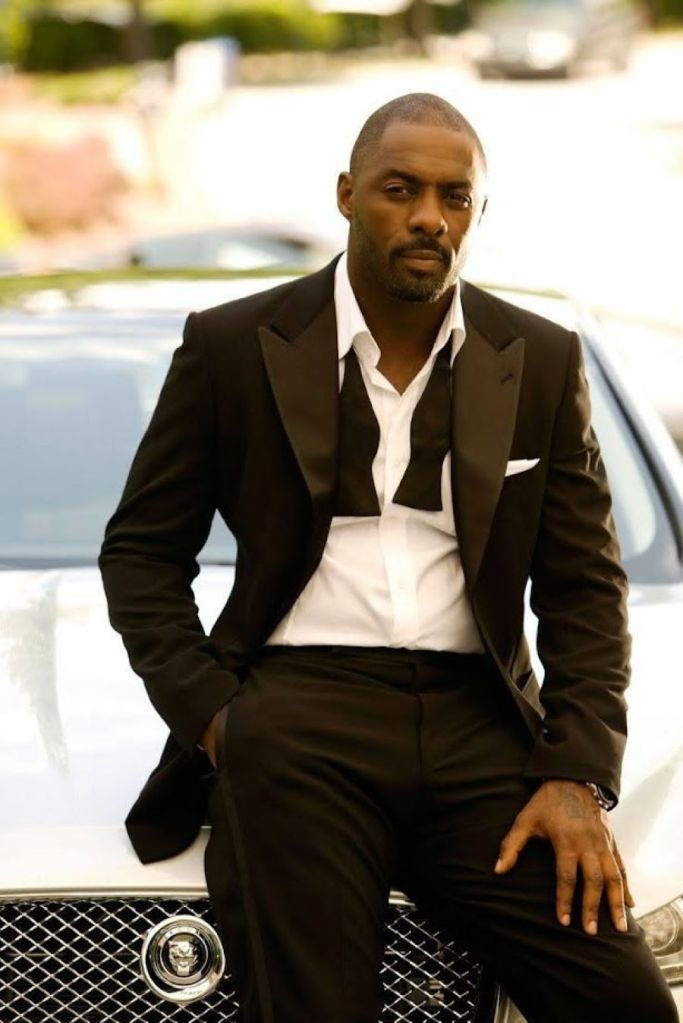
Idris Elba is the epitome of modern masculinity, one of the finest men on earth who is often referred to as “tall, dark, and handsome” with a depth of talent and presence that makes hearts race across continents. With a chiseled jawline, soulful eyes, and a baritone British accent that exudes quiet power, Elba’s face ranked among the top scores on ThePerfectHumanFace.com, affirming what many have already believed: he is masculine perfection personified. But behind the looks lies a powerhouse of acting prowess, a multifaceted artist who has reshaped how Black men are portrayed on screen—dignified, dynamic, and deeply human.
Born Idrissa Akuna Elba on September 6, 1972, in London, England, to a Sierra Leonean father and a Ghanaian mother, Elba proudly carries his African heritage while representing the finest of British talent. He grew up in Hackney, East London, and began acting in his early twenties, gaining his first big break on the British TV series Bramwell. He would later gain international recognition for his iconic portrayal of Russell “Stringer” Bell on HBO’s The Wire, a role that fused intellect with danger and redefined what a Black gangster could look like on television.
Idris Elba is also a devoted family man. He has been married to model and activist Sabrina Dhowre Elba since 2019, and he is a proud father to two children. Outside of acting, he has launched a men’s skincare and wellness line called S’Able Labs, focused on inclusion, health, and self-care, co-founded with his wife. The brand reflects his belief in holistic well-being, emphasizing inner confidence alongside outer grooming.
Elba’s acting résumé is robust and decorated. He’s received Golden Globe nominations, an NAACP Image Award, a Screen Actors Guild Award, and was even appointed an Officer of the Order of the British Empire (OBE) by Queen Elizabeth II in 2016 for his services to drama. From Mandela: Long Walk to Freedom to Beasts of No Nation, and Luther to The Harder They Fall, Elba’s range has no boundaries. His favorite role, as he once shared in interviews, is John Luther—the brilliant but troubled detective he portrayed with grit and grace in the BBC series Luther.
In 2018, People Magazine named him the “Sexiest Man Alive,” a title that made global headlines. Elba accepted the honor with humility and humor, tweeting, “Who’d have thought it! Thank you People magazine. I’m honored & thankful.” Yet the title meant more than vanity—it was a rare acknowledgment of a Black man as the universal standard of male desirability. “Representation matters,” Elba has said. “To see yourself reflected as beautiful or powerful—that’s life-changing.”
Elba has been vocal about racism in Hollywood and the challenges of being a Black actor. He has criticized the lack of diversity and inclusion in the British and American entertainment industries, once stating, “Change is coming, but it’s too slow. We’re not asking for handouts—we’re asking for opportunity.” His rumored potential casting as James Bond sparked both excitement and racial backlash, highlighting the ongoing resistance to Black leads in legacy roles. Elba responded with elegance, emphasizing that representation is about inspiration, not provocation.
Standing 6’2″ tall, Elba’s presence is physically commanding and emotionally magnetic. Black women have long expressed admiration for him, not just for his looks but for his aura. Comments such as, “He’s the perfect blend of rugged and refined,” and “Idris Elba could read a phone book and still sound like Shakespeare,” are common across social media. One fan gushed, “Idris is like fine wine—smooth, complex, and only gets better with time.”
Elba’s love and respect for Black women are evident both in his interviews and in the way he uplifts his wife. In one interview he shared, “Black women have held me down since day one. My mother, my daughter, my wife—they are the definition of strength and beauty.” These sentiments further elevate his appeal, as he acknowledges and honors the role of Black women in shaping his journey.
In terms of industry differences, Elba has often compared acting in the UK and the US. He noted that in Britain, classism affects casting just as much as race, whereas in America, race is more overtly central to opportunity. “In the UK, I wasn’t black enough. In America, I was black and British, so I was exotic,” he once reflected. Regardless of geography, Elba has proven that excellence transcends borders.
In conclusion, Idris Elba is more than a pretty face—he is a symbol of global Black excellence. He represents dignity, strength, style, and substance. As both an actor and advocate, he challenges outdated narratives and forges new paths for Black men in media. Whether he’s commanding the screen or speaking truth to power, Elba remains a towering figure—physically, artistically, and culturally. He is, without question, a modern legend.
Quotes
“Black women have held me down since day one. My mother, my daughter, my wife—they are the definition of strength and beauty.” — Idris Elba
“Representation matters. To see yourself reflected as beautiful or powerful—that’s life-changing.” — Idris Elba
“Idris Elba is like fine wine—smooth, complex, and only gets better with time.” — Anonymous fan
References
People Magazine. (2018). Sexiest Man Alive: Idris Elba. BBC News. (2016). Idris Elba receives OBE from Queen Elizabeth II. The Guardian. (2020). Idris Elba on diversity in Hollywood and James Bond rumors. Essence Magazine. (2021). Idris and Sabrina Elba Launch S’Able Labs: Skincare for All. Vogue. (2022). Idris Elba and the Redefinition of Masculinity.
Broderick Hunter — “Mesmerizing eyes, boyish charm, modern Black beauty.”
Broderick Hunter Jr., born January 3, 1991, in Fontana, California, is an American model and actor. Originally a basketball player with over fifteen years of experience, an injury shifted his path toward modeling in 2011. Hunter has appeared in editorials and covers for major publications, including Vogue Paris, Italian GQ, Cosmopolitan, Maxim, and Essence. He has also modeled for top brands such as Ralph Lauren. On screen, he has acted in television series, including Insecure, showcasing versatility that combines athleticism, aesthetic polish, and charisma.
Hunter’s allure lies in his “piercing” eyes and boyish charm — a blend of youthful energy and contemporary Black male beauty. His presence conveys both confidence and approachability, making him a standout figure in fashion and media.
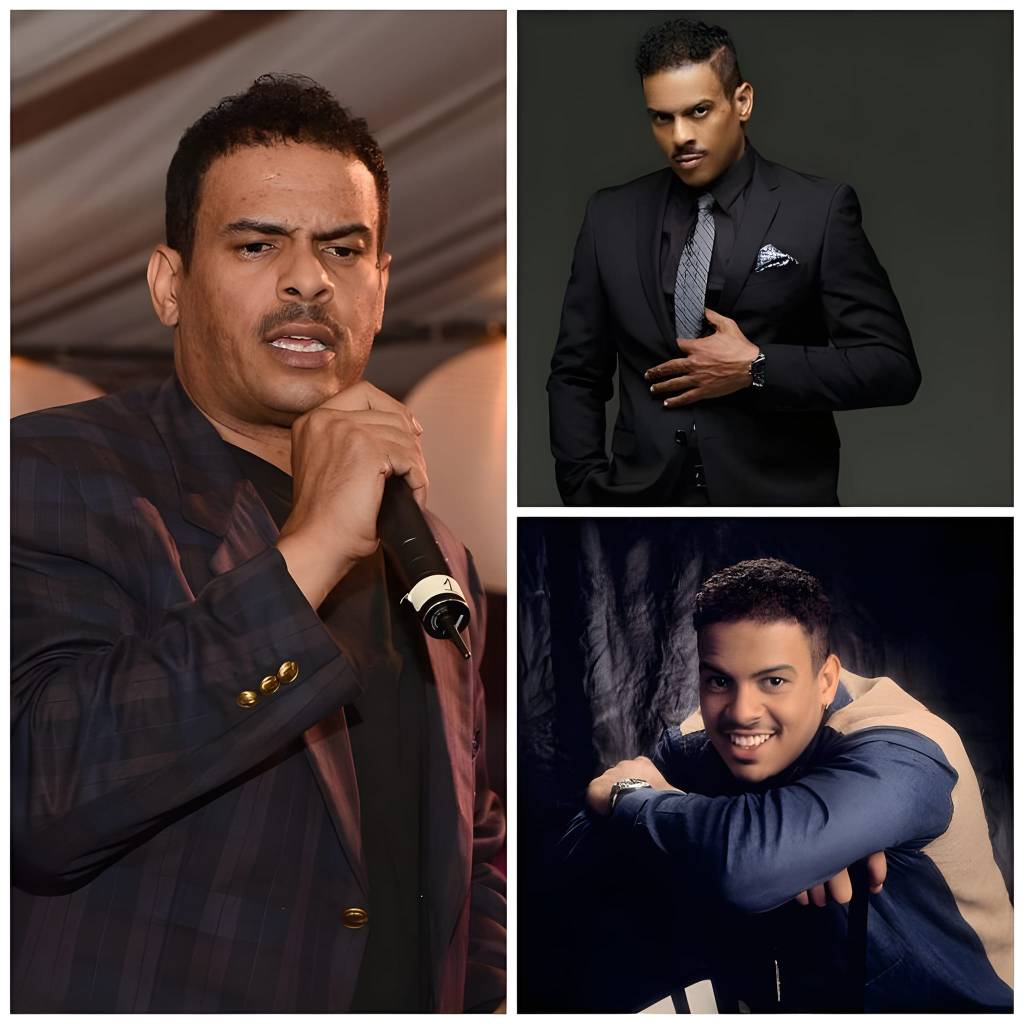
Christopher Williams — “Soulful crooner, gorgeous face, velvet voice.”
Christopher Williams, born August 22, 1967, in the Bronx, New York, emerged as a professional recording artist in the late 1980s. His debut album, Adventures in Paradise (1989) introduced his smooth R&B style, and his 1991 single I’m Dreamin’ topped Billboard’s Hot R&B/Hip-Hop Singles chart. Williams continued to produce hits such as Every Little Thing U Do and All I See, solidifying his reputation as a romantic and soulful performer. He has also acted in films, most notably New Jack City, and participated in theatre and smaller screen roles.
Williams embodies a classic form of Black masculinity: his gorgeous face and rich, emotional voice convey vulnerability and romantic depth. His combination of musicality and visual appeal positioned him as a beloved figure in R&B and Black culture.
Blair Underwood, born August 25, 1964, in Tacoma, Washington, is a classically trained actor with a BFA from Carnegie Mellon School of Drama. He gained prominence with the role of attorney Jonathan Rollins on NBC’s L.A. Law (1987–1994) and has sustained a prolific career in film and television, displaying versatility across genres. Underwood has received two Golden Globe nominations, multiple NAACP Image Awards, and a Grammy Award, underscoring his talent and impact.
Underwood represents a timeless, understated elegance, combining classical good looks with gravitas and sophistication. His refined style and acting skill embody a mature, dignified form of Black masculine beauty, emphasizing poise, intellect, and artistic excellence.
Why these three matter
Together, Broderick Hunter, Christopher Williams, and Blair Underwood illustrate a spectrum of Black male beauty and excellence:
Hunter reflects contemporary youth, athleticism, and media-ready aesthetic.
Williams represents soulful, romantic, and emotionally resonant masculinity.
Underwood embodies classical sophistication, gravitas, and unforgettable actor.
Their collective presence challenges narrow standards of Black male beauty, offering multiple models of excellence in fashion, music, and acting.
References
Broderick Hunter — Wikipedia, IMDb, Teen Vogue, Vogue Paris.
Christopher Williams — Wikipedia, IMDb, Billboard, UrbanBridgez.
Blair Underwood — Wikipedia, TV Guide, BET, Encyclopedia.com.
In the shimmering constellation of Hollywood’s most handsome and talented men, few stars shine as brightly as Shemar Moore, Morris Chestnut, and Travis Cure. These men represent a rare fusion of strength, style, and sophistication — the embodiment of masculine perfection. With chiseled physiques, radiant skin tones that range from golden bronze to deep mahogany, and charisma that commands the screen, each of them has carved a distinct path in the entertainment industry. Beyond their striking looks, they possess the discipline, intelligence, and heart that make them more than just leading men — they are icons of modern Black excellence and representations of divine craftsmanship in human form.
Shemar Moore: The Golden Standard of Handsome
This photograph is the property of its respective owner. No copyright infringement intended.
Shemar Franklin Moore, born April 20, 1970, in Oakland, California, is the epitome of Hollywood charm and physical perfection. With his golden-brown complexion, sculpted physique, and infectious smile, Moore has long been celebrated as one of the most handsome men in the entertainment world. A model-turned-actor, he began his career in the early 1990s, quickly rising to fame for his role as Malcolm Winters on The Young and the Restless (1994–2005). His portrayal earned him a Daytime Emmy Award and solidified his reputation as a heartthrob.
Moore’s magnetism extended beyond daytime television when he joined the cast of the hit crime drama Criminal Minds (2005–2016) as Derek Morgan, a role that highlighted his toughness, empathy, and leadership. He currently stars as Sergeant Daniel “Hondo” Harrelson in the CBS action drama S.W.A.T., where his commanding presence and flawless physique continue to capture audiences.
Off-screen, Moore’s life mirrors his confidence and charisma. He is also the founder of Baby Girl LLC, a clothing line that raises awareness for multiple sclerosis in honor of his late mother. Despite being one of Hollywood’s most desired bachelors for years, Moore welcomed his first child with model Jesiree Dizon in 2023, marking a new chapter in his life. His career is a testament to endurance, talent, and timeless allure — Shemar Moore remains a perfect 10 in every sense.
Morris Chestnut: The Definition of Majestic “Hot Chocolate”
This photograph is the property of its respective owner. No copyright infringement intended.
Morris Lamont Chestnut, born January 1, 1969, in Cerritos, California, has long reigned as the cinematic archetype of the ideal man. With his deep, chocolate-brown skin and mesmerizing eyes, Chestnut embodies what many describe as “Black handsomeness in motion.” His film debut in John Singleton’s Boyz n the Hood (1991) as Ricky Baker launched him into stardom, and since then, he has maintained a reputation as one of the most attractive and respected actors in Hollywood.
Throughout his illustrious career, Chestnut has starred in classics such as The Best Man (1999), The Brothers (2001), Think Like a Man (2012), and The Perfect Guy (2015). His performances are distinguished not only by his physical presence but also by his emotional depth and versatility. In 2015, he received a NAACP Image Award for Outstanding Actor for his role in The Best Man Holiday (2013).
Known for his grace, humility, and commitment to family, Morris Chestnut has been married to Pam Byse since 1995, proving that real love still thrives in Hollywood. His success in film and television, coupled with his flawless physique and gentlemanly demeanor, makes him every woman’s dream man and a living symbol of enduring Black masculinity. For decades, he has been the poster child of male perfection — handsome, intelligent, and irresistibly charming.
Travis Cure: The Rising Star of Modern Masculinity
This photograph is the property of its respective owners. No copyright infringement intended
Travis Cure is one of Hollywood’s most captivating new faces — a blend of classic good looks and raw, emerging talent. With a physique that seems sculpted by divine hands and features that exude confidence and power, Cure is the personification of modern Black male beauty. Born and raised in Miami, Florida, Cure’s journey to stardom began through modeling and fitness. His perfectly symmetrical face, commanding frame, and piercing gaze quickly caught the attention of industry professionals, propelling him into acting.
He gained recognition for his roles in Tyler Perry’s The Oval, where he showcased not only his physical appeal but also his natural acting ability. Cure has also appeared in the film Deadly Sexy (2018), and his career continues to ascend as he takes on more dynamic and challenging roles.
Known for his discipline, fitness lifestyle, and strong work ethic, Travis Cure has become a symbol of determination and masculine beauty. His flawless complexion, toned body, and calm confidence make him one of the most striking men in entertainment today. Though he is still rising, Cure has already earned a devoted fanbase and the admiration of audiences worldwide. He represents the new generation of Black Hollywood — powerful, polished, and purpose-driven.
Conclusion
Shemar Moore, Morris Chestnut, and Travis Cure stand as embodiments of the artistry of masculine beauty — golden, rich, and radiant in their own ways. Their presence on and off the screen redefines what it means to be both strong and graceful, handsome and humble. Each has carved his legacy through talent, discipline, and divine design, representing the finest aspects of Black excellence. In the ever-evolving landscape of Hollywood, they remain timeless — men whose beauty and brilliance will forever be celebrated.
References
CBS. (2024). S.W.A.T. [Television series]. CBS Studios.
In the grand gallery of African excellence and cinematic artistry, few men embody the essence of masculine perfection as profoundly as Kenneth Okolie, Van Vicker, and Ramsey Nouah. These leading men of Nollywood and Ghanaian cinema epitomize refinement, beauty, and brilliance. Their presence transcends borders — commanding screens across Africa and the diaspora with magnetic performances, striking physiques, and elegant confidence. They are not only talented actors but cultural ambassadors, proving that African men are among the most captivating and multidimensional figures in global entertainment.
Kenneth Okolie: The Regal Gentleman of Nollywood
This photograph is the property of its respective owners. No copyright infringement intended
Kenneth Okolie, born February 21, 1984, in Nigeria, stands as one of Nollywood’s most polished and admired figures. A man of regal stature, broad shoulders, and a perfectly sculpted jawline, Okolie embodies the image of African royalty. His deep-brown complexion, calm confidence, and eloquence have made him one of the most desirable actors in the industry.
Before becoming a celebrated actor, Kenneth began his career as a model, winning Mr. Nigeria 2010, a title that catapulted him into fame and opened doors in film and television. His transition from modeling to acting came naturally, as his charm and on-screen poise quickly captivated audiences.
He gained recognition through roles in acclaimed films such as The Royal Hibiscus Hotel (2017), Desperate Housewives Africa, and Fifty the Series. His performances balance intensity and tenderness, often portraying characters who exude leadership and integrity.
Off-screen, Kenneth Okolie is admired for his humility and devotion to family. He married his longtime partner Jessica Nwakah in 2017, and together they represent a picture of grace and grounded success. His awards include Best Supporting Actor at the Nollywood Movies Awards and Best Actor in a Leading Role at the African Magic Viewers’ Choice Awards (AMVCA). Handsome, intelligent, and sophisticated, Kenneth Okolie is truly the modern African gentleman — a symbol of both royal elegance and divine masculinity.
Van Vicker: The Golden Charmer of Ghanaian Cinema
This photograph is the property of its respective owners. No copyright infringement intended
Joseph Van Vicker, born August 1, 1977, in Accra, Ghana, is one of the most recognizable and beloved faces in African entertainment. With his golden skin tone, captivating smile, and soft yet commanding eyes, Van Vicker exudes an effortless charm that has made him a fan favorite across the continent.
He began his career as a radio and television personality, working as a DJ and presenter before transitioning into acting. His rise to fame came with his breakout roles in Divine Love (2004) and Beyoncé: The President’s Daughter (2006), which showcased his romantic charisma and screen presence. Since then, he has starred in over 200 films, often portraying the handsome lover or noble hero.
Van Vicker’s talent has earned him numerous accolades, including the AAMA Best Actor Award and the Pan African Film Festival Award for Achievement. Beyond acting, he is a director, producer, and humanitarian, with a deep passion for empowering youth and supporting education in Ghana.
Married to his high school sweetheart, Adjoa Vicker, since 2003, Van Vicker embodies loyalty and family devotion — a rare quality in the entertainment world. His combination of charm, humility, and artistic excellence makes him one of the most admired men in African cinema. To many, he represents the “golden boy” of Ghana — radiant, talented, and timelessly handsome.
Ramsey Nouah: The Prince of Nollywood
This photograph is the property of its respective owners. No copyright infringement intended
Ramsey Tokunbo Nouah Jr., born December 19, 1970, in Lagos, Nigeria, is the very definition of timeless beauty and cinematic mastery. With his smooth golden light caramel complexion, soulful eyes, and sophisticated demeanor, Ramsey Nouah has been affectionately called “Nollywood’s Lover Boy” — a title he has worn gracefully for over two decades.
His acting career began in the early 1990s with the television soap opera Fortunes, but it was his roles in romantic films such as Silent Night (1996), Dangerous Twins (2004), and Figurine (2009) that established him as one of the most talented and handsome actors in Africa.
Nouah has since evolved into a respected director and producer, making his directorial debut with the blockbuster Living in Bondage: Breaking Free (2019), which won multiple Africa Magic Viewers’ Choice Awards, including Best Overall Movie. His ability to seamlessly move between acting, directing, and producing shows his artistic brilliance and leadership in Nollywood.
Married to Emelia Phillips-Nouah, Ramsey is a devoted husband and father. His calm confidence, refined beauty, and professionalism have made him a mentor and role model to younger actors. His accolades include Best Actor in a Leading Role at the African Movie Academy Awards (AMAA) and multiple recognitions from the AMVCA. Ramsey Nouah is not just a handsome face — he is the embodiment of African cinematic evolution, blending legacy, artistry, and elegance.
Conclusion
Kenneth Okolie, Van Vicker, and Ramsey Nouah stand as three pillars of African masculinity — distinguished, disciplined, and devastatingly handsome. Each of them brings a unique light to the African film industry: Okolie with his regal grace, Vicker with his golden warmth, and Nouah with his timeless sophistication. Together, they redefine what it means to be both powerful and tender, proving that Black excellence radiates across borders and generations. Their artistry reminds the world that Africa not only births talent — it births kings.
References
Africa Magic Viewers’ Choice Awards. (2024). Award winners archive. MultiChoice Africa.
The British Invasion of MaleAesthetics, Talent, and Global Impact
In recent years, British actors of African and Afro-diasporic descent have taken the world stage with unprecedented impact, redefining standards of beauty, charisma, and screen presence. Leading this movement are Idris Elba, Aaron Pierre, and Regé‑Jean Page—each possessing a striking combination of physical allure, magnetic charm, and extraordinary talent. Elba’s commanding height, chiseled features, and deep expressive eyes have made him an icon of rugged sophistication; Pierre’s athletic build, symmetrical face, and intense gaze convey both vulnerability and heroism; while Page’s near-perfect facial symmetry, photogenic features, and refined presence have cemented him as a global standard of romantic lead. Together, they represent a new era in which Black British actors are celebrated not only for their artistic skill but also for the distinct aesthetic and cultural richness they bring to international film and television. Their rise signals a powerful shift in representation, challenging stereotypes, and opening doors for future generations of Black talent in the entertainment industry.
1. Idris Elba
This photograph is the property of its respective owner. No copyright infringement intended.
Idris Elba is widely regarded as one of the most handsome and charismatic actors of his generation, combining rugged masculinity with refined elegance. Standing around 6’2” with a strong, athletic build, he possesses chiseled facial features, deep brown expressive eyes, and a warm, engaging smile. His smooth dark skin, combined with his salt‑and‑pepper beard and commanding posture, exudes both authority and charm. Elba’s presence is magnetic, making him naturally captivating on screen, whether portraying intense drama or heroic roles. His physicality and aesthetic appeal have contributed significantly to his image as a quintessential leading man.
Early Life & Background
Idrissa Akuna Elba OBE was born on 6 September 1972 in Hackney, London, England, to a father from Sierra Leone and a mother from Ghana (Biography.com). He grew up in East London (Canning Town area) and left school around age sixteen to pursue acting, winning a place in the National Youth Music Theatre via a Prince’s Trust grant (IMDb).
Career Start
Elba began with small UK television roles and DJ work before his major breakthrough portraying Russell “Stringer” Bell in HBO’s The Wire (2002‑2004) (Wikipedia). His portrayal of DCI John Luther in the BBC series Luther (2010‑2019) further cemented his international star status (Britannica). He has also starred in films such as Mandela: Long Walk to Freedom (2013) and Marvel/Thor installments.
Key Roles & Achievements
Stringer Bell in The Wire – breakout role.
DCI John Luther in Luther – Golden Globe Award for Best Actor (Miniseries/TV).
Mandela: Long Walk to Freedom – major biopic role.
Beasts of No Nation (2015) – Screen Actors Guild Award, BAFTA & Golden Globe nominations.
Awards & Recognition
Elba has received a Golden Globe, multiple Primetime Emmy nominations, and BAFTA nominations. Named to Time 100 Most Influential People in the World in 2016.
Personal Life & Marriage
Elba married Sabrina Dhowre in April 2019 in Marrakech, Morocco. He has two children from prior relationships: daughter Isan and son Winston (People.com).
Significance
Elba’s combination of physical presence, aesthetic appeal, and talent has made him a global symbol of Black British excellence, bridging UK and American television and film with remarkable ease.
2. Aaron Pierre
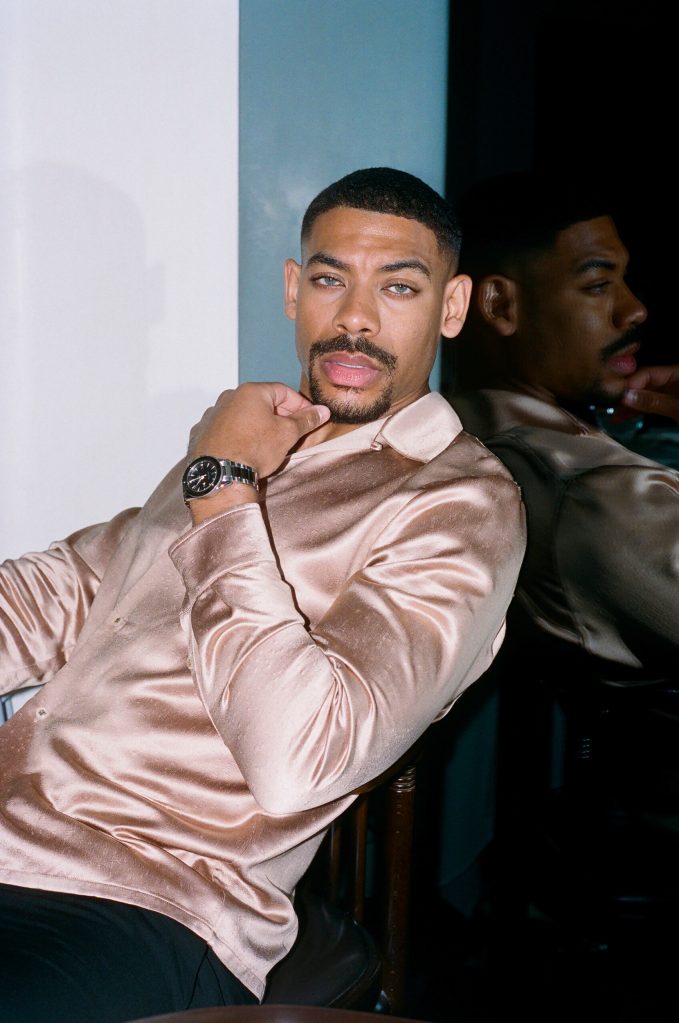
This photograph is the property of its respective owner. No copyright infringement intended.
Aaron Pierre is a strikingly attractive actor, known for his tall, athletic build, smooth dark skin, and commanding presence. His symmetrical facial features, strong jawline, and expressive light eyes convey intensity, sensitivity, and screen charisma. His natural elegance, combined with a confident posture and versatile features, allows him to portray both heroic and vulnerable characters convincingly. Pierre’s physicality and photogenic appeal make him stand out as a rising figure in film and television.
Early Life & Background
Aaron Stone Pierre was born on 7 June 1994 in London, England, of Jamaican, Curaçaoan, and Sierra‑Leonean descent (Wikipedia). He participated in athletics in his youth and later developed an interest in acting, training at the London Academy of Music and Dramatic Art (LAMDA), graduating around 2016 (Wikipedia).
Career Start
Pierre’s early stage work included Cassio in Shakespeare’s Othello at the Globe Theatre, earning commendation in the Ian Charleson Awards (IMDb). Screen recognition followed with his role as Dev‑Em in the sci‑fi series Krypton (2018‑2019), and he later starred in Amazon’s The Underground Railroad (2021) and the thriller film Old (2021).
Key Roles & Achievements
Dev‑Em in Krypton – early screen role.
Caesar in The Underground Railroad – critically acclaimed period drama role.
Lead in Rebel Ridge (2024).
Voicing Mufasa in Mufasa: The Lion King.
Awards & Recognition
Pierre received an Ian Charleson Award nomination (2018) and won the Canadian Screen Award for Best Supporting Performance (Brother) and an NAACP Image Award for Outstanding Actor (Rebel Ridge).
Personal Life & Marriage
Aaron Pierre is currently not publicly married; as of mid‑2025, actor Aaron Pierre is publicly dating singer‑actress Teyana Taylor.
Significance
Pierre represents the new wave of Black British talent blending rigorous stage training with screen charisma. His aesthetic appeal, athletic build, and symmetrical features make him a striking presence on screen, enhancing his versatile acting repertoire.
3. Regé‑Jean Page
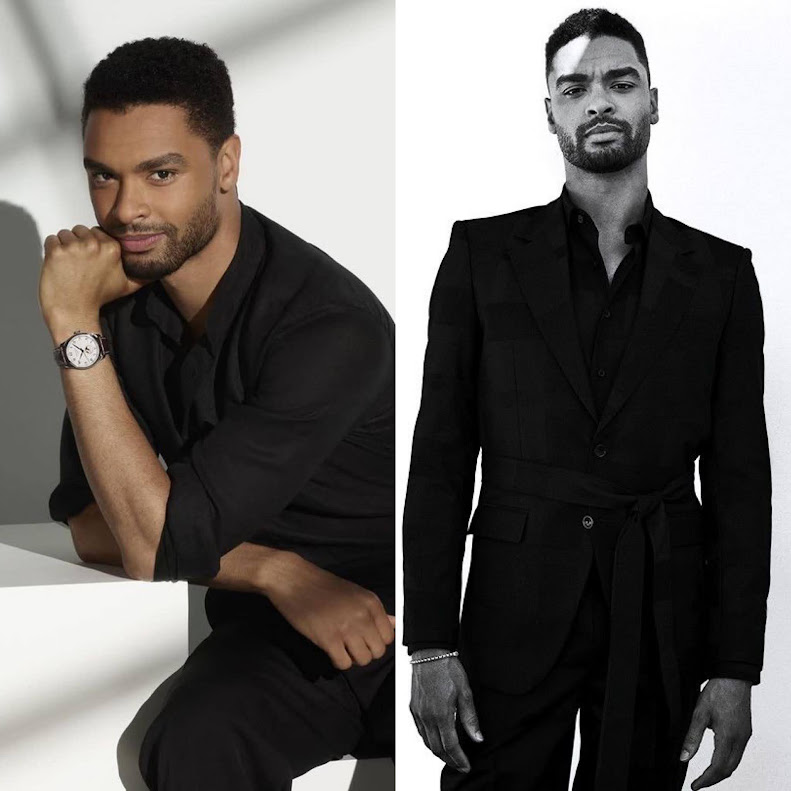
These photographs are the property of their respective owners. No copyright infringement intended.
Regé‑Jean Page possesses a striking combination of classical good looks, symmetry, and magnetic charm. Often cited in studies and media analyses as having one of the most perfectly symmetrical faces among contemporary actors, his features are exceptionally balanced and proportionate. Standing around 6’1” with a tall, lean, athletic build, he has smooth dark skin, deep-set brown eyes, and a captivating smile. His presence exudes both refinement and sensuality, making him an ideal romantic lead. His mixed British-Zimbabwean heritage further enhances his distinctive and photogenic features, giving him a unique screen presence that is both compelling and timeless.
Early Life & Background
Born in London to an English father (a preacher) and a Zimbabwean mother (a nurse), Page spent part of his childhood in Harare, Zimbabwe, before returning to London (Wikipedia). He studied sound engineering before entering Drama Centre London, graduating in 2013 (Fandango.com).
Career Start
Page’s early roles included a short film (Troublemaker, 2004) and guest appearances on BBC’s Casualty (2005) and Waterloo Road (2015). He gained global recognition as Simon Basset, the Duke of Hastings, in Netflix’s Bridgerton (2020).
Key Roles & Achievements
Simon Basset in Bridgerton – worldwide breakout role.
Films: The Gray Man (2022), Dungeons & Dragons: Honor Among Thieves (2023).
NAACP Image Award winner for Outstanding Actor in a Drama Series.
Screen Actors Guild Award nomination.
Personal Life & Relationship
Page is not married publicly but has been in a relationship with Emily Brown since around 2019 (People.com).
Significance
Page exemplifies modern standards of facial beauty and symmetry, combined with talent and charisma. His aesthetic perfection, along with acting skill, redefines the Black British male romantic lead for global audiences and makes him a symbol of representation in period dramas and blockbuster cinema.
From the moment they enter a room, these three men command attention—LaKeith Stanfield with his piercing, soul-searching eyes that seem to look straight through you; Ali Amin Carter with his refined, boyish good looks that blend innocence and masculine poise; and Louis Allen III with his breathtaking green orbs and sculpted physique that define him as a genetic marvel. Their appearances alone make them unforgettable, but their talent, charisma, and artistic versatility elevate them into the realm of cinematic and modeling excellence.
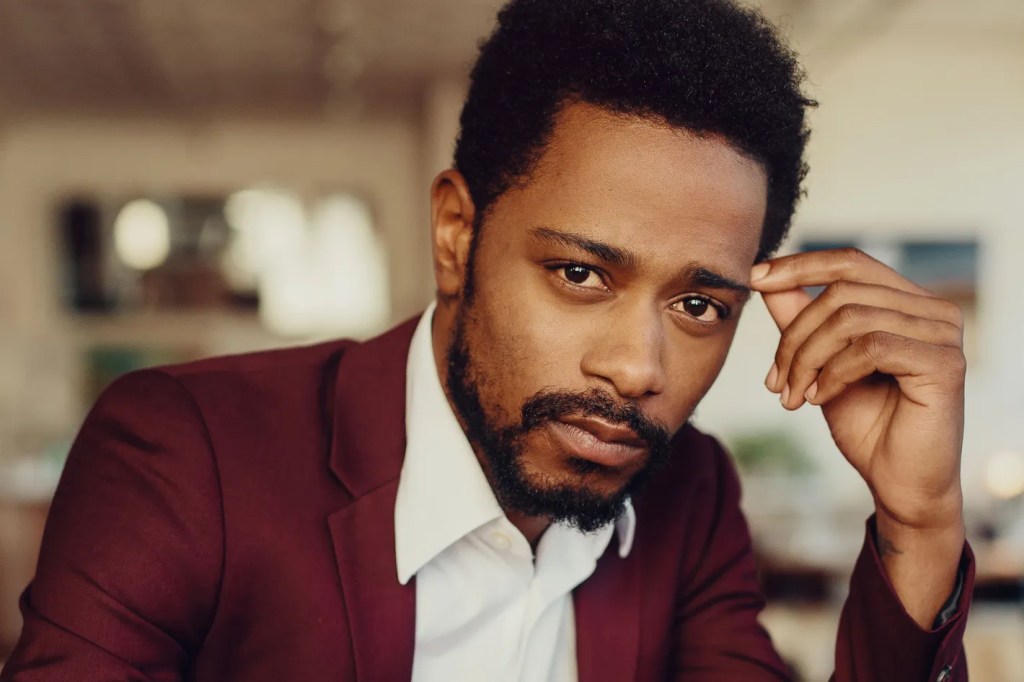
LaKeith Stanfield
“The Enigmatic Soul: A gaze that speaks, a talent that transforms.”
LaKeith Stanfield stands as one of the most intriguing and enigmatic actors of his generation. Born in California, he began acting in high school before training at the John Casablancas Modeling & Career Center, where he developed the poise and facial precision that now define his screen presence. His breakout came with Short Term 12, which earned him an Independent Spirit Award nomination, and he continued rising with roles in Selma, Get Out, Sorry to Bother You, Knives Out, and Judas and the Black Messiah, for which he received an Academy Award nomination. Among his most captivating roles is his leading performance in The Photograph (2020), where his deep, expressive eyes created a magnetic intensity—particularly in the scene where he gazes at Issa Rae’s character with a mix of longing, vulnerability, and desire. The moment became iconic because Stanfield’s eyes communicate an entire emotional universe, piercing straight into the viewer’s heart just as they pierce Issa Rae’s.
On the personal front, Stanfield married model Kasmere Trice and together they welcomed a baby in 2023. He is also father to two daughters from previous relationships and describes fatherhood as “something that completely changes” you. His commitment to protecting the privacy of his family and framing the narrative of his own story underscores a grounded side to the actor’s life amid public visibility.
Ali Amin Carter
“Attractiveness in Motion: Where quiet masculinity meets undeniable screen presence.”
This photograph is the property of its respective owner. No copyright infringement intended.
Ali Amin Carter is a striking talent whose tall, elegant frame and natural good looks positioned him for success in both modeling and acting. Beginning his career on the runway, he eventually transitioned into theatre, earning recognition through the acclaimed stage production Ruined. His screen roles include appearances in Lovecraft Country and The Good Lord Bird, each showcasing his ability to blend emotional depth with quiet masculinity. More recently, Carter starred in the feature film Love Unexpected (2023/24), portraying Chase, a college-playboy figure whose world is challenged by love and transformation. His modeling roots gave him the visual confidence and stature that translate naturally to the screen, and he extended his reach further by starring in a music-video production by the singer Joe, demonstrating a versatility that spans modeling, film, and music.
Louis Allen III (LA3)
“The Green-Eyed Hunk: Athletic strength, masculine beauty, and unforgettable allure.”
Photo Credit: Tibo Norman
Louis Allen III, known professionally as LA3, emerged from New Jersey as a modeling force defined by his remarkable green eyes, warm brown complexion, and athletic physique honed from his earlier years in minor-league football. His modeling journey began in high school, and he quickly became known for his commanding appearance in editorial spreads and grooming campaigns. Allen’s features made him a favorite for “Eye Candy” showcases and brand ambassador roles, where he represents the fusion of masculine beauty, athletic power, and classic photogenic appeal. Although his acting portfolio is smaller, he continues to expand his influence in fashion, fitness, and men’s grooming culture.
Together, these three men represent different dimensions of modern Black male beauty—intense, elegant, and powerfully photogenic. Their stories show how physical presence, combined with talent and ambition, opens doors across film, modeling, and public life. Each of them brings a unique energy to the screen or lens: Stanfield with soulful complexity, Carter with polished charm, and Allen with athletic grandeur. They reflect a new era in representation where Black men can embody sensitivity, strength, mystery, and beauty simultaneously. Their careers not only highlight their personal evolution but also expand the cultural imagination of what masculine perfection looks like in the twenty-first century.
IMDb. LaKeith Stanfield – Biography. Time Magazine. LaKeith Stanfield: Contemporary Chameleon. Empire Magazine. LaKeith Stanfield Profile. IMDb. Ali Amin Carter – Biography. Essence Magazine. Eye Candy: Louis Allen III. Blinging Beauty. The Face of Blinging Beauty’s Manly Man is LA
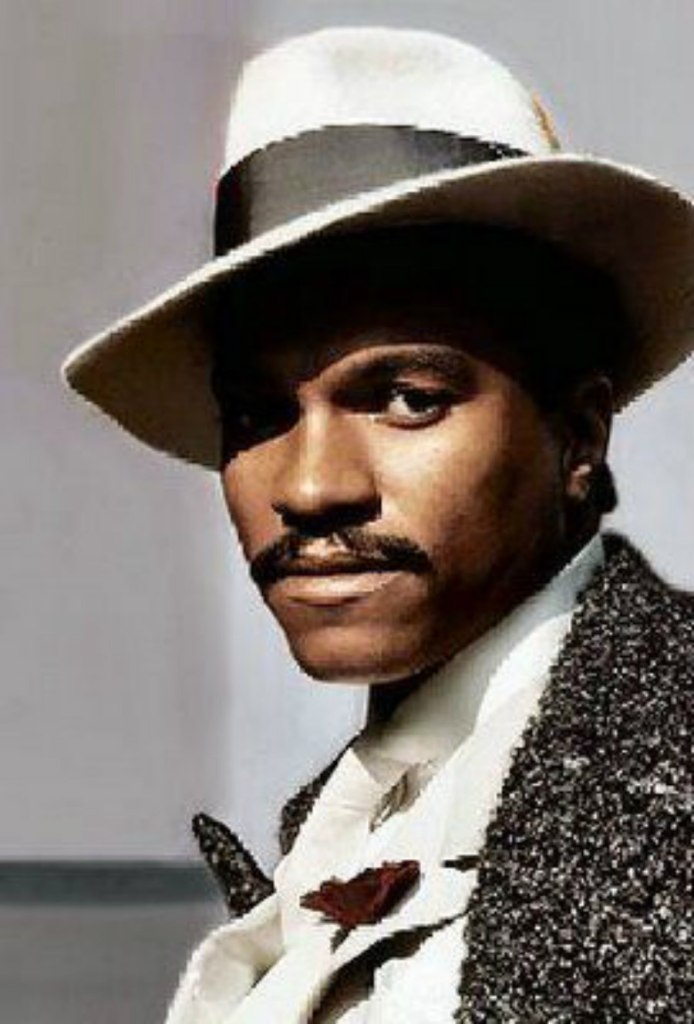
The Most Handsome, Suave, Cool, and Charismatic Black Actor to ever grace the Silver Screen.
This photograph is the property of its respective owner.
“Suave was redefined the moment he walked into a room. That voice, that smile, that presence—Billy Dee wasn’t just a heartthrob, he was a whole genre of cool.”
Introduction: The Gentleman of Desire
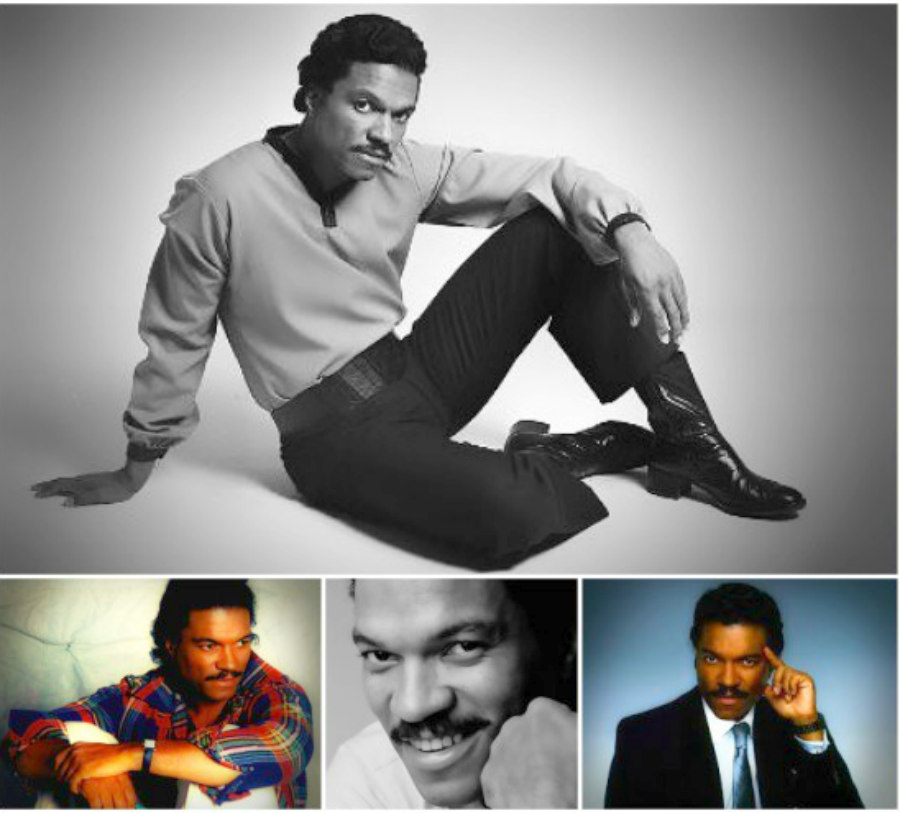
Before the era of social media heartthrobs, abs-driven selfies, and designer drip, there was Billy Dee Williams—an actor whose very presence on screen sent pulses racing and redefined Black masculinity for generations. With his caramel-hued velvety skin, deep-set almond eyes, and that now-legendary “come hither” smile, Billy Dee was more than handsome—he was hypnotic. His voice? A smooth, seductive baritone dipped in brown liquor and jazz smoke, as unforgettable as his on-screen swagger.
With his caramel-toned skin, bedroom eyes, and a voice as smooth as jazz, Billy Dee Williams was more than just a handsome face—he was an icon of sophistication. Possessing a magnetic screen presence, his roles blended elegance and edge, charm and command. Whether donning a finely tailored suit or delivering lines with velvety poise, Williams captivated audiences with a rare combination of classic Hollywood glamour and unapologetic Black excellence. From romantic dramas to intergalactic adventures, he brought style, strength, and seduction to every frame he graced. A trailblazer for generations of Black leading men, Billy Dee made being suave look effortless—and unforgettable.
He was the epitome of elegance—a handsome devil, as fans and critics often called him, whose sensual restraint made desire simmer rather than explode. His style, grace, and natural charm gave the leading men of the 1970s and ’80s a run for their money—and would still outshine many of today’s stars.
These photographs are the property of their respective owners.
Quotes from Admirers
“There was Denzel, there was Sidney… but there was only one Billy Dee.” – Quincy Jones
“His voice alone could seduce a nation.” – Angela Bassett
“He made us believe in love on screen. Real, grown, complicated love.” – Diana Ross
Early Life and Beginnings
William December “Billy Dee” Williams Jr. was born (has a twin sister) on April 6, 1937, in Harlem, New York, to Loretta Anne, an elevator operator at the Schubert Theatre, and William Sr., a caretaker and aspiring musician. With roots in African-American, West Indian, and Native American ancestry, Billy Dee’s rich cultural heritage imbued him with both classic beauty and a regal air.
He graduated from LaGuardia High School of Music & Art and studied at the prestigious National Academy of Fine Arts and Design, originally pursuing a career in visual arts before making a pivot to the stage and screen.
Rise to Stardom and Breakout Roles
Billy Dee’s breakthrough came with the 1971 television movie “Brian’s Song,” in which he portrayed NFL star Gale Sayers alongside James Caan. The role earned him a Primetime Emmy nomination and established him as a serious actor with emotional depth and romantic appeal.
But it was in “Lady Sings the Blues” (1972), opposite Diana Ross, that Billy Dee became a certified sex symbol. Playing the smooth-talking Louis McKay, he delivered the now-iconic line to Ross, “Do you want my arm to fall off?”—a moment that oozed suave seduction. That line—and the way he said it—became cinematic shorthand for Black male romantic allure.
The Aesthetic of Desire: His Iconic Look
Billy Dee’s beauty wasn’t just physical—it was dimensional.
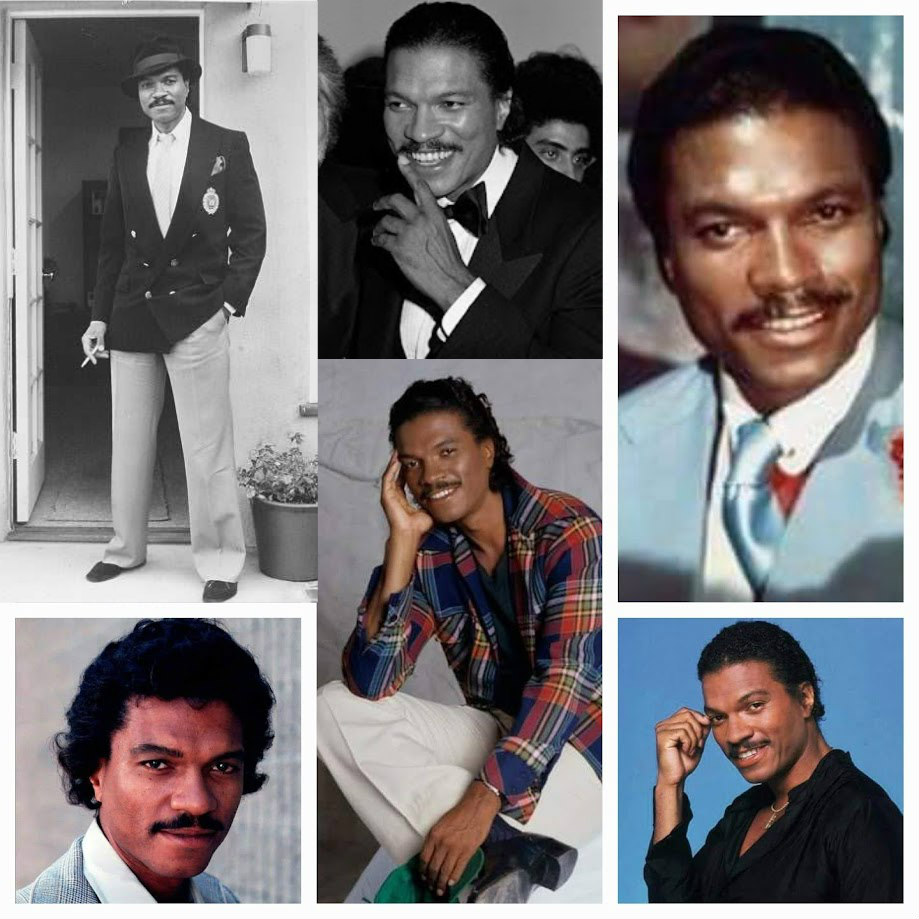
These photographs are the property of their respective owners.
Skin: A warm, glowing brown, reminiscent of sunlit caramel, always perfectly lit by the camera.
Smile: Disarming, confident, and suggestive—a “come hither” look that made audiences lean in.
Voice: Silky, deep, and debonair. That “d’o-demere” voice (as one fan affectionately mispronounced “debonair”) added to his mystique.
Style: Whether in a tuxedo, a cape (as Lando Calrissian), or a simple three-piece suit, his fashion sense exuded classic Hollywood elegance with unapologetic Black pride.
Women swooned, men imitated, and Hollywood finally had a Black male romantic lead who didn’t have to be aggressive, comedic, or stereotyped to hold the screen.
Celebrated Roles and Legacy
Billy Dee Williams has appeared in over 90 film and television projects across his career, including iconic roles in “Lady Sings the Blues” (1972) and as Lando Calrissian in the Star Wars franchise.
Some of Billy Dee’s most iconic roles include:
Louis McKay in Lady Sings the Blues (1972)
Brian’s Song (1971) – A tender, groundbreaking portrayal of interracial friendship
Gale Sayers in the TV movie Brian’s Song
Lando Calrissian in Star Wars: The Empire Strikes Back (1980) and Return of the Jedi (1983)
Berry Gordy’s Mahogany (1975) – Again paired with Diana Ross
Nighthawks (1981) with Sylvester Stallone
He is particularly remembered for Lando Calrissian, the cape-wearing, galaxy-hopping smooth-talker who brought charm and charisma to the Star Wars universe—a role he reprised in The Rise of Skywalker (2019), proving his ageless appeal.
His favorite performance? Billy Dee has often said that Brian’s Song and Lady Sings the Blues held deep personal meaning—stories about love, loss, and dignity.
Awards and Recognition
NAACP Image Award (multiple wins)
Hollywood Walk of Fame Star (1985)
Primetime Emmy Nomination for Brian’s Song
Honored by Ebony, Jet, and Essence throughout the 1970s and ’80s as one of the “Most Beautiful Black Men in America.”
Ebony Magazine once called him “The Face of Black Sophistication.” Diana Ross described him as “so smooth, he made the screen melt.”
Racism, Respect, and Representation
Billy Dee was a leading Black man in an era that rarely allowed for them. He once shared, “There weren’t many roles where a Black man could be dignified, romantic, and powerful without being stereotyped. I fought for that image.”
He challenged Hollywood’s limited narrative—presenting the Black man as a lover, a hero, and a gentleman.
Love Life, Family, and Legacy
Billy Dee has been married three times, most famously to Teruko Nakagami, a Japanese-American actress and model. They have one daughter, Hanako, and he has a son, Corey Dee Williams, from a previous relationship.
While not publicly known for romantic scandals, he’s long been admired for his respectful relationships, discretion, and dignified image.
Who did he have a crush on? Rumors swirled about his admiration for Lena Horne, whom he called “the epitome of grace and allure.”
Commercials and Endorsements
In the 1980s, Billy Dee became the face of Colt 45 Malt Liquor, delivering the famously smooth tagline: “It works every time.”
While the ad campaign was commercially successful, it also drew criticism for its alignment with alcohol marketing. Nevertheless, it further cemented his image as the “coolest man alive.”
He also endorsed products for Mennen, Schick razors, and fashion brands who wanted to capture his stylish persona.
Where Is He Now?
Now in his late 80s, Billy Dee Williams remains active in voice acting, public appearances, and conventions. He reprised his Lando role in Star Wars: The Rise of Skywalker (2019) and voiced characters in animated series.
In 2019, he caused a stir by referring to himself as using “he/him and she/her pronouns” to describe his emotional duality—sparking conversations about identity, masculinity, and expression. He later clarified he was referring to his balance of energies, not gender fluidity, but praised the younger generation’s openness.
Conclusion: A Living Monument of Black Elegance
Billy Dee Williams wasn’t just beautiful—he was cinematic alchemy. The type of man who made time pause, who made women blush and men reassess their approach. He showed us that Black men could be more than what the world limited them to. He was a lover, a thinker, a prince of style and sensuality.
As Ebony once put it: “Billy Dee didn’t just change the screen—he changed the way Black men were seen.”
References
Bassett, A. (2016). Interview with Angela Bassett on Black icons in Hollywood. Essence Magazine. https://www.essence.com
Ebony Magazine. (1972, October). Hollywood’s smoothest Black leading man: Billy Dee Williams lights up the screen. Ebony, 27(12), 72–76.
Jet Magazine. (1980, April 7). Billy Dee Williams: The man, the myth, the mustache. Jet, 59(15), 20–23.
Jones, Q. (1994). Q: The Autobiography of Quincy Jones. New York: Doubleday.
Ross, D. (1993). Secrets of a diva: Diana Ross on life, love, and legends. Interview by Ebony, reprinted in Classic Soul Interviews. Johnson Publishing.
Smith, J. (2020). The elegance of Black masculinity: Billy Dee Williams and the politics of suave. Journal of Black Cinema and Culture, 12(1), 35–48.
Vanity Fair. (2019, November 27). Billy Dee Williams discusses gender fluidity, love, and his return to Star Wars. Retrieved from https://www.vanityfair.com
Williams, B. D. (2016). Lights, Camera, Legacy: A Conversation with Billy Dee Williams. NPR Interviews. Retrieved from https://www.npr.org
Where faith, history, and truth illuminate the Black experience.


 THE BROWN GIRL DILEMMA