
Category Archives: Makeup/Cosmetics

Artificial Allure: How Cosmetic Capitalism Redefines Self-Worth.

Photo by ROMAN ODINTSOV on Pexels.com

In the modern age, beauty has become an economy, a global enterprise built upon desire, insecurity, and illusion. What was once a natural attribute or divine gift has been rebranded into a commodity, carefully marketed and endlessly consumed. The rise of cosmetic capitalism—the fusion of aesthetic obsession and capitalist profit—has transformed self-worth into a purchasable product. Under its glossy surface lies a troubling truth: the more individuals strive for “perfection,” the further they drift from authenticity.

Cosmetic capitalism thrives on the manipulation of perception. It capitalizes on the human longing to be seen, valued, and loved, while subtly redefining beauty as something always just out of reach. Advertising industries employ psychological tactics to manufacture dissatisfaction, convincing consumers that flaws are problems only money can solve. As Naomi Wolf (1991) argues in The Beauty Myth, this perpetual cycle of insecurity sustains the economic engine of modern capitalism—especially at the expense of women’s peace and identity.

The proliferation of cosmetic procedures, filters, and beauty products reflects not empowerment but enslavement to constructed ideals. The body becomes a billboard for consumer aspiration, and the face a canvas for capitalist fantasy. From plastic surgery to skincare regimens costing thousands, the marketplace preys on human vulnerability. What was once a mirror of individuality has become a mask of conformity, polished and profitable.

Social media has accelerated this commodification of self-image. Platforms like Instagram, TikTok, and Snapchat offer digital mirrors that reflect filtered realities rather than authentic identities. The algorithm rewards those who adhere most closely to the aesthetic of perfection—symmetry, smoothness, and sexual appeal—creating an economy of validation driven by likes and shares. In this sense, self-worth is no longer self-defined; it is crowdsourced, monetized, and algorithmically managed.

The cosmetic industry’s power lies not merely in products, but in narratives. It sells more than lipstick or foundation—it sells belonging. Through subtle messaging, it implies that confidence, success, and even love can be bought in a bottle. This seductive illusion keeps billions of consumers tethered to beauty routines that promise transformation while ensuring perpetual dependence. The capitalist beauty system thus mirrors the spiritual condition of idolatry: worshiping the creation rather than the Creator.

Historically, beauty was rooted in nature and divine reflection. Ancient African civilizations viewed adornment as spiritual expression—a way to honor the gods or celebrate life’s passages. Today’s beauty culture, however, has severed this sacred link. It no longer celebrates identity; it commodifies it. The sacred has become synthetic. Skin lightening, cosmetic surgery, and digital alteration have replaced the natural artistry of self with manufactured sameness, particularly targeting communities of color with Eurocentric ideals.

Colorism and racial capitalism intersect deeply with cosmetic culture. The global skin-lightening industry, valued in the billions, preys on the psychological remnants of colonialism. Lighter skin remains marketed as “premium,” reinforcing hierarchies that stem from slavery and segregation. This systemic conditioning perpetuates a cycle of shame, where darker-skinned individuals internalize inferiority and seek salvation through consumption. As Yaba Blay (2017) notes, the market exploits not just vanity but centuries of racial trauma.

Black women, in particular, stand at the crossroads of beauty and exploitation. Once demonized for their natural features, they are now imitated and appropriated by the same systems that marginalize them. Fuller lips, curvier bodies, and natural hairstyles—once mocked—are now commodified as exotic trends when worn by others. This irony underscores the hypocrisy of cosmetic capitalism: it steals the aesthetics of Blackness while erasing the people behind them.

Men, too, are increasingly drawn into this cosmetic economy. The rise of “manscaping,” muscle-enhancing supplements, and grooming products reveals how capitalism evolves to exploit all demographics. The same insecurity once marketed exclusively to women now fuels a male beauty industry worth billions. Toxic masculinity and body dysmorphia merge under the pressure to maintain a chiseled, curated image of strength and desirability.

The psychological consequences of cosmetic capitalism are profound. Studies link excessive beauty consumption with increased anxiety, depression, and body dysmorphic disorder. The endless pursuit of flawlessness leaves individuals perpetually dissatisfied, unable to accept themselves as they are. In spiritual terms, this is the corruption of self-image—the very “mirror of God” distorted by man’s marketing. When identity is mediated by brands, authenticity becomes an act of rebellion.

Biblically, this crisis reflects a deeper spiritual decay. Scripture warns against the vanity of outward appearances: “Whose adorning let it not be that outward adorning… but let it be the hidden man of the heart” (1 Peter 3:3–4, KJV). Cosmetic capitalism inverts this truth, teaching that worth is earned through purchase, not character. It replaces grace with glamour, humility with hype. The result is a generation that confuses external beauty for inner value, and branding for being.

Theologically, beauty is meant to reveal God’s handiwork, not man’s manipulation. Every feature—whether symmetrical or not—is intentional, carrying divine fingerprint. When one alters themselves to meet worldly standards, they unconsciously declare that God’s design is insufficient. Cosmetic capitalism, therefore, functions as both economic and spiritual colonization—it profits from convincing creation that it needs re-creation.

Resistance to this system requires both awareness and faith. To reject cosmetic capitalism is not to reject adornment, but to reclaim it as self-expression rather than self-erasure. It means celebrating the authenticity of one’s God-given form while refusing to participate in industries that profit from insecurity. This spiritual resistance mirrors Christ’s call to live “in the world, but not of the world” (John 17:14–16, KJV).

Artists, scholars, and activists within the African diaspora are at the forefront of this reclamation. From natural hair movements to melanin-positive campaigns, the cultural shift toward authenticity reflects both political defiance and spiritual awakening. These movements remind the world that beauty, when stripped of capitalist influence, becomes liberation—a mirror of divine creativity rather than corporate design.

Yet, the allure of artificial beauty persists because it offers the illusion of control. In a world of chaos and uncertainty, cosmetic enhancement promises mastery over at least one aspect of life: the body. This illusion, however, exacts a cost. It traps the soul in an endless loop of dissatisfaction, where every “fix” exposes a new flaw. The pursuit of perfection becomes a pilgrimage to nowhere.

The challenge for modern believers and thinkers alike is to restore beauty to its rightful context: as a reflection of inner truth. True beauty radiates from wholeness, not from highlighter. It is found in empathy, resilience, and divine alignment. It does not fade with age or depend on filters; it deepens with wisdom. In this sense, beauty is not bought—it is revealed.

In the end, cosmetic capitalism cannot deliver what it promises because it feeds on emptiness. Its survival depends on perpetual insecurity. Liberation begins the moment one recognizes that self-worth is not a commodity but a covenant. Each person is fearfully and wonderfully made (Psalm 139:14, KJV)—a masterpiece that needs no retouching.

To reclaim beauty is to reclaim freedom. When we turn away from the altar of artificial allure and look instead into the mirror of divine truth, we rediscover our reflection as it was meant to be: whole, sacred, and radiant with the image of God.


References

Blay, Y. (2017). Pretty. Period.: The politics of being Black and beautiful. Blackprint Press.
Fanon, F. (1952). Black skin, white masks. Grove Press.
hooks, b. (1992). Black looks: Race and representation. South End Press.
Mills, C. W. (1997). The racial contract. Cornell University Press.
Nyong’o, L. (2014). Lupita Nyong’o’s speech on beauty and self-love [Video]. Essence Black Women in Hollywood.
Tate, S. (2016). Black beauty: Aesthetics, stylization, politics. Routledge.
Thomas, C. (2019). God, image, and identity: Reclaiming beauty from a biblical lens. Faith & Reason Press.
Walker, A. (1983). In search of our mothers’ gardens: Womanist prose. Harcourt Brace Jovanovich.
Wilkerson, I. (2020). Caste: The origins of our discontents. Random House.
Wolf, N. (1991). The beauty myth: How images of beauty are used against women. HarperCollins.
Wynter, S. (2003). Unsettling the coloniality of being/power/truth/freedom. The New Centennial Review, 3(3), 257–337.
West, C. (1993). Race matters. Beacon Press.
Davis, A. Y. (1981). Women, race, & class. Random House.
Johnson, K. (2021). Beauty in resistance: Black aesthetics and cultural power. Duke University Press.
Mercer, K. (1994). Welcome to the jungle: New positions in Black cultural studies. Routledge.
The Holy Bible, King James Version. (1611). Thomas Nelson.
How Beautiful You Want to Be? Irene says..

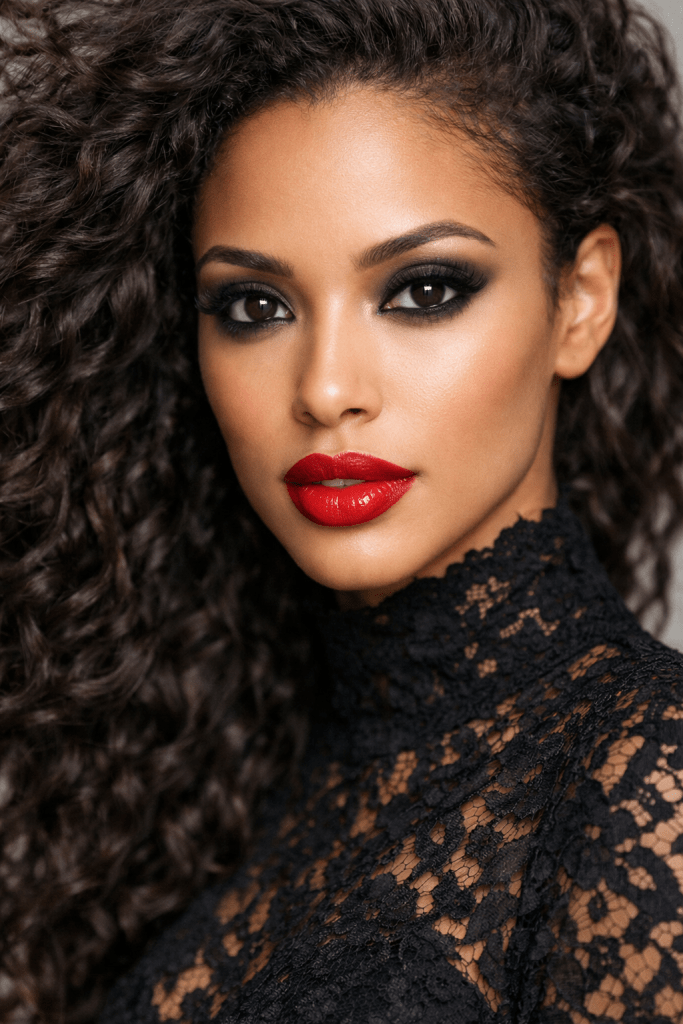
Beauty has never been a fixed concept; it is a moving reflection of culture, history, power, and identity. Across civilizations, the human desire to enhance appearance has been deeply connected to ritual, status, spirituality, and self-expression. Makeup, in particular, is not merely cosmetic—it is historical evidence of how societies have defined femininity, attraction, and worth. Yet alongside the long tradition of adornment exists an equally powerful ideal: natural beauty, the belief that one’s unaltered features already hold intrinsic value.

The earliest recorded use of makeup dates back over 6,000 years to ancient Egypt. Both men and women applied kohl around the eyes not only for aesthetic reasons, but also for spiritual and medical purposes, believing it protected against evil spirits and eye infections. Makeup in this era symbolized divinity, health, and social class, with queens such as Cleopatra using pigments derived from minerals, insects, and plants to signify royal status.

In ancient Greece and Rome, beauty standards became increasingly tied to class and gender. Pale skin was associated with wealth and leisure, while women used white lead and chalk to lighten their complexions—often at great physical cost. Rouge, derived from berries and wine, was used to color lips and cheeks, reinforcing the idea that beauty required alteration, even at the expense of health.

During the Middle Ages, Christian doctrine discouraged overt cosmetic use, equating beauty enhancement with vanity and moral corruption. However, subtle practices persisted—women plucked hairlines, used herbal tonics, and relied on symbolic clothing and jewelry to express femininity within socially acceptable limits.

The Renaissance revived cosmetic culture, particularly among European aristocracy. Queen Elizabeth I popularized the “mask of youth,” using lead-based powders to achieve an artificially flawless pale complexion. Beauty became synonymous with power, status, and artificial perfection, further separating aesthetic ideals from biological reality.

The modern cosmetics industry emerged in the late 19th and early 20th centuries with the rise of mass production, advertising, and celebrity culture. Brands such as Max Factor, Revlon, and Estée Lauder transformed makeup into a global business, linking beauty with consumerism and identity. Hollywood, fashion magazines, and later social media solidified unattainable beauty standards rooted in youth, symmetry, and Eurocentric features.

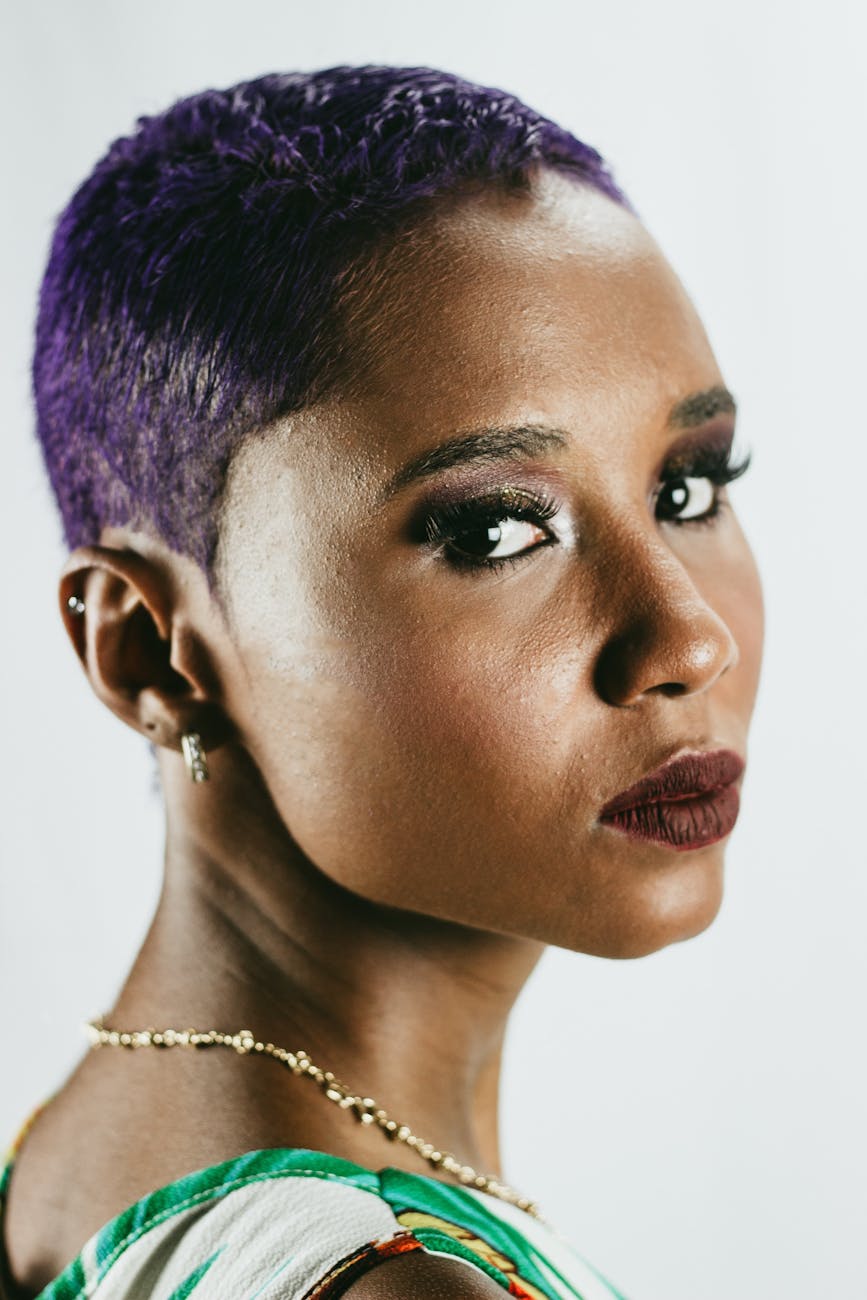
Yet alongside this commercial expansion came resistance. The natural beauty movement, particularly within feminist and Black cultural traditions, challenged the idea that worth must be painted, contoured, or filtered. Natural beauty emphasizes authenticity, health, and self-acceptance over modification. It argues that beauty is not something to be constructed, but something to be recognized.

For Black women especially, natural beauty has political meaning. In a world that historically devalued dark skin, textured hair, and non-European features, choosing natural presentation became an act of cultural affirmation. The natural hair movement, Afrocentric aesthetics, and body positivity campaigns represent a reclamation of beauty from colonial and capitalist definitions.

Ultimately, the question “How beautiful do you want to be?” is not about cosmetics—it is about power. It asks whether beauty is something to chase or something to claim. Makeup can be art, armor, or expression, but it should never replace self-worth. True beauty lies not in how much one alters the face, but in how deeply one accepts it.


References

Bordo, S. (2003). Unbearable weight: Feminism, Western culture, and the body. University of California Press.

Byrne-Davis, L. M. T., et al. (2020). Appearance ideals and body image. Current Opinion in Psychology, 36, 9–14.

Corson, R. (2004). Fashions in makeup: From ancient to modern times. Peter Owen.

Davis, A. (2015). Women, culture, and politics. Vintage Books.

Jones, G. (2011). Beauty imagined: A history of the global beauty industry. Oxford University Press.

Peiss, K. (2011). Hope in a jar: The making of America’s beauty culture. University of Pennsylvania Press.

Tate, S. A. (2009). Black beauty: Aesthetics, stylization, politics. Ashgate.

The Impact of Makeup Marketing on Black Women.

Photo by Matheus Ferrero on Pexels.com

The beauty industry, valued at billions of dollars worldwide, has long been a space where race, gender, and consumer culture intersect. For Black women, makeup marketing has been both a site of exclusion and empowerment. Historically marginalized in product design and advertising, Black women were often positioned outside mainstream definitions of beauty. Yet, over time, the demand for inclusivity, the rise of Black-owned brands, and the power of cultural influence have transformed makeup marketing. Still, the journey reveals complex dynamics of representation, identity, and consumer psychology.

Historical Exclusion from the Market

For much of the 20th century, mainstream makeup companies largely ignored the needs of Black women. Shades for darker skin tones were either unavailable or limited to a small range, forcing many women to mix products or turn to alternative methods to match their complexion (Craig, 2006). The absence of inclusive shades reinforced Eurocentric standards, sending the implicit message that lighter skin was normative and desirable. This exclusion not only alienated Black consumers but also perpetuated colorism by failing to validate the beauty of darker complexions.

The Psychological Effects of Exclusion

The lack of representation in makeup marketing contributed to negative self-image and internalized racism among Black women. According to Hall (2010), the erasure of darker skin tones in consumer products reinforced a hierarchy of beauty that privileged proximity to whiteness. Psychologically, this translated into feelings of invisibility, inadequacy, and pressure to conform to Eurocentric aesthetics. Biblical wisdom emphasizes the value of self-worth beyond external validation: “Favour is deceitful, and beauty is vain: but a woman that feareth the LORD, she shall be praised” (Proverbs 31:30, KJV). Yet, when entire industries failed to affirm Black women’s beauty, the weight of systemic messaging became a powerful force shaping identity.

Black-Owned Beauty Brands as Resistance

In response to exclusion, Black entrepreneurs created their own beauty solutions. Companies like Fashion Fair Cosmetics, founded in 1973 by Eunice Johnson, became pioneers in offering a wide range of shades for Black women. These brands not only met practical needs but also challenged dominant beauty narratives by affirming that Black beauty was valuable, marketable, and worthy of celebration (Byrd & Tharps, 2014). Makeup became more than a cosmetic product; it was an act of resistance, pride, and self-definition.

Modern Representation and Inclusivity

The 21st century ushered in significant changes. Rihanna’s Fenty Beauty revolutionized the industry in 2017 by launching with 40 foundation shades, later expanded to 50, proving that inclusivity could also be profitable. The brand’s success pressured major companies like L’Oréal, Maybelline, and CoverGirl to expand their shade ranges. Adut Akech, Duckie Thot, and other dark-skinned models became global campaign faces, signaling a shift toward celebrating deeper tones. However, critics note that inclusivity often functions as a marketing strategy rather than a genuine commitment to equity (Lewis & Neal, 2020).

Fashion Fair vs. Fenty Beauty

Fashion Fair (1973): Founded by Eunice Johnson of Ebony and Jet magazines, Fashion Fair was one of the first major cosmetic brands created specifically for Black women. It emerged during the height of the Civil Rights Movement and the Black Is Beautiful era. The brand’s marketing emphasized elegance, sophistication, and the celebration of dark-skinned women. Fashion Fair offered shades that had long been ignored by mainstream companies and became a staple in Black households, representing self-determination and pride in racial identity (Byrd & Tharps, 2014).

Fenty Beauty (2017): Launched by Rihanna, Fenty Beauty debuted with 40 foundation shades that instantly disrupted the industry. Unlike Fashion Fair, which primarily served Black women, Fenty positioned inclusivity as universal—catering to all races while centering deeper tones. Social media marketing, influencer campaigns, and global reach allowed Fenty to dominate culturally and commercially, setting new industry standards.

Comparison:

  • Cultural Context: Fashion Fair was a product of the Black Power era; Fenty emerged in the digital, globalized age.
  • Marketing Approach: Fashion Fair marketed exclusively to Black women; Fenty used Black women as the starting point but expanded inclusivity to all.
  • Legacy: Fashion Fair paved the way by affirming Black beauty in a segregated market; Fenty institutionalized inclusivity in the mainstream.

Together, these brands illustrate how makeup marketing for Black women evolved from racial exclusivity to global inclusivity—yet both underscore the importance of Black women shaping their own beauty narratives.

Social Media and Consumer Activism

Social media platforms have amplified Black women’s voices in shaping beauty marketing. Hashtags like #BlackGirlMagic and #MelaninPoppin highlight the richness of darker skin tones, while consumer backlash against non-inclusive campaigns has pressured companies to diversify. This shift demonstrates the power of collective consumer activism in holding brands accountable and ensuring that marketing reflects the realities of diverse beauty.

The Duality of Empowerment and Exploitation

While inclusive makeup marketing empowers Black women by affirming their presence, it also risks commodifying diversity. Representation can sometimes be surface-level, serving corporate profits more than genuine cultural respect. This duality highlights a tension: makeup can be a tool of self-expression and empowerment, but it can also perpetuate consumer dependency and reinforce beauty hierarchies if not critically engaged.

A Biblical Perspective on Beauty and Value

From a biblical perspective, makeup marketing raises questions about identity and self-worth. Scripture emphasizes that beauty originates not from external adornment but from inner character: “Whose adorning let it not be that outward adorning of plaiting the hair, and of wearing of gold, or of putting on of apparel; But let it be the hidden man of the heart” (1 Peter 3:3-4, KJV). This perspective does not condemn cosmetics outright but reminds Black women that marketing should not define their worth. True empowerment lies in knowing one’s divine value while navigating consumer culture critically.

Conclusion

The impact of makeup marketing on Black women is profound, weaving together histories of exclusion, resistance, empowerment, and commodification. While the rise of inclusive brands has reshaped the industry, Black women remain vigilant in ensuring that representation is authentic rather than exploitative. At its best, makeup marketing affirms identity and expands the definition of beauty; at its worst, it risks reducing diversity to a trend. Ultimately, the challenge for Black women lies in balancing the joy of self-expression with the wisdom of recognizing that true beauty and worth transcend products, aligning with God’s eternal affirmation of their value.


References

Byrd, A., & Tharps, L. L. (2014). Hair story: Untangling the roots of Black hair in America. St. Martin’s Press.
Craig, M. L. (2006). Race, beauty, and the tangled knot of a guilty pleasure. Feminist Theory, 7(2), 159–177.
Hall, R. E. (2010). An historical analysis of skin color discrimination in America: Victimism among victim group populations. Springer.
Lewis, R., & Neal, A. (2020). Colorism and the fashion industry: Shifting standards of representation. Journal of Black Studies, 51(5), 452–469.
The Holy Bible, King James Version. (1611/2017). Thomas Nelson.