
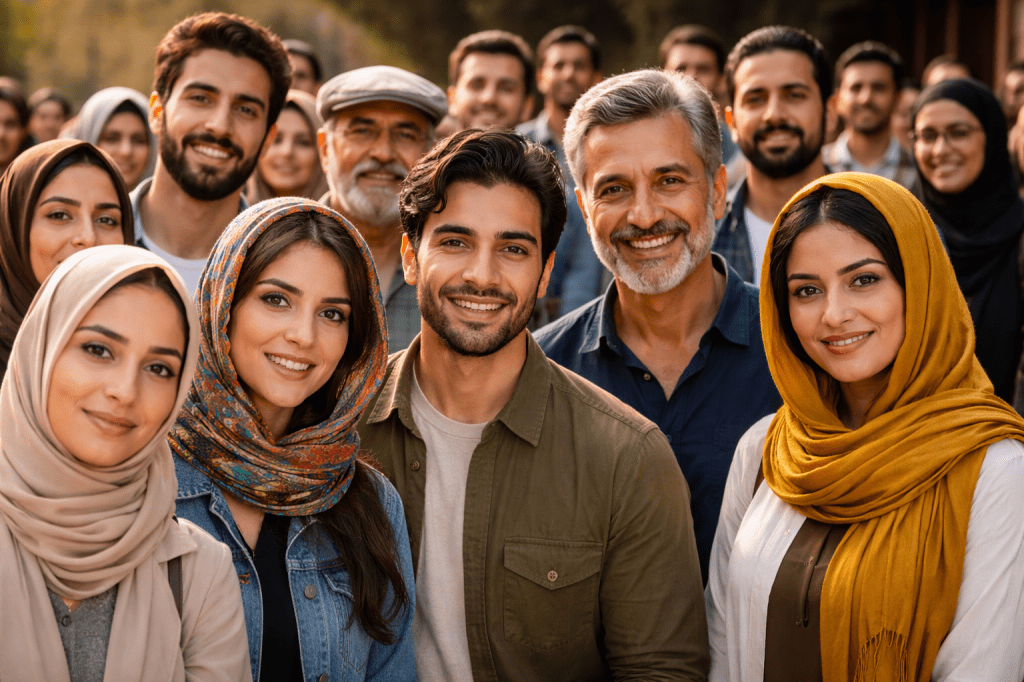
The people known today as Iranians trace their civilizational roots to the ancient world of the Near East, where empire, language, and lineage intersected in profound ways. Historically called Persians in Western sources, they descend from Indo-Iranian tribes who migrated onto the Iranian plateau in the second millennium BCE, forming the cultural and political foundation of what would become one of antiquity’s most influential empires.
The term “Aryan” originally derived from the Old Iranian word arya, meaning “noble” or “freeborn,” and was a self-designation used by early Indo-Iranian peoples. It appears in ancient inscriptions such as those of Darius I, who referred to himself as an Aryan and of Aryan lineage. In its original linguistic and cultural context, the term denoted Indo-Iranian identity, not the racial ideology later misappropriated in modern Europe.
The Iranian tribes included the Medes, Persians, Parthians, and others who settled across the plateau. The Medes first established a significant kingdom, followed by the rise of the Achaemenid Persians under Cyrus the Great, whose empire stretched from India to the Mediterranean. This imperial formation shaped the geopolitical landscape of the ancient Near East.
Biblically, the Persians are explicitly mentioned in the Hebrew Scriptures. The books of Ezra, Nehemiah, Daniel, and Esther occur within the Persian imperial context. The decree of Cyrus allowing the Jewish exiles to return to Jerusalem is recorded in Ezra 1:1–4, marking a pivotal moment in post-exilic restoration.
The Achaemenid Empire, often associated with the biblical “kings of Persia,” included rulers such as Xerxes I, commonly identified with Ahasuerus in the Book of Esther. This period demonstrates the direct intersection between Iranian imperial authority and Jewish covenant history.
From a genealogical standpoint, many biblical scholars associate the Persians and Medes with the descendants of Japheth, specifically through Madai (Genesis 10:2), who is traditionally linked to the Medes. The Table of Nations situates Madai among Japheth’s sons, suggesting an Indo-European lineage consistent with linguistic evidence.
Linguistically, Iranians belong to the Indo-Iranian branch of the Indo-European language family. Modern Persian (Farsi) evolved from Old Persian, written in cuneiform, and later Middle Persian (Pahlavi). Today, Persian remains the official language of Iran, alongside recognized minority languages such as Azeri, Kurdish, and Balochi.
The name “Iran” itself derives from “Ērān,” meaning “land of the Aryans.” In 1935, under Reza Shah Pahlavi, the country formally requested that the international community refer to it as Iran rather than Persia, reflecting indigenous historical terminology.
Iran’s religious identity transformed dramatically in the seventh century with the Islamic conquest, shifting from Zoroastrianism to Islam. Today, Iran is predominantly Twelver Shi’a Muslim, and religion plays a foundational role in its political system.
The current president of Iran is Masoud Pezeshkian, elected in 2024. A cardiac surgeon by training and a longtime parliamentarian, Pezeshkian has positioned himself as a reform-minded figure advocating for economic stabilization and measured diplomatic engagement.
Iran’s political system, however, vests ultimate authority in the Supreme Leader, currently Ali Khamenei, who oversees military, judicial, and strategic state functions. The presidency operates within this theocratic framework.
The relationship between Iran and the United States has been strained since the 1979 Islamic Revolution, which overthrew the U.S.-backed Shah and led to the hostage crisis at the American embassy in Tehran. Diplomatic relations were severed, and tensions have persisted for decades.
Key flashpoints include Iran’s nuclear program, regional proxy conflicts, and economic sanctions. The 2015 Joint Comprehensive Plan of Action (JCPOA) temporarily eased tensions before the U.S. withdrawal in 2018, reigniting sanctions and diplomatic friction.
Recent developments continue to center on nuclear negotiations, internal economic pressures, and regional security dynamics involving Israel and Gulf states. Iran remains a central actor in Middle Eastern geopolitics due to its strategic location, military capabilities, and energy resources.
Historically, Iran’s power derived not only from military strength but also from administrative sophistication. The Achaemenids pioneered systems of provincial governance (satrapies), infrastructure development, and cultural tolerance that influenced later empires, including Rome.
In prophetic literature, Persia appears in the Book of Daniel as part of the Medo-Persian Empire symbolized by the ram with two horns (Daniel 8). This imagery reflects the dual Medo-Persian authority that followed Babylon’s fall.
Ethnically, modern Iranians are diverse, encompassing Persians, Azeris, Kurds, Lurs, Arabs, and others. While the Indo-Iranian linguistic heritage aligns historically with Japhetite classifications in biblical ethnography, contemporary genetic and cultural realities reflect centuries of migration and intermarriage.
The Parthian and later Sassanian empires continued Persian imperial traditions until the Arab conquests. These dynasties preserved Iranian cultural identity even as religious transformations reshaped the region.
Iran’s strategic influence today stems from energy reserves, regional alliances, and ideological positioning within the Shi’a world. It exerts influence through political networks in Iraq, Syria, Lebanon, and Yemen, shaping Middle Eastern power balances.
The question of whether Iranians descend from Shem or Japheth remains a matter of theological interpretation rather than modern genetics. Traditional biblical scholarship associates the Medes with Japheth through Madai, yet Iran’s historical interactions with Semitic peoples—including Assyrians, Babylonians, and Hebrews—demonstrate intertwined destinies rather than isolated bloodlines.
Thus, the Iranians stand in Scripture not as peripheral figures but as imperial actors through whom divine providence unfolded restoration and prophetic vision. Their story bridges Genesis genealogies, prophetic symbolism, imperial governance, and contemporary geopolitics—an enduring testament to how ancient bloodlines and modern nationhood intersect within sacred and secular history.
References
The Holy Bible, King James Version.
Briant, P. (2002). From Cyrus to Alexander: A History of the Persian Empire. Eisenbrauns.
Curtis, V. S., & Stewart, S. (2005). Birth of the Persian Empire. I.B. Tauris.
Frye, R. N. (1984). The History of Ancient Iran. C.H. Beck.
Kuhrt, A. (2007). The Persian Empire: A Corpus of Sources from the Achaemenid Period. Routledge.
Daniel 8; Ezra 1; Esther; Nehemiah.
 THE BROWN GIRL DILEMMA