
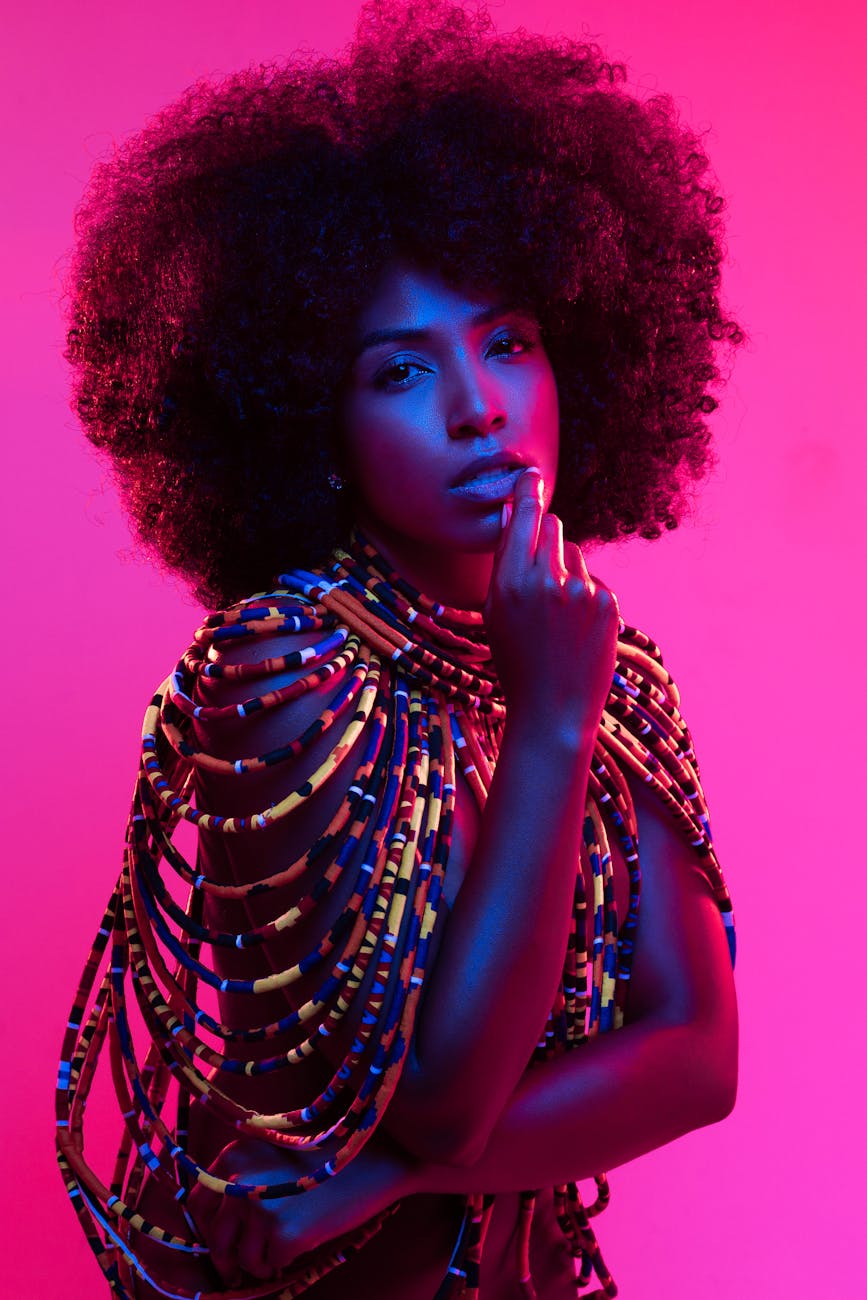
The idea of beauty in Western society has long been framed through Eurocentric ideals—fair skin, straight hair, narrow noses, and thin bodies. These standards, rooted in colonialism and white supremacy, continue to shape global perceptions of attractiveness, particularly among women of African descent. For many, the journey toward self-love has required unlearning the belief that divine beauty can only exist through proximity to whiteness.
The Bible reminds us that God’s measure of beauty is vastly different from the world’s. In 1 Samuel 16:7 (KJV), it is written, “For the Lord seeth not as man seeth; for man looketh on the outward appearance, but the Lord looketh on the heart.” This verse dismantles the social hierarchies of appearance that have long privileged Eurocentric features over the diverse expressions of God’s creation.
For centuries, Eurocentric ideals have been weaponized against Black and brown women, creating hierarchies within our own communities. The effects of colorism—favoring lighter skin tones and Euro-featured appearances—echo the psychological scars of slavery and colonization. These systems conditioned people of color to internalize shame about their features, skin, and hair, distorting the divine image within them.
The Apostle Peter’s admonition in 1 Peter 3:3–4 urges believers not to depend on outward adornment but to cultivate “the hidden man of the heart,” which is “of great price” in the sight of God. Yet, modern media continues to bombard women with images that glorify glamour over grace, leading many to chase validation through aesthetics rather than spiritual wholeness.
The global beauty industry profits from insecurity—especially among Black women—by marketing products that promise transformation toward Eurocentric ideals: skin-lightening creams, hair-straightening chemicals, and surgeries to alter African features. These pressures exploit spiritual and emotional wounds, turning self-hate into profit.
In Proverbs 31:30, it is written, “Favour is deceitful, and beauty is vain: but a woman that feareth the Lord, she shall be praised.” This passage reorients the definition of beauty away from social approval and toward godly reverence. The fear of the Lord, not the favor of man, is the foundation of true worth.
Biblical womanhood celebrates strength, dignity, and wisdom. Figures like Deborah, Esther, and Ruth illustrate that influence comes not from appearance but from purpose, courage, and obedience to God’s will. Deborah’s leadership was not enhanced by her beauty but by her discernment and faithfulness—qualities society rarely uplifts in women of color.
Eurocentric pressures have also distorted the psychology of beauty among men, shaping whom they view as desirable. Many have unconsciously absorbed colonial value systems, equating whiteness with purity and status. This internalized bias fractures relationships within the Black community and deepens gender divides.
For Black women, reclaiming divine beauty is an act of spiritual warfare. It requires rejecting false idols of appearance and replacing them with God’s truth. Psalm 139:14 affirms, “I will praise thee; for I am fearfully and wonderfully made.” Each coil, curve, and complexion is intentional, sacred, and reflective of the Creator’s artistry.
Natural hair, once stigmatized under Eurocentric standards, has become a powerful expression of identity and resistance. Wearing one’s natural texture is not merely aesthetic; it is theological. It affirms that God’s design needs no correction to be beautiful or professional.
The pursuit of glamour often masks deeper wounds—feelings of inadequacy, rejection, and alienation. Healing begins with spiritual renewal. Romans 12:2 calls believers to “be not conformed to this world, but be ye transformed by the renewing of your mind.” Freedom from Eurocentric validation starts with changing one’s thoughts about worth and divine design.
Black women’s beauty carries ancestral resonance. It tells stories of survival, innovation, and resilience under systems that sought to erase their humanity. To embrace this beauty is to honor those who came before—women who wore their grace under oppression, who embodied elegance without privilege or praise.
The Church must also confront its complicity in Eurocentric standards. Too often, depictions of biblical figures in Western art portray whitened versions of Christ, Mary, and the Israelites, reinforcing harmful beauty hierarchies. Reclaiming the Hebraic and Afro-Asiatic roots of Scripture restores both historical truth and cultural dignity.
Spiritual beauty is the fruit of the Spirit—love, joy, peace, patience, kindness, goodness, faithfulness, gentleness, and self-control (Galatians 5:22–23). These are qualities that outlast time, status, and fashion. They illuminate the soul in ways that no cosmetic can replicate.
In modern culture, social media amplifies vanity and comparison. Yet, platforms can also be used to affirm the diverse beauty of Black and brown people worldwide. Sharing images that celebrate melanin, natural hair, and authentic features creates digital ministry—testifying to the magnificence of God’s varied creation.
The myth of Eurocentric beauty is powerful because it promises belonging. But true belonging comes from identity in Christ, not conformity to oppressive ideals. When one’s self-worth is anchored in divine truth, glamour loses its grip. Grace becomes the new standard.
For mothers and mentors, modeling self-acceptance is sacred work. Every time a woman chooses authenticity over assimilation, she teaches the next generation to see holiness in their reflection. That spiritual inheritance dismantles centuries of distortion.
Grace over glamour means living with purpose, humility, and gratitude. It is to embody a light that radiates from within—one that cannot be dimmed by prejudice or societal expectation. It is beauty refined by faith, not defined by fashion.
In the end, beauty is not a competition but a calling. To reflect God’s image in all shades, shapes, and textures is an act of worship. The Eurocentric lens may distort, but grace restores clarity—revealing the sacred truth that all God’s creations are “very good” (Genesis 1:31).
References (APA 7th Edition):
- The Holy Bible, King James Version.
- Banks, I. (2000). Hair matters: Beauty, power, and Black women’s consciousness. New York University Press.
- Craig, M. L. (2006). Race, beauty, and the tangled knot of a guilty pleasure. Feminist Theory, 7(2), 159–177.
- hooks, b. (1992). Black looks: Race and representation. South End Press.
- Tate, S. A. (2009). Black beauty: Aesthetics, stylization, politics. Ashgate.
- Wolf, N. (1991). The beauty myth: How images of beauty are used against women. HarperCollins.
- Wilder, J. (2015). Color stories: Black women and colorism in the 21st century. Praeger.
 THE BROWN GIRL DILEMMA