
Category Archives: generational wealth

The Black Hamptons

Historic Black Beach Communities

The Black Hamptons is a historic cluster of African-American beachfront communities located in Sag Harbor on Long Island, New York. These communities emerged during the late 1940s, a time when racial segregation and discriminatory housing practices prevented Black Americans from purchasing property in traditional Hamptons resorts. In response to these barriers, African-American professionals, educators, and entrepreneurs created vacation communities where Black families could gather, enjoy leisure, and build generational wealth through land ownership.

The origins of the Black Hamptons are closely tied to Maude Terry, a Brooklyn schoolteacher who frequently vacationed in Sag Harbor. Terry envisioned a seaside retreat where Black families could enjoy the pleasures of summer without facing racial prejudice. Recognizing the scarcity of safe, welcoming spaces for African Americans along Long Island’s coast, she began to explore options for purchasing and developing land specifically for Black buyers.

Maude Terry was joined in her efforts by her sister, Amaza Lee Meredith, who was one of the first documented Black female architects in the United States. Meredith’s expertise in architecture and urban planning helped transform the raw land into a functional and attractive residential subdivision. She designed several of the first homes, combining practicality with aesthetic appeal, and ensuring that the community would be visually appealing while fostering a sense of pride among its residents.

Together, the Terry sisters created what would become the Sag Harbor Hills, Azurest, and Ninevah Beach neighborhoods. These three neighborhoods formed the core of what historians now call the SANS Historic District. Each neighborhood was deliberately planned to provide both privacy and a communal feel, with winding streets, beach access, and small parks that encouraged social interaction among residents.

Sag Harbor Hills became a popular summer destination for Black professionals such as doctors, lawyers, and academics. Its waterfront lots allowed families to enjoy beachside living and boating, creating a sense of leisure that had previously been denied due to racial segregation in other Hamptons communities. The neighborhood quickly became a hub of Black middle- and upper-class culture on the East Coast.

Azurest, the second neighborhood, was the subdivision that benefited most from Amaza Lee Meredith’s architectural vision. Featuring small, charming beach houses, Azurest attracted educators, artists, and entrepreneurs who sought a peaceful summer retreat. Its well-planned layout and proximity to the water made it especially desirable for families looking to spend extended summers in a safe and welcoming environment.

Ninevah Beach, the third primary neighborhood, expanded the Black Hamptons’ reach along the Sag Harbor coast. With additional beach access and residential lots, Ninevah Beach allowed the growing community to accommodate more families and strengthen the cultural and social bonds among residents. Over time, the three neighborhoods formed a contiguous enclave that became synonymous with African-American leisure and affluence.

The initial purchase of land and construction of homes was not without challenges. Most mainstream banks refused to issue mortgages to African-American buyers, a discriminatory practice known as redlining. This barrier could have prevented many families from acquiring property in the Black Hamptons, but community organizers developed cooperative financing strategies that allowed buyers to pool resources, invest in land collectively, and overcome systemic discrimination.

The cooperative financing model was essential for building generational wealth. By purchasing property in Sag Harbor, Black families were able to transfer assets to subsequent generations, securing long-term financial stability. Unlike many urban African-American communities that suffered from systemic disinvestment, the Black Hamptons offered a rare opportunity for homeownership in a desirable coastal location.

The Black Hamptons quickly gained a reputation as a cultural hub. Prominent entertainers and civil-rights advocates began visiting or establishing homes in the community. Lena Horne, the legendary singer and actress, purchased property in Sag Harbor, signaling the area’s growing prestige. Her presence attracted other artists and performers seeking a welcoming, affluent Black community on the East Coast.

Jazz legend Duke Ellington also visited the Black Hamptons, further enhancing its cultural cachet. Ellington’s ties to the area underscored the neighborhood’s appeal to Black artists and performers who were looking for both privacy and prestige. Similarly, civil-rights activist and performer Harry Belafonte was associated with the enclave, linking the community to a broader narrative of Black empowerment and visibility.

Entrepreneur and media personality B. Smith owned property in the Black Hamptons as well. Her investment reflected the community’s appeal to African-American professionals and business leaders who wanted summer residences that provided both status and cultural connection. Former NBA star Allan Houston is another figure linked to Sag Harbor, further illustrating the area’s appeal to accomplished Black individuals.

Over time, the Black Hamptons became a symbol of African-American achievement. While the area was originally created as a vacation community, its cultural and financial significance extended far beyond leisure. It represented the triumph of vision, organization, and resilience in the face of systemic racism.

Financially, property in the Black Hamptons has appreciated dramatically. Homes that once sold for a few thousand dollars now range from $1 million to several million, depending on size, location, and proximity to the water. This growth has both preserved and challenged the community’s identity, as rising property values make it increasingly difficult for younger generations or middle-class families to maintain ownership.

The influx of wealth has attracted outside investors and developers who sometimes purchase modest homes, demolish them, and build large luxury estates. While this trend reflects the desirability of the area, it also raises concerns about gentrification and the erasure of the historic Black cultural identity embedded in Sag Harbor Hills, Azurest, and Ninevah Beach.

Residents and preservation advocates have responded by seeking official recognition and protection for their neighborhoods. In 2019, the three communities were added to the National Register of Historic Places, acknowledging their significance as rare African-American beachfront enclaves and preserving their historical and cultural legacy for future generations.

Today, the Black Hamptons continues to attract influential African Americans, including entertainers, athletes, and business leaders, who value both the cultural history and the leisure opportunities of the area. It serves as a summer refuge, a gathering place, and a living testament to African-American resilience and achievement.

Despite challenges, including rising property costs and external development pressures, the Black Hamptons remains a unique symbol of Black wealth, cultural pride, and community organization. Efforts by local associations aim to maintain the historic character of the neighborhoods while balancing the realities of a highly competitive real estate market.

The Black Hamptons stands as both a historical and contemporary statement: it reflects the triumph of African Americans over systemic barriers while highlighting the ongoing importance of preserving culturally significant spaces. The neighborhoods continue to foster social cohesion, cultural celebration, and intergenerational wealth within the African-American community.

Its legacy also serves as a model for other historically marginalized groups seeking to protect and maintain culturally significant residential spaces. The Black Hamptons’ story demonstrates how deliberate planning, community cooperation, and visionary leadership can create enduring cultural and economic value.

In conclusion, the Black Hamptons is more than a vacation community; it is a testament to African-American perseverance, ingenuity, and the pursuit of leisure, culture, and wealth in a society that historically sought to limit these opportunities. Its founders, residents, and visitors have ensured that the community remains a meaningful space for celebrating Black identity, accomplishment, and generational legacy.

References

Beglane, T. (2019). African-American neighborhoods in Sag Harbor added to NYS Historic Register. WSHU Public Radio. https://www.wshu.org/news/2019-03-27/african-american-neighborhoods-in-sag-harbor-added-to-nys-historic-register

Jefferson, A. R. (2024). Long Road to Freedom: African American History on Long Island. Long Island Museum. https://longislandmuseum.org/wp-content/uploads/2024/09/Long-Road-to-Freedom-Book-FINAL.pdf

Leland, J. (2016). Investors move next door, unsettling a Black beachside enclave. The New York Times.

McMullen, T. (2017). Historically Black beach enclaves are fighting to save their identity. The Washington Post. https://www.washingtonpost.com/realestate/surf-sand-and-race/2017/07/26/f674c5be-61bb-11e7-84a1-a26b75ad39fe_story.html

Sag Harbor Hills, Azurest, and Ninevah Beach Subdivisions Historic District. (n.d.). Wikipedia. https://en.wikipedia.org/wiki/Sag_Harbor_Hills%2C_Azurest%2C_and_Ninevah_Beach_Subdivisions_Historic_District

27 East. (2019). Historic African-American summer communities in Sag Harbor could receive national recognition. https://www.27east.com/east-hampton-press/nehsans0620-1298259

Kingdom Wealth: God’s Blueprint for Prosperity and Purpose.

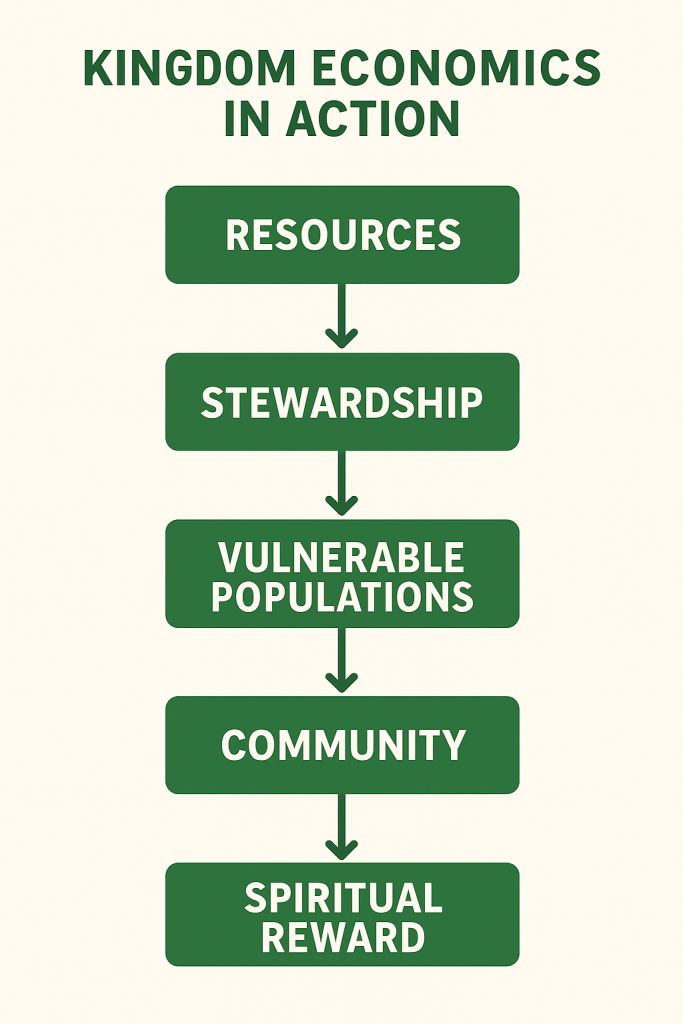
The concept of wealth within the biblical framework transcends material accumulation and economic prosperity. True kingdom wealth is rooted in stewardship, divine purpose, and service to others rather than self-indulgence or exploitation. The Most High’s design for wealth has always been redemptive, restorative, and righteous. As Deuteronomy 8:18 (KJV) declares, “But thou shalt remember the LORD thy God: for it is he that giveth thee power to get wealth, that he may establish his covenant.”

In contrast to the materialism and capitalism that dominate worldly systems, biblical prosperity is covenantal—it exists to advance the will of God, care for the poor, and sustain the community. Wealth in the Kingdom is a trust, not a trophy. It is never meant to enslave the believer’s heart but to empower righteous influence.

The Psychology of Wealth and Purpose

From a psychological perspective, wealth tends to magnify the moral and emotional state of its possessor. Materialism often leads to a distorted self-concept, where identity becomes tied to possessions (Kasser, 2016). In contrast, individuals guided by intrinsic values—such as compassion, stewardship, and purpose—display greater emotional stability and fulfillment. Scripture reinforces this truth in Luke 12:15 (KJV): “A man’s life consisteth not in the abundance of the things which he possesseth.”

The Kingdom mindset therefore shifts the believer’s focus from acquisition to assignment. This transformation represents a renewal of the mind (Romans 12:2), where wealth becomes an instrument of righteousness. Kingdom wealth serves people, not pride.

Stewardship vs. Ownership

In biblical theology, humans are not owners but stewards of God’s resources. Psalm 24:1 (KJV) affirms, “The earth is the LORD’s, and the fulness thereof.” Every possession—whether land, talent, or intellect—belongs ultimately to God. This truth humbles the heart and neutralizes greed. Psychologically, stewardship fosters gratitude, accountability, and ethical decision-making, countering the ego-driven impulses of capitalism.

Wealth as a Test of Character

Wealth reveals what is hidden in the heart. Proverbs 11:28 (KJV) warns, “He that trusteth in his riches shall fall.” The psychology of power and wealth often exposes deeper insecurities, leading to overcompensation through control, consumption, or social dominance. In God’s Kingdom, however, power is authenticated through service (Mark 10:44). The greatest test of prosperity is whether one remains humble and generous amid abundance.

The Kingdom Economy

Unlike the capitalist model based on competition and scarcity, the Kingdom economy is grounded in abundance and cooperation. In Acts 4:34–35 (KJV), the early church practiced communal distribution: “Neither was there any among them that lacked.” Their model demonstrates divine equity, where prosperity is shared, not hoarded. Kingdom economics thus aligns with divine justice, prioritizing human need over greed.

Wealth and Responsibility

The Bible consistently associates wealth with moral responsibility. In 1 Timothy 6:17–18 (KJV), Paul instructs, “Charge them that are rich… that they be rich in good works, ready to distribute, willing to communicate.” The accumulation of wealth without generosity invites judgment (James 5:1–3). From a psychological lens, generosity enhances well-being, while greed fuels anxiety and social isolation (Layous et al., 2012).

The Devil’s Counterfeit Kingdom

When Satan offered Jesus “all the kingdoms of the world” in Matthew 4:8–9 (KJV), he was not lying about possessing them temporarily. The “kingdoms” represent systems—political, economic, religious, and cultural—governed by pride, corruption, and idolatry. These include Babylon (economic greed), Rome (military power), Egypt (enslavement and control), and Sodom (pleasure and moral decay). Each symbolizes a facet of worldly dominion designed to draw humanity away from divine authority.

Who Truly Holds Power?

While earthly rulers boast of influence, Scripture affirms that all true power belongs to God. Psalm 62:11 (KJV) states, “Power belongeth unto God.” The devil’s power is temporal and deceptive, operating through fear, manipulation, and vanity. The believer’s power, by contrast, flows from righteousness, truth, and the indwelling Spirit of God (Acts 1:8).

The Ethics of Giving and Receiving

Biblical wealth ethics emphasize balance—both giving and receiving in alignment with God’s will. Proverbs 3:9–10 (KJV) encourages, “Honour the LORD with thy substance… so shall thy barns be filled with plenty.” Giving is not loss but investment into eternal purpose. Psychologically, altruistic giving correlates with increased happiness and self-worth (Post, 2005).

God’s Heart for Widows

The Bible repeatedly emphasizes that widows are among the most vulnerable members of society. In ancient Israel, widows often lacked financial support because they were dependent on their husbands. God commands His people to care for them, reflecting His justice and mercy:

  • Deuteronomy 10:18 (KJV):“He doth execute the judgment of the fatherless and widow, and loveth the stranger, in giving him food and raiment.”
    • God Himself is described as a defender and provider for widows. Helping widows aligns us with His character.
  • Psalm 68:5 (KJV):“A father of the fatherless, and a judge of the widows, is God in his holy habitation.”
    • God identifies as the protector of widows, showing that caring for them is an extension of worshiping Him.

2. Old Testament Instructions

In the Mosaic Law, caring for widows was often tied to practical provision, especially through gleaning, charity, and justice:

  • Exodus 22:22–24 (KJV):“Ye shall not afflict any widow, or fatherless child. If thou afflict them in any wise, and they cry at all unto me, I will surely hear their cry.”
    • Oppressing a widow was equated with oppressing God Himself. The law ensured widows were protected, not exploited.
  • Deuteronomy 14:29 (KJV): The tithe and offerings were to be shared with “the stranger, the fatherless, and the widow.”
    • God’s economic system included widows as beneficiaries, ensuring they could survive even if they lacked a male provider.
  • Ruth 2:2–3 (KJV): Ruth, a widow, was allowed to glean in Boaz’s field.
    • This illustrates practical giving: providing access to resources and opportunity, not only handouts.

3. New Testament Principles

In the New Testament, the church formalized support for widows as part of spiritual and social responsibility:

  • 1 Timothy 5:3–4 (KJV):“Honour widows that are widows indeed. But if any widow have children or nephews, let them learn first to shew piety at home, and to requite their parents: for that is good and acceptable before God.”
    • The apostle Paul distinguishes between widows who are truly alone and those with family. Giving is primarily for those who lack other support.
  • 1 Timothy 5:9–10 (KJV): Paul outlines qualifications for widows who receive support from the church. They must be reputable, have a good testimony, and show hospitality.
    • This shows that giving to widows was not indiscriminate; it was intended to support godly women in need.
  • James 1:27 (KJV):“Pure religion and undefiled before God and the Father is this, To visit the fatherless and widows in their affliction, and to keep himself unspotted from the world.”
    • Caring for widows is a central marker of true, undefiled religion.

4. Psychological and Spiritual Effects of Giving to Widows

Psychologically, giving to widows combats societal neglect, reduces fear and isolation, and reinforces dignity. It fosters empathy and gratitude, while breaking selfishness in the giver.

Spiritually, giving reflects God’s heart, cultivates generosity, and aligns the giver with kingdom principles of justice, mercy, and righteousness (Proverbs 19:17). It is both a blessing for the widow and a spiritual investment for the giver.


5. Modern Application

In contemporary practice, giving to widows can take many forms:

  1. Financial Support – Direct gifts, stipends, or assistance with bills.
  2. Community Assistance – Helping with groceries, housing, or medical needs.
  3. Spiritual Encouragement – Visiting, praying with, and mentoring widows.
  4. Opportunity Creation – Providing jobs, training, or means of self-sufficiency.

The principle remains the same: widows who lack other support are to be cared for as a reflection of God’s love.


Summary:
Giving to widows in the Bible is both a command and a blessing. It demonstrates godliness (James 1:27), honors God’s heart (Deut. 10:18), and is part of a believer’s duty to the vulnerable. True giving is intentional, respectful, and empowering, not merely a formality or charity.

Capitalism vs. Kingdom Commerce

Capitalism thrives on competition, but the Kingdom thrives on cooperation. The capitalist mindset promotes profit even at the expense of people, while the Kingdom system promotes productivity that blesses the community. Proverbs 16:8 (KJV) declares, “Better is a little with righteousness than great revenues without right.” Kingdom wealth prioritizes justice and sustainability over short-term gain.

Materialism and the Empty Self

Materialism offers a false sense of security and identity. The psychological phenomenon known as the “empty self” (Cushman, 1990) describes modern individuals who fill emotional voids with consumerism. This aligns with Ecclesiastes 5:10 (KJV): “He that loveth silver shall not be satisfied with silver.” The more we pursue things, the less fulfilled we become.

The Role of Contentment

Contentment anchors the believer against covetousness. Philippians 4:11 (KJV) declares, “I have learned, in whatsoever state I am, therewith to be content.” Contentment is not complacency but spiritual stability—the confidence that God is the source of all provision. Psychologically, contentment reduces envy and fosters peace of mind.

Economic Justice and the Poor

The Bible commands economic justice. Proverbs 19:17 (KJV) promises, “He that hath pity upon the poor lendeth unto the LORD.” Neglecting the poor is a spiritual offense (Ezekiel 16:49). Capitalist societies often ignore systemic poverty, perpetuating inequality through unjust systems. Kingdom wealth, by contrast, redistributes blessings to uplift others.

Wealth and Worship

Money is morally neutral—it becomes holy or corrupt depending on intent. Jesus warned in Matthew 6:24 (KJV): “Ye cannot serve God and mammon.” Worshipping wealth enslaves the soul, while surrendering it sanctifies our stewardship. Kingdom-minded believers see every dollar as an opportunity to manifest God’s glory through impact.

The Transformation of Power

In worldly terms, power controls others. In the Kingdom, power serves others. Jesus redefined authority in John 13 when He washed His disciples’ feet. Kingdom power is exercised through humility, self-discipline, and obedience. True power is never domination—it is transformation.

The Psychological Trap of Greed

Greed is both spiritual and psychological bondage. It originates from fear of lack and manifests as insatiable craving. Research links greed to increased depression and moral disengagement (Seuntjens et al., 2015). Spiritually, greed is idolatry (Colossians 3:5). The cure is gratitude—a posture that restores perspective and peace.

Restoring the Divine Order of Wealth

God designed wealth to sustain creation and bless humanity. When believers align finances with faith, they reverse the curse of exploitation. Malachi 3:10 (KJV) highlights the principle of tithing as a covenant of trust and reciprocity. Obedience in giving opens spiritual and material abundance.

Cultural Power and Influence

The “kingdoms of this world” include cultural dominance—media, education, and entertainment. These systems shape thought, normalize sin, and influence behavior. Kingdom citizens are called to engage culture without conforming to it (Romans 12:2). Influence should lead to illumination, not imitation.

Reclaiming Dominion

When Christ rose from the grave, He declared, “All power is given unto me in heaven and in earth” (Matthew 28:18, KJV). This statement reclaimed humanity’s lost dominion. The believer’s authority, therefore, is not in possessions but in position—being seated with Christ in heavenly places (Ephesians 2:6).

Wealth and the End Times

Revelation 18 depicts Babylon’s economic collapse, symbolizing the fall of corrupt world systems. Those who trusted in materialism mourned, but the saints rejoiced because divine justice prevailed. This eschatological vision warns believers not to build eternal hope on temporary wealth.

Power Reimagined Through Service

Jesus taught that leadership in the Kingdom is servant-centered (Matthew 20:26–28). This redefines greatness as the ability to lift others rather than exalt oneself. The psychology of servant leadership demonstrates higher emotional intelligence and resilience (Greenleaf, 2002).

The Eternal Value of Generosity

Generosity is a heavenly investment that yields eternal dividends. Matthew 6:20 (KJV) instructs, “Lay up for yourselves treasures in heaven.” Acts of giving create legacy, spiritual growth, and divine favor. The more one gives, the more one reflects the image of the Giver.

Conclusion

Kingdom wealth is not defined by possessions but by purpose. It aligns prosperity with righteousness, power with service, and influence with integrity. Materialism, capitalism, and the worldly pursuit of power lead to spiritual poverty, while Kingdom stewardship produces eternal fruit. True wealth is measured not by what one owns but by what one gives. In the end, all power, all glory, and all wealth belong to the Most High, who alone reigns forever.


References (KJV & Academic):

  • The Holy Bible, King James Version.
  • Cushman, P. (1990). Why the self is empty: Toward a historically situated psychology. American Psychologist, 45(5), 599–611.
  • Kasser, T. (2016). Materialistic values and goals. Annual Review of Psychology, 67, 489–514.
  • Layous, K., et al. (2012). The benefits of prosocial spending. Journal of Positive Psychology, 7(5), 377–389.
  • Post, S. (2005). Altruism, happiness, and health: It’s good to be good. International Journal of Behavioral Medicine, 12(2), 66–77.
  • Seuntjens, T. G., et al. (2015). Greed: A motivational and social comparison perspective. Personality and Individual Differences, 74, 153–158.
  • Greenleaf, R. K. (2002). Servant leadership: A journey into the nature of legitimate power and greatness. Paulist Press.

Wealth as Empowerment: Building Generational Prosperity.

Photo by Pixabay on Pexels.com

Wealth is more than money; it is a tool of empowerment, influence, and legacy. For Black women, historically marginalized in economic structures, building wealth is both an act of self-determination and a vehicle for generational uplift. Wealth enables financial independence, access to education, and the ability to invest in community, creating a cycle of prosperity that can transcend systemic barriers.

Historically, Black women faced exclusion from financial institutions, employment opportunities, and property ownership. Despite these constraints, they developed strategies for survival and community wealth-building—establishing businesses, savings circles, and cooperative networks. These efforts demonstrate that financial empowerment has long been intertwined with resilience, resourcefulness, and leadership.

Modern financial empowerment involves strategic planning, investment, and education. Understanding assets, liabilities, budgeting, and wealth accumulation is essential. Psychological research emphasizes that financial literacy strengthens self-efficacy, reduces stress, and fosters long-term planning (Lusardi & Mitchell, 2014). Wealth-building is therefore not only practical but also psychological, reinforcing confidence and agency.

Entrepreneurship has been a key avenue for Black women to generate wealth and influence. From Madam C.J. Walker, America’s first self-made female millionaire, to contemporary business leaders like Rihanna with her Fenty brand, Black women have leveraged creativity, strategy, and branding to secure financial independence. These success stories demonstrate that entrepreneurship can create both personal prosperity and employment opportunities within the community.

Investment in real estate, stocks, and businesses also provides long-term security and intergenerational wealth. Proverbs 13:22 (KJV) states: “A good man leaveth an inheritance to his children’s children: and the wealth of the sinner is laid up for the just.” This verse underscores the biblical principle of building resources not only for oneself but for future generations. By adopting disciplined investment strategies, Black women can ensure that their wealth becomes a vehicle for generational prosperity.

Education is another cornerstone of wealth-building. By investing in knowledge, skills, and professional growth, Black women increase earning potential, career advancement, and financial independence. Community initiatives, scholarships, and mentorship programs further amplify these benefits, ensuring that economic empowerment is not an individual pursuit but a collective one.

Generational wealth also has profound societal implications. Families with accumulated resources can access better healthcare, housing, and education, breaking cycles of poverty and creating opportunities for upward mobility. Wealth enables philanthropy, community investment, and advocacy, extending the benefits of financial empowerment beyond the individual.

🌟 Generational Wealth Blueprint for Black Women

1. Build a Strong Financial Foundation

  • Budget Wisely: Track income and expenses; prioritize needs versus wants.
  • Emergency Fund: Save 3–6 months of living expenses to create financial security.
  • Debt Management: Pay down high-interest debt first and avoid unnecessary liabilities.

2. Invest Strategically

  • Stocks & Mutual Funds: Start early to leverage compounding interest.
  • Real Estate: Property ownership builds equity and long-term security.
  • Retirement Accounts: Contribute consistently to 401(k)s, IRAs, or other retirement plans.

Biblical Principle: Proverbs 13:22 (KJV) – “A good man leaveth an inheritance to his children’s children.” Investments today secure tomorrow’s legacy.


3. Entrepreneurship and Business Ownership

  • Leverage Skills & Talents: Turn passions into profitable ventures.
  • Mentorship & Networking: Connect with experienced businesswomen to learn strategies.
  • Scale & Reinvest: Grow the business and reinvest profits to expand impact.

Examples: Madam C.J. Walker’s haircare empire; Rihanna’s Fenty brand.


4. Education and Skill Development

  • Formal Education: Degrees and certifications increase earning potential.
  • Financial Literacy: Understand taxes, investments, and personal finance.
  • Continuous Learning: Stay updated on trends, technology, and market opportunities.

5. Build a Supportive Network

  • Community Circles: Join groups focused on financial empowerment.
  • Mentorship: Both give and receive guidance to create a generational cycle of learning.
  • Family Involvement: Teach children financial responsibility early to instill long-term habits.

6. Estate Planning and Legacy Building

  • Wills & Trusts: Protect assets and ensure smooth wealth transfer to future generations.
  • Life Insurance: Safeguard family in case of unexpected events.
  • Philanthropy: Invest in community initiatives to create societal impact.

7. Psychological and Spiritual Mindset

  • Abundance Mindset: Believe wealth is attainable and purposeful.
  • Resilience: View financial challenges as opportunities to learn and grow.
  • Faith-Driven Approach: Trust God as your guide in financial stewardship.

Scriptural Guidance: Deuteronomy 8:18 (KJV) – “But thou shalt remember the LORD thy God: for it is he that giveth thee power to get wealth.”


8. Key Takeaways

  • Wealth is a tool for empowerment, independence, and community uplift.
  • Combine financial literacy, investment, entrepreneurship, and mentorship to secure generational prosperity.
  • Faith, resilience, and community amplify the impact of wealth across generations.

Psychologically, wealth fosters self-determination and resilience. It provides a buffer against systemic stressors and allows for strategic life choices aligned with values rather than necessity. For Black women, who navigate intersectional challenges, financial empowerment reinforces autonomy, self-respect, and leadership.

Ultimately, wealth as empowerment is both practical and spiritual. It aligns with biblical teachings, supports community uplift, and ensures that success is sustainable across generations. By embracing financial literacy, entrepreneurship, investment, and education, Black women can transform wealth into a tool for personal growth, community development, and lasting legacy.


References

  • Lusardi, A., & Mitchell, O. S. (2014). The economic importance of financial literacy: Theory and evidence. Journal of Economic Literature, 52(1), 5–44.
  • Bible (KJV). Proverbs 13:22.
  • Boyd, R. L. (2003). The History of Black Women Entrepreneurs in America. Greenwood Press.
  • Walker, M. C. (2001). On Her Own Ground: The Life and Times of Madam C.J. Walker. Scribner.