
The Forgotten Mother of Modern Gynecology
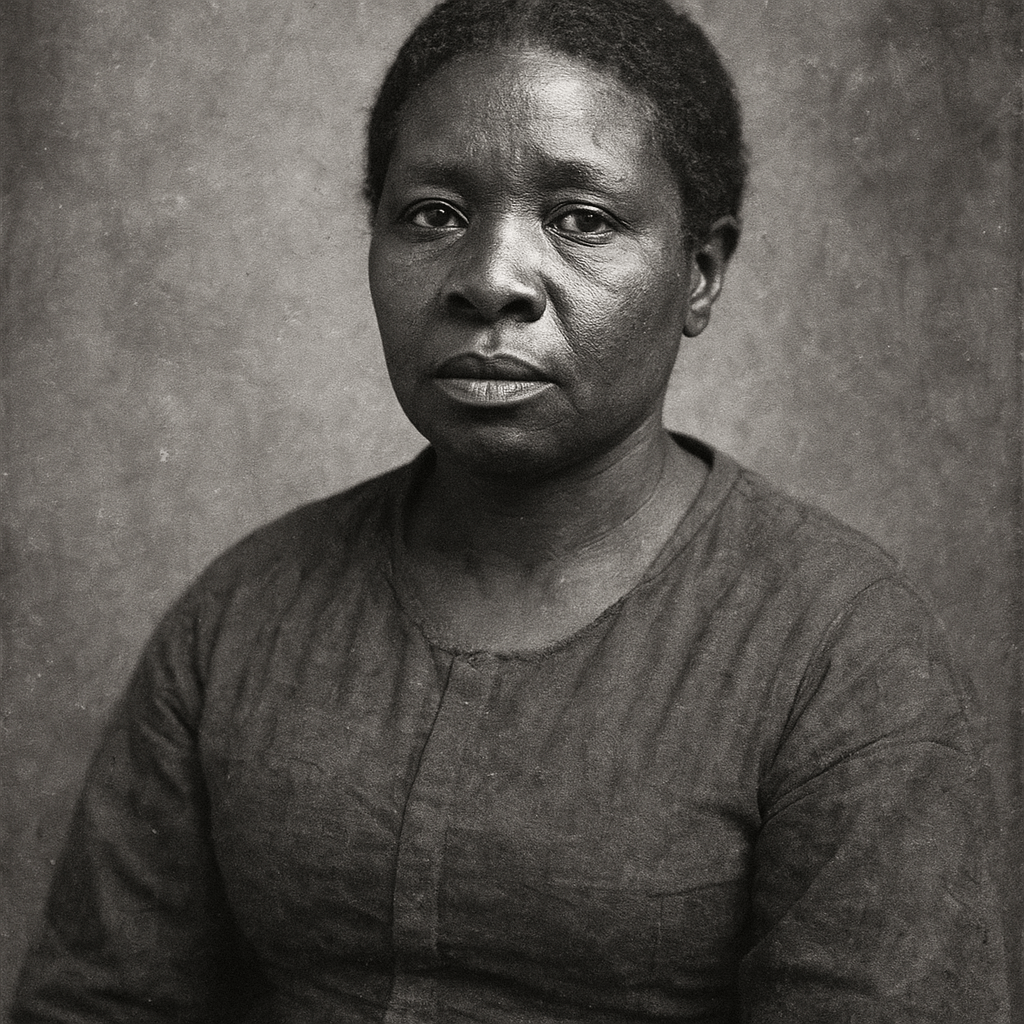
Anarcha Westcott was an enslaved African American woman who became one of the most historically significant yet long-overlooked figures in the history of medicine. Born around 1828 in Alabama, Anarcha was enslaved on a plantation and subjected to one of the most infamous episodes of unethical medical experimentation in the nineteenth century. Her story is deeply intertwined with that of Dr. J. Marion Sims, a physician often referred to as “the father of modern gynecology,” whose surgical breakthroughs came at the cost of the suffering and exploitation of enslaved Black women.
During her teenage years, Anarcha suffered from a vesicovaginal fistula, a devastating childbirth injury that caused incontinence and severe pain. At the time, there were no effective surgical treatments for this condition. Her owner, seeking medical help, sent her to Dr. Sims, who was experimenting with ways to repair the injury. Between 1845 and 1849, Sims performed at least thirty experimental surgeries on Anarcha without anesthesia, as the procedure was extremely painful and invasive (Washington, 2006).
Anarcha was not alone in her ordeal. Sims also experimented on other enslaved women, including Lucy and Betsey. Together, they were forced to endure repeated procedures, often under brutal conditions, while being denied consent and bodily autonomy. Their pain and endurance became the foundation for the advancement of gynecological surgery, yet for more than a century, their names were erased from mainstream medical narratives (Owens & Fett, 2019).
Anarcha’s body became a site of scientific curiosity and racial exploitation. In an era when Black women were viewed as biologically inferior and more tolerant of pain—a racist myth perpetuated to justify medical abuse—Anarcha’s humanity was denied (Hoberman, 2012). Sims justified his actions by claiming that the women consented, but historians have made clear that true consent was impossible within the system of slavery (Gamble, 1997).
After enduring years of painful experimentation, Sims eventually claimed to have perfected the surgical technique for repairing fistulas—an advancement that would transform women’s health worldwide. Once his method succeeded, Sims shifted to performing surgeries on white women, this time using anesthesia. This contrast underscores the racial double standard embedded in nineteenth-century medicine (Washington, 2006).
Little is known about Anarcha’s later life. Historical records indicate that she may have been returned to her owner after Sims deemed his experiments successful. Some accounts suggest that she lived into adulthood and may have later been emancipated, but her ultimate fate remains undocumented (Spettel & White, 2011). The erasure of her life’s details speaks to the broader historical silencing of enslaved Black women whose bodies were exploited in the name of science.
Anarcha’s story resurfaced in the late twentieth and early twenty-first centuries as scholars began to reevaluate the ethical legacy of J. Marion Sims. Feminist and Black historians, such as Harriet A. Washington and Deirdre Cooper Owens, reframed Sims’s “pioneering work” as an example of racial and gendered medical violence rather than mere innovation. Their research has brought Anarcha, Lucy, and Betsey into the light as the true, unacknowledged mothers of modern gynecology.
In recent years, there has been a push to honor Anarcha’s legacy and to confront the medical racism embedded in her story. In 2018, the statue of J. Marion Sims that once stood in Central Park, New York, was removed following public outcry. Activists and historians argued that memorializing Sims without acknowledging his victims perpetuated racial injustice (New York City Public Design Commission, 2018).
In the place of glorifying Sims, memorial projects now seek to center the women who endured his experiments. The Mothers of Gynecology Monument in Montgomery, Alabama, unveiled in 2021, features statues of Anarcha, Lucy, and Betsey. Created by artist Michelle Browder, the monument serves as a visual reclamation of their dignity and humanity. It acknowledges their suffering but also celebrates their resilience and historical significance (Browder, 2021).
Anarcha Westcott’s life represents both a tragedy and a triumph of historical recovery. Her name, once buried under medical myth and racial bias, has become a symbol of resistance against systemic exploitation in medicine. She stands as a testament to the countless unnamed enslaved women whose suffering contributed to medical progress from which they themselves were excluded.
Her legacy compels the medical community to confront its past and to build an ethical framework grounded in consent, respect, and equity. Anarcha’s story also calls for the inclusion of marginalized voices in the telling of medical history, ensuring that the contributions and sacrifices of Black women are never again silenced.
Though Anarcha did not choose her role, her involuntary participation reshaped the landscape of women’s health. Today, her story inspires new generations of Black women in medicine to reclaim agency, visibility, and justice. Anarcha Westcott’s name, once a footnote in Sims’s biography, now rightfully stands as an emblem of both suffering and scientific inheritance—a reminder that progress built on exploitation must be critically examined.
Her rediscovery marks a broader movement within history and medicine toward truth-telling and moral accountability. Anarcha Westcott’s life reveals not only the cruelty of slavery’s medical dimensions but also the enduring strength of the human spirit when subjected to dehumanization. Her pain became the foundation for healing; her silence now speaks volumes in the call for medical justice and remembrance.
In remembering Anarcha, we also acknowledge the humanity of those who were reduced to subjects in the name of progress. Her story embodies both the horror of enslavement and the ongoing struggle to reconcile medicine with morality. She is no longer just a victim of experimentation—she is a historical witness whose endurance reshaped the course of women’s healthcare.
Anarcha Westcott’s history demands not only remembrance but reform. Her life urges medical practitioners and scholars to examine the ethics of research, power, and representation. To honor her is to commit to a medicine that heals rather than exploits, that listens rather than silences, and that restores dignity to those history sought to erase.
References
Browder, M. (2021). The Mothers of Gynecology Monument. Montgomery, AL: More Up Campus.
Gamble, V. N. (1997). Under the shadow of Tuskegee: African Americans and health care. American Journal of Public Health, 87(11), 1773–1778.
Hoberman, J. (2012). Black and blue: The origins and consequences of medical racism. University of California Press.
New York City Public Design Commission. (2018). Statement on the removal of the J. Marion Sims statue. New York, NY.
Owens, D. C., & Fett, S. M. (2019). Black maternal and infant health: Historical legacies of slavery. American Journal of Public Health, 109(10), 1342–1345.
Spettel, S., & White, M. D. (2011). The portrayal of J. Marion Sims’ controversial surgical legacy. Journal of Urology, 185(6), 2424–2427.
Washington, H. A. (2006). Medical apartheid: The dark history of medical experimentation on Black Americans from colonial times to the present. Doubleday.
 THE BROWN GIRL DILEMMA