Category Archives: Directors

The “It Girl” Series: Regina King

With hazel eyes that see truth and talent that commands history, Regina King doesn’t follow eras — she defines them.

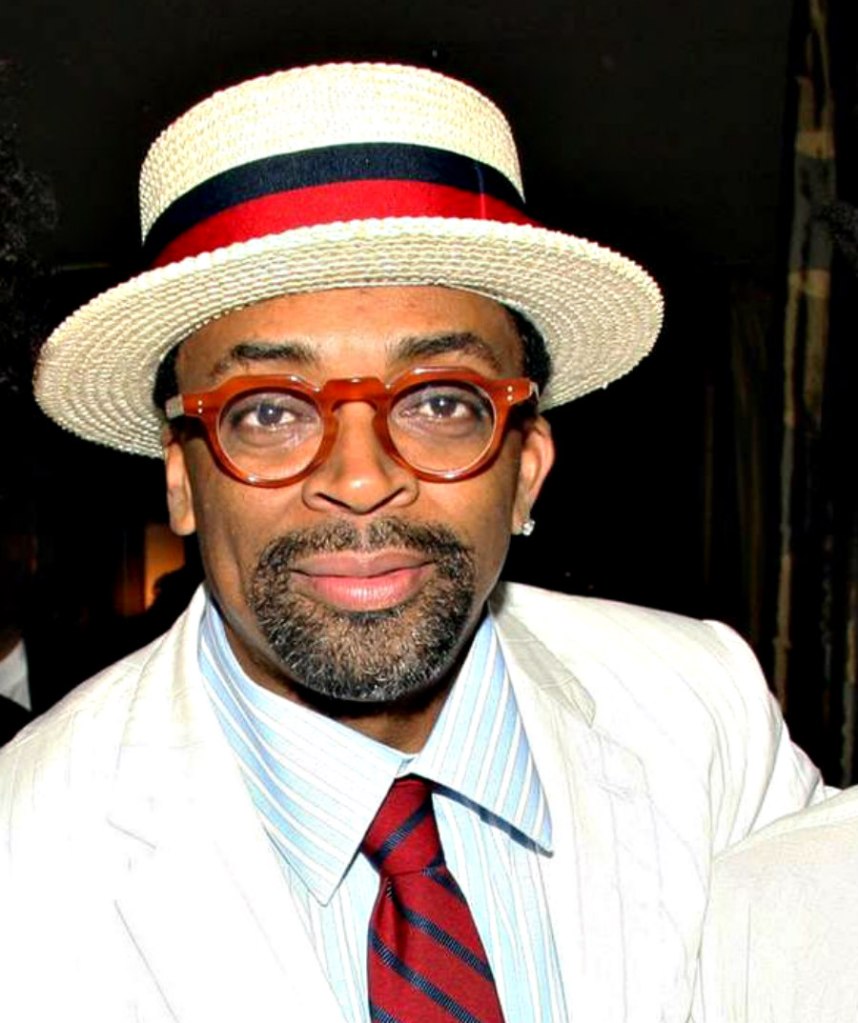
This photograph is the property of its respective owner.

There are actresses, there are auteurs, and then there is Regina King — a woman whose career arc reflects brilliance, endurance, evolution, and cultural gravitas. Regina King is not merely an “It Girl” because of a trend or visibility. She is an It Girl because she embodies excellence — consistently, intelligently, and unapologetically.

From child star to Academy Award winner to Emmy-winning television powerhouse and acclaimed director, King represents the rare Hollywood figure whose relevance deepens with time.


Early Life & How She Got Started

Born January 15, 1971, in Los Angeles, California, Regina King grew up in View Park–Windsor Hills, a historically Black middle-class enclave. After her parents divorced, King was raised primarily by her mother, Gloria, and encouraged to pursue both education and performance.

Her professional career began in 1985 when she was cast as Brenda Jenkins on the NBC sitcom 227. As the witty, sharp-tongued teenage daughter of Mary Jenkins (played by Marla Gibbs), King displayed natural comedic timing and emotional intelligence beyond her years. “227” ran for five seasons and established her as a household name in Black America.

Unlike many child actors, King did not disappear. She transitioned deliberately into film, starring in culturally defining projects such as Boyz n the Hood (1991), Poetic Justice (1993), and Friday (1995). Each role expanded her range — from socially conscious drama to romantic intensity to comedic realism.


This photograph is the property of its respective owner.

Becoming a Hollywood Force

By the 2000s, Regina King was no longer simply a former child star — she was a powerhouse performer. Her television performances in Southland and American Crime earned her critical acclaim and multiple Emmy Awards. In fact, she has won four Primetime Emmy Awards, making her one of the most decorated Black actresses in television history.

Her career-defining film role came in If Beale Street Could Talk, directed by Barry Jenkins. Her portrayal of Sharon Rivers — a fierce, protective mother — earned her the Academy Award for Best Supporting Actress in 2019. In her Oscar acceptance speech, King declared:

“I’m an example of what it looks like when support and love is poured into someone.”

That statement encapsulates her ethos: grounded, grateful, powerful.

She later directed the critically acclaimed film One Night in Miami…, becoming the first Black woman to direct a film selected for the Venice Film Festival in 2020. The film dramatized a fictionalized meeting between Malcolm X, Muhammad Ali, Jim Brown, and Sam Cooke — positioning King not only as an actress but as a cultural curator of Black history.


Portraying Shirley Chisholm

In 2024, King portrayed pioneering congresswoman Shirley Chisholm in the Netflix film Shirley. Chisholm, the first Black woman elected to Congress and the first Black candidate for a major party’s presidential nomination, required gravitas, discipline, and historical sensitivity. King brought both power and tenderness to the role, further solidifying her reputation for portraying strong, intelligent Black women rooted in political and emotional complexity.


Her Family, Marriage & Personal Loss

Regina King married record executive Ian Alexander Sr. in 1997. They divorced in 2007. Together, they had one son, Ian Alexander Jr.

In January 2022, Ian Alexander Jr. died by suicide at age 26. The tragedy stunned Hollywood and the public. King released a statement describing her son as “a bright light who cared so deeply about the happiness of others.”

Her strength in the aftermath was quiet but profound. She requested privacy while expressing gratitude for the outpouring of love. In interviews before his death, she had often described motherhood as her greatest joy. Afterward, she has spoken about grief as something that does not disappear but transforms.

Her resilience has deepened public admiration. She embodies a particular kind of Black maternal dignity — one that does not collapse under public pain but refuses spectacle. All the best to her.
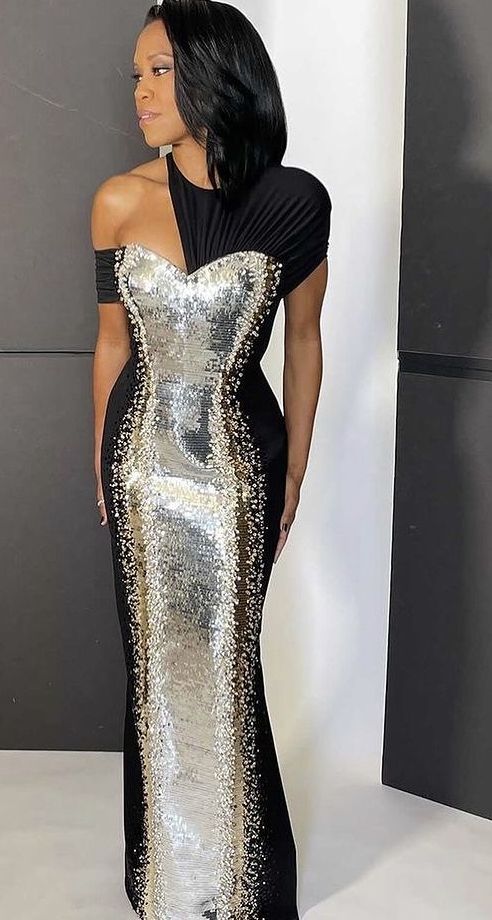

This photograph is the property of its respective owner.

Beauty, Presence & Hollywood Appeal

Regina King’s beauty is understated yet magnetic. Her warm hazel eyes — often highlighted by minimal, elegant styling — convey intelligence and emotional awareness. Casting directors frequently praise her for her ability to “listen on camera,” a rare acting skill that makes her performances feel lived-in rather than performed.

Critics often describe her as:

  • Disciplined
  • Emotionally precise
  • Thoughtful
  • Commanding without arrogance

Viola Davis once publicly praised King’s range and fearlessness, and many directors note her preparation and leadership on set. Her appeal in Hollywood stems from three rare combinations:

  1. Talent across mediums (film, television, directing)
  2. Professional longevity without scandal-driven notoriety
  3. Intellectual depth paired with cultural authenticity

She is popular not because she is loud, but because she is consistently excellent.
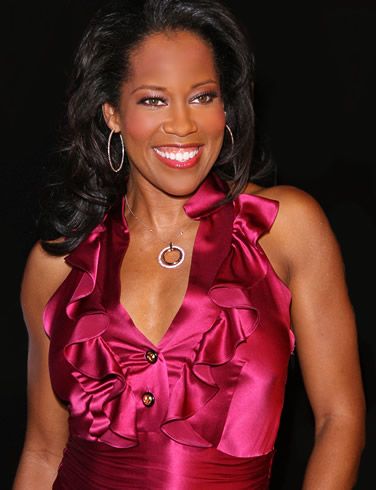

This photograph is the property of its respective owner.

Why She Is an “It Girl”

The term “It Girl” is often associated with trendiness, youth, or fleeting fame. Regina King redefines it.

She is an It Girl because:

  • She began as a teenage sitcom star and evolved into an Oscar-winning actress.
  • She commands respect in both acting and directing.
  • She carries herself with moral and intellectual clarity.
  • She uplifts Black history through her work.
  • She balances glamour with groundedness.

She represents aspirational Black womanhood — educated, accomplished, emotionally complex, and culturally conscious.

Her favorites often include roles that explore justice, motherhood, and Black identity — themes aligned with her public values. She has stated in interviews that she chooses projects that matter socially, not merely financially.


Popularity & Cultural Position

Regina King is popular because she bridges generations:

  • Millennials remember her from Friday.
  • Gen X remembers her from 227.
  • Gen Z knows her from Watchmen.
  • Cinephiles respect her Oscar win.
  • Scholars respect her directorial contributions.

Few artists manage that breadth.

In a Hollywood system that often sidelines Black women after a certain age, King has grown more powerful, not less visible. She is the embodiment of sustained relevance.

Regina King is not simply an actress.
She is a cultural institution.

And in the It Girl Series, she stands as proof that brilliance, when cultivated with discipline and dignity, never fades — it evolves.


References

Academy of Motion Picture Arts and Sciences. (2019). 91st Academy Awards winners list.

Emmys. (n.d.). Regina King – Award history. Television Academy.

IMDb. (n.d.). Regina King filmography. Retrieved from https://www.imdb.com

Jenkins, B. (Director). (2018). If Beale Street Could Talk [Film]. Annapurna Pictures.

King, R. (Director). (2020). One Night in Miami… [Film]. Amazon Studios.

Netflix. (2024). Shirley [Film].

NBC. (1985–1990). 227 [Television series].

People Magazine. (2022). Regina King statement on the death of her son.

The Hollywood Reporter. (2019–2024). Interviews and coverage on Regina King’s directing and acting career.

Variety. (2018–2024). Coverage of Regina King’s awards and industry impact.
Spike Lee: The Cinematic Trailblazer

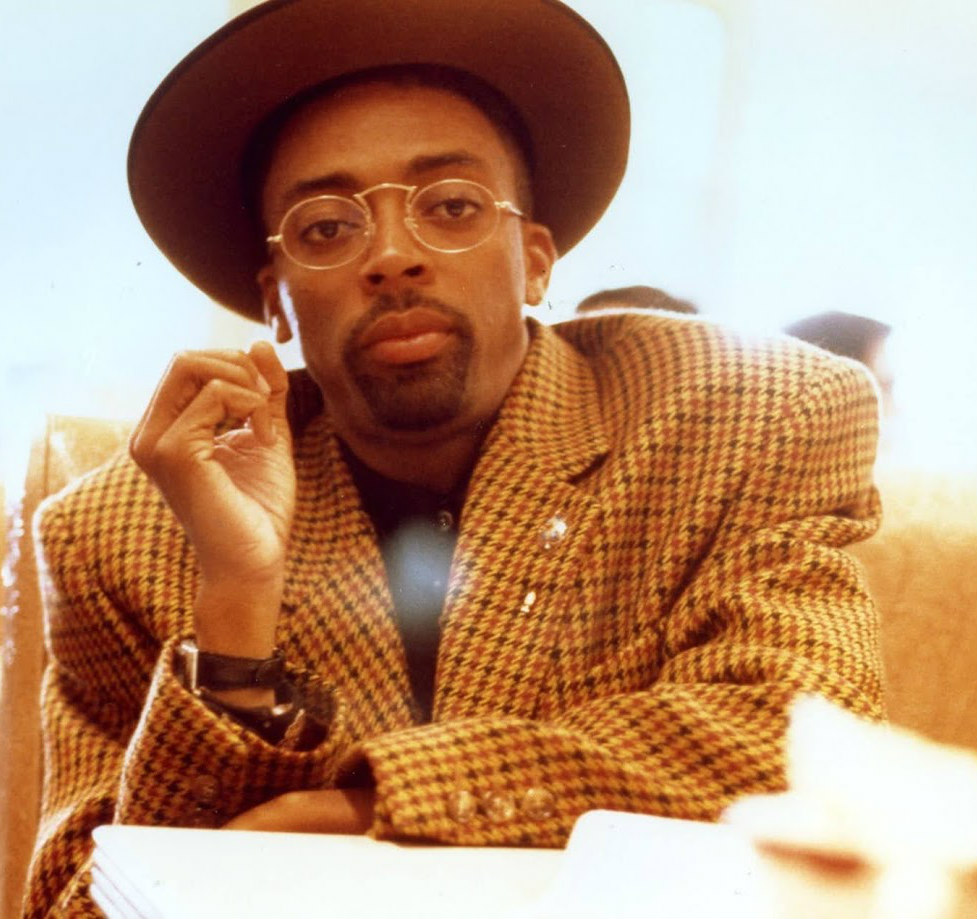
This photograph is the property of its respective owners. No infringement intended.

“It’s easier to be President of the United States as a Black person than to be head of a studio.” — Spike Lee, Governors Awards speech (2015).

Spike Lee is more than a filmmaker—he is the cinematic conscience of Black America. For nearly five decades, he has not only told stories but demanded that America listen to the voices it tried to silence. In the Black community of film, Lee stands as the best of the best because he refuses to separate artistry from accountability. His lens does not flatter injustice, nor does it dilute Black experience for mainstream comfort. Instead, it exposes truth with bold color, sharp dialogue, and uncompromising honesty. Where Hollywood often built walls, Lee carved doorways for others to walk through, ensuring that Denzel Washington, Samuel L. Jackson, and countless others could shine. His work reminds us that the measure of greatness is not only found in awards, but in how deeply one reshapes culture. Spike Lee is not just a director—he is a griot with a camera, a keeper of memory, and a visionary who has transformed film into a battleground for justice and a sanctuary for Black creativity.

Shelton Jackson “Spike” Lee, born on March 20, 1957, in Atlanta, Georgia, is widely recognized as one of the most influential filmmakers of the modern era. His career has been defined by an unwavering commitment to telling stories about race, justice, culture, and community. Lee studied at Morehouse College before earning his Master of Fine Arts in Film Production at New York University’s Tisch School of the Arts, where his student thesis film Joe’s Bed–Stuy Barbershop: We Cut Heads (1983) won a Student Academy Award. Soon after, he established his own production company, 40 Acres and a Mule Filmworks, a hub for creating authentic and unapologetically Black narratives. Married to producer and author Tonya Lewis Lee since 1993, Spike Lee is also a father of two children, Satchel and Jackson, who continue his family legacy of creativity and activism.

Spike Lee’s first feature-length film, She’s Gotta Have It (1986), was a breakthrough in independent cinema. Produced on a micro-budget of $175,000 and filmed in just 12 days, it grossed over $7 million at the box office. The story centered on Nola Darling, a sexually independent Brooklyn artist navigating relationships on her own terms. At a time when mainstream films rarely depicted such complex portrayals of Black women, Lee broke new ground in both narrative and representation. The film’s success not only launched his career but also cemented him as an innovative voice in American cinema.

Nearly five decades into his career, Spike Lee has directed films that dissect the nuances of race and American identity. His 1988 film School Daze drew directly from his experiences at Morehouse College and explored colorism, classism, and cultural hierarchies within the Black community. The following year, he directed Do the Right Thing (1989), inspired by the racially charged Howard Beach incident of 1986 and his observations of racial tension in New York City. Set during a sweltering Brooklyn summer, the film captures how ordinary frustrations can explode into violence under systemic injustice. These works positioned Lee as a truth-teller whose films function both as social critique and as artistic expressions of Black life.

Despite his success, Lee has faced persistent barriers in Hollywood, particularly in securing funding for his films. He has consistently spoken out about the racism and exclusion that plague the industry. In his 2015 Governors Awards speech, he remarked that it was “easier for a Black person to be President of the United States than to head a studio.” His decision to boycott the 2016 Oscars in solidarity with the #OscarsSoWhite movement reflected his long-standing critique of Hollywood’s failure to embrace diversity. For Lee, filmmaking has never been simply about entertainment—it has been a vehicle to confront injustice.

Lee’s inspirations are diverse, ranging from his upbringing in Brooklyn to his academic years at historically Black colleges, and the broader African American struggle for equality. His most enduring creative partnership has been with Denzel Washington, whom he cast in several landmark films including Mo’ Better Blues (1990), Malcolm X (1992), He Got Game (1998), and Inside Man (2006). Washington has praised Lee for opening doors for Black actors and redefining what representation in film could look like. Other frequent collaborators include Samuel L. Jackson, Delroy Lindo, Giancarlo Esposito, John Turturro, cinematographer Ernest Dickerson, and composer Terence Blanchard.

Actors who have worked with Lee consistently describe him as a visionary director who challenges them to give their best performances. Denzel Washington, introducing Lee at the 2015 Governors Awards, emphasized that Lee’s commitment to truth-telling has not only elevated his actors but has reshaped the landscape of American cinema. Many in Hollywood acknowledge that Lee’s films helped pave the way for a generation of Black filmmakers who now have greater opportunities to tell their own stories.

Over the course of his career, Spike Lee has been honored with numerous awards and accolades. He won the Academy Award for Best Adapted Screenplay for BlacKkKlansman (2019) and received an Honorary Oscar in 2015. He has also earned the Cannes Grand Prix, BAFTA Awards, two Primetime Emmy Awards for his documentary When the Levees Broke (2006), Peabody Awards, and the U.S. National Medal of Arts (2023). These honors are testaments to his artistry and his role as a cultural historian, documenting America’s triumphs and its deepest wounds through film.

Today, Spike Lee remains a force in Hollywood and beyond. His films continue to spark dialogue about racism, identity, and justice while celebrating Black resilience and creativity. His influence extends not only through his work but also through the countless artists he has mentored and inspired. For Lee, filmmaking has always been about more than the screen—it has been about shifting consciousness.

Feature Filmography (Director/Filmmaker)

1980s

  • She’s Gotta Have It (1986)
  • School Daze (1988)
  • Do the Right Thing (1989)

1990s

  • Mo’ Better Blues (1990)
  • Jungle Fever (1991)
  • Malcolm X (1992)
  • Crooklyn (1994)
  • Clockers (1995)
  • Get on the Bus (1996)
  • He Got Game (1998)
  • Summer of Sam (1999)

2000s

  • Bamboozled (2000)
  • 25th Hour (2002)
  • She Hate Me (2004)
  • Inside Man (2006)
  • Miracle at St. Anna (2008)

2010s

  • Red Hook Summer (2012)
  • Oldboy (2013)
  • Da Sweet Blood of Jesus (2014)
  • Chi-Raq (2015)
  • BlacKkKlansman (2018)

2020s

  • Da 5 Bloods (2020)

(In addition to feature films, Lee has directed numerous documentaries, including 4 Little Girls (1997), When the Levees Broke (2006), and If God Is Willing and da Creek Don’t Rise (2010).)


Selected Awards and Honors

  • Academy Awards (Oscars)
    • Winner: Best Adapted Screenplay – BlacKkKlansman (2019)
    • Honorary Oscar (2015)
    • Nominations: Best Director (BlacKkKlansman), Best Original Screenplay (Do the Right Thing)
  • Cannes Film Festival
    • Grand Prix: BlacKkKlansman (2018)
  • BAFTA Awards
    • Best Adapted Screenplay – BlacKkKlansman (2019)
  • Primetime Emmy Awards
    • Two wins for When the Levees Broke (2007)
  • Peabody Awards
    • Multiple awards including for When the Levees Broke
  • National Medal of Arts
    • Awarded by the U.S. Government (2023)

References

  • Cannes Film Festival. (2018). Grand Prix winners. Retrieved from [festival-cannes.com]
  • Lee, S. (2015). Governors Awards acceptance speech. Academy of Motion Picture Arts and Sciences.
  • NYU Tisch School of the Arts. (2020). Alumni achievements: Spike Lee. Retrieved from [tisch.nyu.edu]
  • Oscars.org. (2019). Spike Lee wins Best Adapted Screenplay for BlacKkKlansman. Retrieved from [oscars.org]
  • Smith, J. (2019). The films of Spike Lee: A cultural critique. Journal of Film Studies, 45(2), 122–138.
  • Washington, D. (2015). Tribute to Spike Lee at the Governors Awards. Academy of Motion Picture Arts and Sciences.
  • Young, S. (2023). Spike Lee awarded National Medal of Arts. The New York Times.