
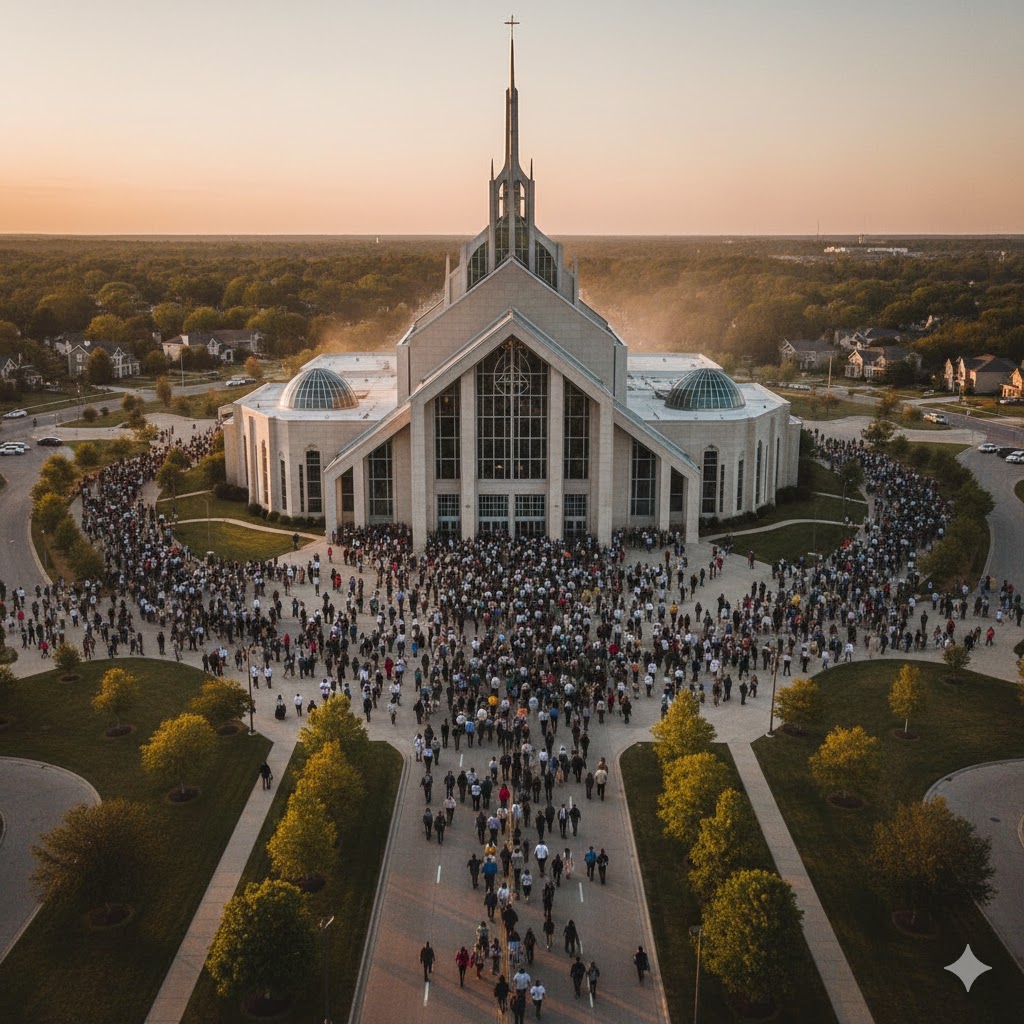
Across America, many Black believers are quietly stepping away from traditional church spaces. What was once the heart of the community—a place of refuge, power, and spiritual identity—has become a place of disappointment for many. This silent exodus is not rooted in rebellion against God, but in disillusionment with systems, leaders, and teachings that no longer reflect biblical truth, justice, or the spiritual hunger of a new generation. As faith evolves, many are seeking God outside the four walls that once defined their spiritual home.
One of the leading reasons for the departure is the rise of the prosperity gospel. This message teaches that wealth is a sign of divine favor and that poverty is a sign of spiritual weakness. But Scripture warns against false teachers who “through covetousness shall they with feigned words make merchandise of you” (2 Peter 2:3, KJV). Many Black believers are recognizing that this gospel has imprisoned them financially, emotionally, and spiritually.
The so-called tithing requirement is another source of frustration. While giving is biblical, many leaders have transformed it into a manipulative obligation. Some teach that failing to pay 10% curses a believer, even though the New Testament emphasizes cheerful, voluntary giving (2 Corinthians 9:7). For many, tithing has become a tool of guilt rather than worship, and people are waking up to the misuse of Scripture.
Stories of preachers buying luxury cars, designer clothes, and mansions using church funds have pushed many away. The contrast between lavish pastoral lifestyles and struggling congregants feels immoral. “Woe be unto the pastors that destroy and scatter the sheep of my pasture!” (Jeremiah 23:1). Black believers sense this imbalance deeply and are tired of watching leaders prosper while their communities suffer.
The “name it and claim it” ideology has caused further spiritual damage. When prayers aren’t answered in expected ways, believers are told their faith is too weak. Yet Jesus Himself said that believers would face trials and tribulations (John 16:33). Faith is not a vending machine, and many are rejecting a doctrine that oversimplifies suffering and blames the believer for every hardship.
The lifestyle of many pastors has also become a source of mistrust. Instead of shepherds serving the flock, some have become celebrities cultivating their own brands. Paul warned of such leaders, describing those “whose god is their belly” (Philippians 3:19). For many, the church feels more like a corporation than a sacred space.
Gen Z, in particular, has walked away in large numbers. They crave authenticity and truth. They are not satisfied with emotional sermons that lack substance or accountability. They question everything, research deeply, and refuse to remain in systems that exploit them spiritually or financially.
The wound of slavery remains a major factor in this shift. During enslavement, Christianity was used as a weapon. Slave owners gave enslaved people chains and a distorted Bible, using select verses to enforce obedience and justify brutality. Passages about liberation and justice were hidden or forbidden. This historical truth forces many modern believers to question how Christianity was presented to them.
Black scholars, theologians, and seekers are now reading Scripture for themselves—and finding that the Bible is not a tool of oppression but one of liberation. They see that Christ came to set the captives free (Luke 4:18), not bind them. Many are reclaiming their identity as God’s chosen people, awakening to spiritual truths long hidden from them.
The “curse of Ham” was one of the greatest lies used against Black people. This fallacy claims that Africans were cursed to be servants, but no Scripture supports this racist myth. Many are leaving churches that still allow such harmful theology to linger in silence.
Another issue is the image of a blonde-haired, blue-eyed Jesus imposed by Western society. This false image disconnects Black believers from the true Afro-Asiatic identity of the Messiah. It promotes white supremacy more than biblical truth. As believers discover historical accuracy, they reject the false image forced upon generations.
Many also leave because church culture has become performance-driven. Lights, cameras, production, and theatrics overshadow Scripture. Worship is sometimes designed to entertain rather than transform. This hollowness creates spiritual emptiness.
Others walk away because they feel unheard. Real questions about justice, identity, history, trauma, and racial healing are often ignored. Instead of addressing community pain, some churches avoid difficult conversations, choosing comfort over truth.
Some depart because the church has become politically entangled. Instead of preaching the Kingdom of God, some pastors preach nationalism, capitalism, or partisan agendas. Believers seeking spiritual food find themselves receiving propaganda instead.
Disconnection grows when churches refuse to confront issues like mental health. Many suffering believers are told to “just pray about it,” leaving them unsupported and unseen. This spiritual minimization pushes people toward therapists, support groups, and online communities instead of the sanctuary.
Some churchgoers are tired of being overworked in ministry while receiving little spiritual nourishment. They volunteer endlessly while pastors demand more, never pouring back into the people who labor for free behind the scenes.
Many leave because church discipline has become abusive. Leaders shame people publicly, gossip about members, or use Scripture as a weapon rather than a guide. Christ did not model this; He led with compassion, correction, and truth.
Others walk away because churches fail to address the real needs of the community—poverty, violence, education, housing, family structure, and injustice. Instead, money is collected while communities around the building remain broken.
Some are leaving because they sense God calling them to a deeper truth. They are not leaving Him—they are leaving systems that have misrepresented Him. They seek raw worship, sound doctrine, biblical accuracy, and spiritual awakening.
What It Means When Mega-Churches Preach Prosperity
Many mega-churches promote the “prosperity gospel,” which teaches that if you sow money, speak positive words, or claim blessings, God will make you wealthy, healthy, and successful. On the surface, it sounds empowering. But the structure behind it reveals something deeper and more concerning.
The preaching of prosperity is often not about the people prospering—it’s about financing the pastor’s lifestyle, expanding the church’s brand, and increasing the institution’s wealth.
1. They Preach Prosperity Because It Is Profitable—for Them
When pastors say things like:
- “Sow your seed today and watch God move!”
- “Break the curse by giving your best offering!”
- “God is going to double your harvest if you plant a sacrificial seed!”
They are essentially turning the pulpit into a spiritual business model. The more people struggle, the more desperate they become for hope. Desperation + Scripture taken out of context = financial gain for the leadership.
2. Members Rarely See the “Promised” Prosperity
If prosperity teaching were truly biblical the way it’s taught:
- The members would be debt-free.
- The community around the church would be transformed.
- The poor would be fed.
- Single mothers would be supported.
- Generational poverty would be broken.
But what usually happens?
The congregation struggles while the pastor gets richer.
People keep sowing into a system that never brings the promised results.
3. The Pastor’s Lifestyle Reveals the Real “Prosperity.”
Prosperity preachers often own:
- Luxury cars
- Multi-million-dollar homes
- Designer suits
- Private jets
- Personal security teams
- Investment properties
- Corporate-level salaries
And yet, many of their members:
- Work two or three jobs
- Are behind on rent
- Can’t afford groceries
- Stay financially stressed
- Have no savings or investments
This imbalance exposes that the doctrine is not about universal prosperity but one-directional prosperity flowing upward—from the members to the pastor.
4. They Use Scripture as a Fundraising Tool
Verses like:
- Malachi 3:10
- Luke 6:38
- 3 John 1:2
are preached heavily—but out of context. These messages are crafted to make people emotional so they will give more.
Meanwhile, verses about:
- financial stewardship
- caring for the poor
- justice
- leaders living modestly
- accountability
are conveniently ignored.
5. Emotional Manipulation Becomes a Strategy
The formula is predictable:
- Play soft music.
- Build a testimony about “seed sowing.”
- Stir emotions.
- Make supernatural promises.
- Repetition of “This is your season!”
- Pressure giving (multiple offerings in one service).
This emotional moment creates an illusion of spiritual breakthrough when, in reality, it is fundraising disguised as faith.
6. The Focus Shifts from Christ to Cashflow
Instead of preaching:
- repentance
- holiness
- discipleship
- righteousness
- justice
- community building
- spiritual growth
The sermons revolve around:
- money
- success
- manifestations
- personal blessing
- “expecting checks in the mail.”
The gospel becomes a financial transaction instead of a transformational relationship with God.
7. They Teach You to “Believe for Wealth”—But Not How to Build It
Notice they rarely teach:
- budgeting
- investing
- building credit
- starting a business
- wealth-building strategies
- inheritance planning
- financial literacy
Because real financial literacy breaks dependence.
If members become financially wise, they stop being financially manipulated.
So instead of empowering people to build financial stability, they tell them to “sow their way to prosperity,” which guarantees the church’s wealth—not the members’.
8. Mega-Church Prosperity Is a System
And systems are designed to protect one thing:
The institution and its leadership.
Every sermon, every conference, every seed challenge ultimately feeds the machine that keeps:
- the lights on,
- the brand alive,
- and the pastor is wealthy.
In Short:
Mega-churches that preach prosperity are often preaching their own prosperity, not yours. The system is built so that:
- You give
- They receive
- You believe for miracles
- They accumulate wealth
- You stay hopeful
- They stay rich
This is why many believers are waking up, studying Scripture for themselves, and walking away from systems that exploit their faith.
Ultimately, the silent exodus is not the death of Black faith—it is the beginning of spiritual reformation. Black believers are no longer satisfied with imitation religion. They want truth, freedom, and an authentic connection with God. They hunger for the Word, not manipulation; for liberation, not bondage; for identity, not erasure.
God is calling His people back to Himself. Back to Scripture. Back to the truth. Back to a lifestyle of righteousness. “And ye shall know the truth, and the truth shall make you free” (John 8:32). The exodus is not away from God—it is toward Him.
References (KJV)
John 8:32; 2 Peter 2:3; 2 Corinthians 9:7; Jeremiah 23:1; John 16:33; Philippians 3:19; Luke 4:18; Genesis 9 (context of Ham); John 10:27.
 THE BROWN GIRL DILEMMA