
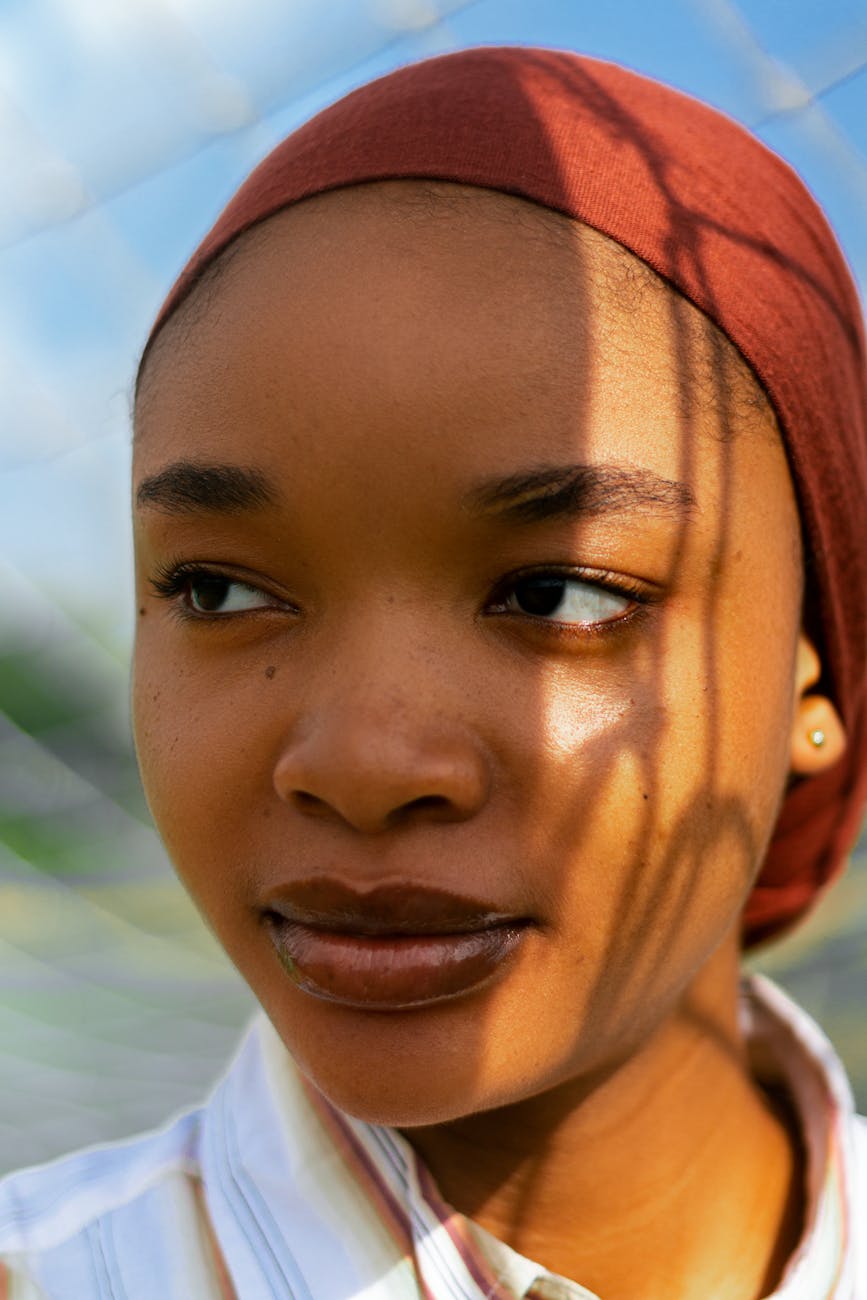
For Brown girls, beauty is never a neutral experience. It is both a gift and a burden, a source of pride and pain, a reflection of cultural richness but also a reminder of society’s skewed lens. To be seen as a Brown girl is to live at the intersection of visibility and invisibility—noticed for one’s appearance yet often unseen for one’s humanity. This duality forms one of the heaviest weights carried by women of color: the struggle of being defined more by skin tone than by character.
Historically, the beauty of Brown women was distorted through slavery, colonialism, and colorism. Enslaved women were simultaneously exploited for their bodies and devalued as “less beautiful” compared to White women or lighter-skinned counterparts. This legacy persists today. In media, advertisements, and even dating culture, lighter skin often remains the celebrated standard, leaving darker-skinned women to fight for validation. The result is that beauty for Brown girls often comes with unspoken conditions—accepted only if it fits within narrow, Eurocentric frameworks.
The Bible reminds us that true beauty is never defined by skin, hair, or external adornment but by the inner spirit. “Whose adorning let it not be that outward adorning of plaiting the hair, and of wearing of gold, or of putting on of apparel; But let it be the hidden man of the heart, in that which is not corruptible, even the ornament of a meek and quiet spirit, which is in the sight of God of great price” (1 Peter 3:3–4, KJV). For Brown girls, this scripture serves as both comfort and resistance—it affirms that their worth is not contingent upon external validation but upon the divine imprint within.
Psychology helps explain the toll of being hyper-visible yet undervalued. Studies on racialized beauty standards reveal that colorism can erode self-esteem and contribute to depression and anxiety (Keith & Monroe, 2016). When society constantly communicates that lighter skin is preferable, darker-skinned women internalize messages of inadequacy. This psychological burden often begins in childhood, when young girls are teased for their complexion, and extends into adulthood in areas such as employment, dating, and representation.
At the same time, the weight of being seen also generates strength. Brown girls have historically resisted narrow beauty ideals by embracing their natural features—whether through the natural hair movement, melanin pride campaigns, or simply rejecting bleaching products marketed to them. This resilience reflects what psychologists describe as “collective identity affirmation,” the process by which marginalized groups draw strength from shared experiences of struggle and pride (Sellers et al., 1998). For many Brown women, their skin becomes not just a marker of difference but a source of solidarity.
Still, the burden of beauty cannot be ignored. Brown girls often walk into rooms knowing they will be judged before they speak. They navigate workspaces where professionalism is measured against Eurocentric hair textures, and relationships where desirability is filtered through centuries-old biases. The weight is constant: to prove that their beauty is not a liability, to show that their skin is not an obstacle but a testament to survival and resilience.
The challenge for families, churches, and communities is to create counter-narratives that affirm beauty without conditions. Romans 8:37 reminds us, “Nay, in all these things we are more than conquerors through him that loved us” (KJV). For Brown girls, this verse is a reminder that no societal gaze can diminish their divine worth. Healing begins when families affirm dark skin as beautiful, when men honor it without comparison, and when Brown girls themselves embrace their skin not as a burden but as a crown.
Ultimately, beauty for Brown girls will always carry weight—but it can be transformed from a burden into a banner. By rejecting society’s shallow standards and embracing the beauty God already placed within, Brown women redefine what it means to be seen. Their presence becomes a testimony that true beauty does not ask permission to exist—it commands recognition, dignity, and love.
References
- The Holy Bible, King James Version.
- Keith, V. M., & Monroe, C. R. (2016). Histories of colorism and its psychological impact on African American women. Gender & Society, 30(2), 184–206.
- Sellers, R. M., Smith, M. A., Shelton, J. N., Rowley, S. A., & Chavous, T. M. (1998). Multidimensional model of racial identity: A reconceptualization of African American racial identity. Personality and Social Psychology Review, 2(1), 18–39.
 THE BROWN GIRL DILEMMA