Category Archives: brown girl blues

Girl Talk Series: What Love Is—and Isn’t

Love is one of the most misused words in modern culture. It is often confused with desire, attention, chemistry, or access to someone’s body. This confusion has caused many women to mistake emotional intensity for commitment and physical intimacy for proof of care. This conversation exists to clarify—not to shame, romanticize, or encourage—but to protect.

Before discussing what love is, it is necessary to warn women about what love is not. Love is not urgent. When a man pressures you to rush intimacy, commitment, or decisions, he is revealing impatience, not devotion. True love respects timing, boundaries, and the weight of consequences.

Sleeping with you is not love. Physical access is not a declaration of commitment, nor is it evidence of emotional investment. Desire is biological; love is intentional. Many men are willing to enjoy intimacy without responsibility, which is why actions must always outweigh words.

Love is not manipulation disguised as passion. Excessive flattery, future promises without follow-through, jealousy framed as protection, and guilt used to bypass your standards are all warning signs. Love does not coerce or corner; it invites and honors choice.

A man who truly loves you is willing to wait. Waiting for sex until marriage is not repression; it is restraint. It demonstrates discipline, foresight, and respect for the covenant. A man who can govern his desires is more likely to govern his character.

Biblically, love is patient. Patience is not passive—it is active self-control. A man waiting until marriage shows that he values your soul, your future, and the sacredness of union more than momentary pleasure. That kind of waiting is evidence of reverence, not weakness.

Love does not require you to prove yourself physically. You are not auditioning for commitment through intimacy. If access to your body becomes the price of staying, the relationship is transactional, not loving.

Love is consistent. It does not disappear when boundaries are enforced. A man who withdraws affection, attention, or kindness because you will not sleep with him has revealed his true motivation. Love does not punish purity.

Love is protective, not possessive. A man who loves you will care about your spiritual health, emotional well-being, and long-term stability. He will not place you in situations that compromise your values or peace.

Love involves responsibility. A man serious about love is also serious about provision, leadership, accountability, and legacy. Sex without covenant creates emotional and spiritual vulnerability without security. Love never asks you to accept risk alone.

Love is honest. It does not keep you confused or guessing. If a man says he loves you but avoids commitment, avoids clarity, or avoids future planning, his behavior contradicts his words. Love does not thrive in ambiguity.

Waiting until marriage is not about perfection; it is about alignment. It aligns intimacy with commitment, passion with protection, and desire with destiny. This alignment safeguards women emotionally, spiritually, and psychologically.

Psychological research supports what Scripture has long taught: delayed sexual involvement is associated with higher relationship satisfaction, stronger commitment, and lower rates of regret and emotional distress. Boundaries are not barriers to love; they are frameworks that support it.

Love does not exploit trauma. Men who rush intimacy often target emotional vulnerability, loneliness, or insecurity. Healing should precede bonding. Love contributes to healing; it does not capitalize on wounds.

Love allows room for growth without pressure. It does not rush milestones to secure control. It respects process, seasons, and readiness. What is built slowly is often built to last.

Marriage-centered love understands covenant. Sex within marriage is not merely physical—it is a spiritual union, trust, and responsibility. Love that leads toward marriage honors this reality rather than dismissing it.

A man who waits communicates long-term vision. He sees you as a wife, not an experience. He is willing to sacrifice immediate gratification for lasting union. That sacrifice is a form of love many women have been taught to undervalue.

Love does not ask women to lower their standards to be chosen. It rises to meet standards. If your boundaries repel someone, that person was not aligned with your future.

Women must be cautious not to romanticize struggle or confusion as passion. Peace, safety, and clarity are signs of healthy love. Chaos is not chemistry.

This conversation is not meant to encourage dating or desire but discernment. Love is serious. It is sacred. And it requires wisdom to recognize before intimacy clouds judgment.

Love is patient, disciplined, respectful, and accountable. Anything less—no matter how intense—falls short of what love truly is.


References

Holy Bible, King James Version. (1611/1769).

Gottman, J. M., & Silver, N. (2015). The seven principles for making marriage work. Harmony Books.

Stanley, S. M., Rhoades, G. K., & Markman, H. J. (2006). Sliding versus deciding: Inertia and the premarital cohabitation effect. Family Relations, 55(4), 499–509.

Regnerus, M. (2017). Cheap sex: The transformation of men, marriage, and monogamy. Oxford University Press.

Wilcox, W. B., & Dew, J. (2016). The social and cultural predictors of generosity in marriage. Journal of Family Issues, 37(2), 251–271.

Peplau, L. A., & Fingerhut, A. W. (2007). The close relationships of lesbians and gay men. Annual Review of Psychology, 58, 405–424.
Brown Girl Blues: “Do You Speak African?” They Say….

Photo by Muhammad-Taha Ibrahim on Pexels.com

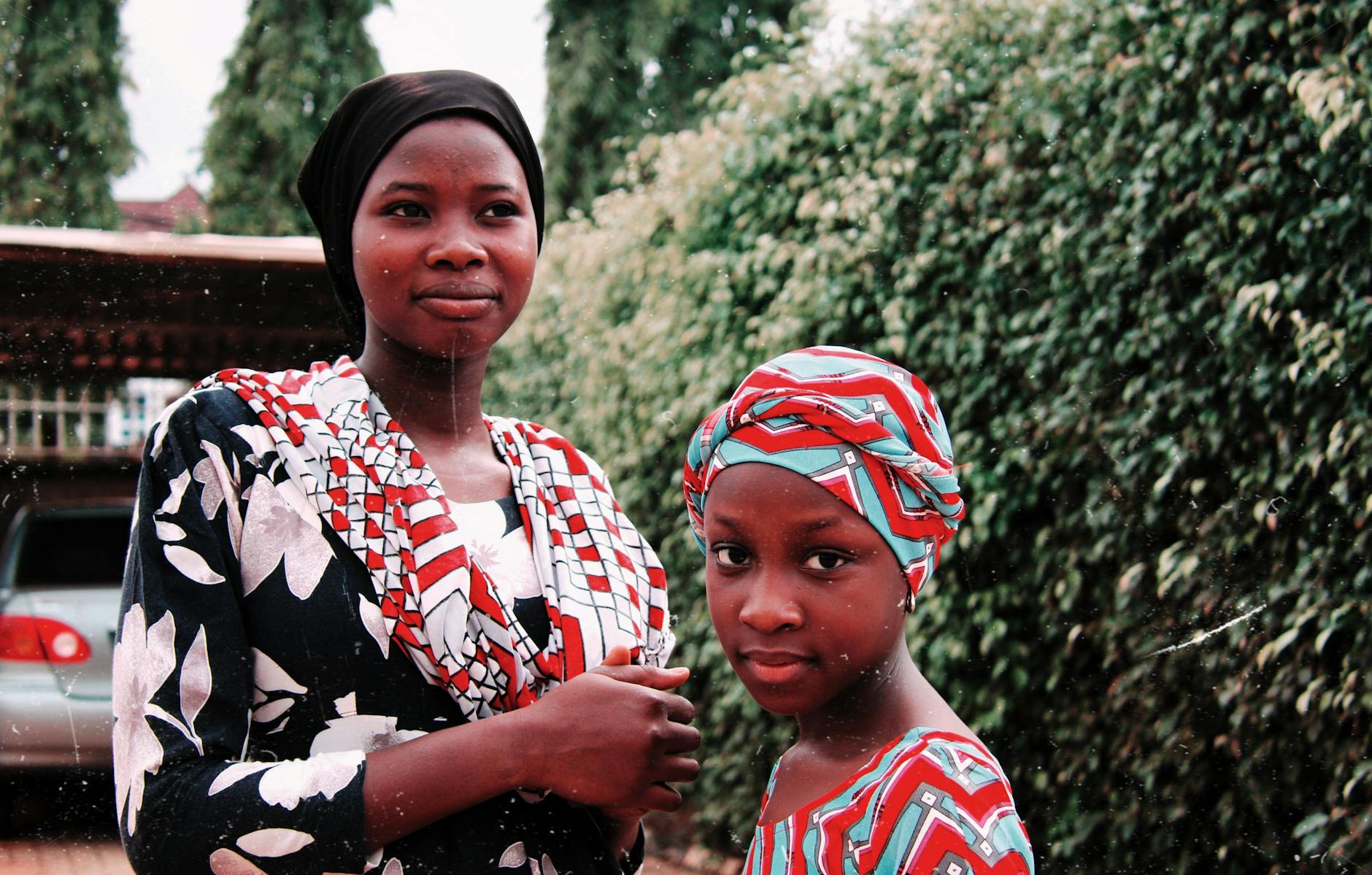
The question, “Do you speak African?” lands with an awkward thud — part curiosity, part ignorance, part wound. It reveals not only what others fail to know but also what history has taken from the brown girl who hears it. The question is not neutral; it is a microaggression wrapped in innocence, a symptom of the colonial erasure that fractured language and lineage.

To ask someone if they “speak African” is to mistake a continent for a country, and a civilization for a dialect. Africa, home to over 1,500 languages and countless dialects, cannot be reduced to a single tongue (Eberhard, Simons, & Fennig, 2022). The question exposes how deeply Western education has flattened the African world — a world once rich with linguistic kingdoms, oral histories, and sacred speech.

For the brown girl in America, this question stings differently. It is not just about language; it is about belonging. Her ancestors once spoke languages now lost — tongues silenced by chains and rewritten through slavery. The question reminds her of what she cannot retrieve: the sound of her motherland’s lullabies.

The transatlantic slave trade did not just steal bodies; it stole languages. Enslaved Africans from different regions were deliberately mixed to prevent communication and rebellion (Gomez, 1998). Over time, English became the imposed tongue, and ancestral languages were criminalized. The linguistic death that followed was cultural genocide disguised as civilization.

Thus, when someone asks, “Do you speak African?” the brown girl feels the ache of disconnection. She wants to answer, “I would if they hadn’t beaten it out of my blood.”

Language is identity — it shapes how one thinks, dreams, and remembers. When language dies, memory fractures. For many descendants of the African diaspora, English became both a prison and a canvas — a forced medium turned into a tool of survival. Out of this tension emerged the dialects and rhythms of Black English, Caribbean patois, and Creole, each carrying fragments of forgotten worlds (Rickford, 2016).

Yet the irony persists: the same world that mocks African languages as “primitive” now romanticizes accents and aestheticizes African words for fashion and marketing. This selective celebration strips context, transforming heritage into decoration.

To the brown girl, “Do you speak African?” sounds like an echo of every moment she’s been told she’s too Black for some and not African enough for others. She exists between worlds — Westernized but not white, diasporic but disconnected. Her tongue carries history’s contradictions.

Cultural alienation often follows diaspora children who have been taught to speak the language of their oppressors more fluently than the language of their ancestors. They master English syntax but long for ancestral rhythm — the music in words they’ve never known.

This longing shows up in art, poetry, and music. From Langston Hughes’s blues to Beyoncé’s Black Is King, artists continually reach across oceans to reconnect the severed speech of their lineage. Their art becomes translation — a spiritual form of speaking “African” in a world that forgot how to listen.

The brown girl learns that language is more than vocabulary. It’s gesture, rhythm, call, and response. She speaks African every time she hums a gospel tune in a minor key, every time her laughter fills a room with rhythm, every time her hands punctuate her words like ancestral drums.

Her speech carries the DNA of lost languages — echoes of Yoruba, Igbo, and Wolof wrapped in English phrasing. Her slang, her tone, her cadence — all are living languages of survival. What others call “improper” is actually linguistic memory resisting erasure (Smitherman, 2000).

Still, the weight of that question lingers. It reminds her that ignorance is not harmless. Every careless question keeps history misunderstood. To say “African” as though it were a single language reveals how empire rewrote geography and reduced multiplicity to stereotype.

Western colonial systems erased Africa’s intellectual complexity, painting the continent as uniform and inferior. Missionaries and colonizers banned indigenous languages in schools, promoting European tongues as “civilized” (Ngũgĩ wa Thiong’o, 1986). The result was not just silence but shame.

The brown girl inherits that shame unconsciously — the hesitation to pronounce African names, the anxiety of mispronunciation, the internalized fear of sounding “too foreign.” These linguistic insecurities are the aftershocks of colonization.

But reclamation begins with awareness. Each generation of brown girls learns to unlearn. She begins to study African languages, wear names that carry meaning, and honor accents once mocked. She reclaims sound as identity.

The movement toward linguistic reconnection has become a spiritual revival. Across the diaspora, Black Americans and Afro-Caribbeans are learning Yoruba, Swahili, and Twi — not merely as languages, but as portals to ancestral consciousness (Ani, 1994).

For the brown girl, this journey feels like resurrection. Each new word is a heartbeat returning to the body of her culture. Each phrase feels like homecoming.

Yet she knows that fluency is not the only path to identity. To “speak African” is also to live African — to embody its values of community, rhythm, resilience, and reverence for spirit. It is to carry Africa in one’s breath, one’s laughter, one’s survival.

When others ask, “Do you speak African?” she now answers differently. She says, “Yes, I speak it in the way I live, love, and remember.”

She speaks it in her boldness, in the way she tells truth with rhythm, in the way her words refuse to be small. She speaks it in her dialect — the language that was never fully lost, just remixed through pain and perseverance.

Her lips form English words, but her spirit speaks Africa’s music. She carries within her every language that empire tried to destroy.

Her tongue, once colonized, is now consecrated. Through her, Africa speaks again.

So the next time the question comes — “Do you speak African?” — she will smile softly and say, “I am African, and that is enough.”

For her very existence is a language — a sacred syntax of survival written in melanin, rhythm, and divine memory.


References

Ani, M. (1994). Yurugu: An African-centered critique of European cultural thought and behavior. Africa World Press.

Collins, P. H. (2000). Black feminist thought: Knowledge, consciousness, and the politics of empowerment. Routledge.

Eberhard, D. M., Simons, G. F., & Fennig, C. D. (Eds.). (2022). Ethnologue: Languages of the world (25th ed.). SIL International.

Gomez, M. A. (1998). Exchanging our country marks: The transformation of African identities in the colonial and antebellum South. University of North Carolina Press.

Ngũgĩ wa Thiong’o. (1986). Decolonising the mind: The politics of language in African literature. James Currey.

Rickford, J. R. (2016). African American vernacular English: Features, evolution, educational implications. Blackwell.

Smitherman, G. (2000). Talkin and testifyin: The language of Black America. Wayne State University Press.

Brown Girl Blues: “I’d Kill For Your Lips,” They Say….

Photo by Sheer Wave Therapy on Pexels.com

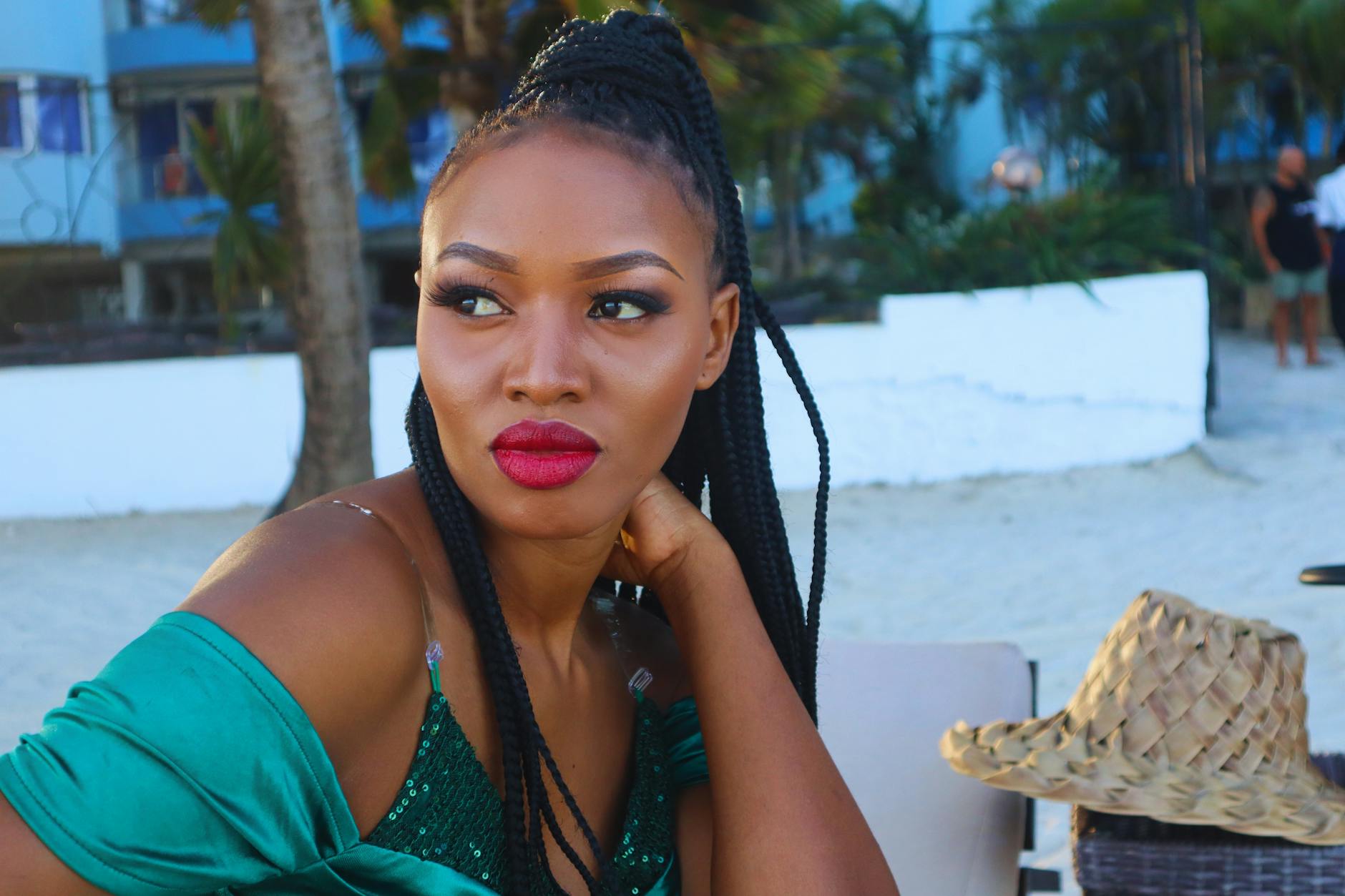
The phrase “I’d kill for your lips” sounds like flattery, but for many brown girls, it is a haunting compliment. It encapsulates a history of desire mixed with exploitation, admiration laced with appropriation. The words roll off tongues in admiration of features once mocked, once ridiculed, and once pathologized — yet now celebrated when worn by someone else.

For centuries, the lips of brown women have been sites of fascination and fear. During slavery and colonialism, full lips were used to justify racist caricatures that depicted Black women as hypersexual and animalistic (Collins, 2000). The grotesque imagery of figures like Sarah Baartman, the so-called “Hottentot Venus,” exemplified how European audiences eroticized and dehumanized African femininity (Qureshi, 2004).

To say “I’d kill for your lips” is to unknowingly echo the violence of history. It is an unconscious confession of envy born from centuries of theft — where physical traits of Blackness were plundered even as Black bodies were persecuted. The world both craved and condemned the features it now romanticizes.

In the modern era, the full lips that once symbolized “otherness” have become the pinnacle of Western beauty. From fashion runways to social media filters, the aesthetic of plump, pouty lips dominates global standards. Yet the models of this look are rarely brown-skinned women; they are often white influencers who undergo cosmetic enhancement to mimic what nature gave to women of African descent (Nash, 2019).

This phenomenon exemplifies the paradox of cultural and corporeal appropriation. Society rejects the people but embraces the features. It dismembers identity, taking the aesthetic while discarding the heritage, the struggle, and the soul that shaped it. This disembodied admiration is not love — it is consumption.

The statement “I’d kill for your lips” thus becomes more than an expression of envy; it is a metaphor for how society symbolically “kills” the original to resurrect the imitation. It celebrates the copy but crucifies the source.

Within this paradox lies the pain of countless brown girls who grew up being teased for their appearance. Many remember childhoods filled with mockery — lips called “too big,” noses “too wide,” skin “too dark.” These wounds ran deep, leaving psychological scars that linger into womanhood (Russell, Wilson, & Hall, 1992).

Then suddenly, the very traits that once provoked shame became fashionable. The same lips once mocked in schoolyards were now praised in magazines. But the praise was selective — applauding the imitation while ignoring the originators. This selective admiration creates a silent rage and a longing for justice.

To be a brown girl in such a world is to constantly negotiate between pride and pain. One learns to love one’s reflection while knowing that others only love it in pieces — as long as it is detached from the fullness of identity.

Beauty, then, becomes political. For the brown girl, every selfie, every smile, every expression is a reclamation of what was stolen. Her lips are not merely aesthetic; they are ancestral. They carry the stories of foremothers who survived silence, objectification, and distortion.

The lips of brown women have spoken liberation into existence. They have kissed away fear, sung through struggle, and prayed through suffering. They have articulated protest, prophecy, and poetry. Their fullness is not just biological; it is spiritual — a testament to abundance and resilience.

Historically, white femininity was constructed in opposition to Black femininity. While white women were seen as pure and delicate, Black women were hypersexualized and loud (hooks, 1981). The fetishization of features like full lips reveals how racial desire operates under domination — to desire the exotic without embracing the person.

Contemporary media perpetuates this dynamic through what scholars call commodified Blackness (Weheliye, 2002). Pop culture borrows the aesthetics of Black womanhood — from lips and curves to slang and attitude — yet distances itself from Black identity itself. The result is a hollow performance of beauty stripped of cultural soul.

“I’d kill for your lips” becomes a tragic refrain in this context. It is admiration laced with erasure. Beneath the compliment lies the question: Would you still want them if they came with my skin?

This question echoes across social media spaces where brown women watch their likeness replicated without credit. Lip fillers, bronzers, and contour trends mimic features that were once signs of “too much Blackness.” Now they are marks of luxury.

The irony is painful yet familiar. Beauty industries profit from what society once punished. They commercialize the natural features of women of color while offering those same women limited representation or voice.

But brown women are reclaiming the narrative. Artists, activists, and influencers are using digital platforms to celebrate authentic Black and brown beauty. Hashtags like #MelaninMagic and #BlackGirlJoy function as digital revolutions, redefining what beauty means beyond white gaze.

The psychological work of reclamation is just as vital as the cultural. Brown girls are learning to love what the world once taught them to hate. This self-love is not vanity but healing — an act of decolonization of the mirror.

Healing also involves confronting the contradictions. A brown girl can feel flattered and hurt simultaneously when someone says, “I’d kill for your lips.” She can recognize admiration but still grieve the history that makes that statement possible.

In many ways, the lips symbolize the border between visibility and invisibility. They are the threshold of voice — the space where silence turns into speech. For generations, brown women’s voices have been suppressed, their words deemed “too loud,” “too emotional,” or “too much.” The fullness of their lips reminds the world of what it has tried to silence.

When a brown woman speaks, her lips are political instruments. They challenge stereotypes, they narrate histories, and they bless futures. Every word spoken from those lips resists centuries of objectification.

To “kill for those lips,” then, would mean to destroy what gives them power — to rob them of their context and their story. Society does this symbolically every time it celebrates features but denies identity.

Yet the brown woman refuses erasure. Her lips remain full — of memory, of truth, of divine breath. She smiles not because she has been accepted, but because she has accepted herself.

Her smile is rebellion. It says, You cannot own what you did not create.

Her lips are holy ground. They are the place where trauma transforms into testimony, and beauty into revolution.

She does not need anyone to die for her lips; she simply needs the world to stop killing her joy, her identity, and her authenticity.

When she speaks now, her lips tell a different story — one of reclamation. She knows that her beauty was never a trend; it was always a birthright.

The world can keep its envy. She will keep her fullness — of lips, of life, and of spirit.


References

Collins, P. H. (2000). Black feminist thought: Knowledge, consciousness, and the politics of empowerment. Routledge.

hooks, b. (1981). Ain’t I a woman: Black women and feminism. South End Press.

Nash, J. C. (2019). Black feminism reimagined: After intersectionality. Duke University Press.

Qureshi, S. (2004). Displaying Sara Baartman, the ‘Hottentot Venus’. History of Science, 42(2), 233–257.

Russell, K., Wilson, M., & Hall, R. (1992). The color complex: The politics of skin color among African Americans. Anchor Books.

Weheliye, A. G. (2002). Feenin’: Posthuman voices in contemporary Black popular music. Social Text, 20(2), 21–47.

Brown Girl Blues: “Brown Girls Are Loud,” They Say….

Photo by Polina Tankilevitch on Pexels.com

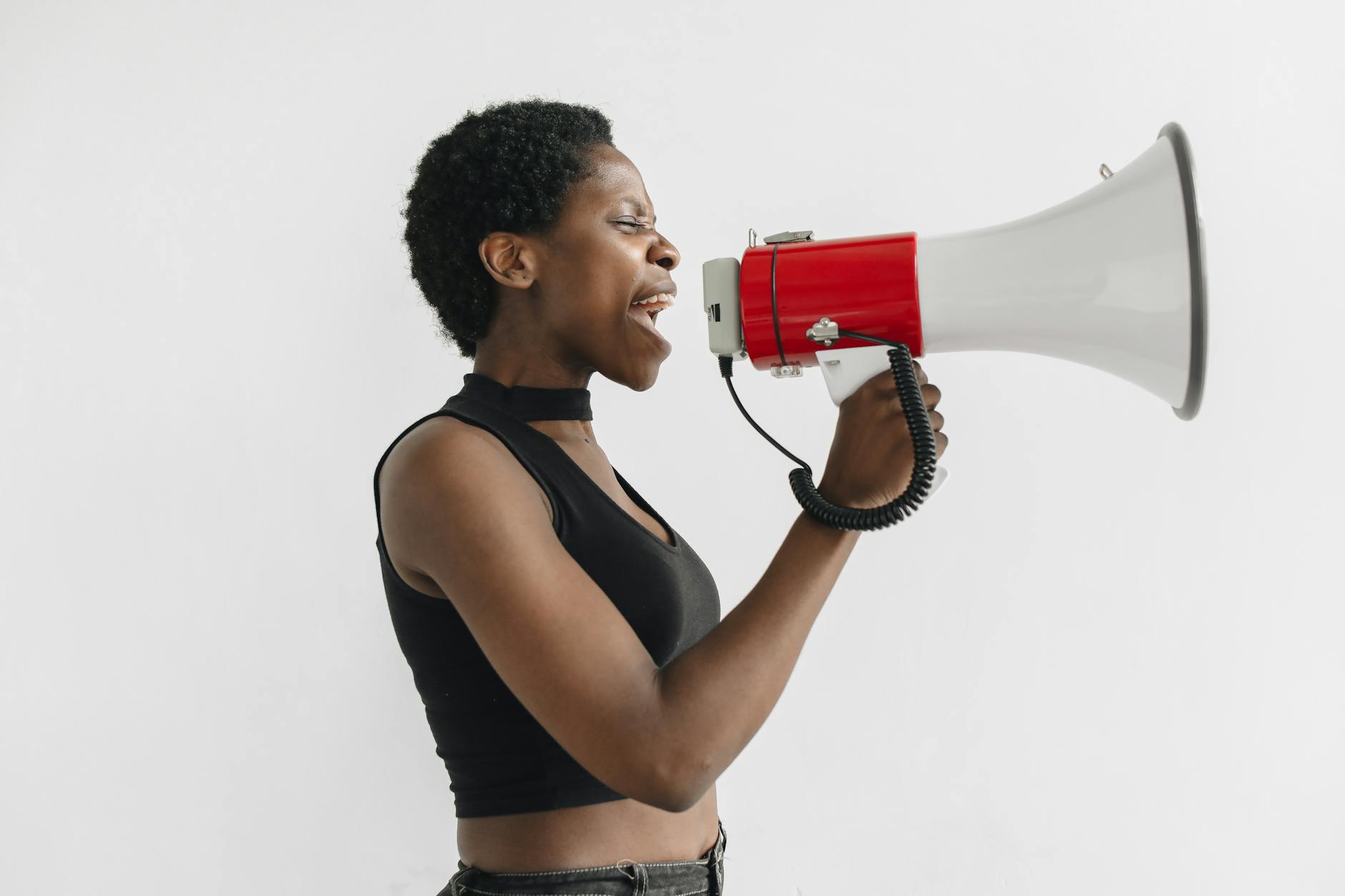
The assertion that “Brown girls are loud” functions as both a stereotype and a silencing mechanism. This phrase, often uttered casually or as social commentary, conceals a deeper historical bias against women of color who assert themselves vocally or emotionally. The term “loud” becomes a racialized label that delegitimizes self-expression while maintaining Eurocentric standards of femininity and decorum (Collins, 2000).

For centuries, the voices of Black and brown women have been controlled, muted, or mocked. Under slavery, colonization, and segregation, their words were often dismissed as irrational or impertinent. Today, these historical prejudices persist through modern stereotypes like the “angry Black woman” or the “fiery Latina,” both of which frame passionate communication as emotional instability (Walley-Jean, 2009). Thus, “loudness” becomes a weaponized term used to reassert social hierarchies.

To be called “loud” is rarely about volume; it is about visibility. When women of color speak confidently or express emotion, they challenge the systems designed to keep them silent. This so-called loudness is, in essence, a refusal to disappear. It is the sound of resistance echoing across generations who were denied speech.

The racialization of voice and tone stems from colonial constructs of civility. Western norms associated femininity with quietness, politeness, and restraint — ideals rooted in white, patriarchal structures (hooks, 1981). Any deviation from this mold was deemed unruly or primitive. For brown women, whose cultural communication styles are often rich in rhythm, gesture, and emotion, this framework was particularly limiting.

The result is tone-policing: a subtle but pervasive form of control where the manner of a woman’s speech overshadows the content of her message. In classrooms, workplaces, and media, brown women are often told to “calm down,” “lower their voices,” or “speak professionally.” These directives disguise racial discomfort as etiquette (Pittman, 2012).

In educational spaces, this dynamic begins early. Studies show that Black girls are more likely to be disciplined for “disruptive behavior” even when engaging in classroom discussion (Morris, 2016). What is interpreted as rudeness or defiance is often simple participation, filtered through racial bias. The message received is clear: intellectual curiosity and emotional expression are dangerous when spoken in a brown voice.

Over time, many young women of color internalize this message. They learn to perform quietness as a form of protection — softening their tone, diluting their opinions, and practicing invisibility to avoid social punishment. This self-censorship comes at the cost of authenticity and mental well-being (Jones & Norwood, 2017).

The workplace continues this narrative of containment. Brown women who are assertive in leadership are often labeled “intimidating” or “difficult.” The corporate world rewards those who fit neatly within the norms of “professionalism,” which are historically white and male-centered (Wingfield, 2010). Thus, emotional expressiveness and cultural authenticity are misread as unprofessionalism rather than strength.

Yet the so-called “loudness” of brown women has fueled some of the most transformative movements in history. From Sojourner Truth’s “Ain’t I a Woman?” speech to Fannie Lou Hamer’s testimony during the Civil Rights Movement, loudness has always been synonymous with liberation (Guy-Sheftall, 1995). The voice has functioned as both weapon and witness.

In artistic and spiritual traditions, voice is sacred. Within African and Afro-diasporic communities, song and speech have long served as vessels for memory and survival. From the griots of West Africa to the blues singers of the American South, the act of speaking — or singing — truth aloud is a form of cultural continuity (Gates, 1988).

Brown women’s expressiveness must therefore be understood within this historical continuum. Their tone is not aggression but ancestral resonance. The cadence, warmth, and emotionality of their voices carry centuries of resilience. To misinterpret that as loudness is to mishear history itself.

Media representations, however, continue to distort this narrative. Television and film often portray brown women as “sassy,” “overly dramatic,” or “ghetto,” reinforcing the myth that they lack emotional control (Gray, 2013). These depictions not only shape public perception but also influence how brown women see themselves.

Representation, as bell hooks (1992) reminds us, is a site of struggle. When brown women are consistently portrayed as one-dimensional caricatures, the world forgets that their “loudness” has context — a response to generations of silence and misrepresentation.

Nevertheless, modern movements in art and media are reclaiming the narrative. Figures like Issa Rae, Viola Davis, and Michaela Coel embody unapologetic authenticity, turning what was once labeled as “too much” into a badge of power. Their presence affirms that loudness and grace can coexist.

Community also plays a crucial role in healing the internal wounds caused by tone-policing. Safe spaces where brown women can speak freely — whether through sister circles, creative writing, or therapy — allow them to rediscover the sound of their unfiltered voices. These spaces become sanctuaries of affirmation.

Spiritual traditions, especially within the African diaspora, have long affirmed the power of voice. In the Black church, for example, “call and response” reflects communal validation — a sacred rhythm where one voice calls forth another. This cultural form rejects Western silence and instead celebrates collective expression (Lincoln & Mamiya, 1990).

The intersection of race, gender, and expression requires a reimagining of what it means to communicate effectively. Emotional expression should not be pathologized but valued as an indicator of passion, creativity, and humanity (Lord, 2000).

Moreover, educators and employers must practice cultural humility — learning to interpret communication through a multicultural lens rather than penalizing difference. This shift from tolerance to understanding is essential to dismantling linguistic bias.

For brown girls and women, unlearning internalized shame takes courage. It involves reclaiming the parts of oneself that were silenced, mocked, or misunderstood. It is a journey toward self-definition, where voice becomes both therapy and testimony.

Healing means allowing oneself to be “too much” in a world that demands less. It means crying loudly, laughing deeply, and speaking boldly — not for validation but liberation.

Cultural pride also strengthens this reclamation. By reconnecting with heritage, language, and tradition, brown women remember that expressiveness is not a flaw but a legacy. Their voices echo the resilience of ancestors who refused silence even when the cost was life itself.

When society tells brown women to quiet down, it is not requesting peace but compliance. Loudness, then, becomes a form of protest — an assertion of life in the face of erasure.

The “Brown Girl Blues” encapsulates the emotional dissonance of being seen yet unheard. It is the ache of visibility without validation, of expression met with resistance. Yet it also symbolizes beauty — the soulful rhythm of survival set to the melody of truth.

To be called “loud” is to be told that your presence disrupts. But disruption births change. In reclaiming the label, brown women transform insult into empowerment, noise into narrative, and stereotype into song.

Today’s brown girls stand on the shoulders of those who dared to speak when speaking was forbidden. Their loudness is not rebellion — it is inheritance.

The world must learn to listen differently. To hear not volume, but value. To perceive not threat, but truth.

For when brown girls speak, they do not merely raise their voices; they raise history. Their sound reverberates through time as proof that silence never saved anyone.

So, the next time the world says, “Brown girls are loud,” the answer should be unapologetic: “Yes, we are — and the world is finally listening.”


References

Collins, P. H. (2000). Black feminist thought: Knowledge, consciousness, and the politics of empowerment. Routledge.

Gates, H. L. (1988). The signifying monkey: A theory of African-American literary criticism. Oxford University Press.

Gray, H. (2013). Cultural moves: African Americans and the politics of representation. University of California Press.

Guy-Sheftall, B. (Ed.). (1995). Words of fire: An anthology of African-American feminist thought. The New Press.

hooks, b. (1981). Ain’t I a woman: Black women and feminism. South End Press.

hooks, b. (1992). Black looks: Race and representation. South End Press.

Jones, C., & Norwood, K. (2017). Aggressive, angry, and affirming: Black women’s labor, speech, and resistance. Communication and Critical/Cultural Studies, 14(3), 253–273.

Lincoln, C. E., & Mamiya, L. H. (1990). The Black church in the African American experience. Duke University Press.

Lord, A. (2000). Sister outsider: Essays and speeches. Crossing Press.

Morris, M. W. (2016). Pushout: The criminalization of Black girls in schools. The New Press.

Pittman, C. T. (2012). Racial microaggressions: The narratives of African American women in the workplace. The Journal of Black Psychology, 38(2), 185–205.

Walley-Jean, J. C. (2009). Debunking the myth of the “angry Black woman”: An exploration of anger in young African American women. Black Women, Gender + Families, 3(2), 68–86.

Wingfield, A. H. (2010). Are some emotions marked “whites only”? Racialized feeling rules in professional workplaces. Social Problems, 57(2), 251–268.