
Category Archives: black wealth

The Black Hamptons

Historic Black Beach Communities
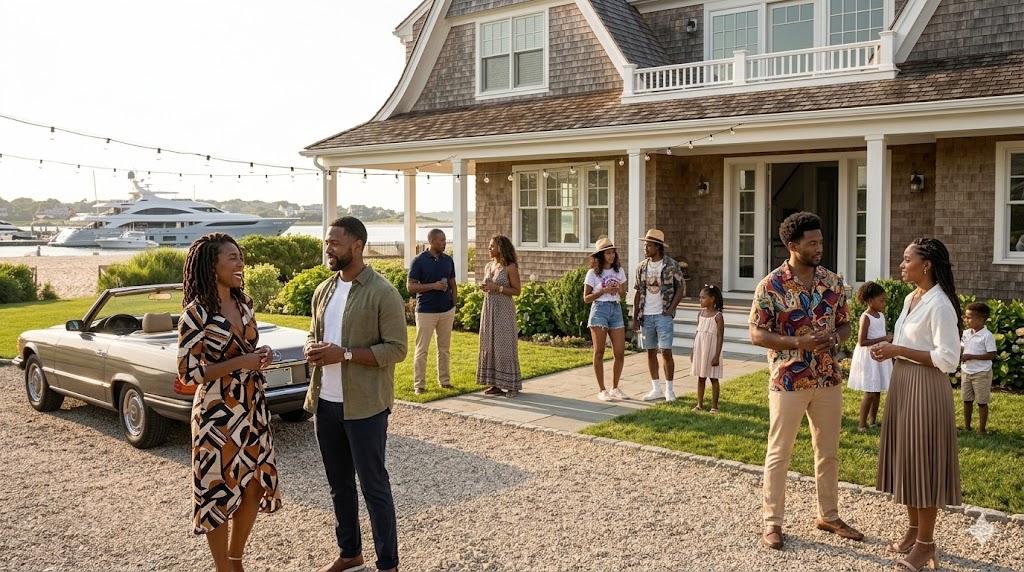
The Black Hamptons is a historic cluster of African-American beachfront communities located in Sag Harbor on Long Island, New York. These communities emerged during the late 1940s, a time when racial segregation and discriminatory housing practices prevented Black Americans from purchasing property in traditional Hamptons resorts. In response to these barriers, African-American professionals, educators, and entrepreneurs created vacation communities where Black families could gather, enjoy leisure, and build generational wealth through land ownership.

The origins of the Black Hamptons are closely tied to Maude Terry, a Brooklyn schoolteacher who frequently vacationed in Sag Harbor. Terry envisioned a seaside retreat where Black families could enjoy the pleasures of summer without facing racial prejudice. Recognizing the scarcity of safe, welcoming spaces for African Americans along Long Island’s coast, she began to explore options for purchasing and developing land specifically for Black buyers.

Maude Terry was joined in her efforts by her sister, Amaza Lee Meredith, who was one of the first documented Black female architects in the United States. Meredith’s expertise in architecture and urban planning helped transform the raw land into a functional and attractive residential subdivision. She designed several of the first homes, combining practicality with aesthetic appeal, and ensuring that the community would be visually appealing while fostering a sense of pride among its residents.

Together, the Terry sisters created what would become the Sag Harbor Hills, Azurest, and Ninevah Beach neighborhoods. These three neighborhoods formed the core of what historians now call the SANS Historic District. Each neighborhood was deliberately planned to provide both privacy and a communal feel, with winding streets, beach access, and small parks that encouraged social interaction among residents.

Sag Harbor Hills became a popular summer destination for Black professionals such as doctors, lawyers, and academics. Its waterfront lots allowed families to enjoy beachside living and boating, creating a sense of leisure that had previously been denied due to racial segregation in other Hamptons communities. The neighborhood quickly became a hub of Black middle- and upper-class culture on the East Coast.

Azurest, the second neighborhood, was the subdivision that benefited most from Amaza Lee Meredith’s architectural vision. Featuring small, charming beach houses, Azurest attracted educators, artists, and entrepreneurs who sought a peaceful summer retreat. Its well-planned layout and proximity to the water made it especially desirable for families looking to spend extended summers in a safe and welcoming environment.

Ninevah Beach, the third primary neighborhood, expanded the Black Hamptons’ reach along the Sag Harbor coast. With additional beach access and residential lots, Ninevah Beach allowed the growing community to accommodate more families and strengthen the cultural and social bonds among residents. Over time, the three neighborhoods formed a contiguous enclave that became synonymous with African-American leisure and affluence.

The initial purchase of land and construction of homes was not without challenges. Most mainstream banks refused to issue mortgages to African-American buyers, a discriminatory practice known as redlining. This barrier could have prevented many families from acquiring property in the Black Hamptons, but community organizers developed cooperative financing strategies that allowed buyers to pool resources, invest in land collectively, and overcome systemic discrimination.

The cooperative financing model was essential for building generational wealth. By purchasing property in Sag Harbor, Black families were able to transfer assets to subsequent generations, securing long-term financial stability. Unlike many urban African-American communities that suffered from systemic disinvestment, the Black Hamptons offered a rare opportunity for homeownership in a desirable coastal location.

The Black Hamptons quickly gained a reputation as a cultural hub. Prominent entertainers and civil-rights advocates began visiting or establishing homes in the community. Lena Horne, the legendary singer and actress, purchased property in Sag Harbor, signaling the area’s growing prestige. Her presence attracted other artists and performers seeking a welcoming, affluent Black community on the East Coast.

Jazz legend Duke Ellington also visited the Black Hamptons, further enhancing its cultural cachet. Ellington’s ties to the area underscored the neighborhood’s appeal to Black artists and performers who were looking for both privacy and prestige. Similarly, civil-rights activist and performer Harry Belafonte was associated with the enclave, linking the community to a broader narrative of Black empowerment and visibility.

Entrepreneur and media personality B. Smith owned property in the Black Hamptons as well. Her investment reflected the community’s appeal to African-American professionals and business leaders who wanted summer residences that provided both status and cultural connection. Former NBA star Allan Houston is another figure linked to Sag Harbor, further illustrating the area’s appeal to accomplished Black individuals.

Over time, the Black Hamptons became a symbol of African-American achievement. While the area was originally created as a vacation community, its cultural and financial significance extended far beyond leisure. It represented the triumph of vision, organization, and resilience in the face of systemic racism.

Financially, property in the Black Hamptons has appreciated dramatically. Homes that once sold for a few thousand dollars now range from $1 million to several million, depending on size, location, and proximity to the water. This growth has both preserved and challenged the community’s identity, as rising property values make it increasingly difficult for younger generations or middle-class families to maintain ownership.

The influx of wealth has attracted outside investors and developers who sometimes purchase modest homes, demolish them, and build large luxury estates. While this trend reflects the desirability of the area, it also raises concerns about gentrification and the erasure of the historic Black cultural identity embedded in Sag Harbor Hills, Azurest, and Ninevah Beach.

Residents and preservation advocates have responded by seeking official recognition and protection for their neighborhoods. In 2019, the three communities were added to the National Register of Historic Places, acknowledging their significance as rare African-American beachfront enclaves and preserving their historical and cultural legacy for future generations.

Today, the Black Hamptons continues to attract influential African Americans, including entertainers, athletes, and business leaders, who value both the cultural history and the leisure opportunities of the area. It serves as a summer refuge, a gathering place, and a living testament to African-American resilience and achievement.

Despite challenges, including rising property costs and external development pressures, the Black Hamptons remains a unique symbol of Black wealth, cultural pride, and community organization. Efforts by local associations aim to maintain the historic character of the neighborhoods while balancing the realities of a highly competitive real estate market.

The Black Hamptons stands as both a historical and contemporary statement: it reflects the triumph of African Americans over systemic barriers while highlighting the ongoing importance of preserving culturally significant spaces. The neighborhoods continue to foster social cohesion, cultural celebration, and intergenerational wealth within the African-American community.

Its legacy also serves as a model for other historically marginalized groups seeking to protect and maintain culturally significant residential spaces. The Black Hamptons’ story demonstrates how deliberate planning, community cooperation, and visionary leadership can create enduring cultural and economic value.

In conclusion, the Black Hamptons is more than a vacation community; it is a testament to African-American perseverance, ingenuity, and the pursuit of leisure, culture, and wealth in a society that historically sought to limit these opportunities. Its founders, residents, and visitors have ensured that the community remains a meaningful space for celebrating Black identity, accomplishment, and generational legacy.

References

Beglane, T. (2019). African-American neighborhoods in Sag Harbor added to NYS Historic Register. WSHU Public Radio. https://www.wshu.org/news/2019-03-27/african-american-neighborhoods-in-sag-harbor-added-to-nys-historic-register

Jefferson, A. R. (2024). Long Road to Freedom: African American History on Long Island. Long Island Museum. https://longislandmuseum.org/wp-content/uploads/2024/09/Long-Road-to-Freedom-Book-FINAL.pdf

Leland, J. (2016). Investors move next door, unsettling a Black beachside enclave. The New York Times.

McMullen, T. (2017). Historically Black beach enclaves are fighting to save their identity. The Washington Post. https://www.washingtonpost.com/realestate/surf-sand-and-race/2017/07/26/f674c5be-61bb-11e7-84a1-a26b75ad39fe_story.html

Sag Harbor Hills, Azurest, and Ninevah Beach Subdivisions Historic District. (n.d.). Wikipedia. https://en.wikipedia.org/wiki/Sag_Harbor_Hills%2C_Azurest%2C_and_Ninevah_Beach_Subdivisions_Historic_District

27 East. (2019). Historic African-American summer communities in Sag Harbor could receive national recognition. https://www.27east.com/east-hampton-press/nehsans0620-1298259
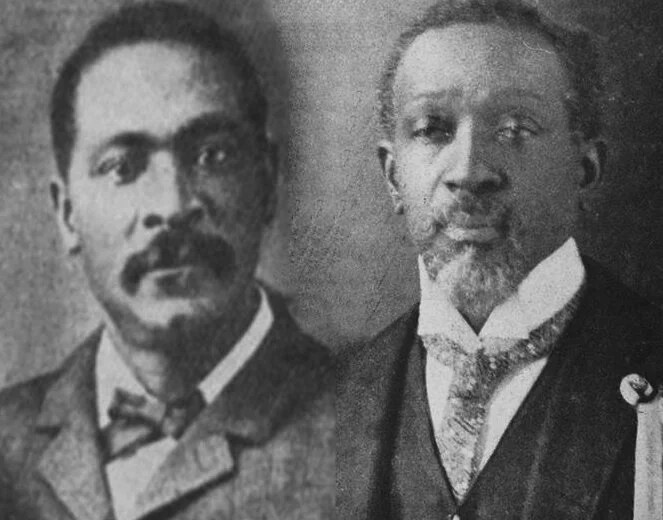

Black History: Mound Bayou – A Sovereign Dream in the Delta’s Shadow.

In the aftermath of Reconstruction, when the promise of Black citizenship was steadily being dismantled across the American South, a remarkable experiment in self-determination emerged in the Mississippi Delta. Mound Bayou was founded in 1887 as an all-Black town built on the principles of economic independence, political autonomy, and racial dignity. Conceived during the height of Jim Crow repression, it stood as a bold counter-narrative to white supremacy—an intentional “fortress” of Black sovereignty in hostile territory.

The founders of Mound Bayou were Isaiah T. Montgomery and his cousin Benjamin T. Green, both formerly enslaved men and sons of Benjamin Montgomery, who had been enslaved by Joseph E. Davis, brother of Jefferson Davis. Benjamin Montgomery had managed the Davis plantation and developed substantial administrative and agricultural expertise, which he passed on to his sons. After emancipation, Isaiah and Benjamin Green carried forward a vision of Black landownership and community governance rooted in self-reliance.

The Mississippi Delta in the late nineteenth century was fertile ground agriculturally but socially perilous for Black people. Sharecropping and debt peonage trapped many formerly enslaved families in cycles of economic dependency. Lynching and racial violence were pervasive. In this climate, Montgomery and Green sought to carve out a space where Black citizens could exercise full civic participation without white interference. They purchased land from the Louisville, New Orleans, and Texas Railway and began plotting a town.

Mound Bayou was deliberately located along the railroad line, which provided economic access while preserving geographic separation. The founders named the town after the nearby bayou and ancient Native American mounds in the region. From its inception, the town was self-governed by Black officials—mayors, police officers, merchants, and educators—forming one of the earliest fully autonomous Black municipalities in the United States.

Economic development was central to its survival. The town established cotton gins, general stores, and farms. Over time, it developed banks, insurance companies, and schools. Black professionals—doctors, lawyers, and teachers—found refuge and opportunity there. By the early twentieth century, Mound Bayou had become a symbol of Black enterprise, often cited alongside other independent Black communities such as Tulsa’s Greenwood District.

One of the most discussed early incidents illustrating the town’s social boundaries involved a white train conductor or traveler who reportedly stepped off a train in Mound Bayou, unaware that it was an all-Black town. According to local oral histories, he expected the usual racial deference accorded to whites in the South. Instead, he encountered a community that did not operate under Jim Crow norms of subservience. The shock was mutual: white intrusion was rare, and the town’s residents made clear that governance and authority there rested in Black hands. While versions of the story vary, the incident became emblematic of Mound Bayou’s guarded autonomy—a literal and symbolic “fortress” in the Delta.

Despite its ideals, the town’s leadership faced difficult political choices. In 1890, Isaiah T. Montgomery served as a delegate to the Mississippi Constitutional Convention. In a controversial move, he supported provisions that effectively disenfranchised many Black voters through poll taxes and literacy tests. Montgomery argued that political compromise was necessary to protect Mound Bayou from violent reprisal and to ensure its survival within a white-dominated state. His decision has remained a subject of scholarly debate, reflecting tensions between pragmatism and principle.

During the early 1900s, national Black leaders took notice. Booker T. Washington visited Mound Bayou and praised it as a model of Black self-help and industrial progress. Washington’s philosophy of economic advancement before political agitation aligned with Montgomery’s approach. The town was frequently cited in speeches and publications as proof that Black communities could thrive independently.

By 1907, Mound Bayou had a hospital, the Taborian Hospital, founded by the Knights and Daughters of Tabor, a Black fraternal organization. The hospital became one of the most important medical facilities for African Americans in Mississippi, providing care at a time when segregation barred them from white institutions. Health care, education, and business infrastructure reinforced the town’s status as a refuge.

The Great Migration altered the town’s trajectory. As millions of African Americans left the South for northern and western cities, Mound Bayou experienced population fluctuations. Mechanization in agriculture reduced labor needs, and economic challenges mounted. Yet the town endured, maintaining its identity as a symbol of Black resilience.

During the Civil Rights Movement, Mound Bayou again became significant. Activists and organizations such as the Student Nonviolent Coordinating Committee found support networks there. The town’s history of self-governance made it receptive to voter registration drives and community organizing efforts aimed at dismantling Jim Crow laws.

Federal anti-poverty programs in the 1960s, including initiatives under President Lyndon B. Johnson’s War on Poverty, brought new investments into the Mississippi Delta. Mound Bayou became a site for community health centers and economic development programs, linking its nineteenth-century origins to twentieth-century struggles for structural reform.

Throughout its existence, the town has embodied a paradox: it was both separatist in structure and integrative in aspiration. Its founders did not seek isolation for its own sake but protection from violence and degradation. In doing so, they created a civic experiment in Black nationalism long before that term gained popular currency.

The legacy of Isaiah T. Montgomery remains complex. To some, he was a visionary architect of Black autonomy; to others, his compromise at the 1890 convention symbolized accommodation to white supremacy. Yet without his political navigation, Mound Bayou may not have survived its vulnerable infancy.

Mound Bayou’s story also intersects with broader patterns of Black town formation across the South and West, including communities founded in response to racial terror and land exclusion. These towns were acts of resistance—physical manifestations of a people determined to claim space, cultivate land, and govern themselves.

Culturally, Mound Bayou fostered a sense of dignity that countered prevailing narratives of Black inferiority. Children grew up seeing Black authority normalized—Black teachers instructing, Black officers enforcing law, Black entrepreneurs building wealth. This psychological impact cannot be overstated in a region structured by racial hierarchy.

Though its population has declined from its early peak, the town remains incorporated and inhabited. Its very endurance is testimony to the durability of its founding vision. Streets laid in 1887 still carry the memory of aspiration etched into Delta soil.

Today, historians revisit Mound Bayou as part of a larger reconsideration of Reconstruction and its aftermath. Rather than viewing the post-Reconstruction era solely through the lens of Black disenfranchisement, scholars now emphasize Black institution-building and strategic survival. Mound Bayou stands at the center of that reinterpretation.

It was not merely a town but an argument—an embodied thesis that formerly enslaved people could master land, capital, and governance despite systemic obstruction. In the middle of the Delta, surrounded by plantations that once symbolized bondage, rose a community determined to rewrite destiny.

Mound Bayou endures as a sovereign dream carved from cotton fields and conviction. It reminds the nation that even under siege, Black Americans built fortresses of hope—self-fashioned citadels of dignity in the shadow of oppression.


References

Anderson, J. D. (1988). The education of Blacks in the South, 1860–1935. University of North Carolina Press.

Franklin, J. H., & Moss, A. A. (2000). From slavery to freedom: A history of African Americans (8th ed.). McGraw-Hill.

Green, A. (1999). Mound Bayou: An all-Black town in the Mississippi Delta. Mississippi Historical Society.

Montgomery, I. T. (1890). Speech at the Mississippi Constitutional Convention.

Washington, B. T. (1901). Up from slavery. Doubleday.

Woodruff, N. (2003). American Congo: The African American freedom struggle in the Delta. Harvard University Press.

Black Economics: The Legacy of Black Economics & Excellence.

This photograph is the property of its respective owners. No copyright infringement intended.

Black economics is deeply intertwined with the history, resilience, and ingenuity of Black communities worldwide. From the era of enslavement to the present, Black individuals have consistently demonstrated resourcefulness and entrepreneurial spirit, often in the face of systemic oppression (Wilson, 2012).

The legacy of Black excellence is rooted in survival. During slavery, enslaved Africans developed economic skills, such as agriculture, carpentry, and trade, which allowed them to generate personal wealth and support their communities under oppressive conditions (Berlin, 2003).

Following emancipation, Black communities sought economic autonomy through the establishment of businesses, banks, and cooperative enterprises. This era saw the rise of Black Wall Streets, with Tulsa’s Greenwood District being the most notable example, showcasing a thriving economy built entirely by Black hands (Harris, 2002).

Despite violent disruptions and discriminatory policies, Black entrepreneurs continued to innovate. Figures like Madam C.J. Walker, the first female self-made millionaire in America, demonstrated that economic success could serve as a platform for empowerment and societal change (Snyder, 1989).

Education has consistently been a cornerstone of Black economic advancement. Historically, Black communities prioritized schools, literacy, and vocational training as tools to break cycles of poverty and build generational wealth (Anderson, 1988).

Black excellence in economics is not confined to the United States. Across Africa and the Caribbean, Black-owned enterprises and cooperative movements have contributed significantly to regional economic growth, reinforcing the global nature of Black entrepreneurial achievement (Agyeman, 2015).

Modern Black businesses encompass a wide spectrum—from fashion and entertainment to technology and finance. These ventures demonstrate innovation and cultural influence while creating employment opportunities within and beyond Black communities (Brown & Dancy, 2018).

Black women have played a pivotal role in this economic legacy. Entrepreneurs like Oprah Winfrey and Rihanna have leveraged creativity and business acumen to build billion-dollar enterprises, inspiring future generations to pursue financial independence (Hooks, 2000).

The historical challenges Black entrepreneurs face are significant, including systemic racism, redlining, limited access to capital, and discriminatory banking practices. Yet, resilience and community solidarity have enabled many to thrive despite these barriers (Oliver, 2006).

Community-based economic strategies, such as mutual aid societies, credit unions, and co-ops, have historically fortified Black communities. These initiatives fostered financial literacy, collective wealth, and intergenerational support, laying the foundation for sustainable growth (Gills, 2009).

Black excellence is also reflected in professional achievement and leadership. Black economists, financiers, and business leaders have challenged stereotypes, influencing policy and demonstrating that economic mastery is not bound by race (Herring & Henderson, 2012).

Cultural entrepreneurship—where art, music, and media are monetized—has created pathways for wealth that simultaneously celebrate Black heritage. Hip-hop, for instance, became both a cultural and economic phenomenon, exemplifying the fusion of creativity and business (Chang, 2005).

Philanthropy remains a critical aspect of Black economic legacy. Historically, successful Black entrepreneurs have reinvested in their communities, funding education, healthcare, and social programs, thus reinforcing cycles of empowerment (Darity & Hamilton, 2012).

The Black economic experience highlights the importance of generational wealth. Building assets, investing in property, and developing financial literacy are critical strategies that sustain Black families and communities over time (Shapiro, 2004).

Modern initiatives, such as Black-owned banks and venture capital funds, aim to address historic inequities by providing capital and resources to underserved Black entrepreneurs, reflecting a continued commitment to economic excellence (Brown & Dancy, 2018).

Education, mentorship, and networking remain vital for sustaining Black economic growth. Programs that connect emerging entrepreneurs with experienced leaders cultivate both skills and confidence, ensuring the next generation carries forward the legacy of excellence (Agyeman, 2015).

Despite systemic barriers, Black communities continue to innovate. Technology startups, e-commerce platforms, and creative industries are areas where Black excellence is visible, challenging conventional economic paradigms and asserting influence in global markets (Harris, 2002).

Black economic thought also intersects with activism. Advocates for reparations, equitable lending practices, and fair labor policies aim to dismantle structures that inhibit Black wealth accumulation, reinforcing that economic empowerment is inseparable from social justice (Darity & Hamilton, 2012).

The legacy of Black excellence in economics is not solely measured in dollars. It is measured in resilience, knowledge, cultural influence, and the ability to transform adversity into opportunity. This holistic perspective underscores the enduring power of Black economic agency (Wilson, 2012).

Ultimately, celebrating Black economics is a recognition of a legacy forged through ingenuity, perseverance, and vision. It is a testament to the capacity of Black communities to create wealth, sustain culture, and inspire future generations toward both economic and personal excellence (Hooks, 2000).


References

Agyeman, J. (2015). Black entrepreneurship in Africa: Strategies for sustainable growth. Routledge.

Anderson, J. D. (1988). The education of Blacks in the South, 1860–1935. University of North Carolina Press.

Berlin, I. (2003). Generations of captivity: A history of African-American slaves. Harvard University Press.

Brown, D. L., & Dancy, T. E. (2018). Economic empowerment in Black communities. Journal of Black Studies, 49(2), 134–152.

Chang, J. (2005). Can’t stop won’t stop: A history of the hip-hop generation. St. Martin’s Press.

Darity, W., & Hamilton, D. (2012). African Americans and the wealth gap: Social justice and reparations. Palgrave Macmillan.

Gills, J. (2009). Cooperative economics and the Black community: Historical perspectives. Journal of Pan African Studies, 3(1), 55–73.

Harris, L. (2002). Black Wall Street: The rise and fall of Greenwood, Tulsa. University of Oklahoma Press.

Herring, C., & Henderson, L. (2012). Skin deep: How race and complexion matter in the workplace. Annual Review of Sociology, 38, 353–374.

Hooks, B. (2000). Where we stand: Class matters. Routledge.

Oliver, M. L. (2006). Black wealth/white wealth: A new perspective on racial inequality. Routledge.

Shapiro, T. (2004). The hidden cost of being African American: How wealth perpetuates inequality. Oxford University Press.

Wilson, W. J. (2012). The truly disadvantaged: The inner city, the underclass, and public policy. University of Chicago Press.