
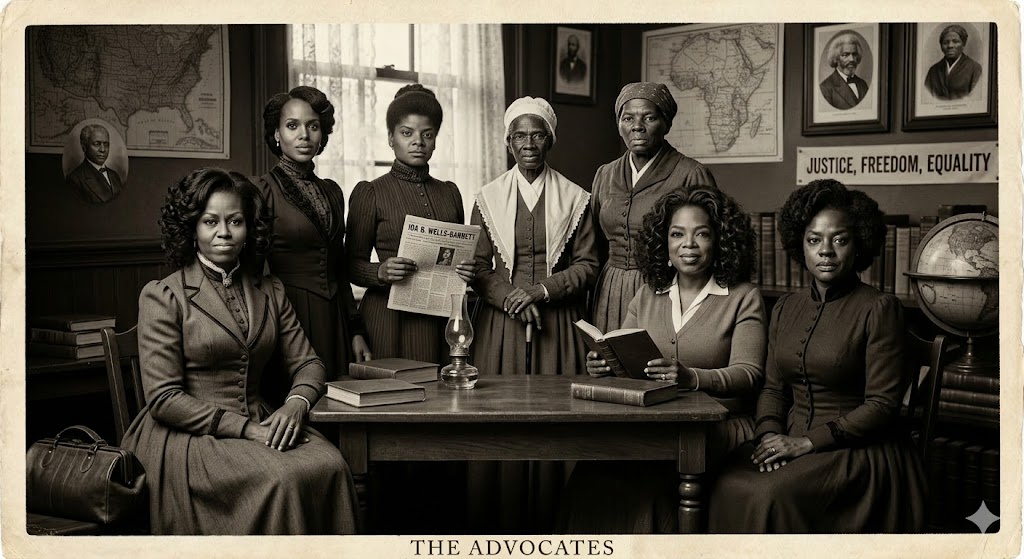
Dark-skinned women have long shaped history, art, culture, and politics, yet their contributions are often overlooked or undervalued. These women embody resilience, brilliance, and transformative power that defy societal limitations.
Harriet Tubman is one of the most iconic figures in American history. Born into slavery, she risked her life repeatedly to lead enslaved people to freedom via the Underground Railroad. Her courage and strategic brilliance exemplify the profound impact of dark-skinned women on the fight for justice.
Ida B. Wells transformed journalism and activism by exposing lynching and systemic racial violence. Through her fearless reporting, she challenged entrenched social norms and advocated for civil rights long before the modern civil rights movement.
Sojourner Truth, born into slavery, became a compelling orator and activist for abolition and women’s rights. Her speech “Ain’t I a Woman?” continues to inspire generations, illustrating the intersection of race and gender in advocacy.
Michelle Obama redefined the role of First Lady, advocating for education, health, and empowerment for young women. Her public presence and initiatives have had global influence, elevating the visibility and authority of Black women in leadership.
Viola Davis has reshaped Hollywood’s understanding of talent and representation. Her Emmy, Tony, and Academy Awards highlight not only her personal achievements but also the need for equitable opportunities for women of color in the entertainment industry.
Lupita Nyong’o’s Oscar-winning performance in 12 Years a Slave brought grace, strength, and visibility to dark-skinned actresses worldwide. Beyond acting, she challenges beauty standards and inspires young women to embrace their natural skin.
Angela Davis, a scholar and activist, has dedicated her life to fighting for civil rights, prison reform, and gender equality. Her fearless advocacy demonstrates the intellectual and moral leadership of Black women in public discourse.
Toni Morrison used literature to give voice to Black experiences and histories. Through novels like Beloved and The Bluest Eye, she illuminated the struggles and triumphs of dark-skinned women, creating a legacy of empowerment through storytelling.
Maya Angelou, a poet, singer, and activist, intertwined artistry and advocacy. Her work celebrated Black identity, resilience, and self-expression, leaving an enduring cultural imprint on generations of readers and performers.
Serena Williams transformed sports and broke racial and gender barriers in tennis. Her dominance on the court and influence off it showcase the resilience and versatility of dark-skinned women excelling in highly visible arenas.
Shirley Chisholm broke political barriers as the first Black woman elected to Congress and the first to run for a major party presidential nomination. Her courage inspired countless women to pursue leadership roles.
Oprah Winfrey’s rise from poverty to global influence demonstrates the transformative power of determination and vision. Her philanthropy and media presence have created platforms for countless underrepresented voices.
Madam C.J. Walker became the first self-made female millionaire in the U.S., creating economic opportunities and challenging social barriers for Black women in the early 20th century.
Mae Jemison, the first Black woman in space, shattered barriers in STEM and exploration, inspiring generations of girls to pursue careers in science and technology.
Zora Neale Hurston preserved African American folklore and heritage through literature and anthropology, elevating cultural narratives often ignored in mainstream history.
Coretta Scott King continued her husband’s civil rights work, advocating for equality, peace, and justice. Her leadership exemplifies the often unseen roles women play in movements for societal transformation.
Alice Walker, author of The Color Purple, illuminated the lived experiences of Black women, addressing trauma, resilience, and empowerment, shaping contemporary conversations around race and gender.
Ella Baker’s grassroots activism was pivotal in the civil rights movement, emphasizing collective leadership and community empowerment over personal recognition.
Shonda Rhimes revolutionized television by centering Black female characters in mainstream media, creating cultural influence and changing industry standards for representation.
Audre Lorde, a poet and activist, challenged oppression through her writing, encouraging Black women to embrace their voices and assert their identities unapologetically.
Angela Rye’s political commentary and advocacy work amplify marginalized voices, highlighting the continued need for equity and justice in modern society.
Kerry Washington blends artistry and activism, using her platform to engage in civic causes while portraying multidimensional Black women in film and television.
Ruby Dee’s career as an actress and activist highlighted the intersection of artistry and social advocacy, reflecting a lifelong dedication to both craft and justice.
Maya Rudolph, through comedy and performance, brings intelligence, cultural commentary, and visibility to dark-skinned women in entertainment, expanding the narrative of influence.
These women, past and present, demonstrate the unstoppable force of dark-skinned women in shaping history, culture, and society. Their achievements remind us that leadership, talent, and courage are not defined by visibility but by impact.
By celebrating their stories, society acknowledges not only their individual achievements but also the broader legacy of dark-skinned women who continue to inspire and transform the world.
Through their lives, we see a pattern: resilience, brilliance, and the ability to break barriers are hallmarks of dark-skinned women. Their impact is profound, enduring, and unstoppable.
The ongoing work of highlighting, recognizing, and celebrating these women is essential to rewriting narratives and empowering future generations. Their stories remind us that greatness often emerges in spite of societal neglect.
The legacies of these extraordinary women prove that being unseen or uncelebrated does not diminish influence. Their courage, intellect, and creativity continue to change the world in every sphere.
Ultimately, dark-skinned women have always been drivers of progress. By learning from and amplifying their stories, we ensure that their transformative power is recognized, celebrated, and passed on to inspire the leaders of tomorrow.
References
The Holy Bible, King James Version. (1611).
Clinton, C. (2004). Harriet Tubman: The Road to Freedom. Little, Brown.
Obama, M. (2018). Becoming. Crown Publishing Group.
Davis, V. (Interviews and speeches). Various sources.
Nyong’o, L. (Interviews, various). Media coverage and awards.
Walker, A. (1982). The Color Purple. Harcourt.
Angelou, M. (1993). Phenomenal Woman: Four Poems Celebrating Women. Random House.
Hooks, B. (1992). Black Looks: Race and Representation. South End Press.
Gates, H. L., Jr. (2019). Stony the Road: Reconstruction, White Supremacy, and the Rise of Jim Crow. Penguin Press.
Winfrey, O. (2007). The Wisdom of Sundays. Flatiron Books.
Discover more from THE BROWN GIRL DILEMMA
Subscribe to get the latest posts sent to your email.
 THE BROWN GIRL DILEMMA