
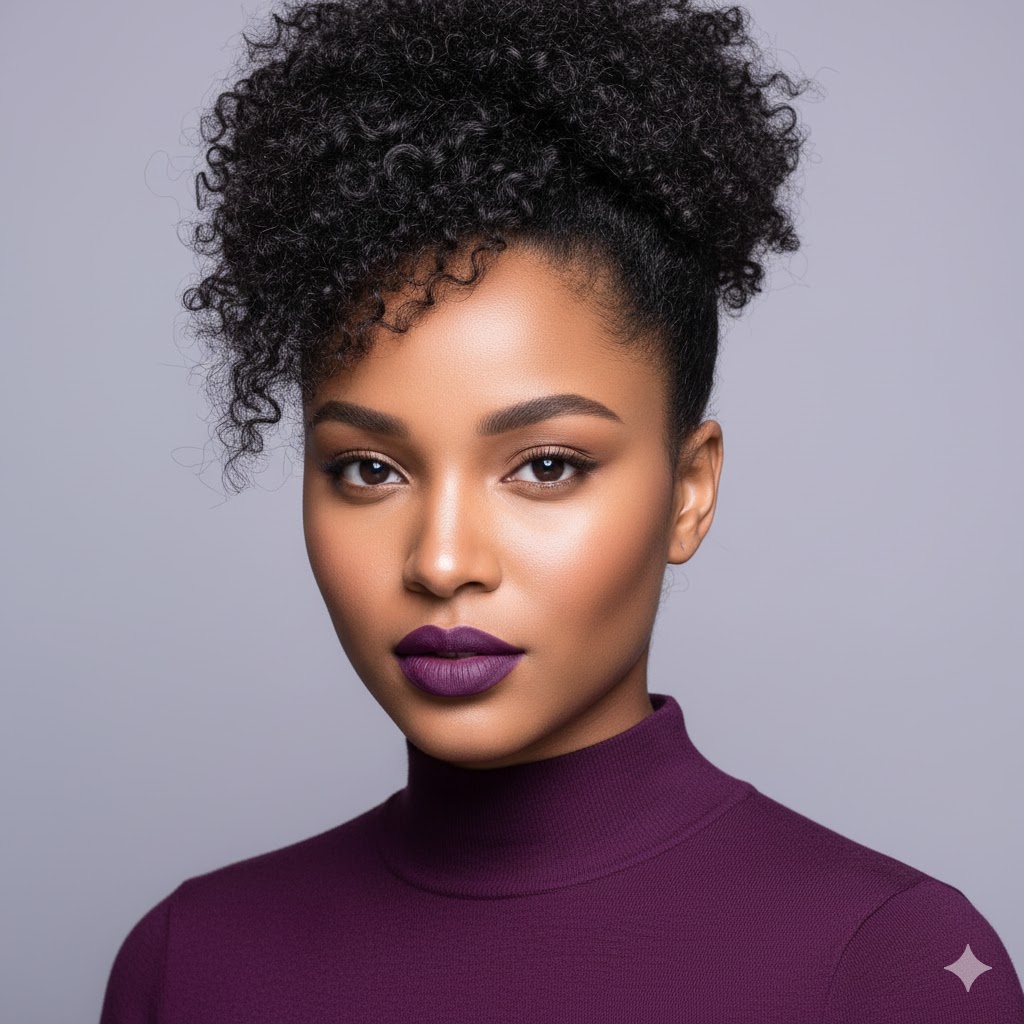
From her earliest memories, the brown girl learned that the world often measured beauty through a narrow lens. Yet even as she navigated these constraints, she discovered that her own radiance came from a deeper, more spiritual source—one that could not be dimmed by society’s expectations.
Growing up, she noticed subtle differences in the way people were treated. Lighter meant better. Paler meant prettier. Straighter hair meant more acceptable. These unspoken rules shaped how she saw herself, but they also birthed questions that would redefine her journey.
She soon realized that colorism—the preferential treatment of lighter skin within and outside the Black community—was not merely personal but historical. It was a legacy of colonialism that still lingered in classrooms, families, and media portrayals (Hunter, 2007).
At school, she felt the quiet sting of invisibility. Teachers praised the girls who looked nothing like her. Boys whispered admiration for complexions far from hers. Yet the brown girl refused to shrink; instead, she learned to observe, analyze, and grow stronger through insight.
Her grandmother became her first source of light. With stories of African queens, biblical women of strength, and ancestral wisdom, she taught the brown girl that her melanin was a sacred inheritance, not a flaw (hooks, 2000).
In adolescence, she began experimenting with beauty rituals—some meant to enhance her features and others designed to change them. The pressure to conform was heavy, but each time she looked in the mirror, she felt a tug toward authenticity.
The turning point came when she noticed that even those who met society’s beauty standards still struggled with insecurity. It revealed a powerful truth: beauty built on comparison is fragile, but beauty rooted in identity is unbreakable (Hall, 1997).
She started seeking images that reflected her. Books by Black women, films with diverse representation, and social movements celebrating melanin-rich beauty began to shift her understanding of self (Banks, 2017).
Her world widened. Lupita Nyong’o’s presence on global stages, the rise of natural hair movements, and conversations about inclusivity in fashion reshaped the cultural landscape in which she lived (Ferguson, 2015).
Even with these changes, she still faced microaggressions—people touching her hair without consent, questioning her heritage, or assuming she was less refined. Each encounter reminded her that representation does not erase bias overnight (Crenshaw, 1991).
Yet she refused to internalize these wounds. Instead, she began documenting her experiences, writing poetry, and sharing her story with others. She discovered that vulnerability could become activism.
As she stepped into adulthood, she noticed how beauty standards shaped professional and social opportunities. Those seen as “more presentable” were often treated with more respect. The brown girl learned to navigate these spaces with grace but also with a sharpened awareness of systemic bias.
Her faith deepened her resilience. Scriptures reminding her that she was “fearfully and wonderfully made” became anchors, grounding her in divine identity rather than societal ranking.
She also discovered a sisterhood among other brown girls—women who shared her struggles, victories, and dreams. Together, they formed communities where their stories were honored and their brilliance celebrated.
In time, she embraced her melanin as a symbol of survival. It held the memory of ancestors who endured displacement, injustice, and generational pain yet still carried glory in their skin.
Her career became another avenue of transformation. Whether she pursued art, leadership, education, or business, she found ways to elevate voices like hers and challenge the beauty hierarchy that once confined her.
She learned that her story was more than personal. It was political, cultural, and spiritual. Her journey illuminated the intersections of race, gender, and color, revealing how they shape identity in a world still learning to see fully.
The brown girl became a woman who no longer chased sunlight to feel seen. She recognized that she carried her own light—one born of resilience, culture, and faith.
Today, she stands boldly in the fullness of her identity. She knows that sunlight does not give her worth; it only reflects what has always been there.
In her triumph, she leaves a path for others—an invitation for every brown girl to embrace her own radiance and rewrite the narrative: you are enough, you are beautiful, and your melanin is a miracle.
References
- Banks, T. (2017). Representation and beauty in Black media: Celebrating melanin-rich identity. Journal of Black Studies, 48(7), 657–678.
- Collins, P. H. (2000). Black feminist thought: Knowledge, consciousness, and the politics of empowerment. Routledge.
- Crenshaw, K. (1991). Mapping the margins: Intersectionality, identity politics, and violence against women of color. Stanford Law Review, 43(6), 1241–1299.
- Ferguson, R. (2015). Representation matters: African American women in contemporary media. Cultural Studies Review, 21(2), 45–67.
- Hall, R. E. (1997). Beauty and power: Race, gender, and the visual culture of Black women. Feminist Media Studies, 3(1), 23–45.
- hooks, bell. (2000). Feminism is for everybody: Passionate politics. South End Press.
- Hunter, M. L. (2007). The persistent problem of colorism: Skin tone, status, and inequality. Sociology Compass, 1(1), 237–254.
Discover more from THE BROWN GIRL DILEMMA
Subscribe to get the latest posts sent to your email.
 THE BROWN GIRL DILEMMA