
Historic Black Beach Communities
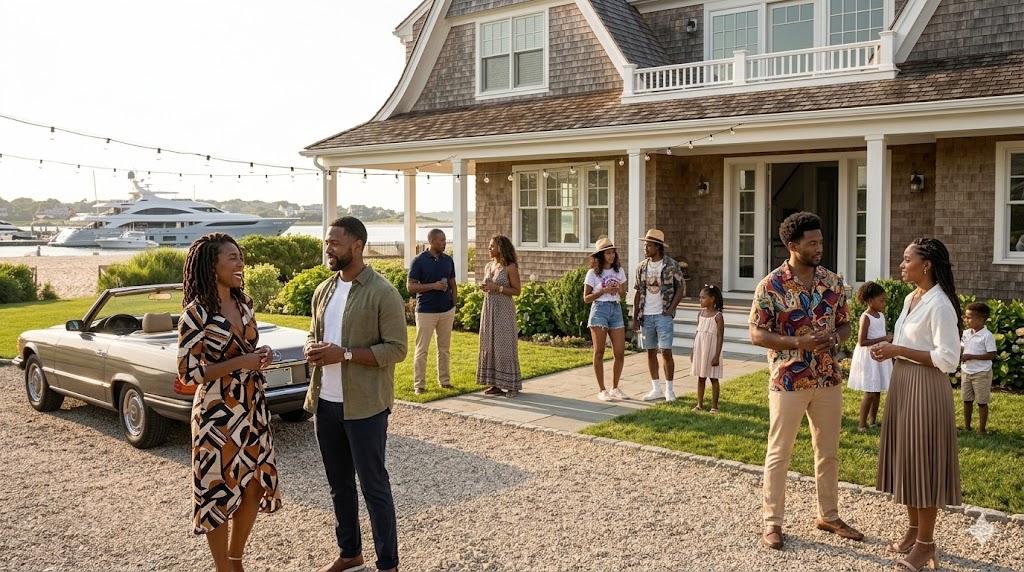
The Black Hamptons is a historic cluster of African-American beachfront communities located in Sag Harbor on Long Island, New York. These communities emerged during the late 1940s, a time when racial segregation and discriminatory housing practices prevented Black Americans from purchasing property in traditional Hamptons resorts. In response to these barriers, African-American professionals, educators, and entrepreneurs created vacation communities where Black families could gather, enjoy leisure, and build generational wealth through land ownership.
The origins of the Black Hamptons are closely tied to Maude Terry, a Brooklyn schoolteacher who frequently vacationed in Sag Harbor. Terry envisioned a seaside retreat where Black families could enjoy the pleasures of summer without facing racial prejudice. Recognizing the scarcity of safe, welcoming spaces for African Americans along Long Island’s coast, she began to explore options for purchasing and developing land specifically for Black buyers.
Maude Terry was joined in her efforts by her sister, Amaza Lee Meredith, who was one of the first documented Black female architects in the United States. Meredith’s expertise in architecture and urban planning helped transform the raw land into a functional and attractive residential subdivision. She designed several of the first homes, combining practicality with aesthetic appeal, and ensuring that the community would be visually appealing while fostering a sense of pride among its residents.
Together, the Terry sisters created what would become the Sag Harbor Hills, Azurest, and Ninevah Beach neighborhoods. These three neighborhoods formed the core of what historians now call the SANS Historic District. Each neighborhood was deliberately planned to provide both privacy and a communal feel, with winding streets, beach access, and small parks that encouraged social interaction among residents.
Sag Harbor Hills became a popular summer destination for Black professionals such as doctors, lawyers, and academics. Its waterfront lots allowed families to enjoy beachside living and boating, creating a sense of leisure that had previously been denied due to racial segregation in other Hamptons communities. The neighborhood quickly became a hub of Black middle- and upper-class culture on the East Coast.
Azurest, the second neighborhood, was the subdivision that benefited most from Amaza Lee Meredith’s architectural vision. Featuring small, charming beach houses, Azurest attracted educators, artists, and entrepreneurs who sought a peaceful summer retreat. Its well-planned layout and proximity to the water made it especially desirable for families looking to spend extended summers in a safe and welcoming environment.
Ninevah Beach, the third primary neighborhood, expanded the Black Hamptons’ reach along the Sag Harbor coast. With additional beach access and residential lots, Ninevah Beach allowed the growing community to accommodate more families and strengthen the cultural and social bonds among residents. Over time, the three neighborhoods formed a contiguous enclave that became synonymous with African-American leisure and affluence.
The initial purchase of land and construction of homes was not without challenges. Most mainstream banks refused to issue mortgages to African-American buyers, a discriminatory practice known as redlining. This barrier could have prevented many families from acquiring property in the Black Hamptons, but community organizers developed cooperative financing strategies that allowed buyers to pool resources, invest in land collectively, and overcome systemic discrimination.
The cooperative financing model was essential for building generational wealth. By purchasing property in Sag Harbor, Black families were able to transfer assets to subsequent generations, securing long-term financial stability. Unlike many urban African-American communities that suffered from systemic disinvestment, the Black Hamptons offered a rare opportunity for homeownership in a desirable coastal location.
The Black Hamptons quickly gained a reputation as a cultural hub. Prominent entertainers and civil-rights advocates began visiting or establishing homes in the community. Lena Horne, the legendary singer and actress, purchased property in Sag Harbor, signaling the area’s growing prestige. Her presence attracted other artists and performers seeking a welcoming, affluent Black community on the East Coast.
Jazz legend Duke Ellington also visited the Black Hamptons, further enhancing its cultural cachet. Ellington’s ties to the area underscored the neighborhood’s appeal to Black artists and performers who were looking for both privacy and prestige. Similarly, civil-rights activist and performer Harry Belafonte was associated with the enclave, linking the community to a broader narrative of Black empowerment and visibility.
Entrepreneur and media personality B. Smith owned property in the Black Hamptons as well. Her investment reflected the community’s appeal to African-American professionals and business leaders who wanted summer residences that provided both status and cultural connection. Former NBA star Allan Houston is another figure linked to Sag Harbor, further illustrating the area’s appeal to accomplished Black individuals.
Over time, the Black Hamptons became a symbol of African-American achievement. While the area was originally created as a vacation community, its cultural and financial significance extended far beyond leisure. It represented the triumph of vision, organization, and resilience in the face of systemic racism.
Financially, property in the Black Hamptons has appreciated dramatically. Homes that once sold for a few thousand dollars now range from $1 million to several million, depending on size, location, and proximity to the water. This growth has both preserved and challenged the community’s identity, as rising property values make it increasingly difficult for younger generations or middle-class families to maintain ownership.
The influx of wealth has attracted outside investors and developers who sometimes purchase modest homes, demolish them, and build large luxury estates. While this trend reflects the desirability of the area, it also raises concerns about gentrification and the erasure of the historic Black cultural identity embedded in Sag Harbor Hills, Azurest, and Ninevah Beach.
Residents and preservation advocates have responded by seeking official recognition and protection for their neighborhoods. In 2019, the three communities were added to the National Register of Historic Places, acknowledging their significance as rare African-American beachfront enclaves and preserving their historical and cultural legacy for future generations.
Today, the Black Hamptons continues to attract influential African Americans, including entertainers, athletes, and business leaders, who value both the cultural history and the leisure opportunities of the area. It serves as a summer refuge, a gathering place, and a living testament to African-American resilience and achievement.
Despite challenges, including rising property costs and external development pressures, the Black Hamptons remains a unique symbol of Black wealth, cultural pride, and community organization. Efforts by local associations aim to maintain the historic character of the neighborhoods while balancing the realities of a highly competitive real estate market.
The Black Hamptons stands as both a historical and contemporary statement: it reflects the triumph of African Americans over systemic barriers while highlighting the ongoing importance of preserving culturally significant spaces. The neighborhoods continue to foster social cohesion, cultural celebration, and intergenerational wealth within the African-American community.
Its legacy also serves as a model for other historically marginalized groups seeking to protect and maintain culturally significant residential spaces. The Black Hamptons’ story demonstrates how deliberate planning, community cooperation, and visionary leadership can create enduring cultural and economic value.
In conclusion, the Black Hamptons is more than a vacation community; it is a testament to African-American perseverance, ingenuity, and the pursuit of leisure, culture, and wealth in a society that historically sought to limit these opportunities. Its founders, residents, and visitors have ensured that the community remains a meaningful space for celebrating Black identity, accomplishment, and generational legacy.
References
Beglane, T. (2019). African-American neighborhoods in Sag Harbor added to NYS Historic Register. WSHU Public Radio. https://www.wshu.org/news/2019-03-27/african-american-neighborhoods-in-sag-harbor-added-to-nys-historic-register
Jefferson, A. R. (2024). Long Road to Freedom: African American History on Long Island. Long Island Museum. https://longislandmuseum.org/wp-content/uploads/2024/09/Long-Road-to-Freedom-Book-FINAL.pdf
Leland, J. (2016). Investors move next door, unsettling a Black beachside enclave. The New York Times.
McMullen, T. (2017). Historically Black beach enclaves are fighting to save their identity. The Washington Post. https://www.washingtonpost.com/realestate/surf-sand-and-race/2017/07/26/f674c5be-61bb-11e7-84a1-a26b75ad39fe_story.html
Sag Harbor Hills, Azurest, and Ninevah Beach Subdivisions Historic District. (n.d.). Wikipedia. https://en.wikipedia.org/wiki/Sag_Harbor_Hills%2C_Azurest%2C_and_Ninevah_Beach_Subdivisions_Historic_District
27 East. (2019). Historic African-American summer communities in Sag Harbor could receive national recognition. https://www.27east.com/east-hampton-press/nehsans0620-1298259
Discover more from THE BROWN GIRL DILEMMA
Subscribe to get the latest posts sent to your email.
 THE BROWN GIRL DILEMMA