
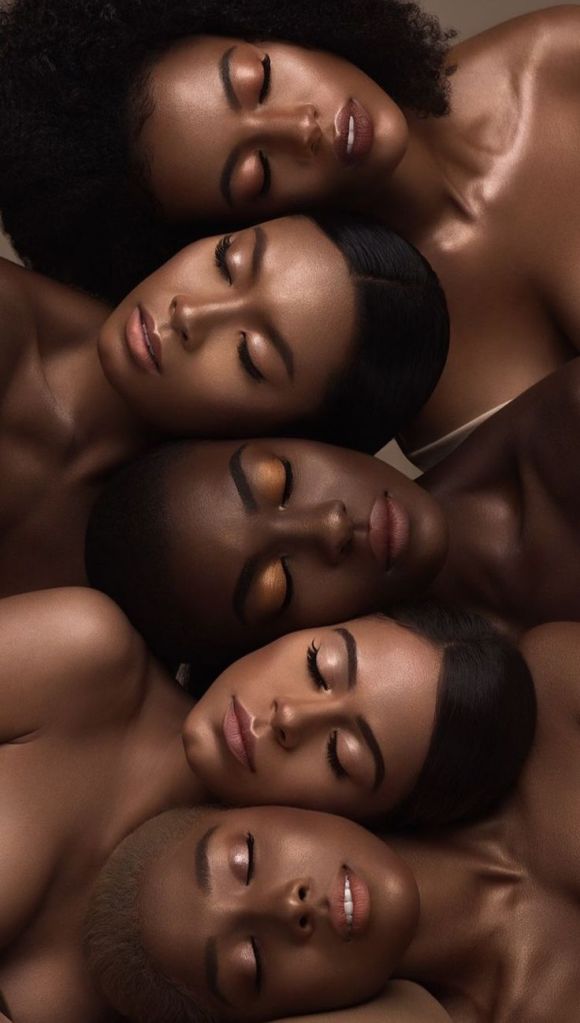
In a world where skin tone often determines social acceptance, professional opportunity, and even perceived beauty, the “brown woman” stands at the crossroads of identity and judgment. Her complexion is both her armor and her battlefield, a silent storyteller of ancestral roots, resilience, and rejection. Yet beneath the surface lies a profound narrative of self-discovery — the confessions of a woman learning to love the skin she’s been taught to hide.
Colorism, a byproduct of colonialism and slavery, remains an insidious force in modern society. While racism distinguishes between races, colorism divides within them, privileging lighter complexions and marginalizing darker tones. The brown woman, often caught between societal ideals and her true self, is forced to reconcile with internalized hierarchies of shade and desirability.
In beauty culture, brown skin is often commodified — praised when exoticized yet criticized when authentic. The media portrays it as “sun-kissed,” “mocha,” or “golden,” terms that sanitize Blackness and dilute cultural identity. The brown woman’s skin becomes a marketing strategy rather than a manifestation of divine creation. Her image is reshaped not to celebrate her but to fit neatly into Eurocentric standards of beauty.
Growing up, many brown girls are told to “stay out of the sun” or “use this cream to lighten your skin.” These comments, passed down through generations, become psychological chains. They create a self-image dependent on proximity to whiteness. What begins as casual advice becomes an internalized inferiority complex, teaching young women to see themselves as “almost enough,” but never fully beautiful.
For many, this painful legacy begins at home. Families unconsciously perpetuate colorism through praise and criticism rooted in shade. “You’re pretty for a dark girl,” a common backhanded compliment, suggests that beauty is exceptional when found in darker tones. Such words wound deeply, shaping how brown women view themselves and others.
The entertainment industry reinforces these wounds. Light-skinned actresses and models often receive more roles, endorsements, and visibility. Meanwhile, brown women are relegated to the margins, portrayed as side characters, helpers, or symbols of struggle rather than elegance. The camera’s gaze has long been biased, framing beauty through a colonial lens.
In music videos, advertisements, and fashion campaigns, the ideal woman often resembles a hybrid — ethnically ambiguous yet close enough to whiteness to be universally marketable. This aesthetic erases brown women who reflect the majority of the global population, especially within the African diaspora, South Asia, and Latin America.
But amidst these systemic structures, the brown woman has begun reclaiming her power. Social media has become both her platform and her protest. Movements like #MelaninMagic and #BrownSkinGirl have amplified voices once silenced. Through self-photography, digital storytelling, and community building, women of color are redefining the narrative.
Still, empowerment comes with complexity. Online validation can be double-edged, reinforcing beauty hierarchies based on features, filters, and follower counts. The brown woman must navigate between self-love and digital performance, questioning whether the praise she receives is genuine or conditional.
Behind every confident selfie lies years of unlearning. It takes courage to stand before the mirror and see beauty rather than burden. It takes faith to reject billion-dollar industries built on bleaching creams and color-correcting foundations. To love brown skin is a political act — a rebellion against centuries of imposed shame.
The confessions of a brown woman are not only about pain; they are about survival. They are stories whispered in dressing rooms, sung in poetry, and written in journals — testaments to endurance and grace. Each confession is a declaration that says, “I am enough as I am.”
Brown women often discover that their beauty lies not in comparison but in contrast. Their tones mirror the earth, the cocoa bean, the sun at dusk — elements of nature itself. They are the shades of continuity, the living tapestry of humanity.
Education plays a crucial role in dismantling colorism. Teaching children about historical oppression, media literacy, and representation cultivates self-acceptance. When young brown girls see women like Lupita Nyong’o, Viola Davis, or Mindy Kaling celebrated for their achievements, it reshapes the standard of beauty for future generations.
Faith also anchors this transformation. Many brown women turn to spirituality to heal internalized wounds. Biblical affirmations such as “I am fearfully and wonderfully made” (Psalm 139:14, KJV) remind them that divine creation does not discriminate by shade. Their melanin is sacred, not shameful.
The global beauty market is slowly shifting. Brands are beginning to expand shade ranges and highlight diverse models, though often for profit rather than principle. True progress will come when darker skin is normalized, not exoticized — when representation reflects authenticity, not tokenism.
Yet the struggle continues. The brown woman’s journey toward self-acceptance is not linear but layered — a process of peeling back colonial residue to uncover divine identity. She learns that her worth cannot be defined by tone, trends, or validation, but by truth.
Her confession ends not in bitterness but in rebirth. She realizes that her melanin holds memory of sun, soil, ancestors, and God’s artistry. The very skin she once prayed to lighten now glows with confidence and consciousness.
The brown woman, once silenced, now speaks boldly. Her skin tells stories of resilience, rebellion, and revelation. She is no longer asking for recognition — she commands it. Her beauty is not skin-deep; it is soul-deep.
References
Ali, S. (2021). Colorism: The social and psychological impact of shadeism. Oxford University Press.
Hunter, M. (2017). Race, gender, and the politics of skin tone. Routledge.
Nyong’o, L. (2014). Lupita Nyong’o’s speech on beauty and self-acceptance. Essence Magazine.
Russell, K., Wilson, M., & Hall, R. (2013). The color complex: The politics of skin color among African Americans (2nd ed.). Anchor Books.
Walker, A. (1983). In search of our mothers’ gardens: Womanist prose. Harcourt.
Wilder, J. (2015). Color stories: Black women and colorism in the 21st century. Praeger.
Discover more from THE BROWN GIRL DILEMMA
Subscribe to get the latest posts sent to your email.
 THE BROWN GIRL DILEMMA