
Embracing Every Hue, Claiming Every Story
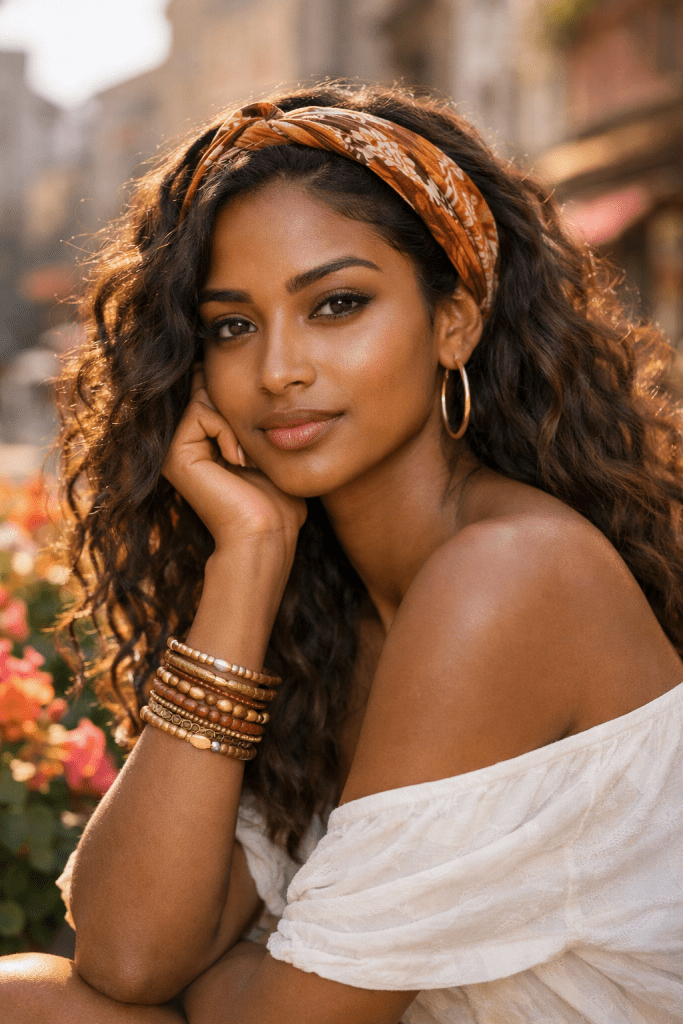
Navigating life as a brown-skinned girl is a journey of constant negotiation—between societal expectations, personal identity, and cultural beauty standards. From childhood, brown girls are acutely aware of how their skin tone situates them within the hierarchy of desirability, both within and outside their communities. Lighter skin is often idealized, celebrated in media, and equated with elegance, intelligence, and worth, while darker tones can be stigmatized or rendered invisible. This color-coded hierarchy, often internalized through subtle comments, media representation, and historical legacies of slavery and colonization, profoundly shapes self-perception and social mobility (Hunter, 2007; Rockquemore & Brunsma, 2002). The result is a dual challenge: the desire to be accepted by mainstream standards and the need to cultivate self-love in the face of systemic bias.
Beauty and fashion industries have historically perpetuated narrow ideals, often favoring Eurocentric features and lighter skin tones, creating a constant tension for brown girls striving to see themselves reflected in the world. Hair texture, eye color, and even body shape are scrutinized through these cultural lenses, further complicating identity formation (Banks, 2018; Russell-Curry, 2019). Social media has added another layer: while platforms provide spaces for celebration and community, they also amplify unrealistic beauty standards and comparison culture. For many brown girls, the pursuit of “acceptable” beauty involves a careful balance between embracing natural features and negotiating external pressures to conform.
Yet, alongside these challenges, a growing movement of empowerment and self-definition is reshaping the narrative. Brown girls are reclaiming their stories, embracing melanin-rich beauty, and celebrating cultural heritage through art, fashion, and activism. Figures like Lupita Nyong’o, Yara Shahidi, and Naomi Campbell exemplify this reclamation, showing that brown skin is not a limitation but a hallmark of strength, resilience, and beauty (Taylor, 2016; Wade & Ferree, 2016). Community-based mentorship, literature, and online collectives further reinforce positive identity development, encouraging brown girls to define beauty on their own terms rather than internalizing external biases.
Love and acceptance, both personal and communal, are central to this journey. Families, peers, and cultural institutions play a pivotal role in fostering confidence, while representation in media and leadership positions helps validate experiences and aspirations. Psychologically, embracing one’s skin tone correlates with higher self-esteem, reduced internalized colorism, and greater social confidence (Keith & Herring, 1991; Monk, 2015). Beyond the Shade is, therefore, more than a conversation about skin—it is about the holistic affirmation of identity, the courage to resist limiting narratives, and the celebration of brown girls as complex, beautiful, and powerful individuals in every sphere of life.
References
Banks, I. (2018). Hair matters: Beauty, power, and Black women’s consciousness. New York University Press.
Hunter, M. (2007). The persistent problem of colorism: Skin tone, status, and inequality. Sociology Compass, 1(1), 237–254.
Keith, V. M., & Herring, C. (1991). Skin tone and stratification in the Black community. American Journal of Sociology, 97(3), 760–778.
Monk, E. P. (2015). The cost of color: Skin color, discrimination, and health among African Americans. American Journal of Sociology, 121(2), 396–444.
Rockquemore, K. A., & Brunsma, D. L. (2002). Beyond Black: Biracial identity in America. Sage Publications.
Russell‑Curry, A. (2019). Shades of identity: Colorism, Black girlhood, and embodied performance. Journal of Gender Studies, 28(2), 147–161.
Taylor, K.-Y. (2016). How we get free: Black feminist visions of liberation. University of Minnesota Press.
Wade, L., & Ferree, M. M. (2016). Gender: Ideas, interactions, institutions (3rd ed.). W.W. Norton & Company.
Discover more from THE BROWN GIRL DILEMMA
Subscribe to get the latest posts sent to your email.
 THE BROWN GIRL DILEMMA