
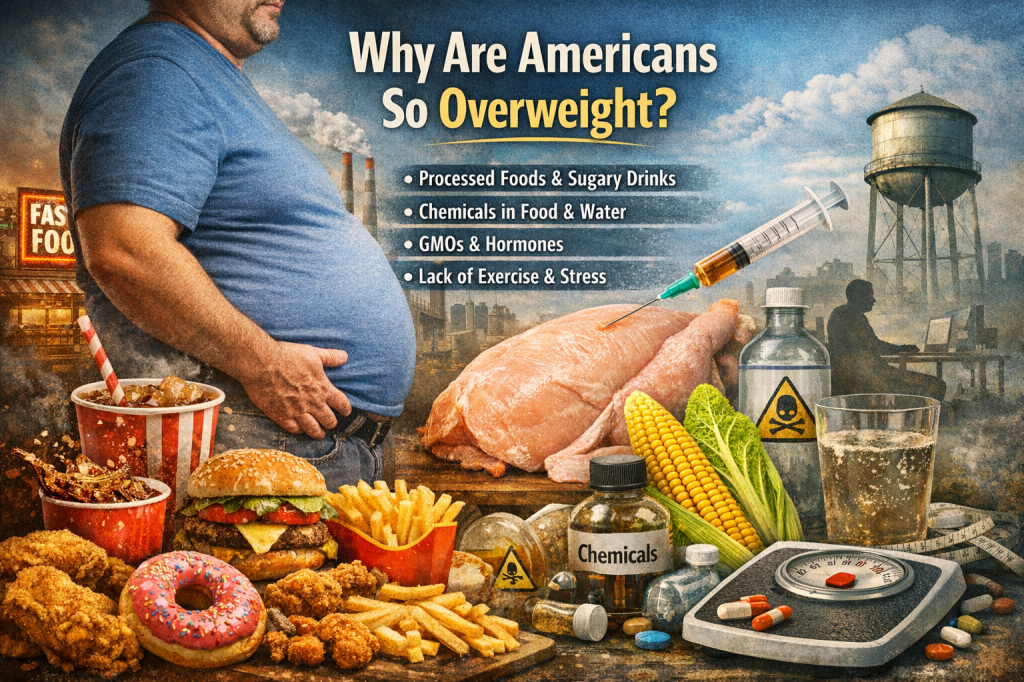
The United States stands among the nations most affected by the global obesity epidemic. According to the Centers for Disease Control and Prevention, more than 40% of American adults are classified as obese, with even higher percentages considered overweight. These figures represent a dramatic increase over the past five decades and correlate with rising rates of type 2 diabetes, cardiovascular disease, hypertension, and certain cancers. Obesity is no longer a marginal issue; it is a defining public health crisis of the modern American era.
A primary driver of excess weight in the United States is the dominance of ultra-processed foods in the national diet. Researchers at institutions such as the National Institutes of Health have demonstrated that diets high in ultra-processed foods lead to greater caloric intake and measurable weight gain compared to whole-food diets, even when macronutrients are matched. These foods are engineered for hyper-palatability, long shelf life, and convenience, often at the expense of nutritional integrity.
Ultra-processed foods typically contain high levels of added sugars, refined carbohydrates, industrial seed oils, and sodium. Ingredients such as high-fructose corn syrup, hydrogenated oils, artificial flavor enhancers, and synthetic preservatives increase calorie density while reducing satiety. Excess sugar consumption, particularly in beverages, has been strongly linked to insulin resistance and fat accumulation.
A growing body of scientific evidence links diets high in ultra-processed foods, added sugars, processed meats, and chemical additives to an increased risk of cancer and other chronic illnesses. The World Health Organization, through its cancer research arm the International Agency for Research on Cancer, has classified processed meats as Group 1 carcinogens, meaning there is sufficient evidence that they cause colorectal cancer in humans. Additionally, high consumption of ultra-processed foods has been associated with increased risks of cardiovascular disease, type 2 diabetes, and certain cancers due to factors such as chronic inflammation, insulin resistance, oxidative stress, and exposure to food additives and contaminants formed during high-heat processing. Diets rich in refined sugars and unhealthy fats further contribute to metabolic dysfunction, obesity, and nonalcoholic fatty liver disease, all of which elevate long-term disease risk. These findings underscore the importance of prioritizing whole, minimally processed foods to reduce the burden of diet-related illness.
Beyond macronutrients, the modern American food supply contains numerous additives and chemical agents that may influence metabolic processes. Certain emulsifiers, artificial sweeteners, and preservatives have been studied for their potential impact on gut microbiota and metabolic regulation. Disruption of gut flora has been associated with inflammation and weight gain, suggesting that food chemistry may indirectly contribute to obesity risk.
Another controversial but frequently discussed topic is genetically modified organisms (GMOs). While leading scientific bodies, including the National Academy of Sciences, conclude that GMOs currently approved for consumption are not directly linked to obesity or chronic disease, concerns persist among consumers regarding pesticide residues and the broader industrial agricultural model. The issue may be less about genetic modification itself and more about the industrial processing of foods derived from such crops.
Hormones in meat production are often cited in discussions about weight gain. It is important to clarify that the use of added hormones is prohibited in U.S. poultry production, as regulated by the U.S. Department of Agriculture. However, hormones are permitted in some cattle production. While no definitive evidence links dietary hormones in approved quantities to obesity, the perception reflects broader mistrust of industrial food systems.
Chemical exposure is not limited to food alone. Drinking water contamination has become a growing concern. Substances such as PFAS (per- and polyfluoroalkyl substances), sometimes referred to as “forever chemicals,” have been detected in water supplies across the country. The Environmental Protection Agency has acknowledged links between certain PFAS exposures and metabolic disorders, thyroid dysfunction, and hormonal disruption. Although research is ongoing, endocrine-disrupting chemicals in water may influence fat storage and metabolic balance.
Bisphenol A (BPA), phthalates, and other plastic-associated chemicals can leach into both food and water from packaging and containers. These compounds are classified as endocrine disruptors because they mimic or interfere with hormonal signaling. Hormonal dysregulation affects appetite, fat storage, and insulin sensitivity, potentially contributing to weight gain over time.
Lifestyle patterns further compound the issue. Americans consume larger portion sizes than most nations and eat outside the home more frequently. Restaurant meals and fast food portions often exceed daily caloric needs in a single sitting. Combined with sedentary occupations and car-dependent infrastructure, caloric intake often surpasses energy expenditure.
Globally, the most obese countries include small Pacific Island nations such as Nauru and Tonga, where obesity rates exceed 60–70%. The United States ranks among the highest of large industrialized nations. In contrast, countries such as Japan and Vietnam report adult obesity rates below 5%.
Many Americans question why countries like France appear to maintain relatively lower obesity rates despite consuming bread, pastries, and desserts. The so-called “French paradox” highlights differences in eating culture rather than specific foods. French meals tend to emphasize portion control, slower eating, fewer snacks, and fresh ingredients rather than highly processed packaged products.
Similarly, traditional diets in China historically centered on vegetables, rice, legumes, and modest portions of meat. While modern China is experiencing rising obesity due to Western dietary influence, traditional dietary patterns involved high fiber intake and minimal processed sugar.
Food deserts and socioeconomic disparities also contribute significantly. In many American urban and rural areas, fresh produce is less accessible than convenience stores stocked with packaged snacks. Lower-income communities often face limited access to affordable, nutrient-dense food options, reinforcing unhealthy dietary cycles.
Marketing practices intensify the issue. Ultra-processed foods are heavily advertised, especially to children. Bright packaging, cartoon branding, and digital marketing campaigns normalize excessive sugar and snack consumption from an early age, shaping lifelong habits.
Sleep deprivation and chronic stress also affect metabolic health. Elevated cortisol levels are associated with increased abdominal fat storage and cravings for high-calorie foods. In a fast-paced, high-stress society, these physiological responses amplify dietary risks.
Physical inactivity is another structural factor. Unlike many European and Asian countries where walking, biking, and public transit are common, American infrastructure often requires automobile travel. Reduced daily movement contributes to energy imbalance over time.
The solution to American obesity must be multifaceted. Individual behavior change—such as cooking whole foods, reducing processed sugar intake, filtering drinking water when necessary, and increasing physical activity—is essential. However, systemic change is equally critical.
Policy interventions may include regulating harmful additives, improving water quality standards, limiting marketing of unhealthy foods to children, and incentivizing access to fresh produce. Public health campaigns must emphasize food literacy, label awareness, and long-term lifestyle change rather than short-term dieting.
Culturally, a shift toward mindful eating, smaller portions, and valuing food quality over quantity may help reshape national norms. Observing dietary patterns in countries with lower obesity rates suggests that eating rituals, moderation, and whole-food traditions play a powerful role in weight stability.
Ultimately, Americans are not overweight because of a single ingredient or habit. The crisis reflects an intricate interaction of industrial food production, chemical exposures in food and water, environmental design, socioeconomic disparities, stress, and lifestyle patterns. Addressing obesity requires both personal accountability and structural reform aimed at restoring balance to the modern American diet and environment.
References
Centers for Disease Control and Prevention. (2023). Adult obesity facts.
Environmental Protection Agency. (2023). PFAS and human health effects.
Hall, K. D., et al. (2019). Ultra-processed diets cause excess calorie intake and weight gain: An inpatient randomized controlled trial. Cell Metabolism, 30(1), 67–77.
National Academy of Sciences. (2016). Genetically Engineered Crops: Experiences and Prospects.
National Institutes of Health. (2022). Ultra-processed foods and obesity research updates.
U.S. Department of Agriculture. (2023). Hormones in meat and poultry.
World Health Organization. (2023). Obesity and overweight global statistics.
International Agency for Research on Cancer. (2015). IARC Monographs evaluate consumption of red meat and processed meat. World Health Organization.
Discover more from THE BROWN GIRL DILEMMA
Subscribe to get the latest posts sent to your email.
 THE BROWN GIRL DILEMMA