
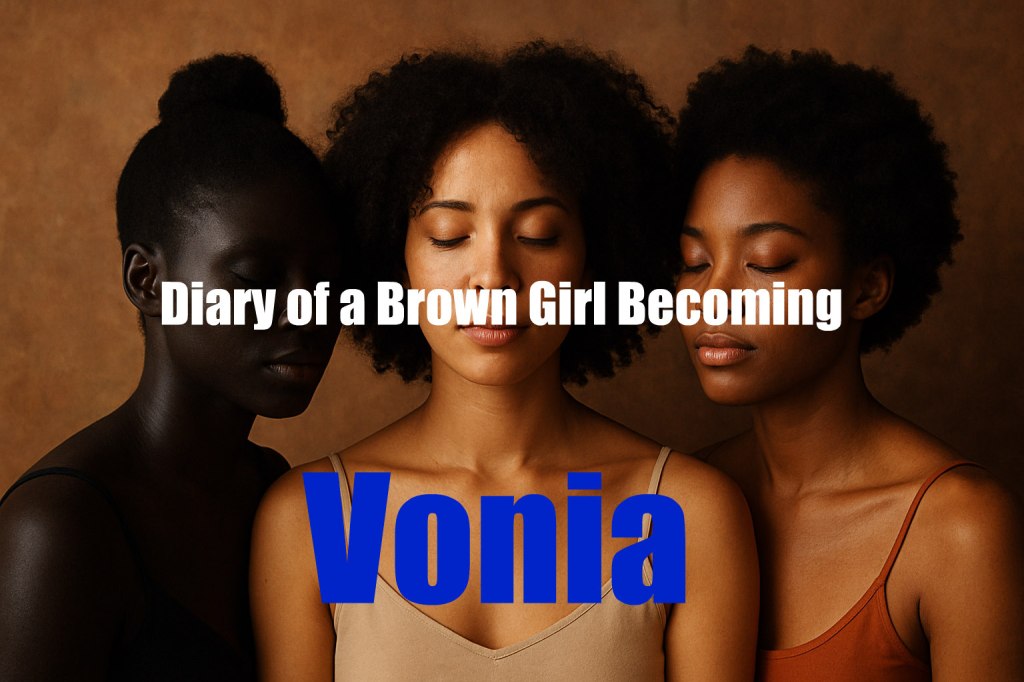
Vonia grew up in a house where love and pain lived side by side. Her mother’s voice was sharp, her words cutting deep into places no one could see. From the outside, they looked like any other family, but behind closed doors, the warmth of home felt more like a battlefield. The irony was cruel—Vonia’s light skin, something others might have envied, became the reason she was despised.
Her mother, a dark-skinned woman with her own wounds from rejection and ridicule, saw in Vonia a reflection of everything she had been taught to hate. That pain turned inward until it found a target—her daughter. Every harsh word, every slap, every accusation carried the weight of generational trauma. “You think you’re better than me,” her mother would hiss, as if Vonia’s existence was an offense. The young girl learned early that sometimes hate doesn’t come from strangers—it comes from those too broken to love you fully.
In family gatherings, jealousy followed her like a shadow. Aunts and cousins whispered, their smiles tight and brittle. Compliments about her complexion came with daggers behind them. Vonia never asked to be lighter; she never asked to be “different.” Yet, her very presence stirred old insecurities that were not hers to carry.
For years, she wore her guilt like a shroud, wondering why she was born the way she was. She hid her glow, dimmed her laughter, and tried to blend in, thinking maybe she could make herself less visible. But pain has a way of calling out for healing, and one day, that call led her to the only One who could answer.
When Vonia found God, she didn’t find religion—she found restoration. She learned that her worth was not determined by the tone of her skin or the acceptance of her mother, but by the love of a Creator who made no mistakes. Psalm 139:14 became her anthem: “I will praise thee; for I am fearfully and wonderfully made.” The more she prayed, the more she began to see her story not as a curse, but as a testimony.
Healing didn’t happen overnight. There were nights when memories still burned, when she questioned why love had to hurt so much. But slowly, she began to understand that her mother’s cruelty was a mirror of her own pain—a pain born of centuries of colorism, colonialism, and comparison. Vonia chose to forgive, not because her mother deserved it, but because she refused to carry bitterness into her future.
Forgiveness was her freedom. The same mouth that once cursed her now spoke blessings over herself and others. The same heart that once ached now poured out compassion for women who were still bound by self-hate. Vonia became a light in her community, mentoring young girls, reminding them that beauty has no hierarchy in the eyes of God.
Today, when she looks in the mirror, she doesn’t see light skin—she sees light. The divine kind. The kind that breaks curses and silences shame.
Her story reminds us that colorism wounds both sides—the one rejected for being dark and the one punished for being light. But in God, both find healing. In Him, both are loved, redeemed, and made whole.
Vonia’s story is not about complexion—it’s about transformation. It’s about the power of grace to turn pain into purpose, and shame into shining.
Discover more from THE BROWN GIRL DILEMMA
Subscribe to get the latest posts sent to your email.
 THE BROWN GIRL DILEMMA