
The First Black Fashion Model and Pioneer of Black Beauty
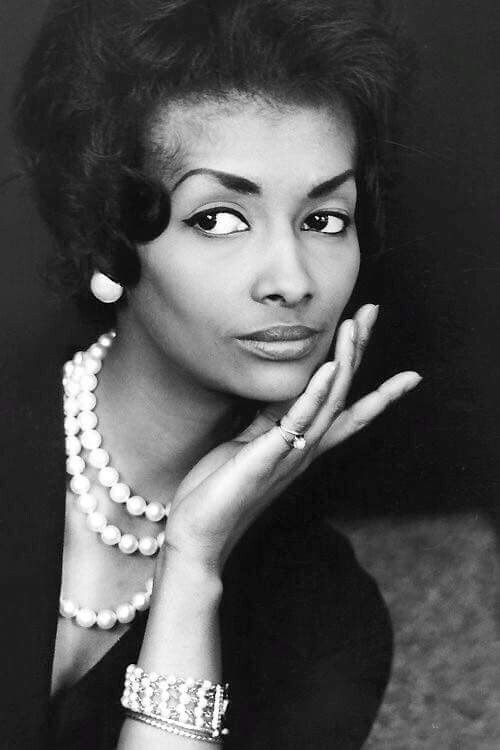
Helen Williams is widely recognized as the world’s first Black fashion model, a trailblazer who broke racial barriers in fashion decades before diversity became a conversation. Her beauty was striking and regal—tall, dark-skinned, with refined African features that challenged a modeling industry built almost entirely around whiteness. At a time when Black women were excluded from mainstream fashion, Helen Williams stood as a living contradiction to racist beauty standards.
Helen Williams was born on September 10, 1924, in New York City, USA. She came of age during the Jim Crow era, when segregation and racial discrimination shaped nearly every aspect of Black life in America. Her rise in fashion occurred against the backdrop of legalized racism, making her success not just professional but political.
Williams began modeling in the late 1940s, after being discovered while working as a waitress. Her elegance and presence quickly drew attention, but American fashion houses refused to book her because of her race. Rather than accept marginalization, she relocated to Paris, France, where racial barriers in fashion were far less rigid.
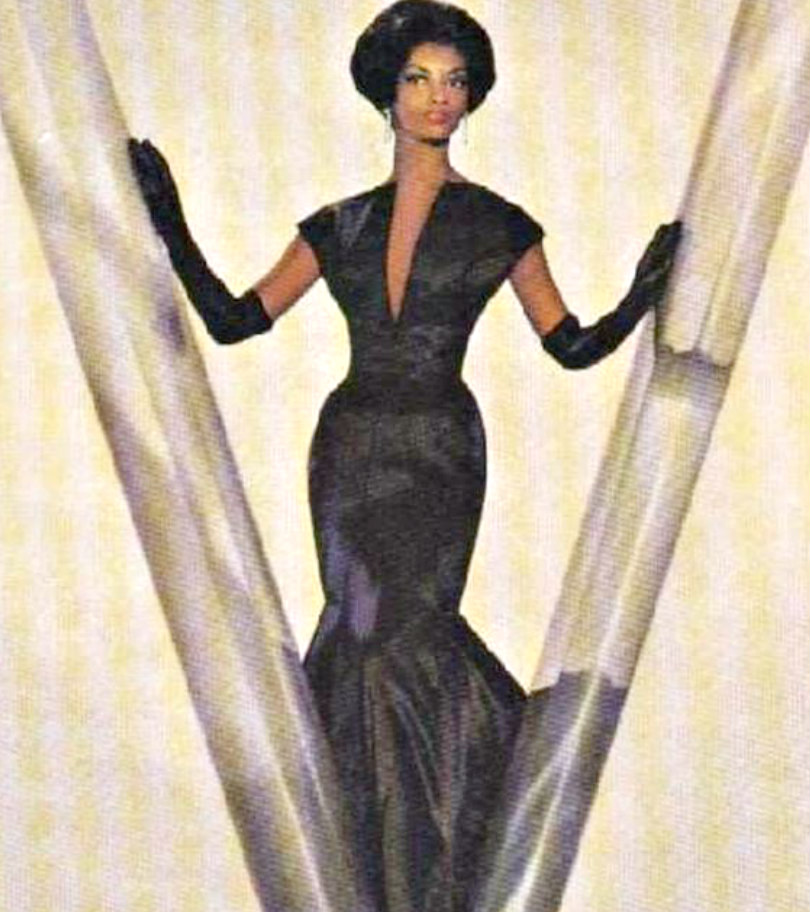
In Paris, Helen Williams became a sensation. She worked extensively in European fashion and appeared in high-profile magazines, becoming one of the most sought-after models in France during the 1950s. She was often compared to white supermodels of the era, yet her dark skin and African features made her uniquely captivating in European fashion circles.
Her most iconic moment came when she became the face of Dior and other major Parisian designers, and most famously when she modeled for Vogue Paris, making her one of the first Black women to appear in a major international fashion publication. This was revolutionary at a time when Black women were still barred from American Vogue.
Despite her success in Europe, Williams remained excluded from mainstream American fashion. U.S. magazines and designers often told her she was “too Black” for their audience. She later recalled that racism in the industry was not subtle—it was explicit and institutionalized.
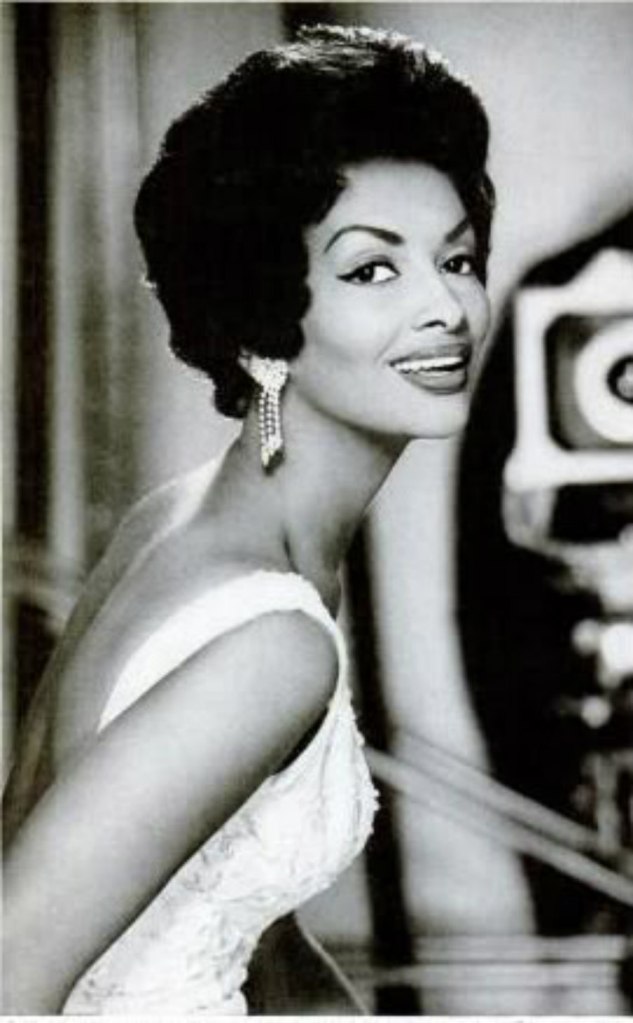
Helen Williams spoke candidly about racism, once stating that in America, she was invisible, while in Europe, she was celebrated. She described how American agencies refused to represent her and how fashion editors openly rejected her because advertisers did not want to associate with Black models.
Although she did not receive formal industry awards during her lifetime—because such institutions rarely honored Black pioneers—Helen Williams’ impact is now recognized historically as foundational. Without her, there would be no Naomi Campbell, Beverly Johnson, Iman, or Adwoa Aboah.
Williams later married French jazz musician Roger Williams and settled in Europe for much of her life. She had children and lived largely outside of the American fashion spotlight, despite her legendary status.
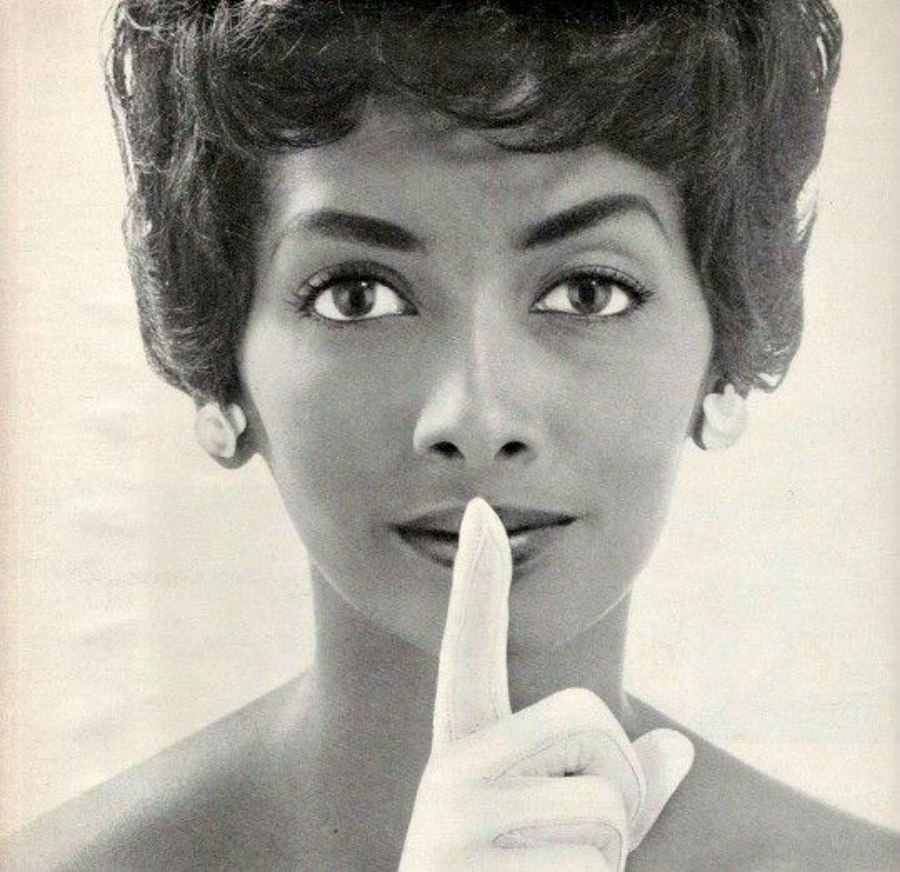
She passed away on November 28, 1997, at the age of 73. For decades, her name was largely erased from fashion history, even though she had opened the door for every Black model who followed.
Helen Williams’ legacy lies in her quiet revolution. She did not protest in the streets—she protested with her presence. Her body, her face, her dark skin on luxury runways was itself a political act.
She proved that Black women belonged in haute couture long before the world was ready to admit it. She was not just a model—she was a cultural insurgent inside an exclusionary industry.
Today, Helen Williams is increasingly acknowledged as the original Ebony Doll, the first Black woman to be globally celebrated in high fashion. Her life reminds us that Black beauty did not begin with modern diversity campaigns—it began with women like her who endured rejection so others could be seen.
References
BlackPast. (n.d.). Helen Williams (1924–1997).
https://www.blackpast.org
Fashion History Museum. (n.d.). Helen Williams: The first Black supermodel.
https://fashionhistory.fitnyc.edu
The Guardian. (2014). The forgotten Black supermodel: Helen Williams.
https://www.theguardian.com
Vogue France Archives. (1950s). Helen Williams editorial appearances.
https://www.vogue.fr
National Museum of African American History and Culture. (n.d.). Black pioneers in fashion.
https://nmaahc.si.edu
BBC Culture. (2020). The Black women who changed fashion.
https://www.bbc.com
Models.com. (n.d.). History of Black models in fashion.
https://models.com
Discover more from THE BROWN GIRL DILEMMA
Subscribe to get the latest posts sent to your email.
 THE BROWN GIRL DILEMMA