
The Voice that carried the weight of the Soul.
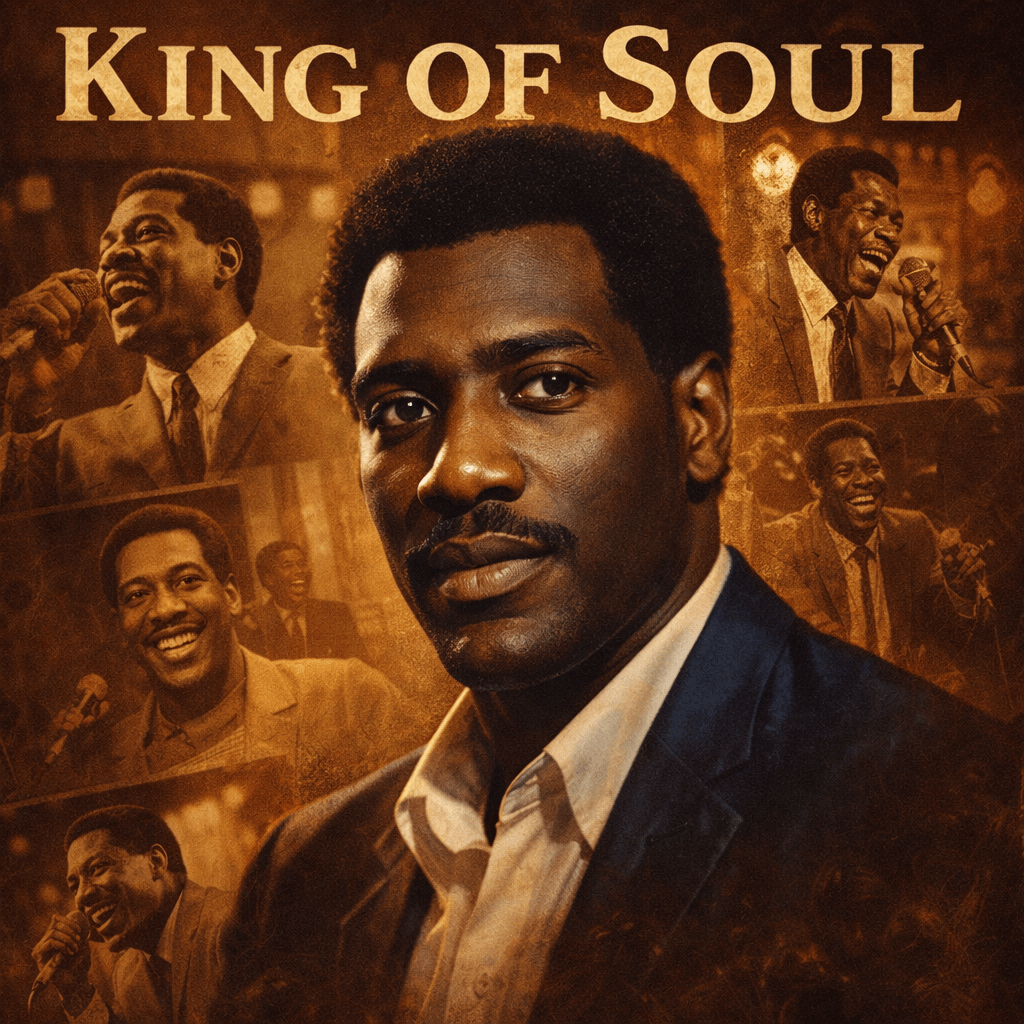
Otis Ray Redding Jr. was not merely a singer; he was a vessel through which the deepest emotional currents of Black American life were expressed. Born on September 9, 1941, in Dawson, Georgia, and raised in the deeply segregated South, Redding’s voice emerged from a cultural landscape shaped by gospel churches, laboring families, and the enduring spiritual resilience of African Americans. His upbringing in Macon, Georgia—a city that would later produce other icons such as Little Richard and James Brown—placed him at the crossroads of sacred music and secular rhythm, where soul was not a genre but a lived experience.
Redding’s earliest musical training came not from formal conservatories, but from the Black church, where he sang in choirs and absorbed the cadences of spirituals and sermons. These early influences endowed his voice with a preacher’s urgency and a mourner’s depth. By his teenage years, he was performing in local talent shows and touring the Southern “chitlin’ circuit,” singing not for glamour but for survival, often earning just enough to support his young family.
His professional breakthrough arrived in 1962 when he recorded at Stax Records in Memphis, a label that would become synonymous with the raw, unpolished sound of Southern soul. Unlike the smoother, orchestrated soul of Motown, Redding’s music carried grit—sweat, struggle, and sincerity. Songs like These Arms of Mine, Pain in My Heart, and Try a Little Tenderness revealed a voice capable of embodying vulnerability without weakness, masculinity without hardness, and romance without illusion.
What distinguished Otis Redding was not technical perfection, but emotional authority. His singing felt less like a performance and more like a confession. He did not decorate songs; he inhabited them. Whether pleading, rejoicing, or lamenting, Redding sang as though each lyric were a lived testimony. This quality made him one of the few artists who could cross the boundaries between Black gospel traditions and mainstream popular music without diluting the spiritual intensity of either.
By the mid-1960s, Redding had become one of the most influential figures in soul music, performing internationally and reaching audiences that extended far beyond the segregated American South. His appearance at the 1967 Monterey Pop Festival—where he performed before a largely white, countercultural crowd—was historic. Rather than conforming to the psychedelic trends of the era, Redding stood in a green suit and delivered soul with the force of a sermon, earning standing ovations and redefining what Black Southern music could mean on a global stage.
Wealth and Career Success
Otis Redding achieved substantial success in his short life, though he died before fully capitalizing on his earning potential. By the mid‑1960s, Redding had become one of Stax Records’ most bankable artists, generating revenue from album sales, tours, and royalties. While precise figures are scarce, his estate reportedly benefited posthumously from the massive success of his hit (Sittin’ On) The Dock of the Bay, which became a chart-topping single worldwide. His music continues to generate royalties, licensing for films, commercials, and streaming platforms, making him a long-lasting source of wealth for his family and estate.
Family Life
Otis Redding was devoted to his family. He married Patricia “Pat” Redding, and together they had several children. Despite his touring and recording schedule, he was known as a loving father and husband, committed to providing stability for his family. His early upbringing in a working-class, deeply religious household in Macon, Georgia, instilled values of family responsibility and community, which he carried into adulthood.
Voice and Musical Talent
Redding’s voice is arguably his most defining feature. Known for its raw intensity, emotional authenticity, and gospel-rooted timbre, his vocal delivery could convey vulnerability, longing, joy, or pain with astonishing immediacy. He could move effortlessly between soft, intimate phrases and powerful, soul-shaking crescendos, which earned him the title “King of Soul.” His phrasing, emotional timing, and distinctive rasp set him apart from other soul singers of his era and continue to influence generations of vocalists.
Awards and Recognition
Otis Redding received several accolades both during his life and posthumously:
- Grammy Award: Best R&B Performance by a Duo or Group for “(Sittin’ On) The Dock of the Bay” (1968, posthumous).
- Grammy Hall of Fame: Multiple inductions for “Try a Little Tenderness” and “(Sittin’ On) The Dock of the Bay.”
- Rock and Roll Hall of Fame: Inducted in 1989, recognizing his influence on rock, soul, and R&B music.
- Various industry honors and lifetime achievement recognitions acknowledge his lasting impact on American music.
Charity and Community Engagement
Though his life was tragically short, Otis Redding was known for supporting his community in Macon, Georgia, often performing at local events and mentoring young artists. His music addressed universal human experiences, giving voice to struggles and joys that resonated across communities. While formal charitable foundations were limited due to his early death, his legacy has inspired ongoing programs and scholarships in his name, supporting music education and African American cultural initiatives.
Legacy
Otis Redding’s legacy is multifaceted:
- Musical Innovation: Bridged gospel, blues, and soul into a contemporary 1960s sound.
- Cultural Impact: Helped shape the soul genre and influence artists across generations, from Al Green to John Legend.
- Posthumous Fame: “(Sittin’ On) The Dock of the Bay” cemented his status as a timeless icon.
- Inspirational Figure: His life story—rising from modest beginnings to international acclaim—continues to inspire young musicians and fans alike.
Redding’s influence persists in recordings, covers by artists worldwide, and the continued reverence of soul music enthusiasts. He remains an emblem of authenticity, emotion, and excellence in music, ensuring his presence endures far beyond his 26 years.
Tragically, Otis Redding’s life was cut short on December 10, 1967, when his private plane crashed into icy waters in Wisconsin. He was only 26 years old. Yet in that brief lifespan, he transformed the emotional language of modern music. His posthumous release, (Sittin’ On) The Dock of the Bay, marked a creative evolution—introducing introspection, subtle melancholy, and a quieter emotional register that hinted at the artistic paths he had yet to explore.
Redding’s legacy cannot be measured merely by chart rankings or awards. His influence lives in the vocal traditions of artists such as Al Green, Aretha Franklin, Marvin Gaye, and countless others who learned that soul music is not about vocal acrobatics, but emotional truth. Otis Redding gave voice to longing, love, grief, and hope in a way that mirrored the collective Black experience of the twentieth century—singing not only for entertainment, but for emotional survival.
In the final analysis, Otis Redding did not simply contribute to soul music; he embodied it. His voice remains a spiritual archive—preserving the sound of a people who turned pain into beauty, and struggle into song.
References
Guralnick, P. (1999). Sweet soul music: Rhythm and blues and the Southern dream of freedom. Back Bay Books.
Classic scholarly text on Southern soul, Stax Records, and Otis Redding’s cultural significance.
Guralnick, P. (2015). Dream boogie: The triumph of Sam Cooke. Back Bay Books.
While focused on Sam Cooke, this work situates Redding within the broader evolution of soul and Black popular music.
Bowman, R. M. (1997). Soulsville, U.S.A.: The story of Stax Records. Schirmer Books.
Definitive academic history of Stax, where Redding recorded.
Werner, C. (2006). A change is gonna come: Music, race & the soul of America. University of Michigan Press.
Explores race, politics, and the meaning of soul music, with substantial sections on Redding.
George, N. (2004). The death of rhythm and blues. Penguin Books.
Cultural analysis of R&B’s evolution, including Otis Redding’s impact.
Rock and Roll Hall of Fame. (1989). Otis Redding induction profile. Retrieved from https://www.rockhall.com/inductees/otis-redding
Official recognition of his musical contributions and awards.
Billboard Charts Archive. (1967–1968). Otis Redding chart history. Retrieved from https://www.billboard.com/music/otis-redding
Details chart performance and commercial success, including posthumous releases.
Wald, E. (2007). How the Beatles destroyed rock ’n’ roll: An alternative history of American popular music. Oxford University Press.
Discusses Redding’s cross-racial appeal and performance at Monterey.
Brackett, D. (2016). Categorizing sound: Genre and twentieth-century popular music. University of California Press.
Useful for theoretical framing of soul as genre and cultural practice.
Redding, Z., & Ritz, D. (2013). Otis: An Otis Redding biography. Da Capo Press.
Official biography by his widow—primary authoritative source.
Smith, C. (1998). Dancing in the street: Motown and the cultural politics of Detroit. Harvard University Press.
For contrasting Motown vs. Stax soul aesthetics.
Taylor, S. C. (2002). Skin of color: Biology, structure, function, and implications for dermatologic disease. Journal of the American Academy of Dermatology, 46(2), S41–S62.
Discover more from THE BROWN GIRL DILEMMA
Subscribe to get the latest posts sent to your email.
 THE BROWN GIRL DILEMMA