
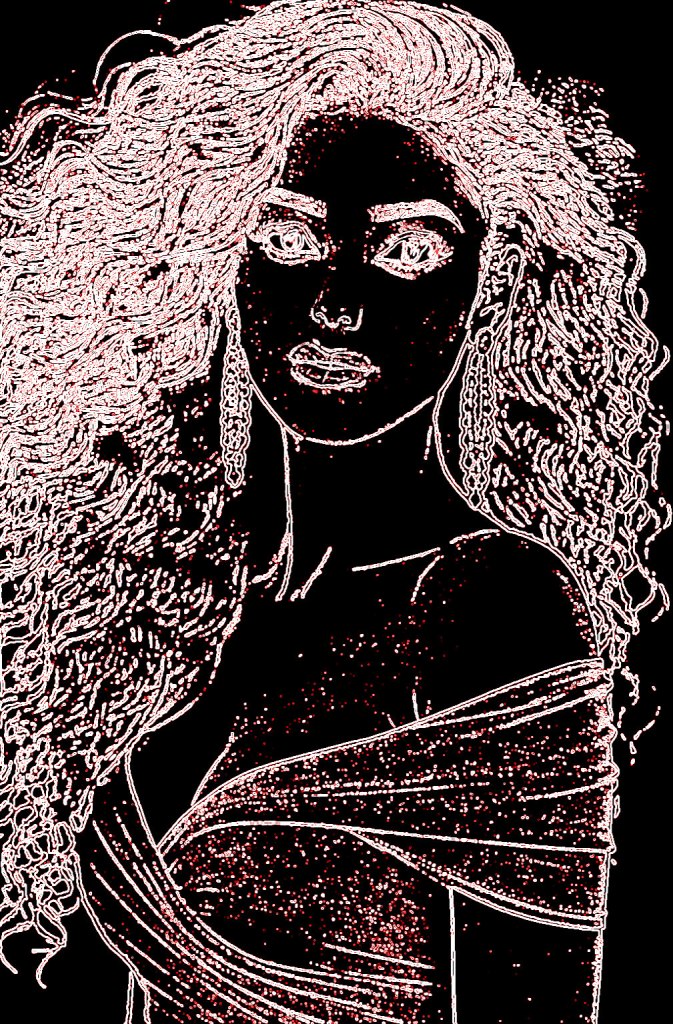
A man said to me, “You are the most beautiful woman I have seen. What are you mixed with? You can’t be all Black.” His words were meant to be a compliment, but they struck me like a backhanded slap. In that moment, my identity was reduced to a puzzle he wanted to solve, as though my beauty could not possibly exist within the fullness of Blackness. This is a story many Black women know too well — where admiration becomes interrogation, and affirmation becomes erasure.
“What are you mixed with?” may sound like a harmless question, but it carries a heavy undertone that many Black people instantly recognize. It suggests that their beauty, intellect, or talent must have come from something other than being fully Black. It is rarely asked of white individuals, nor of those whose racial identity matches a dominant group. For Black people, it becomes a subtle interrogation, implying that their very existence must be explained, categorized, or justified.
This question is one of many racial microaggressions — brief and commonplace verbal, behavioral, or environmental slights that communicate hostile, derogatory, or negative racial messages (Sue et al., 2007). Microaggressions are often delivered without malicious intent, yet their cumulative effect on mental health and identity can be significant. Questions about “mixed heritage” often leave the recipient feeling exoticized, tokenized, or “othered,” as if they are a curiosity to be solved.
Historically, this curiosity is rooted in colonial thinking. During slavery, white slaveholders meticulously catalogued the racial percentages of enslaved people — mulatto, quadroon, octoroon — to determine their value and social status (Williamson, 1980). This obsession with blood quantum was less about ancestry and more about control, categorizing Black people in order to decide who would remain enslaved and who might pass into freedom. The modern fascination with “mixedness” is a residue of that system, where proximity to whiteness was privileged and fetishized.
Colorism — the preference for lighter skin within and outside the Black community — is closely tied to this microaggression. Light skin has historically been associated with privilege, beauty, and desirability, while darker skin was demonized (Hunter, 2007). Asking “What are you mixed with?” when someone is light-skinned reinforces the idea that beauty or acceptability is tied to whiteness or foreign ancestry.
Celebrities often face this question publicly. Meghan Markle, the Duchess of Sussex, has shared that her biracial identity was constantly questioned, with people asking, “What are you?” as if they needed to categorize her before interacting (Winfrey, 2021). Zendaya has spoken openly about colorism, acknowledging that her lighter skin tone gives her access and opportunity denied to darker-skinned actresses, and she intentionally uses her platform to amplify those voices (Robinson, 2018).
This constant questioning can have psychological effects. Repeated microaggressions are linked to racial battle fatigue — a state of mental, emotional, and physical exhaustion caused by navigating racism daily (Smith et al., 2011). Being asked about one’s racial makeup forces a person to confront how others perceive them, which can trigger feelings of alienation or anxiety.
Spiritually, these questions can also conflict with the truth of God’s creation. Psalm 139:14 (KJV) affirms, “I will praise thee; for I am fearfully and wonderfully made: marvellous are thy works.” The implication that Blackness must be “mixed with something” to be beautiful denies the inherent dignity God has placed in every person, including those with deep melanin-rich skin and African features.
Microaggressions of erasure go beyond just “What are you mixed with?” They include statements like “You’re pretty for a dark-skinned girl,” “You talk white,” or “I don’t see color.” While they may be meant as compliments, they actually diminish identity. They praise the individual for fitting into a standard that denies their full cultural and racial reality.
The phrase “I don’t see color” is another common erasure tactic. It attempts to signal equality but ultimately refuses to acknowledge the existence of systemic racism and the lived experiences of Black people. As Neville et al. (2013) argue, colorblindness allows racial inequalities to persist because it discourages the recognition of injustice.
“What are you mixed with?” can also sexualize and exoticize. In some cases, it is asked not out of genuine curiosity but as a way to turn identity into a fantasy or a fetish. This is particularly true for women of color, whose bodies and features have been hypersexualized throughout history (Collins, 2004). This type of questioning reduces a person to their perceived racial “ingredients” rather than honoring them as a whole being.
W.E.B. Du Bois (1903) described the phenomenon of double-consciousness — the sense of always looking at oneself through the eyes of others. For many Black people, being constantly asked about their racial makeup deepens this double-consciousness, forcing them to perform or explain their identity to make others comfortable.
Some who ask “What are you mixed with?” may genuinely mean no harm. For them, it is a way to make conversation or express admiration. But intent does not erase impact. Microaggressions accumulate over time, becoming heavy burdens that affect how Black people move through the world — whether they feel accepted, whether they feel seen, whether they feel safe.
Biblically, diversity is not something to erase or explain away. Revelation 7:9 (KJV) describes a heavenly vision where “all nations, and kindreds, and people, and tongues” stand together before God. This suggests that ethnicity and identity are preserved and celebrated in eternity. To erase Blackness or reduce it to a mixture is to work against divine design.
Representation in media has begun to challenge these erasures. Campaigns like #BlackGirlMagic, #MelaninPoppin, and the natural hair movement have helped normalize the beauty of African features and dark skin. Seeing darker-skinned models, actors, and influencers celebrated for their beauty disrupts the idea that only “mixed” or “exotic” Black people are worthy of admiration.
Healing from the harm of these microaggressions requires education. Non-Black individuals must learn the history of racial classification, colorism, and why these questions are not benign. They must understand that curiosity should never come at the cost of someone else’s dignity.
Black individuals, meanwhile, can reclaim their narrative by affirming their identity openly and unapologetically. This may include correcting someone who asks “What are you mixed with?” by simply saying, “I’m Black — and that’s enough.” Such responses help shift the cultural expectation that Blackness must be explained or justified.
The Erasure Complex and Other Microaggressions of Erasure
The Erasure Complex is the cumulative psychological, social, and spiritual effect of living in a world where Blackness is constantly questioned, redefined, and made to prove its legitimacy. It is not merely about blatant racism but about the small, repeated messages that suggest Black identity is insufficient, unattractive, or incomplete unless modified by proximity to whiteness.
One of the most common forms of erasure is the question, “What are you mixed with?” It might sound curious or flattering, but for Black people, it can feel like an accusation — as though beauty, intelligence, or grace cannot come from African roots alone. These moments communicate that being fully Black is something to be doubted, pitied, or corrected.
Microaggressions like this have deep historical roots. In slavery and Jim Crow America, racial classification was an obsession. Words like mulatto, quadroon, and octoroon were invented to measure bloodlines and determine status, privileges, and restrictions (Williamson, 1980). Even freedom could hinge on whether a person could pass for white. That system created a generational wound — a belief that lighter skin or “mixed blood” was better, safer, more desirable.
The Erasure Complex is not limited to questions of ancestry. It also shows up in phrases like, “You talk white,” “You’re pretty for a dark-skinned girl,” or “I don’t see color.” Each of these statements subtly removes part of a Black person’s identity. They praise the individual for being an exception to a negative stereotype while reinforcing the stereotype itself.
Celebrities often experience these erasures publicly. Lupita Nyong’o, for example, has spoken about being told as a child that dark skin was not beautiful and how she longed to be lighter (Nyong’o, 2014). Zendaya, who is biracial, has acknowledged that her lighter skin gives her privilege and access that darker-skinned actresses are denied (Robinson, 2018). Both testimonies expose how deeply embedded these beauty hierarchies remain.
Psychologically, constant microaggressions accumulate to create racial battle fatigue — mental and emotional exhaustion caused by having to navigate these slights daily (Smith et al., 2011). They can lead to anxiety, hypervigilance, and internalized racism, where Black individuals begin to question their own worth and beauty.
Spiritually, the Erasure Complex challenges the truth of creation. Genesis 1:27 (KJV) reminds us, “So God created man in his own image.” To imply that Blackness is insufficient is to deny the fullness of God’s artistry. Psalm 139:14 (KJV) further affirms, “I will praise thee; for I am fearfully and wonderfully made.” There is no divine error in deep melanin, broad noses, full lips, or coiled hair — they are reflections of God’s intentional design.
Colorblind rhetoric, though often well-meaning, also contributes to erasure. When someone says, “I don’t see color,” they deny a person’s racial reality and the systemic oppression tied to it. As Neville et al. (2013) argue, this type of “colorblindness” allows racism to persist because it refuses to name or confront it.
The Erasure Complex also intersects with the policing of Black hair. When Black women wear natural hair, braids, or locs, they may face questions like, “When are you going to do something with your hair?” — implying that the way it naturally grows is wrong. The Crown Act (2022) was passed in several U.S. states precisely to stop discrimination based on natural hairstyles, which reveals just how institutionalized this erasure can be.
Even in religious spaces, erasure can be present. Some churches have historically promoted Eurocentric aesthetics as “holy” or “presentable,” leaving little room for African expression in hair, dress, or worship styles. This creates an unspoken pressure to assimilate rather than to celebrate the diversity that Revelation 7:9 describes, where “all nations, and kindreds, and people, and tongues” are represented before God’s throne.
Media representation is slowly challenging the Erasure Complex. Campaigns like #BlackGirlMagic, #MelaninPoppin, and films like Black Panther have shifted cultural narratives by celebrating the beauty, brilliance, and power of Blackness without dilution. These moments are important not just as entertainment but as acts of cultural restoration.
However, healing is not just about seeing representation. It is also about internal work — rejecting internalized racism and embracing the full spectrum of Black identity. This may mean responding to “What are you mixed with?” by saying unapologetically, “I’m Black — fully, beautifully Black.” Such responses resist the subtle suggestion that Blackness must be explained away.
Education is essential for those outside the community as well. Non-Black individuals must understand why these questions and statements are harmful, even if they are said with good intentions. Learning the history of racial classification, colorism, and microaggressions can equip people to affirm Black identity rather than interrogate it.
The Erasure Complex also thrives in silence. When microaggressions occur, those who witness them have an opportunity to speak up. Being an ally means interrupting erasure when it happens — affirming the dignity of Blackness in public and private spaces.
W.E.B. Du Bois’ concept of double-consciousness remains relevant here. Many Black people navigate the tension of how they see themselves versus how the world sees them (Du Bois, 1903). Erasure compounds that tension, forcing them to constantly explain, defend, and validate their identity. Healing this wound requires both cultural change and self-acceptance.
The ultimate goal is not just to stop erasure but to replace it with affirmation. Isaiah 61:3 (KJV) speaks of God giving His people “beauty for ashes.” For a people whose identity has been systematically erased and distorted, reclaiming Blackness as beautiful, holy, and worthy is a divine act of restoration.
In conclusion, the Erasure Complex is a powerful framework for understanding the subtle but deeply wounding ways that Black identity is questioned and diminished. Microaggressions like “What are you mixed with?” are not simply curiosities — they are echoes of a racial caste system designed to value proximity to whiteness. By naming this dynamic, addressing its historical roots, and affirming the fullness of Blackness, we can dismantle the systems of erasure and move toward wholeness and liberation.
Our communities also have a role to play. Too often, respectability politics within religious spaces have privileged lighter-skinned or Eurocentric beauty standards. By teaching that all skin tones reflect God’s image, churches can help dismantle internalized racism and affirm the beauty of Black identity.
In conclusion, “What are you mixed with?” is not just a casual question — it is a microaggression that reflects centuries of racial hierarchy and erasure. By recognizing its historical roots, addressing its psychological impact, and responding with pride and education, we can move toward a world where Blackness does not need an asterisk, an apology, or an explanation.
References
- Collins, P. H. (2004). Black sexual politics: African Americans, gender, and the new racism. Routledge.
- Du Bois, W. E. B. (1903). The souls of Black folk. A.C. McClurg & Co.
- Hunter, M. (2007). The persistent problem of colorism: Skin tone, status, and inequality. Sociology Compass, 1(1), 237–254.
- Neville, H. A., Awad, G. H., Brooks, J. E., Flores, M. P., & Bluemel, J. (2013). Color-blind racial ideology: Theory, training, and measurement implications in psychology. American Psychologist, 68(6), 455–466.
- Robinson, J. (2018, September 4). Zendaya talks about colorism, privilege, and responsibility. Marie Claire.
- Smith, W. A., Allen, W. R., & Danley, L. L. (2011). “Assume the position… you fit the description”: Psychosocial experiences and racial battle fatigue among African American male college students. American Behavioral Scientist, 51(4), 551–578.
- Sue, D. W., Capodilupo, C. M., Torino, G. C., Bucceri, J. M., Holder, A. M. B., Nadal, K. L., & Esquilin, M. (2007). Racial microaggressions in everyday life: Implications for clinical practice. American Psychologist, 62(4), 271–286.
- Williamson, J. (1980). New people: Miscegenation and mulattoes in the United States. Free Press.
- Winfrey, O. (2021, March 7). Oprah with Meghan and Harry: A CBS primetime special. CBS.
Discover more from THE BROWN GIRL DILEMMA
Subscribe to get the latest posts sent to your email.
 THE BROWN GIRL DILEMMA