
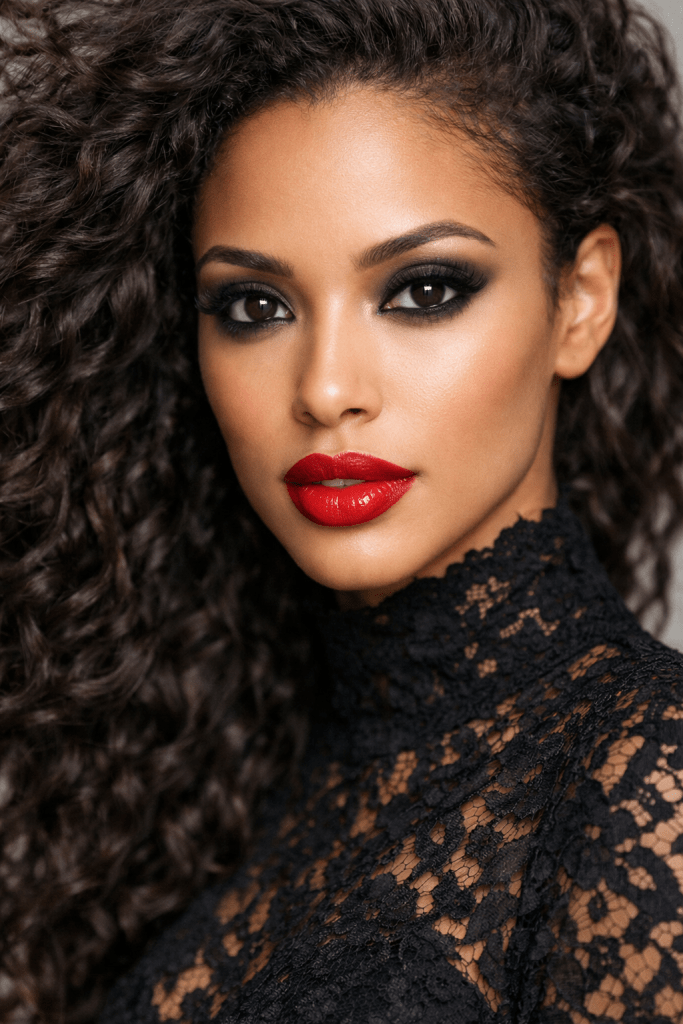
Beauty has never been a fixed concept; it is a moving reflection of culture, history, power, and identity. Across civilizations, the human desire to enhance appearance has been deeply connected to ritual, status, spirituality, and self-expression. Makeup, in particular, is not merely cosmetic—it is historical evidence of how societies have defined femininity, attraction, and worth. Yet alongside the long tradition of adornment exists an equally powerful ideal: natural beauty, the belief that one’s unaltered features already hold intrinsic value.
The earliest recorded use of makeup dates back over 6,000 years to ancient Egypt. Both men and women applied kohl around the eyes not only for aesthetic reasons, but also for spiritual and medical purposes, believing it protected against evil spirits and eye infections. Makeup in this era symbolized divinity, health, and social class, with queens such as Cleopatra using pigments derived from minerals, insects, and plants to signify royal status.
In ancient Greece and Rome, beauty standards became increasingly tied to class and gender. Pale skin was associated with wealth and leisure, while women used white lead and chalk to lighten their complexions—often at great physical cost. Rouge, derived from berries and wine, was used to color lips and cheeks, reinforcing the idea that beauty required alteration, even at the expense of health.
During the Middle Ages, Christian doctrine discouraged overt cosmetic use, equating beauty enhancement with vanity and moral corruption. However, subtle practices persisted—women plucked hairlines, used herbal tonics, and relied on symbolic clothing and jewelry to express femininity within socially acceptable limits.
The Renaissance revived cosmetic culture, particularly among European aristocracy. Queen Elizabeth I popularized the “mask of youth,” using lead-based powders to achieve an artificially flawless pale complexion. Beauty became synonymous with power, status, and artificial perfection, further separating aesthetic ideals from biological reality.
The modern cosmetics industry emerged in the late 19th and early 20th centuries with the rise of mass production, advertising, and celebrity culture. Brands such as Max Factor, Revlon, and Estée Lauder transformed makeup into a global business, linking beauty with consumerism and identity. Hollywood, fashion magazines, and later social media solidified unattainable beauty standards rooted in youth, symmetry, and Eurocentric features.
Yet alongside this commercial expansion came resistance. The natural beauty movement, particularly within feminist and Black cultural traditions, challenged the idea that worth must be painted, contoured, or filtered. Natural beauty emphasizes authenticity, health, and self-acceptance over modification. It argues that beauty is not something to be constructed, but something to be recognized.
For Black women especially, natural beauty has political meaning. In a world that historically devalued dark skin, textured hair, and non-European features, choosing natural presentation became an act of cultural affirmation. The natural hair movement, Afrocentric aesthetics, and body positivity campaigns represent a reclamation of beauty from colonial and capitalist definitions.
Ultimately, the question “How beautiful do you want to be?” is not about cosmetics—it is about power. It asks whether beauty is something to chase or something to claim. Makeup can be art, armor, or expression, but it should never replace self-worth. True beauty lies not in how much one alters the face, but in how deeply one accepts it.
References
Bordo, S. (2003). Unbearable weight: Feminism, Western culture, and the body. University of California Press.
Byrne-Davis, L. M. T., et al. (2020). Appearance ideals and body image. Current Opinion in Psychology, 36, 9–14.
Corson, R. (2004). Fashions in makeup: From ancient to modern times. Peter Owen.
Davis, A. (2015). Women, culture, and politics. Vintage Books.
Jones, G. (2011). Beauty imagined: A history of the global beauty industry. Oxford University Press.
Peiss, K. (2011). Hope in a jar: The making of America’s beauty culture. University of Pennsylvania Press.
Tate, S. A. (2009). Black beauty: Aesthetics, stylization, politics. Ashgate.
Discover more from THE BROWN GIRL DILEMMA
Subscribe to get the latest posts sent to your email.
 THE BROWN GIRL DILEMMA