
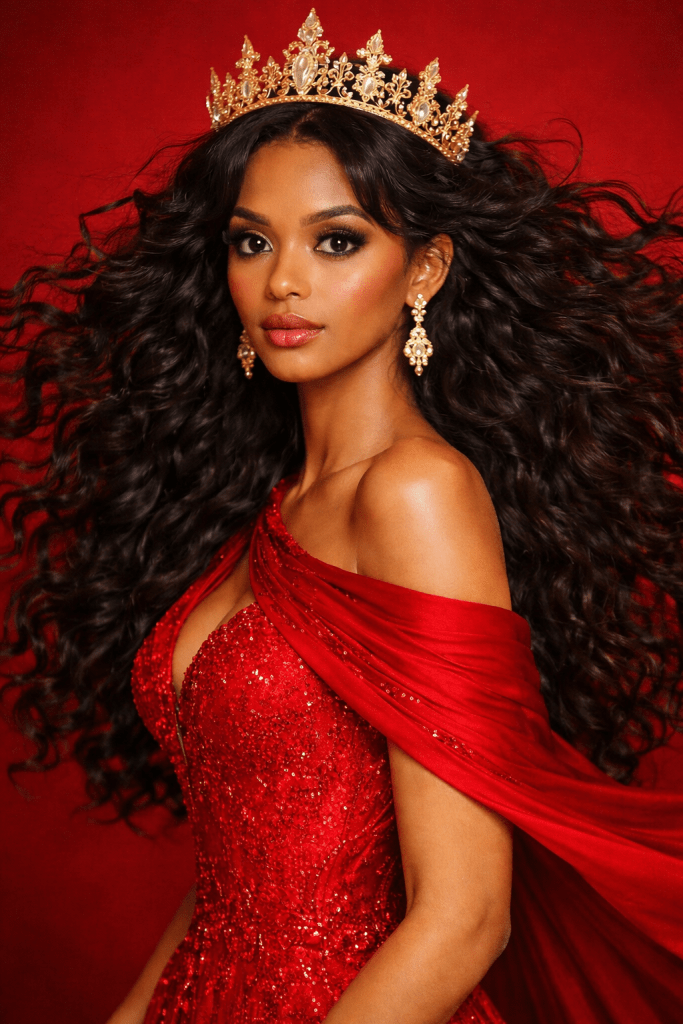
Yet the same specialness that elevates you is often twisted by society into a form of exoticization. To be called “special” because of your Black features is a double-edged sword. It acknowledges beauty but simultaneously separates it from normalcy, making Blackness an object of curiosity rather than a standard to be celebrated on its own terms. This is the politics of being seen as “special” — a liminal space where admiration borders on objectification.
Exoticization has historical roots in the Western gaze. During the colonial period, Africans, especially women, were depicted in art, literature, and anthropology as inherently different — mysterious, seductive, and often hypersexualized. This framing positioned them as objects to be observed and studied rather than fully human, a narrative that persists subtly in contemporary media (Collins, 2004).
In modern society, Black women are frequently described as “exotic” or “unique,” language that seems complimentary but carries implicit othering. To be called exotic is to signal that one is different from the default, which in most Western societies is white. The praise is thus conditional — it only holds value when compared against a Eurocentric standard of beauty.
Being seen as “special” also comes with the invisible burden of performance. Black women are expected to embody this exotic appeal without deviating from societal fantasies. There is pressure to maintain a polished, curated appearance that aligns with someone else’s imagination of “Black beauty,” rather than an authentic self-expression.
Celebrities frequently exemplify this dynamic. Halle Berry, for example, has discussed how her mixed heritage led Hollywood to view her as exotic, opening doors while simultaneously pigeonholing her into roles that emphasized her difference (Berry, 2014). Similarly, Lupita Nyong’o’s rise to prominence was celebrated as a disruption to beauty norms, yet even her acclaim was framed around rarity, the “exceptional” Black woman, rather than the normalization of Black beauty in everyday life.
Exotic, But Not Enough: The Cost of Being the Exceptional Black Woman
I remember the first time I was called “exotic.” I was fourteen, standing in a bookstore, and a man approached me. “You’re beautiful,” he said, “so exotic… I’ve never seen anyone like you.” At that moment, I felt both elevated and invisible. Elevated, because someone recognized my beauty; invisible, because my Blackness was reduced to an adjective, something rare to be admired but never fully understood. That tension — being celebrated and erased at the same time — is the daily reality for so many Black women.
Being called “special” or “exceptional” carries a hidden price. Society frames Black women’s beauty as unusual, as if it exists outside the norm, something that can only be understood through the lens of novelty or difference. This is not admiration without consequence — it is a subtle form of objectification, a lens that separates Black women from ordinariness and imposes expectations of perfection.
Historically, this pattern is rooted in colonial and slave-era ideologies. African women were depicted as mysterious, sensual, and inherently different in European art, literature, and pseudo-science. Their bodies were studied, catalogued, and exoticized, creating a template that continues to influence how Black women are perceived today (Collins, 2004). The message was clear: Black beauty is not the default; it is a spectacle.
In school, this dynamic plays out in classrooms and playgrounds. Girls who are “special” for their looks or mixed heritage often receive attention from teachers and peers, but this attention is conditional. Compliments often carry comparisons — lighter skin, straighter hair, narrower noses — that suggest their beauty is exceptional only when aligned with whiteness. Meanwhile, darker-skinned girls learn that their natural beauty is ordinary, overlooked, or even undesirable.
Celebrities are not immune. Halle Berry has shared that Hollywood initially labeled her as “exotic,” a distinction that opened doors but also confined her to a narrow set of roles emphasizing her difference (Berry, 2014). Lupita Nyong’o’s rise to fame was celebrated as the “exceptional” Black woman, her deep skin and natural features framed as rare, beautiful anomalies. While inspiring, this narrative implies that Black women are only remarkable when they are unusual.
The psychological cost of being seen as exceptional is significant. Black women often internalize the pressure to maintain perfection — flawless skin, a curvaceous figure, impeccable hair — because deviation threatens the fantasy that others have projected onto them. The result is chronic stress, hypervigilance, and anxiety, all in the service of fulfilling someone else’s idea of “special” (Hunter, 2007).
Social media intensifies this effect. On platforms like Instagram, Black women are often celebrated for their rarity — lighter skin, unique hair textures, or particular facial features. While visibility can be empowering, it reinforces a standard where only certain traits are elevated. Many women scroll through feeds feeling both admired and inadequate, unsure if they are enough outside the curated lens of online admiration (Mercer, 2018).
Exoticization frequently intersects with fetishization. Compliments can morph into sexualized attention, where a Black woman’s features are admired but her personhood is overlooked. This transformation of admiration into desire strips agency and places the burden of appeal on her shoulders (Collins, 2004). Being special in this context is not empowering — it is performative and conditional.
Church and faith communities are not exempt. Black women are sometimes told that only Eurocentric features are “presentable” or “holy,” perpetuating an internalized belief that divine beauty aligns with whiteness. This conflicts with scripture, which consistently affirms that God created humanity in His own image (Genesis 1:27, KJV) and that every individual is fearfully and wonderfully made (Psalm 139:14, KJV).
The internalization of these messages leads many Black women to police their own bodies. We straighten our hair, lighten our skin, and sculpt our features to meet expectations. In doing so, we become complicit in a system that values difference over ordinariness and admiration over authenticity. The exceptional Black woman becomes a curated performance rather than a natural, living identity.
Family and community often provide the first lessons in resilience. Older women teach younger women that beauty is not about rarity but about the fullness of who you are. This guidance is essential, reminding girls that they do not need to be exotic to be worthy — that their value is inherent, not contingent on being unusual or extraordinary.
Friendships can complicate the experience. Peer comparisons — “She’s so exotic” or “She’s prettier because she’s mixed” — reinforce hierarchies within the Black community, creating tension and jealousy. The social cost of being “special” is alienation, as admiration from outsiders can distance women from their peers.
Romantic relationships are another arena where this politics plays out. Some men fetishize Black women’s difference, praising them for traits they perceive as rare, while overlooking their personality, intellect, and agency. Being “special” in this context is conditional love — valued for appearance but not always for selfhood.
Education and mentorship are crucial tools for countering the pressure of exceptionalism. Teaching Black girls to see their beauty as inherent, not exceptional, helps dismantle internalized hierarchies and builds self-esteem. Celebrating everyday Blackness — ordinary yet divine — restores balance in a world that constantly tells women they are extraordinary only in comparison to others.
Representation in media must go beyond the exceptional. Stories that normalize Black beauty in all its forms — dark, light, natural, straight, curly — reinforce that Blackness is not a spectacle but a standard. Films, advertisements, and TV shows that showcase everyday beauty help young women internalize a healthy sense of self.
The Erasure Complex compounds the cost of being exceptional. When Black women are admired for being different, it subtly suggests that being fully Black is not enough. The gaze that elevates them simultaneously erases the vast diversity of Black identity, reinforcing conditional admiration rather than universal recognition.
Spiritual grounding offers a counterbalance. Recognizing that one’s beauty and worth are divinely ordained, rather than societally validated, shifts the focus from external approval to intrinsic value. Psalm 139:14 (KJV) reminds us that we are “fearfully and wonderfully made” — unique, yes, but whole and worthy in our natural state.
Community solidarity also heals. By celebrating Black women collectively rather than selectively, society can dismantle the hierarchy of exoticization. From hair and skin to intellect and talent, the normalization of Black excellence fosters a sense of belonging rather than isolation.
Ultimately, being seen as “special” is both an honor and a burden. While it can affirm one’s beauty, it can also confine, objectify, and pressure. True empowerment comes from rejecting conditional admiration, embracing one’s authentic self, and affirming that Blackness — in all its forms — is a universal standard of beauty, not an exception.
In conclusion, the cost of being the exceptional Black woman is real, spanning psychological, social, and spiritual domains. Recognition should not require rarity, admiration should not demand objectification, and beauty should not depend on being extraordinary. To be authentically Black, fully human, and unapologetically oneself is to claim a power and dignity that no external gaze can define. You are special — not because you are rare, but because you are divinely complete.
The psychology of being labeled “special” is complex. While admiration can boost self-esteem, it often comes with heightened scrutiny. Every flaw is amplified because deviation from the constructed standard risks breaking the illusion of perfection that exoticization demands. This creates an internalized pressure to maintain a level of beauty that is unsustainable and emotionally taxing (Hunter, 2007).
Social media amplifies this paradox. Platforms like Instagram and TikTok showcase Black women’s beauty as a form of currency, often highlighting traits that conform to Eurocentric beauty ideals — lighter skin, narrower noses, straighter hair. Even when celebrating natural features, the algorithms often elevate only those deemed “unusual” or “rare,” reinforcing the narrative of being exceptional rather than normal (Mercer, 2018).
Exoticization is closely linked to fetishization, where Black women’s features are sexualized and objectified. The concept of the “exotic woman” transforms admiration into desire, but it strips agency from the individual. Her identity is commodified, admired for how it appeals to someone else rather than for her intrinsic worth or personhood (Collins, 2004).
This pressure is not only external but internalized. Many Black women grow up absorbing messages about what it means to be beautiful, often measuring themselves against a standard that views them as inherently unusual. Internalized colorism and beauty hierarchy become self-policing mechanisms that complicate self-love and identity formation (Hunter, 2007).
In contrast, biblical scripture offers a standard that transcends societal constructs. Genesis 1:27 (KJV) affirms that “God created man in his own image,” which implies that beauty and worth are divinely ordained, not dependent on human hierarchy. Psalm 139:14 (KJV) reinforces this, reminding believers that they are “fearfully and wonderfully made,” with beauty and worth inherent, not contingent on external validation.
The social consequences of being seen as “special” are also significant. Exceptionalism often isolates Black women from their peers, creating distance in communities where solidarity is needed. To be admired primarily for being rare or different can undermine authentic connection, reinforcing the notion that one’s value lies in their difference rather than their humanity.
Exoticization also perpetuates a colorist hierarchy. Lighter-skinned or mixed-race women are often labeled “special,” while darker-skinned women are either ignored or othered differently. This conditional admiration fragments the community, subtly teaching that some forms of Blackness are more palatable or worthy of attention than others (Hunter, 2007).
In the workplace, this dynamic can shape opportunities. Women seen as “exotic” may be promoted for image-based reasons rather than competence, or conversely, pigeonholed into roles that exploit their appearance. Their skills and intellect are overshadowed by the constant framing of their bodies and faces as objects of fascination (Collins, 2004).
Education and mentorship can help counteract these effects. Teaching Black girls that their beauty is both ordinary and extraordinary simultaneously — that they are “special” because they are authentically themselves — can dismantle the internalized pressure to perform for admiration. Celebrating everyday Black beauty as the norm rather than the exception is crucial for mental health and self-acceptance.
Representation matters. Media that portrays Black women in a range of roles, skin tones, and expressions — not only the rare or unusual — helps normalize Black beauty and dismantle exoticization. Films, TV, and advertisements that celebrate Black women for their achievements, intellect, and character, alongside their appearance, provide a more holistic framework for identity (Mercer, 2018).
The politics of being seen as “special” are therefore multifaceted — psychological, cultural, historical, and spiritual. While admiration may feel empowering, it is inseparable from centuries of racialized viewing that objectifies difference. Recognizing this dynamic is the first step toward reclaiming agency over identity.
Ultimately, true empowerment comes from rejecting the conditional praise of the exotic gaze and embracing the full spectrum of Blackness without apology. Being special is not about meeting someone else’s standard or fascination; it is about owning one’s inherent worth and beauty as ordained by God.
In conclusion, the label of “special” carries both admiration and erasure. To be exoticized is to be elevated and confined simultaneously. By understanding the historical and psychological underpinnings of this phenomenon, celebrating authentic Black beauty, and fostering spaces that normalize rather than fetishize, Black women can reclaim the power of their visage. Your FACE is divine, your identity complete, and your beauty is not a curiosity — it is a standard unto itself.
References
- Berry, H. (2014). Halle Berry interviews on Hollywood and racial identity. Essence Magazine.
- Collins, P. H. (2004). Black sexual politics: African Americans, gender, and the new racism. Routledge.
- Hunter, M. (2007). The persistent problem of colorism: Skin tone, status, and inequality. Sociology Compass, 1(1), 237–254.
- Mercer, K. (2018). Representing Blackness in media: Social media, visibility, and authenticity. Routledge.
- Genesis 1:27, KJV.
- Psalm 139:14, KJV.
Discover more from THE BROWN GIRL DILEMMA
Subscribe to get the latest posts sent to your email.
 THE BROWN GIRL DILEMMA