
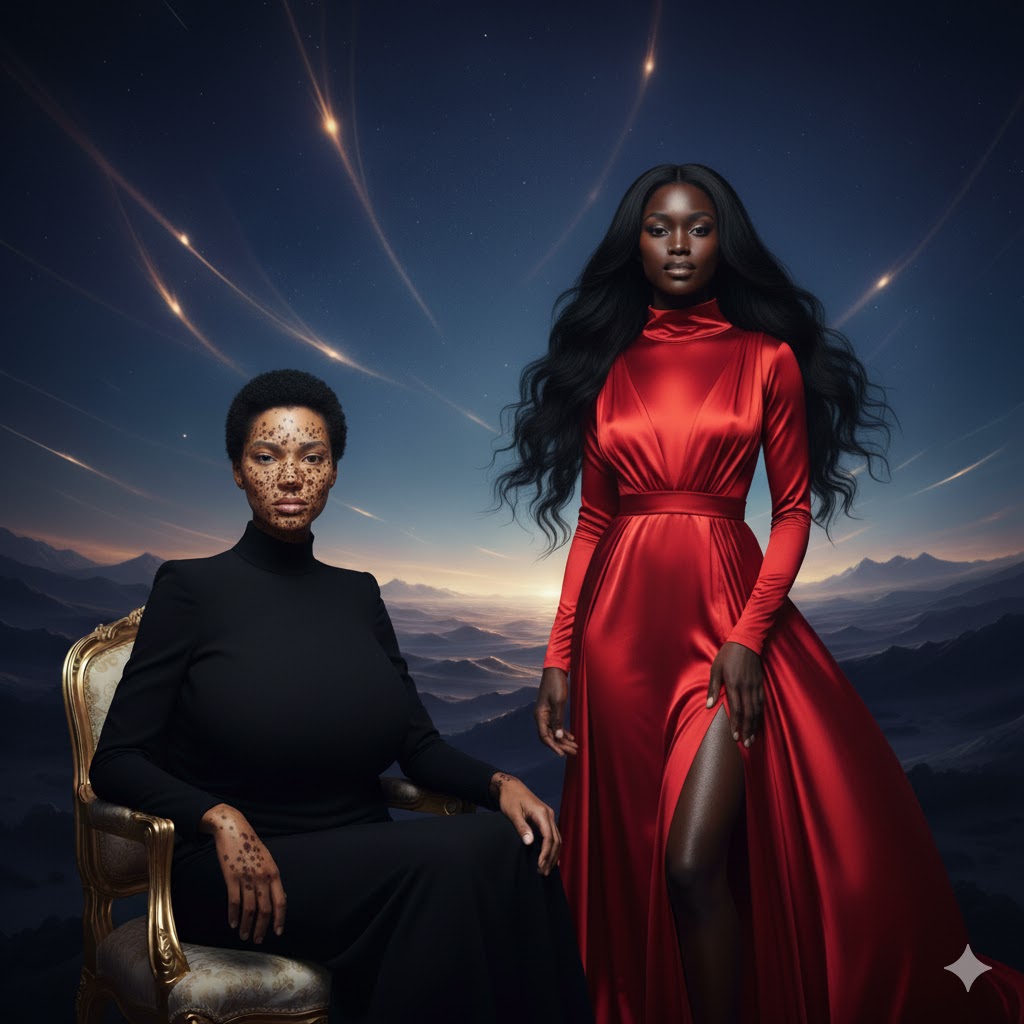
Beauty has long been tied to social hierarchies and cultural perceptions, with lighter skin often privileged in many societies. Yet equating light skin with attractiveness is misleading and overly simplistic. True beauty is a combination of facial features, symmetry, proportion, expression, and character. While society may focus on skin color, psychology and aesthetics show that light skin does not guarantee beauty, nor does dark skin preclude it.
The Cultural Obsession with Light Skin
Throughout history, light skin has been associated with wealth, status, and desirability. From colonialism to modern media, lighter skin has been positioned as aspirational. Colorism perpetuates the false belief that fairness equals beauty, ignoring the complexity of human aesthetics (Hunter, 2007).
The Science of Facial Harmony
Research in facial aesthetics shows that facial harmony—balanced proportions between the eyes, nose, lips, and jaw—is a primary determinant of attractiveness. Features aligned with the golden ratio (approximately 1.618) are perceived as more aesthetically pleasing, regardless of skin tone (Rhodes, 2006).
Symmetry and Perceived Beauty
Facial symmetry is another critical factor. Symmetrical faces are often rated as healthier, more attractive, and genetically fit. Both light-skinned and dark-skinned individuals can possess perfect symmetry, demonstrating that attractiveness is independent of melanin content.
The Eye of the Beholder
Beauty is subjective and culturally mediated. The famous adage, “beauty is in the eye of the beholder,” reflects the role of personal preference, social context, and cultural standards in shaping who is considered attractive (Jones & Hill, 1993). A face admired in one culture may be overlooked in another.
Dark Skin Can Be Beautiful
Many dark-skinned individuals possess features that are considered conventionally beautiful—high cheekbones, symmetrical eyes, balanced lips, and radiant skin. Natural beauty cannot be measured solely by complexion, and dark skin often carries a richness and depth that enhances aesthetic appeal.
Light Skin Does Not Guarantee Beauty
Light-skinned individuals may not have the facial harmony or symmetry that contributes to attractiveness. There are light-skinned people with disproportionate or less balanced facial features, showing that skin tone alone is not an indicator of beauty.
Facial Features Over Skin Tone
Studies demonstrate that eye shape, nose width, lip fullness, and jawline prominence are central to perceptions of beauty. Skin tone plays a role in contrast and highlight but is secondary to feature harmony (Rhodes, 2006).
Expression and Emotional Appeal
Beyond structure, facial expression contributes to perceived attractiveness. A warm smile, expressive eyes, and confident posture enhance beauty in all skin tones, proving that emotional appeal matters more than melanin content.
Cultural Perceptions and Media Bias
Media often reinforces the myth that light skin equals beauty. Advertising, film, and social media tend to feature light-skinned models, skewing public perception and perpetuating colorist ideals. This bias fails to acknowledge the diversity of beautiful faces across all skin tones.
The Role of Confidence
Confidence and self-assurance influence attractiveness. Someone who carries themselves with dignity and self-love is perceived as beautiful regardless of complexion. Inner beauty radiates outward, affecting how others perceive physical appearance (1 Peter 3:3-4).
The Psychology of Preference
Human attraction is influenced by evolutionary psychology—signals of health, fertility, and genetic fitness. Symmetry, proportionality, and skin health signal vitality and influence perception more than skin lightness.
Historical Context
Historically, societies with darker-skinned populations have had their own beauty ideals that did not privilege lightness. African, Indigenous, and Asian cultures have celebrated diverse features, demonstrating that beauty is culturally and biologically multifaceted.
Misconceptions About Fairness
The belief that fair skin guarantees beauty erases diversity and harms self-esteem in darker-skinned populations. People often internalize these messages, creating a false hierarchy of attractiveness.
Beauty Across Skin Tones
Research confirms that both light-skinned and dark-skinned individuals can be beautiful. Symmetry, proportion, facial harmony, and personal presence are universal indicators of attractiveness, not melanin content.
Faith and True Beauty
Scripture reminds us that outward appearance is secondary to the heart. God sees the heart, and His value system is not tied to skin tone (1 Samuel 16:7). True beauty includes character, kindness, and alignment with God’s design.
Examples in Society
Numerous public figures illustrate that beauty transcends skin tone. Dark-skinned models, actors, and leaders are celebrated globally for their aesthetic appeal, disproving the myth that lightness equals prettiness.
The Eye of the Beholder Revisited
Beauty is subjective and socially mediated. While one person may value lighter skin, another may be captivated by facial features, expression, or charisma. Recognizing subjectivity challenges rigid beauty hierarchies.
Challenging Colorist Ideals
Rejecting the notion that light skin is inherently superior empowers individuals to appreciate diverse beauty. Colorism is socially constructed, but feature harmony, symmetry, and confidence are universally admired.
Conclusion
Light skin does not automatically equal beauty. True attractiveness is determined by facial harmony, symmetry, expression, and character. Dark-skinned individuals can be stunningly beautiful, while light-skinned individuals may lack these aesthetic qualities. Beauty is subjective, culturally influenced, and deeply rooted in both physical features and the spirit. Recognizing this truth helps dismantle harmful stereotypes and celebrates God’s diverse creation (Psalm 139:14).
References
- Hunter, M. L. (2007). The persistent problem of colorism: Skin tone, status, and inequality. Sociology Compass, 1(1), 237–254. https://doi.org/10.1111/j.1751-9020.2007.00006.x
- Rhodes, G. (2006). The evolutionary psychology of facial beauty. Annual Review of Psychology, 57(1), 199–226. https://doi.org/10.1146/annurev.psych.57.102904.190208
- Jones, D., & Hill, K. (1993). Criteria of facial attractiveness in five populations. Human Nature, 4(3), 271–296.
- Psalm 139:14 (KJV) – “I am fearfully and wonderfully made.”
- 1 Samuel 16:7 (KJV) – “Man looketh on the outward appearance, but the LORD looketh on the heart.”
- 1 Peter 3:3-4 (KJV) – Emphasis on inner beauty over outward adornment.
Discover more from THE BROWN GIRL DILEMMA
Subscribe to get the latest posts sent to your email.
 THE BROWN GIRL DILEMMA