
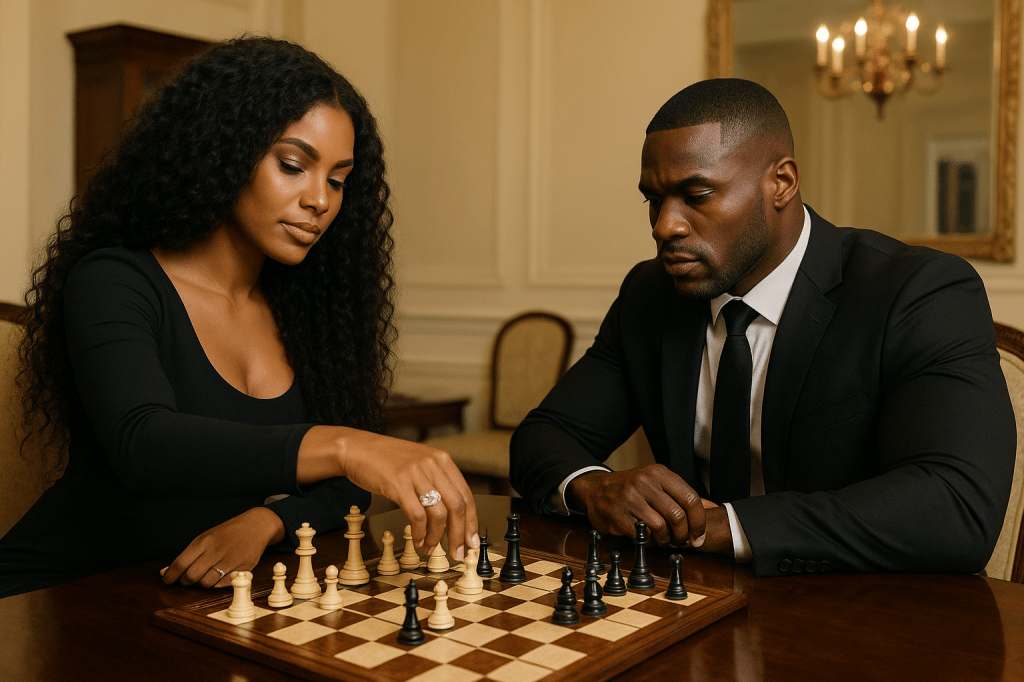
Life is often described through metaphors to help human beings make sense of complexity, uncertainty, and consequence. One of the most enduring metaphors is chess—a game of strategy, foresight, patience, and consequence. Chess mirrors life not because life is rigid or predetermined, but because both require intentional thinking, awareness of the environment, and responsibility for one’s choices. Every move matters, even the ones that seem insignificant at the time.
Chess is a board game played between two opponents, each commanding sixteen pieces with distinct roles and limitations. The goal is not merely to capture pieces, but to place the opponent’s king in a position where escape is impossible. This objective mirrors life’s deeper pursuits, where success is rarely about isolated wins, but about long-term positioning, stability, and survival. Winning in chess, as in life, is about strategy rather than impulse.
Each chess piece represents a different capacity, just as individuals in life possess varying strengths, limitations, and roles. Pawns are often underestimated, yet they form the foundation of the game. In life, foundational habits such as discipline, education, and character function like pawns—seemingly small, but essential for progress and protection. Without strong pawns, the game collapses early.
The king is the most valuable piece, even though it is not the most powerful. Its safety determines the outcome of the game. In life, this mirrors mental health, integrity, and identity. You may accumulate achievements, resources, and recognition, but if your core self is compromised, everything else becomes irrelevant. Protecting the “king” is a psychological necessity.
The queen, the most powerful piece, represents potential, influence, and versatility. In life, unchecked power can lead to overconfidence and vulnerability. Many lose their queen early—burning themselves out, oversharing, or overextending—only to realize later that power must be used with restraint. Wisdom lies not in how much power you have, but in when and how you deploy it.
Chess teaches delayed gratification, a core principle in psychology associated with emotional regulation and long-term success. A good player resists immediate gains in favor of better positioning. Similarly, life rewards those who can resist short-term pleasure for long-term fulfillment. Impulsive decisions often feel good in the moment but create vulnerabilities that are difficult to repair.
Every chess move has consequences, whether visible immediately or revealed later in the game. This mirrors the psychological concept of cause and effect in decision-making. Life choices—relationships, finances, moral decisions—often appear harmless at first, yet compound over time. Chess trains the mind to think beyond the present moment.
Anticipation is central to chess. Players must consider not only their own moves, but their opponent’s responses. In life, emotional intelligence functions the same way. Understanding human behavior, motivations, and reactions allows individuals to navigate social environments more effectively. Poor anticipation leads to unnecessary conflict and self-sabotage.
Chess also teaches adaptability. No game unfolds exactly as planned. Unexpected sacrifices, losses, or threats force players to recalibrate. Life operates the same way. Psychological resilience is the ability to adjust without losing direction. Those who rigidly cling to one plan often struggle when reality shifts.
Sacrifice is a profound lesson in chess. Sometimes a piece must be given up to gain a positional advantage or protect the king. In life, sacrifice often involves letting go of ego, unhealthy relationships, or immediate comfort for future growth. Psychology recognizes sacrifice as a mature coping strategy rooted in purpose rather than fear.
The opening phase of chess emphasizes development and preparation. Early mistakes can haunt a player for the entire game. Likewise, early life experiences—childhood environment, education, and mentorship—shape long-term psychological outcomes. While one can recover from a poor opening, it requires greater effort and awareness.
The middle game represents complexity, tension, and conflict. This stage mirrors adulthood, where responsibilities multiply and consequences intensify. Psychological stress often peaks here, as individuals juggle identity, relationships, career, and purpose. Chess teaches that clarity and patience are essential during high-pressure moments.
Endgames are quiet, precise, and unforgiving. With fewer pieces on the board, every move is magnified. Life’s later stages often resemble this phase, where reflection, legacy, and wisdom become central. Psychology emphasizes meaning-making during this stage, as individuals evaluate their choices and contributions.
Chess punishes emotional decision-making. Anger, fear, or arrogance often lead to blunders. Life is no different. Emotional regulation is one of the strongest predictors of success and well-being. The game reinforces the importance of responding thoughtfully rather than reacting emotionally.
Patterns play a critical role in chess mastery. Experienced players recognize recurring structures and traps. In life, psychology teaches pattern recognition through self-awareness. Repeated relationship failures, financial mistakes, or emotional triggers are signals, not coincidences. Growth begins when patterns are acknowledged and addressed.
Chess also teaches accountability. There are no teammates to blame for a loss. Every defeat is the result of one’s own decisions. Life operates under the same principle, though people often resist it. Psychological maturity involves taking responsibility rather than externalizing blame.
Silence and observation are underrated skills in chess. The best players often wait, watch, and gather information. In life, listening is a powerful psychological tool. Many mistakes are made not from ignorance, but from speaking or acting too quickly without understanding the full situation.
Time management is another parallel. Chess clocks impose limits, forcing players to balance speed and accuracy. Life also imposes time constraints—aging, deadlines, and finite opportunities. Psychology emphasizes prioritization as a survival skill. Not every battle deserves your time or energy.
Victory in chess is not about domination but precision. A single accurate sequence can decide the outcome. Life success is similar. Small, consistent, well-thought-out decisions often outweigh dramatic gestures. Mastery is quiet, not flashy.
Ultimately, chess is a mirror of the mind. It reveals patience, impulsivity, foresight, fear, and discipline. Life does the same. The board simply makes these traits visible. Studying chess psychologically is not about becoming a grandmaster, but about becoming more intentional, self-aware, and strategic in how one lives.
Life may not be a game, but it is governed by rules, consequences, and choices. Chess does not teach how to control others; it teaches how to control oneself. In that sense, life is not won by checkmating people, but by mastering the mind that makes the moves.
References
Baumeister, R. F., & Tierney, J. (2011). Willpower: Rediscovering the greatest human strength. Penguin Press.
Charness, N., Tuffiash, M., & Jastrzembski, T. (2004). Motivation, emotion, and expertise in chess. Journal of Applied Cognitive Psychology, 18(3), 297–315. https://doi.org/10.1002/acp.1016
De Groot, A. D. (1978). Thought and choice in chess. Mouton Publishers.
Kahneman, D. (2011). Thinking, fast and slow. Farrar, Straus and Giroux.
Mischel, W. (2014). The marshmallow test: Mastering self-control. Little, Brown and Company.
Vygotsky, L. S. (1978). Mind in society: The development of higher psychological processes. Harvard University Press.
Discover more from THE BROWN GIRL DILEMMA
Subscribe to get the latest posts sent to your email.
 THE BROWN GIRL DILEMMA