
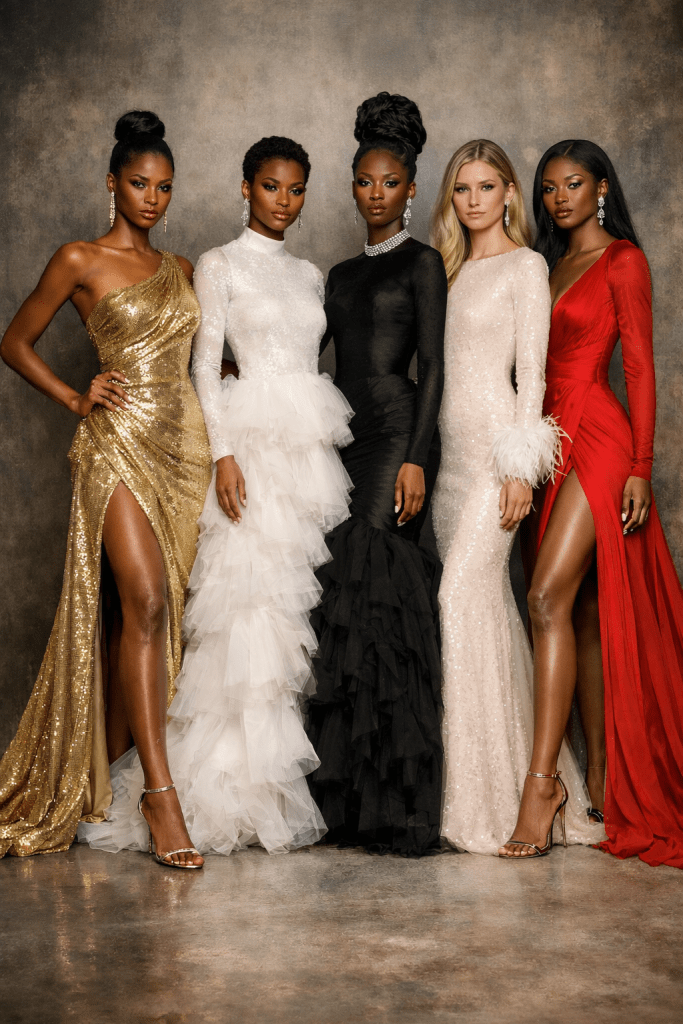
The fashion industry is often portrayed as a glamorous world of beauty, wealth, and celebrity. Runways, photo shoots, and magazine covers create an image of success that many aspire to achieve. However, beneath the polished surface lies a darker reality filled with exploitation, substance abuse, eating disorders, and psychological distress. Many models—including Carre Otis, Gia Carangi, and Beverly Johnson—have exposed these hidden struggles, reminding us that beauty often comes at a steep price.
Carre Otis: Beauty, Abuse, and Survival
Carre Otis, once one of the most recognizable faces in modeling, shed light on the industry’s dark underbelly in her memoir Beauty, Disrupted. She detailed her struggles with anorexia, cocaine addiction, and an abusive marriage to actor Mickey Rourke. Her career exemplifies how the relentless pressure to maintain a certain body image can push models into cycles of starvation and drug dependency (Otis & Warren, 2011). Otis’s story highlights how objectification and commodification often reduce models to mere products, disregarding their humanity.
Gia Carangi and the Tragedy of Fame
Gia Carangi, often called the world’s first supermodel, became a tragic cautionary tale. She quickly rose to fame in the late 1970s but struggled with heroin addiction and died from AIDS-related complications at just 26 years old (Steinem, 1982). Gia’s story illustrates how models, despite their fame and wealth, are not immune to the destructive consequences of substance abuse. Her untimely death revealed the fragility of careers built on the unstable foundations of beauty and fame.
Beverly Johnson: Racism and Exploitation
For Black models, the challenges are even greater. Beverly Johnson, who broke barriers in 1974 as the first Black woman to appear on the cover of Vogue, has been outspoken about the discrimination she faced in the industry. While she helped pave the way for women of color, Johnson admitted that the racism she endured affected her mental health and self-image. She also struggled with drug use during her career, openly discussing how cocaine was normalized in the modeling scene of the 1970s and 1980s (Johnson, 2015). Her story not only reflects the common pressures of beauty and addiction but also the added weight of racial inequality.
Naomi Campbell: Battling Racism and Addiction
Naomi Campbell, one of the most iconic supermodels in history, also faced struggles behind the scenes. Despite her extraordinary success, Campbell revealed in interviews that she turned to drugs and alcohol to cope with industry stress and the racism she experienced in fashion (Campbell, 2010). She admitted to attending rehabilitation programs and facing public scandals over her substance use. Her resilience in overcoming these challenges demonstrates both the toxic pressures of modeling and the possibility of recovery.
Alek Wek: Redefining Beauty in a Colorist World
Alek Wek, a South Sudanese model who rose to fame in the late 1990s, revolutionized beauty standards by embracing her dark skin and natural features in an era when Eurocentric ideals dominated. However, her success was not without struggle. Wek faced intense criticism from segments of the fashion industry and the public, who resisted her presence as a dark-skinned African model. Psychologically, Wek’s story underscores the importance of representation: her rise inspired countless young Black girls to see themselves as beautiful, yet it also revealed the industry’s deep discomfort with redefining beauty beyond whiteness (Wek, 2007).
Jourdan Dunn: Exploitation and Mental Health Struggles
Jourdan Dunn, a British supermodel, provides a modern example of the challenges Black models face. Despite being one of the most sought-after models of her generation, Dunn spoke openly about being paid less than white counterparts, being sidelined for major campaigns, and experiencing tokenism. She also shared her struggles with depression and the pressure of being a single Black mother while navigating an unstable and discriminatory industry (Halliday, 2015). Her experiences illustrate how systemic racism intersects with economic and emotional exploitation in modeling.
The Psychology of Race and Beauty
Psychologists emphasize that beauty standards are not only gendered but also racialized. Black models often internalize messages that their natural features are less desirable, leading to identity struggles and lowered self-esteem (Hunter, 2007). The phenomenon of “colorism”—where lighter skin is favored over darker skin—further marginalizes darker-skinned Black models, intensifying pressures to conform to Eurocentric norms. These dynamics increase vulnerability to depression, anxiety, and substance abuse as models navigate a system that simultaneously fetishizes and rejects them (Grogan, 2016).
Exploitation and Racism in the Industry
In addition to mental health challenges, Black models are frequently subjected to structural exploitation. They are often paid less, given fewer opportunities, and treated as interchangeable tokens in a predominantly white industry. Beverly Johnson’s testimony during the #MeToo era about abuse from powerful figures underscored how Black women in fashion face not only racism but also sexual exploitation (Johnson, 2015). Unlike their white peers, Black models often carry the additional burden of proving their beauty and legitimacy in an environment that persistently devalues them.
Survivors and Change-Makers
Despite the challenges, many Black models have transformed adversity into resilience. Naomi Campbell continues to advocate for diversity in fashion. Alek Wek has become a symbol of empowerment, redefining beauty for a new generation. Jourdan Dunn has used her platform to speak about mental health and inequality, while Tyra Banks created America’s Next Top Model to broaden representations of beauty on television. These women show that while the industry’s dark side is real, survival and reform are possible when models use their voices and visibility to challenge systemic oppression.
The Psychology of the Industry
Psychologists argue that the modeling industry reinforces body dissatisfaction, external validation, and self-objectification. Constant rejection, public scrutiny, and the demand to meet impossible beauty standards create fertile ground for depression, anxiety, and eating disorders (Grogan, 2016). Models are conditioned to base their worth on external approval, which fosters an external locus of control—meaning self-esteem is dictated by others’ opinions rather than inner confidence (Deci & Ryan, 2000). For many, drugs and alcohol become coping mechanisms for managing this high-pressure environment.
Exploitation and Abuse
Beyond mental health struggles, many models face exploitation. Carre Otis spoke about being forced into situations that blurred the line between professional and personal boundaries. Young models are often scouted as teenagers and placed in environments where they are vulnerable to financial exploitation, sexual harassment, and manipulation. In the #MeToo era, models such as Beverly Johnson came forward with stories of abuse by powerful figures in the fashion industry, revealing the systemic exploitation underlying the glitz and glamour (Johnson, 2015).
Survivors Who Transformed Their Careers
Despite the pitfalls, some models have managed to rise above the darker aspects of the industry. Cindy Crawford, Tyra Banks, and Iman transitioned into successful business careers, using their platforms to advocate for women and diversity in fashion. Naomi Campbell, despite her struggles, remains a powerful force in fashion and philanthropy, continuing to champion Black representation. Their resilience shows that while the industry can be destructive, survival and transformation are possible.
Conclusion
The modeling industry, for all its beauty and allure, often conceals a devastating reality. The stories of Carre Otis, Gia Carangi, Beverly Johnson, and Naomi Campbell expose the toxic mix of drugs, eating disorders, exploitation, and racism that lurks behind the runway lights. Psychology helps us understand how constant objectification and external validation can erode mental health, while systemic inequalities exacerbate these struggles for women of color. Yet, amid the darkness, survivors who turned their pain into resilience remind us that change is possible. The future of modeling must prioritize mental health, inclusivity, and ethical reform if it is to truly reflect beauty without destruction. The dark side of modeling is intensified for Black women, who endure the same pressures of drugs, eating disorders, and exploitation as their peers while also navigating racism and colorism. Beverly Johnson, Naomi Campbell, Alek Wek, and Jourdan Dunn exemplify both the pain and the resilience of Black models. Psychology helps us understand the toll of objectification and racial exclusion, while history reminds us of the courage it takes to break barriers in a hostile industry. If fashion is to truly reflect beauty, it must not only embrace diversity but also dismantle the systems that exploit and harm those who bring life to the runway.
References
- Campbell, N. (2010). Naomi Campbell: The rise, fall, and rise again. Interview Magazine.
- Deci, E. L., & Ryan, R. M. (2000). Self-determination theory and the facilitation of intrinsic motivation, social development, and well-being. American Psychologist, 55(1), 68–78.
- Grogan, S. (2016). Body image: Understanding body dissatisfaction in men, women, and children. Routledge.
- Johnson, B. (2015). The face that changed it all: A memoir. Atria Books.
- Otis, C., & Warren, H. (2011). Beauty, disrupted: A memoir. HarperCollins.
- Steinem, G. (1982). The truth about Gia. Cosmopolitan Magazine.
Campbell, N. (2010). Naomi Campbell: The rise, fall, and rise again. Interview Magazine.
Grogan, S. (2016). Body image: Understanding body dissatisfaction in men, women, and children. Routledge.
Halliday, J. (2015). Jourdan Dunn speaks out on racism in the fashion industry. The Guardian.
Hunter, M. (2007). The persistent problem of colorism: Skin tone, status, and inequality. Sociology Compass, 1(1), 237–254.
Johnson, B. (2015). The face that changed it all: A memoir. Atria Books.
Wek, A. (2007). Alek: From Sudanese refugee to international supermodel. HarperCollins.
Discover more from THE BROWN GIRL DILEMMA
Subscribe to get the latest posts sent to your email.
 THE BROWN GIRL DILEMMA