
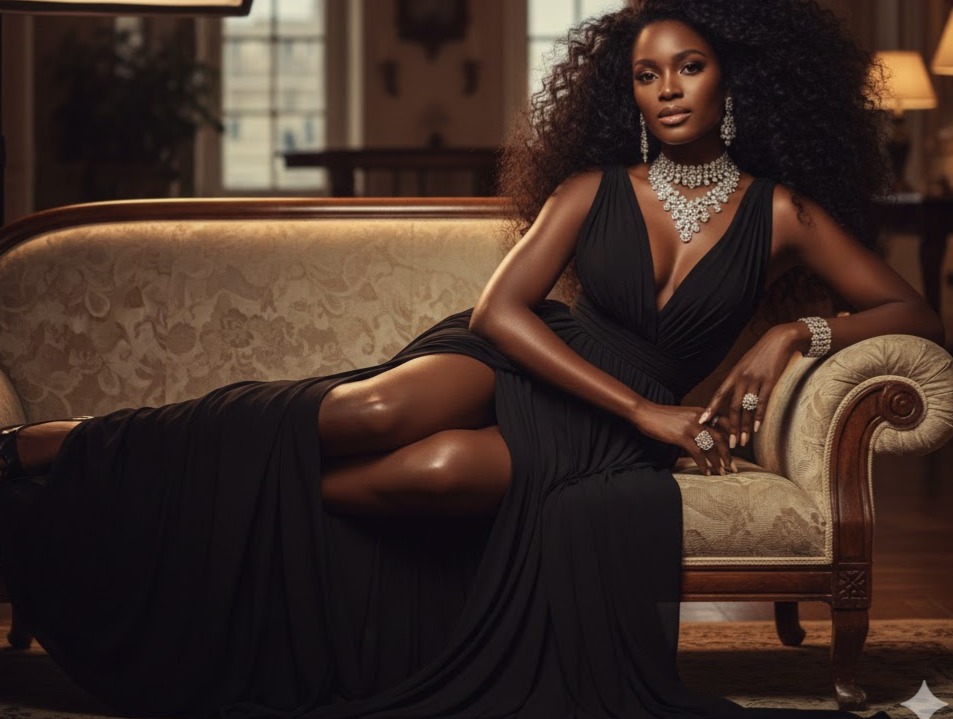
Beauty is more than what meets the eye; it is the careful orchestration of presence, poise, and expression. It is the art of revealing oneself to the world, not merely to be seen, but to be felt, admired, and remembered. Displaying beauty requires intention, awareness, and confidence, creating a lasting impression beyond physical appearance.
In fashion, beauty is curated. Each choice—from color to silhouette—tells a story. A flowing dress against the sunset, a sharp suit at a gala, or a minimalist ensemble at a gallery; each display communicates identity, taste, and mood. The world of aesthetics is deeply intertwined with self-expression, and the act of display becomes an extension of the self.
Hairstyles, skin care, and grooming are equally vital in this exhibition of beauty. A carefully styled hairdo or radiant skin reflects discipline, self-respect, and cultural pride. In many communities, hair is a crown—a statement of individuality and heritage. When displayed thoughtfully, it becomes both a personal and collective symbol of identity.
Body language is another subtle yet powerful medium of display. Graceful gestures, posture, and the way one carries themselves amplify beauty. Confidence cannot be masked; it radiates, capturing attention naturally. Those who master the silent language of movement communicate elegance, even without uttering a word.
Beauty is also a dance of contrasts. Symmetry meets asymmetry, simplicity meets complexity, and light meets shadow. Displaying beauty is about balancing these elements, making the ordinary extraordinary. The human eye is drawn to harmony, but also intrigued by uniqueness that defies expectation.
Cultural heritage heavily influences the standards and forms of display. Traditional attire, ceremonial garb, and artistic ornamentation reveal histories and ancestral pride. When a woman in Ankara fabric steps into a room or a man dons a Kente cloth, the display is a narrative, connecting past and present in one visual statement.
In art, beauty of display transcends the physical. Paintings, sculptures, and performances capture emotion, philosophy, and spirit. The display of a piece of art evokes a visceral reaction, just as human presentation does. Both demand attention and appreciation, bridging aesthetic pleasure with intellectual engagement.
The digital age has transformed how beauty is displayed. Social media platforms allow for curated aesthetics, but also invite scrutiny. The balance between authenticity and performance becomes a challenge, as each image or post is both a declaration and a judgment. Here, beauty of display is as much about narrative as it is about appearance.
Beauty also intersects with purpose. A smile that comforts, eyes that express empathy, or gestures that uplift—these are intangible forms of display. True beauty engages others, leaving them feeling seen and valued. In this sense, display becomes an act of generosity rather than vanity.
Accessories and adornments are extensions of display. Jewelry, scarves, hats, and even shoes are deliberate choices that punctuate personal style. They offer glimpses into taste, creativity, and confidence. Just as a brushstroke completes a painting, these details complete the visual narrative of an individual.
Seasonal changes offer new canvases for display. Colors of autumn, the freshness of spring, or the crisp elegance of winter attire provide opportunities to adapt and evolve one’s aesthetic. Observing nature’s beauty inspires personal display, reminding us that beauty is ever-changing yet enduring.
Light plays a critical role in showcasing beauty. Natural sunlight, candlelight, and soft ambient illumination reveal textures and tones differently, enhancing visual impact. Photographers and painters understand this; so too do those who display themselves thoughtfully. Light can elevate, soften, or dramatize beauty.
Confidence amplifies display more than makeup or fashion ever could. The individual who walks into a room with assurance commands attention effortlessly. This type of beauty is magnetic because it emanates from inner strength rather than external validation. It is timeless and universally admired.
Beauty of display is not limited to youth or conventional standards. Age brings depth, experience, and narrative to the aesthetic. A woman with silver hair styled elegantly or a man with weathered hands and a confident gaze shows that beauty evolves and deepens over time. Display, in this context, is wisdom embodied.
Scent is another invisible yet potent medium. Perfume, essential oils, or natural body aroma complement visual display, creating a multisensory experience. People remember fragrance long after appearances fade, highlighting the holistic nature of beauty and its power to linger.
Public spaces serve as stages for beauty. Street style, everyday gestures, or casual elegance reveal artistry in the mundane. Observing a crowd becomes an appreciation of human creativity, diversity, and expression. Beauty thrives when shared, not confined to galleries or fashion runways.
Storytelling enhances display. The narratives behind clothing, art, or gestures imbue them with significance. A hand-stitched garment, a meaningful accessory, or a deliberate choice of pose tells observers who we are, where we come from, and what we value. Display becomes storytelling without words.
Even restraint can define beauty. Minimalism, subtlety, and understated elegance often create stronger impressions than extravagance. The art of doing less, yet saying more, demonstrates sophistication and intentionality. Beauty, when restrained, invites contemplation and respect.
Symmetry, proportion, and balance remain foundational to beauty. These principles, rooted in mathematics and nature, resonate universally. Whether in the human form, architecture, or visual composition, balance is reassuring, harmonious, and deeply pleasing. Display aligned with these principles often feels effortless.
Ultimately, the beauty of display is a conversation between the self and the world. It invites engagement, admiration, and reflection. When done authentically, it communicates confidence, creativity, and character. True display of beauty transcends vanity; it becomes a celebration of life, identity, and presence.
References
- Stanford Encyclopedia of Philosophy. (2024). Beauty.
- Explores classical and modern conceptions of beauty, objectivity vs. subjectivity, and how beauty connects with art and ethics. Stanford Encyclopedia of Philosophy
- Santayana, G. (1896). The Sense of Beauty: Being the Outlines of Aesthetic Theory.
- A foundational work in aesthetics, especially on “form” and “expression.” Wikipedia+1
- Hogarth, W. (1753). The Analysis of Beauty.
- Introduces the “Line of Beauty” (serpentine S-curve) and discusses visual beauty, movement, and grace. Wikipedia
- Hegel, G. W. F.Lectures on Aesthetics (discussed in secondary source).
- Hegel’s idea: ideal beauty is the “sensuous expression of spiritual freedom.” Stanford Encyclopedia of Philosophy
- Hume, D. (in his essays “Of the Standard of Taste” and “Of Tragedy”).
- Emphasizes the role of “taste” and shared human nature in aesthetic judgments. Plato
- Perlovsky, L. (2010). Beauty and Art: Cognitive Function, Evolution, and Mathematical Models of the Mind.
- A cognitive-science/mathematical model of beauty; argues aesthetic emotions are rooted in cognition and evolution. arXiv
- Perlovsky, L. (2010). Physics of the Mind: Concepts, Emotions, Language, Cognition, Consciousness, Beauty, Music, and Symbolic Culture.
- Explores how beauty is related to cognition, consciousness, and symbolic culture. arXiv
- Jiang, B., & de Rijke, C. (2021). Structural Beauty: A Structure‑based Approach to Quantifying the Beauty of an Image.
- Proposes a more “objective” model of beauty based on structure, hierarchy, and mathematical coherence. arXiv
- Rusnak, A. M. (2025). Representing Beauty: Towards a Participatory but Objective Latent Aesthetics.
- Modern work that examines how beauty might be represented in machine learning / neural networks, bridging subjective experience and objective form. arXiv
- Cambridge Scholars.Aesthetics of Presence.
- Focus on “presence” in performance and how the beholder’s attention / awareness is central in experiencing beauty. Cambridge Scholars Publishing
- Friedenberg, J. (2020). Understanding Aesthetics, Creativity, and the Arts: An Interdisciplinary Approach.
- A modern interdisciplinary textbook combining philosophy, psychology, and art theory. PhilPapers
- Stanford Encyclopedia of Philosophy. (2024). The Concept of the Aesthetic.
- Defines “aesthetic” as a philosophical concept; distinguishes between aesthetic object, judgment, and experience. Stanford Encyclopedia of Philosophy
- Studia Gilsoniana. (2018). Theories of Beauty in Western Culture.
- Scholarly article about metaphysical conceptions of beauty, the problem of ugliness, and historical perspectives. Biblioteka Nauki
Discover more from THE BROWN GIRL DILEMMA
Subscribe to get the latest posts sent to your email.
 THE BROWN GIRL DILEMMA