
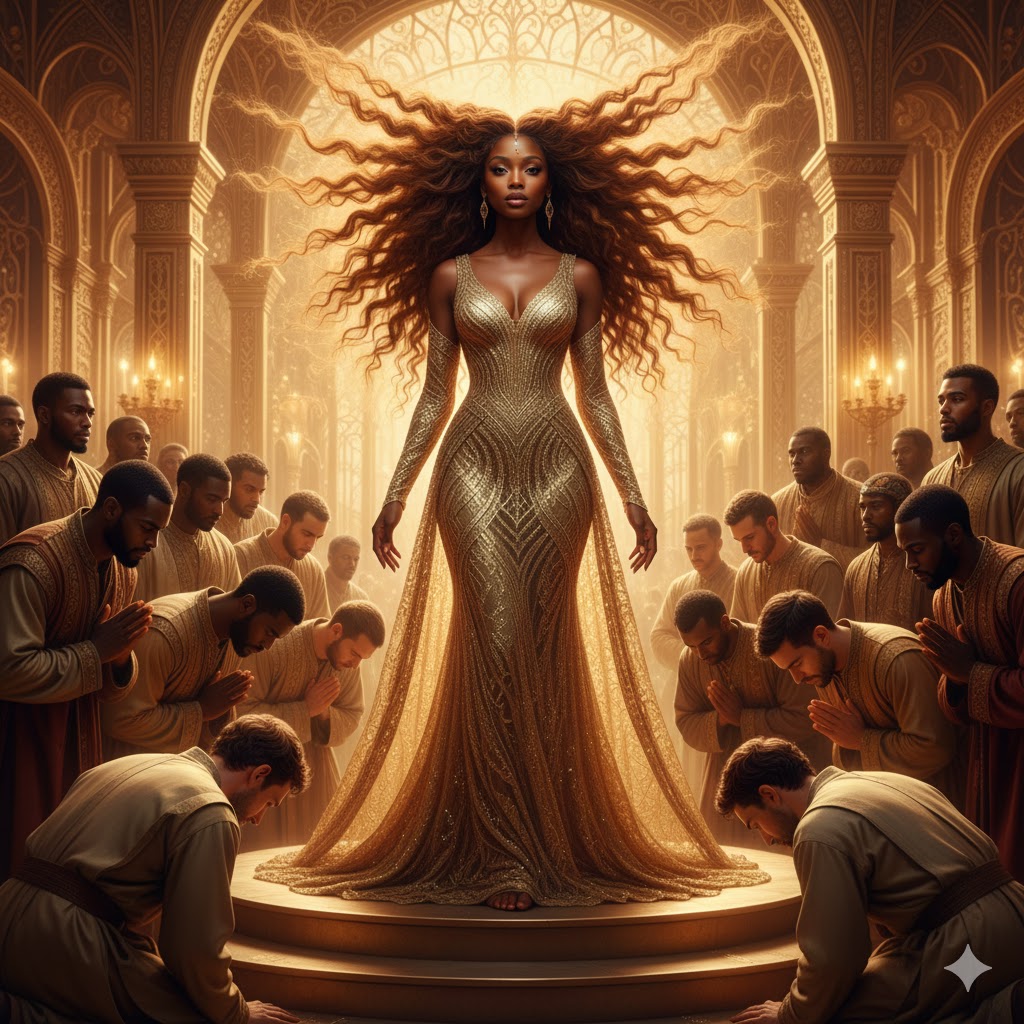
Beauty has always held cultural significance, but in modern society, it has quietly crossed the line from appreciation to worship. What was once an aesthetic value has become a moral currency, shaping who is deemed worthy of love, success, protection, and even humanity. When beauty becomes a god, it demands sacrifice—time, money, self-worth, and identity—while offering conditional acceptance in return.
From a psychological standpoint, humans are wired to notice physical attractiveness due to evolutionary associations with health and fertility. However, contemporary culture has exaggerated this instinct into an obsession. Media, advertising, and social platforms reinforce the idea that beauty equals value, creating a hierarchy where appearance determines social capital rather than character.
Sociologists refer to this phenomenon as “lookism” or “beautyism,” a system in which attractive individuals receive unearned advantages while others face discrimination. Research consistently shows that conventionally attractive people are perceived as more intelligent, trustworthy, and competent, even when no evidence supports these assumptions. This bias reveals how deeply beauty has been moralized.
The Bible warns against this distortion. Scripture repeatedly cautions against judging by outward appearance, reminding humanity that God looks at the heart. When beauty becomes the primary lens through which people evaluate themselves and others, it directly contradicts divine standards of worth.
The idolization of beauty thrives on comparison. Social media intensifies this dynamic by presenting curated, edited, and often artificial images as normal reality. Psychological studies link excessive exposure to idealized images with increased anxiety, depression, body dysmorphia, and low self-esteem, particularly among women and adolescents.
Idolatry, biblically defined, occurs when anything takes the place of God as a source of identity, security, or meaning. Beauty becomes an idol when self-worth rises and falls based on appearance, aging becomes a source of fear, and physical imperfection is treated as failure rather than humanity.
The beauty industry profits from this insecurity. Trillions of dollars are generated globally by convincing people they are perpetually inadequate. This economic system thrives on dissatisfaction, reinforcing the lie that the transformation of the body will heal wounds rooted in identity and belonging.
Scripture identifies this pattern as vanity, not in the shallow sense of self-care, but as emptiness and illusion. Ecclesiastes describes vanity as chasing what cannot satisfy. Beauty, by nature, is fleeting, yet modern culture treats it as eternal currency.
Colorism and racialized beauty standards further expose the moral failure of appearance worship. Eurocentric ideals have historically elevated certain features while marginalizing others, particularly within communities of color. This hierarchy did not arise naturally but was constructed through colonialism, slavery, and white supremacy.
Psychologically, internalized beauty standards can fragment identity. When individuals learn that love and affirmation are conditional upon appearance, they begin performing rather than existing authentically. This performance-based identity leads to chronic stress and emotional exhaustion.
The Bible presents a radically different vision of beauty. Proverbs describes beauty without character as meaningless, while Peter emphasizes the beauty of a gentle and quiet spirit. These passages do not dismiss physical appearance but reframe beauty as something that flows from virtue rather than replaces it.
Men are not exempt from appearance idolatry. Increasing pressure on male physiques, height, and status reflects the same commodification of the body. When masculinity becomes visually performative rather than morally grounded, men, too, become enslaved to external validation.
The idol of appearance also distorts relationships. When beauty is treated as a primary qualification for love, relationships become transactional. Partners are valued for how they reflect status rather than how they embody commitment, empathy, and faithfulness.
Spiritually, beauty worship competes with reverence for God. It demands rituals—constant self-monitoring, comparison, cosmetic alteration—and punishes disobedience with shame. Like all idols, it promises fulfillment but delivers bondage.
Aging exposes the fragility of appearance-based worth. Cultures that worship youth often treat aging as decline rather than wisdom. Scripture, however, associates aging with honor, experience, and blessing, revealing how far society has strayed from biblical values.
Healing from beauty idolatry requires a renewal of the mind. Psychology affirms that challenging distorted beliefs about worth is essential for mental health. Scripture echoes this through its call to transformation through truth rather than conformity to the world.
True beauty, biblically understood, is relational. It is expressed through love, humility, righteousness, and self-control. These qualities deepen over time rather than diminish, making them resistant to decay and comparison.
The church bears responsibility in this conversation. When faith communities mirror societal beauty standards—elevating image over integrity—they reinforce the very idol Scripture condemns. Spiritual spaces should be sanctuaries from appearance-based judgment, not extensions of it.
Freedom comes when beauty is appreciated but dethroned. Gratitude replaces obsession, stewardship replaces worship, and identity is rooted in being made in the image of God rather than meeting an aesthetic ideal.
Ultimately, when beauty becomes a god, it dehumanizes. When God is restored to His rightful place, beauty becomes what it was always meant to be—a reflection, not a ruler; a gift, not a god.
References
American Psychiatric Association. (2022). DSM-5-TR: Diagnostic and statistical manual of mental disorders (5th ed., text rev.). APA Publishing.
Bordo, S. (2004). Unbearable weight: Feminism, Western culture, and the body. University of California Press.
Cash, T. F. (2012). Cognitive-behavioral perspectives on body image. Guilford Press.
Etcoff, N. (1999). Survival of the prettiest: The science of beauty. Anchor Books.
Fredrickson, B. L., & Roberts, T.-A. (1997). Objectification theory. Psychology of Women Quarterly, 21(2), 173–206.
Hunter, M. (2007). The persistent problem of colorism. Sociology Compass, 1(1), 237–254.
The Holy Bible, King James Version. (1769/2017). Cambridge University Press.
Twenge, J. M. (2017). iGen. Atria Books.
Van der Kolk, B. (2014). The body keeps the score. Viking.
Wolf, N. (1991). The beauty myth. HarperCollins.
Discover more from THE BROWN GIRL DILEMMA
Subscribe to get the latest posts sent to your email.
 THE BROWN GIRL DILEMMA