
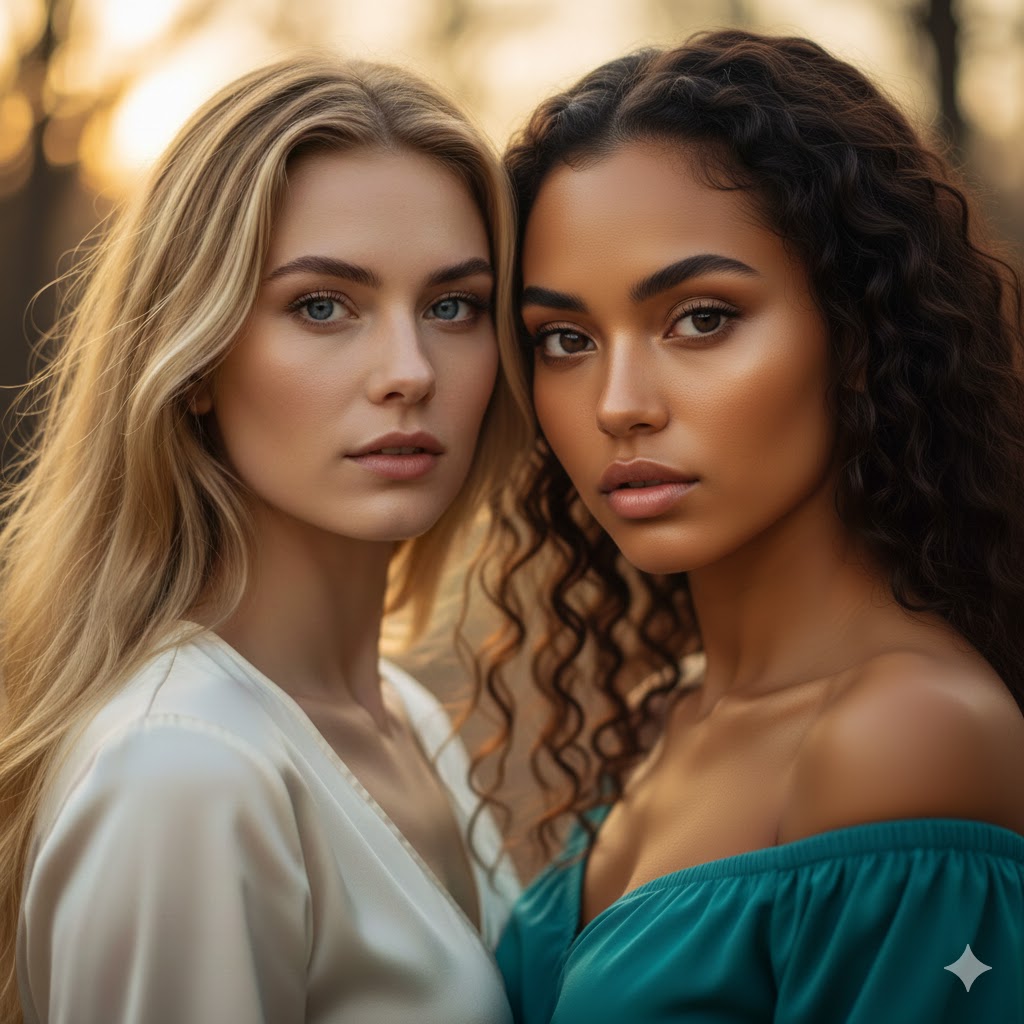
Beauty, often perceived as an individual trait, is deeply social, political, and historically constructed. “Beautyism” refers to the systemic privileging of individuals who conform to dominant aesthetic standards, and the inheritance of colonial aesthetics highlights how these standards are racialized, gendered, and embedded in structures of power. For communities of color, particularly Black and brown populations, these standards are not neutral; they are a legacy of colonialism, slavery, and European dominance, which continue to shape perceptions of worth, social mobility, and cultural acceptance.
Colonial powers imposed Eurocentric standards of beauty on colonized populations, privileging light skin, straight hair, narrow noses, and European facial features. As Fanon (1967) argues, these imposed ideals created internalized hierarchies of appearance, teaching oppressed populations to equate proximity to European aesthetics with social value, intelligence, and morality. Over generations, these beauty norms became cultural inheritance, producing what is now widely referred to as colorism—a preference for lighter skin and Eurocentric features within communities of color (Hunter, 2007).
Colorism manifests in multiple ways: social visibility, economic opportunity, media representation, and interpersonal desirability. Light-skinned individuals frequently receive more favorable treatment in employment, education, and romantic contexts, reflecting the lingering impact of colonial aesthetics (Anderson, Grunert, Katz, & Lovascio, 2010; Hamermesh, 2011). Conversely, darker-skinned individuals, despite possessing features celebrated in ancestral or cultural contexts, often face marginalization, invisibility, and devaluation, highlighting how colonial beauty norms persist as systemic bias.
Hair has been one of the most conspicuous battlegrounds of colonial influence. European standards historically stigmatized curly, coily, or wooly hair textures, pressuring Black women and men to straighten or chemically alter their hair to fit “acceptable” ideals (Banks, 2000). Such practices extend beyond aesthetics—they reinforce internalized notions of inferiority and perpetuate the belief that natural features are undesirable. Resistance to these pressures, such as embracing natural hair and protective styling, has become an act of cultural reclamation and defiance against inherited colonial aesthetics.
Facial features and skin tone remain central to the perpetuation of beautyism. Big eyes, full lips, broad noses, and melanin-rich skin, historically undervalued under colonial influence, are increasingly celebrated in movements reclaiming Black and brown beauty (Craig, 2002). These movements challenge the internalized notion that beauty is synonymous with European features, insisting that aesthetic value is culturally situated and historically contingent.
Media representation plays a crucial role in reinforcing or challenging beautyism. For decades, Eurocentric standards dominated television, film, and advertising, marginalizing Black and brown bodies. Contemporary efforts to highlight diverse skin tones, natural hair textures, and a variety of facial features counteract these historical biases, providing visibility and affirming that inherited colonial aesthetics are neither universal nor inherently desirable (Rhode, 2010).
Psychologically, the inheritance of colonial aesthetics contributes to internalized bias and self-perception challenges. Individuals who deviate from Eurocentric ideals may experience diminished self-esteem, feelings of inadequacy, and a constant pressure to conform (Eagly, Ashmore, Makhijani, & Longo, 1991). Conversely, embracing features that align with ancestral or culturally grounded standards fosters self-confidence, pride, and cultural continuity.
Beautyism also intersects with gender. Women, particularly in Black and brown communities, are disproportionately affected by the pressure to conform to colonial aesthetics. Their features, hair textures, and skin tones are policed in professional, social, and romantic contexts. Men, though often less scrutinized in terms of aesthetics, are still influenced by preferences for lighter skin and Eurocentric traits, reflecting broader societal biases (Langlois et al., 2000).
Colorism and beautyism are not merely personal issues; they are structural. The inheritance of colonial aesthetics influences hiring practices, media representation, and social networking opportunities, reinforcing systems of inequality. Recognition of this legacy is essential to dismantling discriminatory practices and cultivating inclusive standards of beauty that honor diversity, ancestry, and cultural heritage (Hunter & Davis, 1992).
Resistance and reclamation are central to the contemporary response to beautyism. Movements such as natural hair advocacy, Afrocentric beauty campaigns, and media platforms centering melanin-rich aesthetics demonstrate that beauty is culturally constructed and that inherited colonial standards can be challenged. By embracing diverse features—full lips, broad noses, textured hair, and rich skin tones—communities affirm identity, resilience, and historical continuity.
The spiritual dimension of beauty further contextualizes resistance. Biblical principles remind us that worth is not measured by external appearance but by character, virtue, and alignment with divine purpose (1 Samuel 16:7). Celebrating ancestral aesthetics aligns with this principle, affirming that beauty, when rooted in heritage and authenticity, reflects God’s design rather than imposed societal preference.
Education is pivotal in addressing beautyism. Teaching the historical origins of Eurocentric aesthetics, colorism, and colonial beauty standards empowers individuals to recognize internalized biases and make informed choices regarding self-perception, presentation, and cultural alignment. Cultural literacy fosters pride in ancestral features and counters centuries of devaluation.
Economically, beautyism affects access to opportunities. Hamermesh (2011) notes that perceptions of attractiveness influence hiring, wages, and promotion. Since colonial aesthetics continue to inform societal standards, individuals whose appearance aligns with Eurocentric norms often enjoy systemic advantages, while those embracing ancestral features may face barriers. Recognizing and challenging this inequity is a critical step toward social justice.
The inheritance of colonial aesthetics also impacts interpersonal relationships. Preferences for lighter skin and European features shape dating dynamics, friendship hierarchies, and social inclusion, often privileging proximity to Eurocentric ideals. Such dynamics reflect broader societal biases rather than objective measures of attractiveness or compatibility.
By redefining beauty standards to honor ancestral traits, communities challenge entrenched hierarchies. Features once devalued under colonial influence—full lips, broad noses, textured hair, and melanin-rich skin—are now celebrated, affirming identity, pride, and historical continuity. This reclamation disrupts beautyism and repositions cultural aesthetics as a source of empowerment rather than limitation.
Media, fashion, and entertainment industries play a transformative role by presenting diverse representations of Black and brown beauty. Featuring a range of skin tones, natural hair textures, and varied facial features shifts public perception, challenges internalized biases, and promotes equitable valuation of appearance.
Ultimately, beautyism and the inheritance of colonial aesthetics illustrate how historical oppression continues to shape contemporary standards of appearance. Recognizing this legacy is crucial for personal empowerment, cultural reclamation, and societal equity. By embracing diverse features and ancestral aesthetics, communities resist Eurocentric dominance and affirm the dignity, worth, and beauty inherent in melanin-rich bodies.
In conclusion, understanding beautyism requires acknowledging the colonial origins of aesthetic hierarchies and their ongoing impact on perception, opportunity, and self-worth. Reclaiming ancestral beauty—through features, hair, and skin tone—resists the internalization of colonial standards, celebrates diversity, and affirms cultural pride. True beauty emerges not from conformity to inherited Eurocentric ideals but from embracing the richness, history, and authenticity of Black and brown aesthetics.
References
Anderson, T. L., Grunert, C., Katz, A., & Lovascio, S. (2010). Aesthetic capital: A research review on beauty perks and penalties. Sociology Compass, 4(8), 564–575. https://doi.org/10.1111/j.1751-9020.2010.00312.x
Banks, I. (2000). Hair matters: Beauty, power, and Black women’s consciousness. New York University Press.
Bourdieu, P. (1986). The forms of capital. In J. Richardson (Ed.), Handbook of theory and research for the sociology of education (pp. 241–258). Greenwood Press.
Craig, M. L. (2002). Ain’t I a beauty queen? Black women, beauty, and the politics of race. Oxford University Press.
Eagly, A. H., Ashmore, R. D., Makhijani, M. G., & Longo, L. C. (1991). What is beautiful is good, but… A meta-analytic review. Psychological Bulletin, 110(1), 109–128.
Fanon, F. (1967). Black skin, white masks. Grove Press.
Feingold, A. (1992). Good-looking people are not what we think. Psychological Bulletin, 111(2), 304–341.
Hamermesh, D. S. (2011). Beauty pays: Why attractive people are more successful. Princeton University Press.
Hunter, M. (2007). The persistent problem of colorism: Skin tone, status, and inequality. Sociology Compass, 1(1), 237–254. https://doi.org/10.1111/j.1751-9020.2007.00006.x
Hunter, M., & Davis, A. (1992). Colorism: A new perspective. Cultural Diversity and Mental Health, 4(2), 25–35.
Langlois, J. H., et al. (2000). Maxims or myths of beauty? Psychological Bulletin, 126(3), 390–423.
Rhode, D. L. (2010). The beauty bias: The injustice of appearance in life and law. Oxford University Press.
Wilson, T. D. (2002). Strangers to ourselves: Discovering the adaptive unconscious. Harvard University Press.
Gafney, W. (2017). Womanist midrash: A reintroduction to the women of the Torah and the Throne. Westminster John Knox Press.
Discover more from THE BROWN GIRL DILEMMA
Subscribe to get the latest posts sent to your email.
 THE BROWN GIRL DILEMMA