
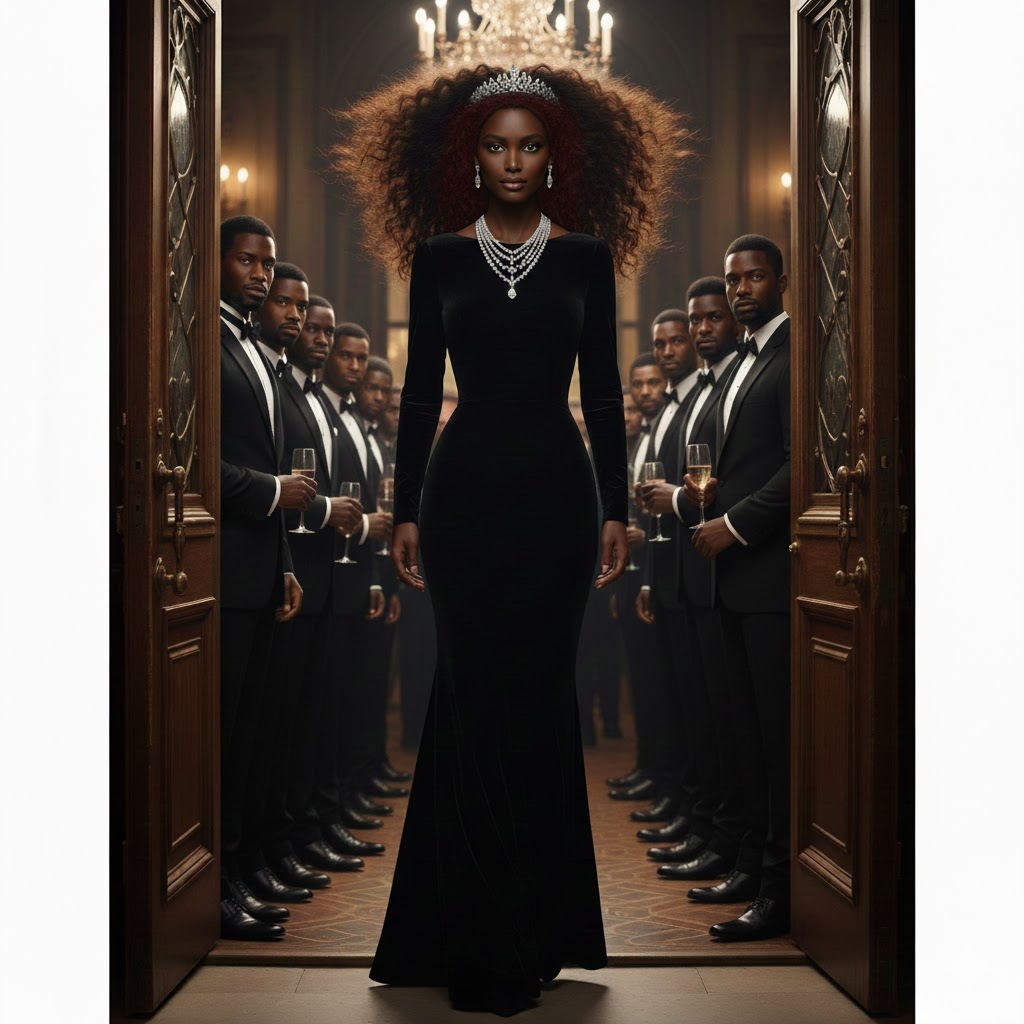
When she enters, the air seems to shift. There is a gravity to her presence, an energy that demands attention without demanding it. Her brown skin, rich and radiant, tells a story of ancestry, resilience, and divine design. She does not need adornment to shine; her essence alone commands the room.
Society has long tried to dictate standards of beauty that favor lighter skin, a legacy of colorism rooted in slavery, colonialism, and media representation. Yet, the beautiful brown woman challenges these narratives simply by existing unapologetically. Her presence is a rebellion, a reclamation of self-worth, and a demonstration of ancestral pride (Hunter, 2007).
Her beauty is holistic—her brownness is inseparable from her poise, intellect, and confidence. It is in her posture, the deliberate cadence of her speech, and the self-assuredness in her eyes. This combination disrupts preconceived notions and reshapes perceptions of what it means to be beautiful (Bradshaw, 2012).
In professional settings, social gatherings, or casual encounters, her brown skin communicates a quiet authority. People instinctively take notice, not because she demands it, but because she emanates authenticity and power. She is a walking testament to the majesty of her people.
Her presence is also culturally symbolic. Dark skin, often stigmatized in media and society, becomes a banner of resilience. She carries the legacy of queens, activists, artists, and pioneers who navigated systemic oppression with grace, leaving imprints that continue to inspire.
The room changes not only because of her external beauty but because of her mindset. She radiates intelligence, creativity, and spiritual depth. These qualities amplify the effect of her appearance, showing that beauty is not skin-deep but soul-deep (Strober, 2017).
Fashion, style, and personal expression become tools to complement her brownness rather than define it. She chooses garments that honor her body, colors that celebrate her tone, and accessories that accentuate her essence without overshadowing it. Every choice is intentional, reflecting self-awareness and artistry.
Her influence extends beyond aesthetics. She inspires other Black women to embrace their own shades of brown, fostering communities of affirmation and empowerment. Through mentorship, social media, and everyday interactions, she reshapes cultural definitions of attractiveness and success (Russell-Cole et al., 2013).
Even in spaces where colorism persists, she refuses to diminish herself. She walks boldly, speaks clearly, and exists fully. Her refusal to conform challenges societal norms and encourages others to do the same, cultivating a ripple effect of confidence and liberation.
The beautiful brown woman also embodies spiritual and emotional depth. Her faith, compassion, and resilience enhance her presence, allowing her to engage the world with a blend of humility and authority. Her brownness becomes not just a visual marker but a symbol of wisdom and inner strength.
Her laughter fills the room, warm and inviting, softening tension and inviting camaraderie. Her smile is a reminder that joy, confidence, and self-acceptance are revolutionary acts for women whose beauty has historically been undervalued.
Even the way she moves—her gestures, her posture, the rhythm of her speech—changes the atmosphere. People are drawn to her authenticity, her refusal to imitate, and her natural elegance. Presence, in her case, becomes a form of empowerment.
In social and professional circles alike, she commands respect through competence, insight, and composure. Her brownness is intertwined with her achievements, a visual testament to capability and excellence (Patton, 2006).
Her beauty is not static; it evolves with experience, reflection, and growth. Each challenge she overcomes and every skill she masters adds depth to her presence, demonstrating that the most impactful beauty is dynamic and multifaceted.
Her brownness is also political. In a world that often undervalues dark skin, she asserts her value daily, challenging ingrained hierarchies and shifting collective consciousness. Her existence questions assumptions and redefines societal standards of desirability and authority.
She carries herself with dignity in all situations, transforming spaces with grace and assurance. People notice not because she seeks approval, but because her essence radiates self-possession and excellence.
Her influence extends to younger generations, who see in her a reflection of possibility and potential. She becomes a visual and moral guidepost, illustrating that beauty, intellect, and strength are not mutually exclusive but complementary.
Her presence challenges stereotypes, proving that the dark-skinned woman is multifaceted—intelligent, creative, resilient, and aesthetically striking. She disrupts monolithic narratives and invites a richer, more inclusive understanding of beauty (Banks, 2000).
Even in fleeting interactions, her impact lingers. People remember her warmth, her confidence, and the way her brownness seemed to illuminate the space. She leaves an imprint that goes beyond sight, touching hearts and minds.
Ultimately, the beautiful brown woman changes the room because she is unapologetically herself. She embodies the intersection of heritage, talent, faith, and self-acceptance. Her presence is a celebration of what it means to thrive as a Black woman, and a reminder that true beauty—grounded in authenticity and pride—is transformative.
References
- Banks, I. (2000). Hair matters: Beauty, power, and Black women’s consciousness. NYU Press.
- Bradshaw, K. (2012). Skin deep: Exploring colorism in Black communities. Journal of Black Studies, 43(1), 21–39.
- Hunter, M. (2007). The persistent problem of colorism: Skin tone, status, and inequality. Sociology Compass, 1(1), 237–254.
- Patton, T. O. (2006). Hey girl, am I more than my hair? African American women and their struggles with beauty, body image, and hair. NWSA Journal, 18(2), 24–51.
- Russell-Cole, K., Wilson, M., & Hall, R. E. (2013). The color complex: The politics of skin color among African Americans. HarperCollins.
- Strober, R. (2017). Dark girls: Embracing beauty and identity. Psychology of Women Quarterly, 41(4), 487–500.
Discover more from THE BROWN GIRL DILEMMA
Subscribe to get the latest posts sent to your email.
 THE BROWN GIRL DILEMMA