
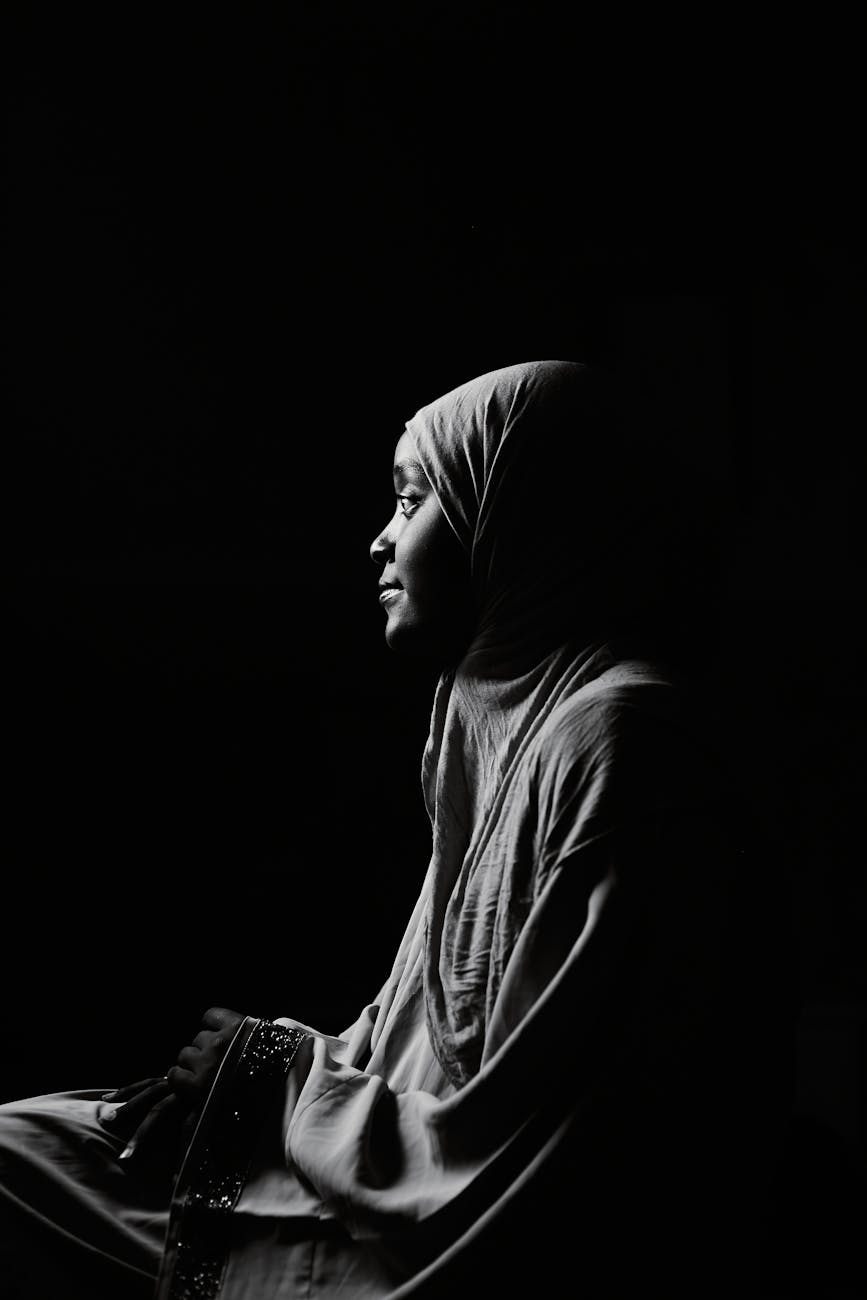
Ursula was forty-four years old, a teacher whose spirit was shaped by resilience and heartbreak. Her skin, rich and deep like polished mahogany, mirrored the hue of Viola Davis—strong, elegant, and undeniably beautiful. Yet, the world had never allowed her to believe it. From childhood to womanhood, her life was a collection of moments where love was something she had to chase, beg for, and sometimes bury.
She had learned early that being dark-skinned came with unspoken lessons—ones that no classroom could ever teach. Her mother, burdened by her own generational wounds, told her she was “too dark to be beautiful,” that no man would ever love her. Those words, sharp as glass, carved deep into Ursula’s developing self-image.
At school, light-skinned girls were treated like princesses. They were the ones chosen first, admired, and adored. Ursula was teased for her tightly coiled hair, her full lips, and her broad nose. They called her names—“tar baby,” “burnt toast,” “midnight”—each insult becoming a shadow that followed her for decades.
She remembered the day she stopped looking in mirrors. It wasn’t out of vanity but protection. Every reflection felt like a reminder of what the world had told her she was not—beautiful, wanted, worthy. Yet deep within, she longed for a love that could see her the way God saw her: radiant and whole.
As an adult, she became a teacher, pouring her heart into students who reminded her of herself—especially the dark-skinned girls who sat quietly at the back, afraid to raise their hands. She made sure to call them “beautiful” every day, hoping to plant in them the seeds no one had planted in her.
Still, the loneliness lingered. Every man she’d loved eventually left her for someone lighter. One boyfriend said, “You’re amazing, but my mom likes girls with softer features.” Another told her, “You’d be perfect if your skin wasn’t so dark.” Those words crushed her spirit, each one confirming the internalized message that her complexion was a curse.
In her thirties, she tried to change herself. She straightened her hair, wore lighter makeup, and dressed in colors that others said would “brighten her up.” But inside, she still felt dimmed—muted by a world that worshiped proximity to whiteness.
At work, she faced the same discrimination in professional form. She was overlooked for promotions, despite being more qualified than her peers. “You’re great with the kids,” her supervisor said, “but we’re looking for someone who represents a more ‘polished’ image.” She knew what that meant. It meant lighter. Softer. Whiter.
Ursula started to write late at night, her journal becoming her confessional. She wrote about beauty and pain, about wanting to be seen—not through pity, but through love. Her pen became her healing, each page a quiet rebellion against the colorist world that had silenced her.
Her mother’s voice still echoed in her head, but it was softer now, drowned out by Ursula’s growing realization that her mother’s cruelty was inherited pain. Her mother, too, had been told she wasn’t enough because of her hue. Hurt people hurt people, and colorism was the wound that passed from generation to generation like a curse disguised as advice.
Despite everything, Ursula’s heart still believed in love. She watched couples holding hands and wondered what it would feel like to be adored openly, without apology. She prayed for a man who would see her soul first and her shade second.
One day, a new teacher joined the school—a kind man with deep brown skin and a smile that reminded her of peace. He admired Ursula’s intellect, her compassion, and her fire. But when she caught feelings, fear crept in. “He’ll probably find someone lighter,” she whispered to herself. Years of rejection had made her afraid to hope.
But this time was different. He saw her. Not the world’s version of her, but her. When he told her she was beautiful, she didn’t believe him at first. “You don’t have to say that,” she replied. He smiled and said, “I’m not saying it because I have to. I’m saying it because I see it.”
Slowly, Ursula began to heal. She started wearing her natural hair again, letting her coils crown her with pride. Her students noticed. “Ms. Green, your hair is so pretty!” they’d say, and she’d smile, realizing how far she’d come from that little girl who once hated her reflection.
She never forgot the pain of her past, but she learned to turn it into purpose. She became an advocate for colorism awareness, speaking at schools and community centers about self-love and healing. Her words touched the hearts of many who had walked the same road.
By forty-four, Ursula hadn’t just survived—she had transformed. Her story was no longer one of rejection but redemption. Her melanin, once mocked, became her testimony. She discovered that beauty wasn’t about being chosen—it was about choosing yourself.
And though she still had scars, she wore them like medals. For every time she was overlooked, she had grown stronger. For every insult, she had built resilience. For every heartbreak, she had learned to love herself a little more.
Ursula’s story is the story of countless women—Black women who have been told their worth is determined by shade. Yet through pain, they rise, reclaiming their beauty one truth at a time.
In the end, Ursula realized that she didn’t need to fight to be loved. She only needed to remember she was already love itself—deep, rich, and divine.
Discover more from THE BROWN GIRL DILEMMA
Subscribe to get the latest posts sent to your email.
 THE BROWN GIRL DILEMMA