
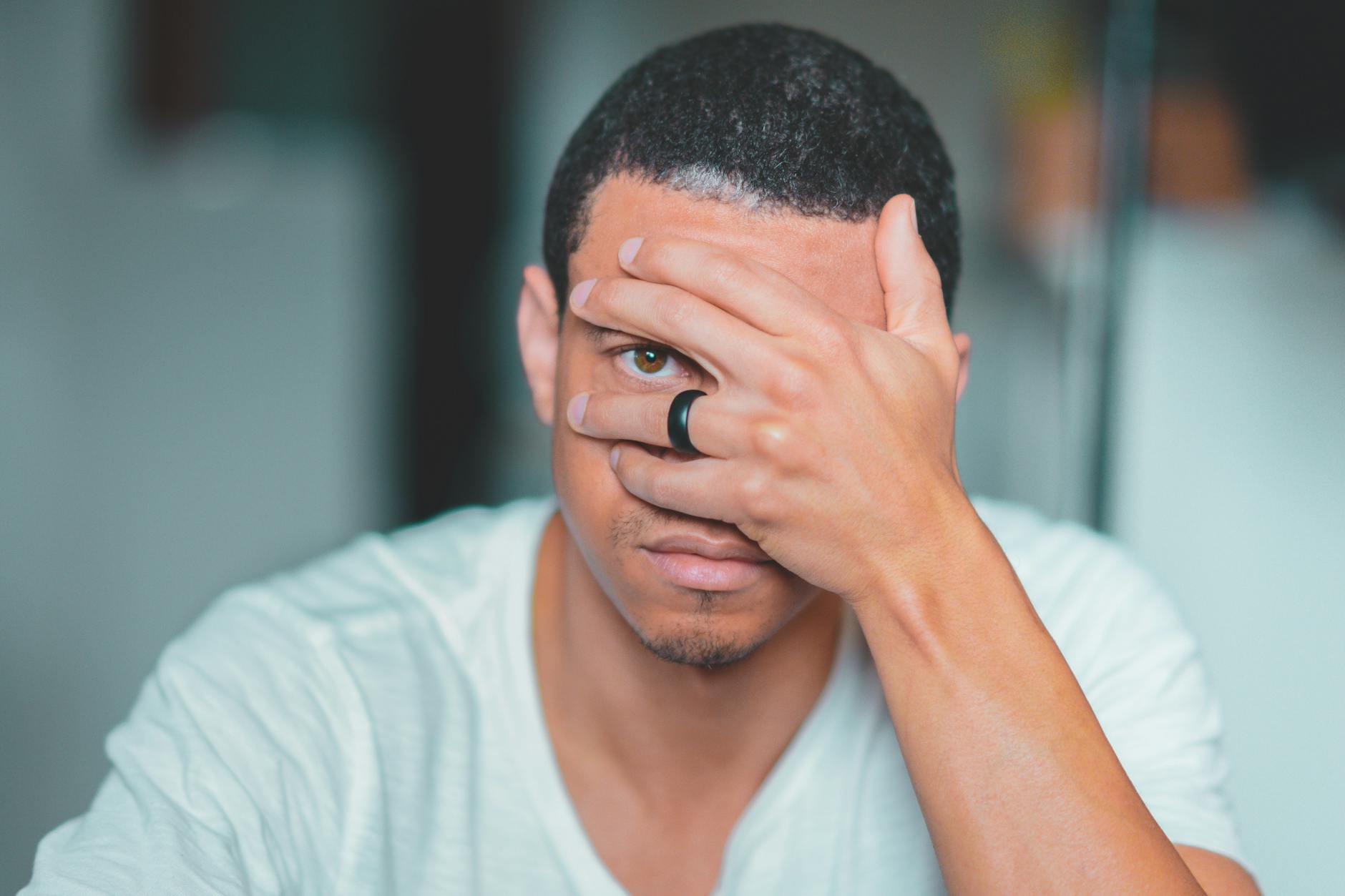
✨When preference becomes shadow, Brown girls shine their own light.✨
Beauty and desirability have always been mediated through the male gaze, but for Brown girls, the gaze is not neutral. It is filtered through colorism, a hierarchy of skin tone preference that privileges lighter complexions and Eurocentric features while marginalizing darker ones. Within this system, Brown beauty often becomes invisible, reduced to stereotypes or subject to conditional acceptance. The politics of attraction reveal that desirability is not simply a matter of individual taste but is shaped by historical legacies, media representation, and cultural bias (Hunter, 2007).
Desirability and Disparity: The Psychology of Attraction in Color
Psychologically, colorism affects how beauty is perceived and valued. Research on implicit bias reveals that individuals often associate lighter skin with attributes like femininity, softness, and sophistication, while darker skin is unfairly linked to aggression, masculinity, or undesirability (Maddox & Gray, 2002). These biases operate beneath conscious awareness, shaping the subconscious foundations of attraction and reinforcing a hierarchy that leaves Brown girls fighting for visibility and validation.
Attraction, in this context, becomes less about personal chemistry and more about navigating social scripts. Social comparison theory demonstrates that when Brown girls consistently encounter cultural messages that devalue their features, they may internalize these standards, resulting in diminished self-esteem and struggles with self-image (Festinger, 1954). The disparity in desirability is thus not a reflection of actual beauty but of distorted cultural conditioning that dictates what is celebrated and what is dismissed.
At the same time, many men who uphold colorist preferences are unaware of the psychological roots of their attraction. They may describe their choices as “just a preference,” but preferences are not created in a vacuum. They are shaped by exposure, cultural conditioning, and the historical privileging of whiteness and lightness. This creates a disparity where Brown girls are simultaneously admired for their strength, style, and resilience but overlooked in romantic desirability.
When Love Meets Color: Dating, Bias, and the Brown Girl Experience
The dating world is often where colorism is most starkly revealed. Studies on partner selection show that lighter-skinned women are more likely to be perceived as suitable for marriage, while darker-skinned women are often relegated to roles of casual relationships or fetishized encounters (Robinson & Ward, 1995). For Brown girls, this translates into painful experiences of rejection, where bias masquerades as taste, and love becomes entangled with structural inequity.
Brown girls often share testimonies of being overlooked in favor of lighter-skinned counterparts, not because of incompatibility but because of ingrained notions of prestige and desirability attached to skin tone. This bias fractures the experience of dating, making it not only about personal compatibility but also about negotiating one’s place within a racially stratified beauty economy. The sting of rejection becomes heavier when it is tied not to personality or values but to features that reflect ancestry and identity.
Yet, despite these barriers, many Brown women redefine love and attraction on their own terms. By rejecting narrow definitions of beauty, they cultivate self-confidence, embrace cultural pride, and seek partners who see beyond colonial legacies of preference. Campaigns such as #UnapologeticallyBrown and #MelaninPoppin amplify this resistance, creating communities where Brown women affirm each other’s worth, beauty, and desirability. Love, when rooted in authenticity rather than bias, becomes both possible and revolutionary.
Toward a New Standard
Ultimately, navigating the male gaze and colorism requires both societal change and personal reclamation. As long as colorist standards define desirability, Brown girls will continue to wrestle with invisibility and inequity. However, when beauty hierarchies are exposed, challenged, and dismantled, attraction can be reimagined as a space of inclusivity and truth. Love that honors the full spectrum of skin tones and features is not only more just but also more deeply human.
References
Festinger, L. (1954). A theory of social comparison processes. Human Relations, 7(2), 117–140.
Hunter, M. (2007). The persistent problem of colorism: Skin tone, status, and inequality. Sociology Compass, 1(1), 237–254.
Maddox, K. B., & Gray, S. A. (2002). Cognitive representations of Black Americans: Reexploring the role of skin tone. Personality and Social Psychology Bulletin, 28(2), 250–259.
Robinson, T. N., & Ward, J. V. (1995). African American adolescents and skin color. Journal of Black Psychology, 21(3), 256–274.
Discover more from THE BROWN GIRL DILEMMA
Subscribe to get the latest posts sent to your email.
 THE BROWN GIRL DILEMMA