
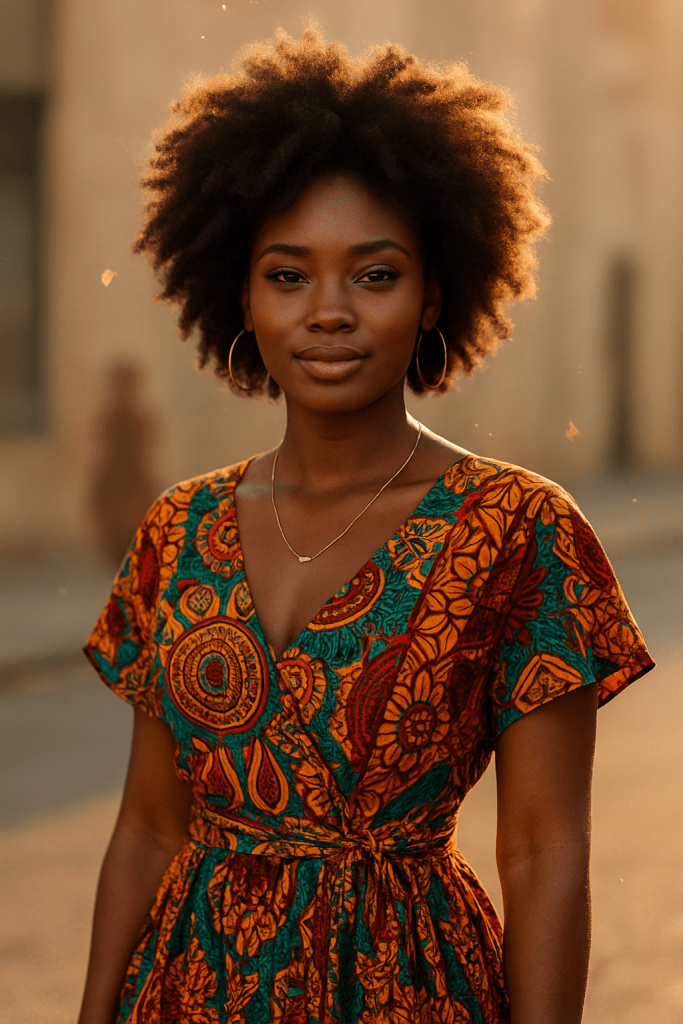
The Black woman stands at the intersection of history and hope, burden and brilliance. Her story is not merely a narrative of survival but a testament to a grace that refuses to die. “The Weight She Carries, the Grace She Wears” is more than a title—it is a reflection of the spiritual, emotional, and generational load she bears with a strength that confounds the world.
Her weight begins with history. From the chains of the transatlantic slave trade to the ongoing echoes of structural racism, Black women have been positioned at the crossroads of inequality. Yet, despite this, they have carried their families, communities, and faith through the wilderness with a dignity that defies explanation.
Spiritually, the Black woman’s strength mirrors biblical archetypes—Deborah’s courage, Ruth’s loyalty, Esther’s wisdom, and Mary’s faithfulness. But her journey is not only rooted in scripture; it is lived daily as she navigates systems that underestimate her while demanding her labor, compassion, and excellence.
The emotional weight she carries often remains unseen. She is expected to be strong, even when she is breaking. She wipes her own tears because the world frequently overlooks them. Still, she rises each day wrapped in a grace that comforts others even as she longs to be comforted.
Her grace is not passive. It is an active, intentional form of resilience. Black women have learned to turn pain into poetry, pressure into purpose, and silence into strength. This grace becomes her shield in a world that too often devalues her body, her voice, and her brilliance.
Identity plays a central role in her journey. She must negotiate a sense of self in a culture that stereotypes her—labeling her angry, intimidating, or “too much.” Yet she understands that authenticity is her liberation. Her identity becomes an act of resistance, a declaration that she will not shrink to make others comfortable.
The weight she carries includes the expectations of family. Many Black women become the backbone of their households, holding everyone together emotionally and spiritually. They nurture while often receiving no nurturing in return. Still, they love deeply, passionately, and sacrificially.
Economically, she bears the weight of wage gaps, limited opportunities, and the constant pressure to outperform to be seen as equal. Despite this, she continues to ascend—educating herself, building businesses, owning property, and creating generational wealth.
Her weight also includes the complexities of beauty. She is judged, compared, imitated, and criticized, yet she remains the blueprint. Society borrows from her style while denying her credit. Still, she walks with elegance, redefining beauty on her own terms.
Mentally, she balances the demands of work, relationships, self-care, and spirituality. She carries generational trauma while trying to build generational healing. The pressure to be “strong” often limits her ability to be vulnerable, yet her vulnerability is part of her transformative power.
In relationships, she gives deeply. Yet at times, she finds herself loving men still learning to love themselves. Her heart becomes both sanctuary and battlefield. Even in heartbreak, she wears her grace like a garment, believing that love—real love—is still worth waiting for.
Spiritually, she is the prayer warrior of her family, the intercessor who calls heaven down in the midnight hour. Her weight includes the responsibility to hold onto faith for everyone who has forgotten how to believe. And she does this not for applause, but because she knows God sustains her.
The grace she wears is not perfection—it is perseverance. It is her ability to keep moving forward even when she is exhausted. Her grace is her ability to forgive, to heal, to rebuild, and to hope again.
She navigates the world with a quiet intelligence, an instinctive wisdom passed down through generations of women who survived storms she will never see. Her grace becomes an inheritance, a legacy, a spiritual garment sewn with threads of sacrifice and love.
Her weight is also joy. Black women carry a capacity for laughter, creativity, and connection that fuels communities. She creates music, art, hair culture, language, and movements that shape cultures globally. Under her weight is a fire that no oppression can extinguish.
Psychologically, she navigates complex terrain—battling microaggressions, stereotypes, workplace politics, and the chronic stress of racism. Yet she cultivates coping strategies rooted in faith, community, sisterhood, and self-affirmation.
The grace she wears shows up in motherhood, whether she has biological children, spiritual children, or community children. She becomes a teacher, a mentor, a guide, shaping futures simply through her presence, her words, and her wisdom.
Her weight is also her purpose. She understands that her life is not random; it is intentional. Her gifts are needed, her voice is needed, her leadership is needed. Everything she carries prepares her for everything she is becoming.
Ultimately, the Black woman remains one of humanity’s greatest miracles. The weight she carries would break many, yet the grace she wears teaches the world what resilience truly looks like. She is not defined by her burdens but by her ability to rise above them.
Her story will always be one of power, beauty, faith, and transformation. For everything she carries, she continues to shine. And for every weight she bears, she wears a grace the world cannot comprehend.
References
Beauboeuf-Lafontant, T. (2009). Behind the mask of the strong Black woman: Voice and the embodiment of a costly performance. Temple University Press.
Collins, P. H. (2000). Black feminist thought: Knowledge, consciousness, and the politics of empowerment (2nd ed.). Routledge.
Gillum, T. (2019). Exploring Black women’s emotional labor and resilience in contemporary society. Journal of Black Psychology, 45(3), 179–197.
Harris-Perry, M. (2011). Sister citizen: Shame, stereotypes, and Black women in America. Yale University Press.
hooks, b. (2000). All about love: New visions. William Morrow.
Jones, C. (2021). The psychological burdens of strength: Black women and emotional wellness. Journal of Women’s Health, 30(6), 867–873.
Discover more from THE BROWN GIRL DILEMMA
Subscribe to get the latest posts sent to your email.
 THE BROWN GIRL DILEMMA